MindMap Gallery Histology and Embryology Neural tissue
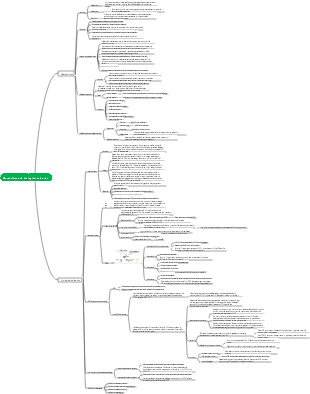
This mind map mainly revolves around neural tissue, contains content related to neurons and glial cells, and also involves nerve endings, nerve ulcers and regeneration. The summary is comprehensive and meticulous, suitable as review materials.
Edited at 2025-03-09 23:40:58Rumi: 10 dimensions of spiritual awakening. When you stop looking for yourself, you will find the entire universe because what you are looking for is also looking for you. Anything you do persevere every day can open a door to the depths of your spirit. In silence, I slipped into the secret realm, and I enjoyed everything to observe the magic around me, and didn't make any noise. Why do you like to crawl when you are born with wings? The soul has its own ears and can hear things that the mind cannot understand. Seek inward for the answer to everything, everything in the universe is in you. Lovers do not end up meeting somewhere, and there is no parting in this world. A wound is where light enters your heart.
Chronic heart failure is not just a problem of the speed of heart rate! It is caused by the decrease in myocardial contraction and diastolic function, which leads to insufficient cardiac output, which in turn causes congestion in the pulmonary circulation and congestion in the systemic circulation. From causes, inducement to compensation mechanisms, the pathophysiological processes of heart failure are complex and diverse. By controlling edema, reducing the heart's front and afterload, improving cardiac comfort function, and preventing and treating basic causes, we can effectively respond to this challenge. Only by understanding the mechanisms and clinical manifestations of heart failure and mastering prevention and treatment strategies can we better protect heart health.
Ischemia-reperfusion injury is a phenomenon that cellular function and metabolic disorders and structural damage will worsen after organs or tissues restore blood supply. Its main mechanisms include increased free radical generation, calcium overload, and the role of microvascular and leukocytes. The heart and brain are common damaged organs, manifested as changes in myocardial metabolism and ultrastructural changes, decreased cardiac function, etc. Prevention and control measures include removing free radicals, reducing calcium overload, improving metabolism and controlling reperfusion conditions, such as low sodium, low temperature, low pressure, etc. Understanding these mechanisms can help develop effective treatment options and alleviate ischemic injury.
Rumi: 10 dimensions of spiritual awakening. When you stop looking for yourself, you will find the entire universe because what you are looking for is also looking for you. Anything you do persevere every day can open a door to the depths of your spirit. In silence, I slipped into the secret realm, and I enjoyed everything to observe the magic around me, and didn't make any noise. Why do you like to crawl when you are born with wings? The soul has its own ears and can hear things that the mind cannot understand. Seek inward for the answer to everything, everything in the universe is in you. Lovers do not end up meeting somewhere, and there is no parting in this world. A wound is where light enters your heart.
Chronic heart failure is not just a problem of the speed of heart rate! It is caused by the decrease in myocardial contraction and diastolic function, which leads to insufficient cardiac output, which in turn causes congestion in the pulmonary circulation and congestion in the systemic circulation. From causes, inducement to compensation mechanisms, the pathophysiological processes of heart failure are complex and diverse. By controlling edema, reducing the heart's front and afterload, improving cardiac comfort function, and preventing and treating basic causes, we can effectively respond to this challenge. Only by understanding the mechanisms and clinical manifestations of heart failure and mastering prevention and treatment strategies can we better protect heart health.
Ischemia-reperfusion injury is a phenomenon that cellular function and metabolic disorders and structural damage will worsen after organs or tissues restore blood supply. Its main mechanisms include increased free radical generation, calcium overload, and the role of microvascular and leukocytes. The heart and brain are common damaged organs, manifested as changes in myocardial metabolism and ultrastructural changes, decreased cardiac function, etc. Prevention and control measures include removing free radicals, reducing calcium overload, improving metabolism and controlling reperfusion conditions, such as low sodium, low temperature, low pressure, etc. Understanding these mechanisms can help develop effective treatment options and alleviate ischemic injury.
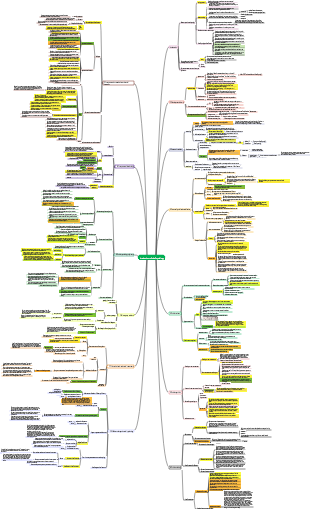
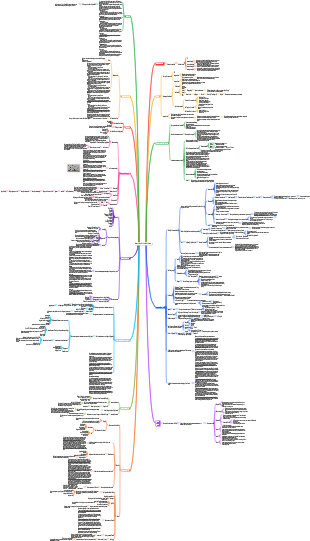
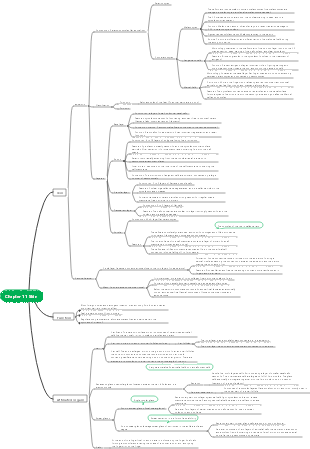
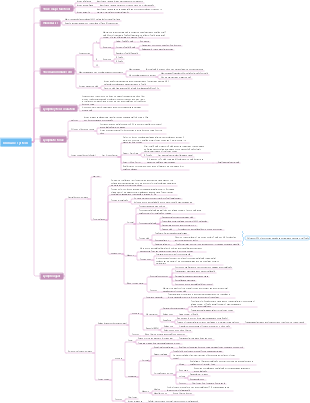
Neural tissue
composition
nerve cell (neuron neuron
Neurons are the basic units of the structure and function of the nervous system that can accept stimuli, integrate information, and conduct impulses.
glial cells neuroglial cell
Glial cells support, protect, nourish, repair, insulate and myelination
Neurons
The morphological structure of neurons
cell body soma
Distribution: Gray matter and ganglion in the brain and spinal cord
Cell membrane
Excitable membrane
Cell nucleus
Nucleolus is large and obvious, light staining
Cytoplasm (under light microscope)
Nissl's body Also known as chromophilic substance
feature
LM: Strongly basophilic, plaque-like, or fine granular
EM: consists of a large number of rough endoplasmic reticulum RER and free ribosomes
Function
Synthetic proteins include enzymes and neuromodulation that synthesize neurotransmitters
Neurotransmitters are carriers for neurons to transmit chemical information to other neurons or effector cells. They are generally small-molecule substances and are mainly stored in the form of vesicles at the axon terminals after the synthesis of the cell body.
Neuromodulator is generally a peptide molecule, which can enhance or weaken neurons' response to neurotransmitters and play a regulatory role.
Distribution: cell body, dendrites. Axial mound and axons are not present.
Neurofibril
feature
LM: Brown-black filaments are arranged in silver-plated sections, arranged in an interlaced manner, and extend into dendrites and axons.
EM: Neural filaments, microtubule composition
Function: Constituting the cytoskeleton and participating in material transport
Distribution site: cell body, dendrites, axons
dendrite
One to multiple, short, dendritic spines, Nissite
Structure: resembled cell body, with microtubules, without Golgi Golgi
Function: Receive stimulation to transmit impulses into the cell body
axon
One, small, few branches
Structural features
Structure: None Nisite, Neurofibrils, No Golgi
Axial mound (light staining for nisite)
Cylindrical part of the cell body that emits axons under LM
Shaft membrane
Axonal surface cell membrane
Axial quality
Cytoplasm in the axon
Axonal transport: Make cell bodies and protrusions become structural and functional wholes
(Cell body: substance synthesis) (Breaking up: substance metabolism of physiological activities)
Continuous axonal transport
Cell to the end of the axon
Reverse axonal transport
Axon end to cell body
Function: Transmit nerve impulses from the cell body to other neurons or effector cells
Category of neurons
According to the number of neuronal protrusions
Pseudomonopolar neurons
Bipolar neurons
Multipole neurons
According to the length of the axon
Gorky Type I Neuron
Gorky Type II Neuron
According to the function of neurons
Sensory neurons: afferent neurons
Motor neurons: efferent neurons
Intermediate neurons
According to the quality of
Cholinergic neurons
Aminergic neurons
Amino acid energy neurons
Peptidergic neurons
Norepinephrocytes
Neuraglial cell
Features: There are many protrusions, but no synapses are formed without dendrites or axons; there is no Nissl body; it has the ability to divide
Silver dye – show the whole picture
(I) Glial cells in the central nervous system
Astrocytes
Large body, with protruding stars, light staining
form
Gluten wire
Intermediate filament composed of glial fibrillary acid protein
Participate in the composition of the cytoskeleton
Gluten boundary membrane
The end of the protrusion can be enlarged to form a foot plate, which is attached to the surface of the brain and spinal cord, forming a glial membrane of the blood-brain barrier near blood vessels.
Classification
Primal astrocytes (not smooth)
Fibrous astrocytes (smooth)
Function
Participate in blood-brain barrier formation
Constituted of capillary endothelial cells, basement membrane and glial plasma membrane
Selectively allow nutrients and metabolites to pass through, maintaining internal environmental stability
Secrete neurotrophic factors and growth factors
Oligodendrocytes
form
Smaller cell body and fewer protrusions
Function
Protrusions form myelin sheath of the central nervous system nerve fibers; nutrition, protection
Microglia
form
Smallest cell body, elongated elliptical
It evolves from the migration and evolution of monocytes in the blood, and transforms into macrophages when the central nervous system is damaged, which has a phagocytic effect.
Macrophages/osteoclasts are all evolved from monocytes
Function: Deformation and motion, swallowing
Ependymal cells
form
Lined in the center of the ventricle and spinal cord, a single layer of ependymos membrane is formed, with microvilli and cilia on the free surface
Function
Secrete cerebrospinal fluid
(II) Glial cells in the peripheral nervous system
Schwan cell
form
Surrounding the neuronal protrusions of the peripheral nervous system, there are differences in morphology and function in myelinated nerve fibers and unmarrow
Function
Secrete neurotrophic factors to promote the survival of damaged neurons and their axonal regeneration
Satellite cells
form
A layer of flat or cubic cells that encapsulate the body of neurons
Function
Protective effect on ganglion cells
Nerve ulcers and regeneration
nerve ending
concept
The terminal part of the peripheral nerve fibers together with other tissues to form receptors or effectors
Sensory nerve endings (receptors) ——Pseudomonopolar neurons
Free nerve endings
Distributed between epithelial cells of the epidermis, cornea and hair follicles, and connective tissues such as dermis and periosteum
Participate in the production of cold, heat, touch, and pain
There are closure sensory nerve endings
Tactile body
Distributed on the dermis nipple of the skin
Participate in creating touch
Ring layer body
Participate in the generation of pressure and vibration sensations
Distributed in subcutaneous tissue, peritoneum, mesenteria, etc.
Stomach shuttle
Shunshape structure in skeletal muscle
Participate in producing proprioception
Motor nerve endings (effector)
Somatic motor nerve endings (motor end plate)
Distribution: Skeletal muscle
LM: Motor neurons have repeatedly branched at the ends of axons, each branch is grape-shaped, and ends with a skeletal muscle fiber (also known as nerve-muscular connection)
EM: Postsynaptic membrane: Grooved sarcoma; axon terminal: synaptic bodies
Visceral motor nerve endings
EM:Symptoms
peripheral nerve
definition
The collection of nerve fibers in the peripheral nervous system is a nerve fiber bundle, and several nerve fiber bundles are a nerve
Extraneous membrane
A dense connective tissue wrapped outside the nerves.
Neural tract membrane
Several layers of flat epithelioid cells on the surface of nerve fiber bundles
Endural
Thin connective tissue on the surface of nerve fibers
nerve fibers
composition
Made of long axons and glial cells enclosed outside them
Classification
(I) Myelinated nerve fibers (myelinated nerve fiber)
Myelinated nerve fibers of the peripheral nervous system
Structural features
LM
Medial cytoplasm - extremely thin, difficult to distinguish
Myelin sheath (multi-layer cell membrane is concentrically wound, up to 50 layers)
Myelinated cells are Schwann cells
EM
Light and dark slab layered
External cytoplasm - slightly thick, containing nucleus
There is a basement membrane outside the nerve membrane
Schwan cell membrane and base membrane are collectively called neural membrane
Lang Feijie
The exposed parts of nerve fibers
Interstitial body
The nerve fibers between two adjacent Lang Fei knots
Myelination notches/Shi-Lanth traces
Stenosis channels between the internal and external cytoplasm, osmium acid staining is lighter
Characteristics of nerve impulse conduction
The conduction is carried out along the Langfei knot. The thicker the nerve fibers, the longer the knot interstitial body, the thicker the myelin, and the faster the conduction speed.
Myelinated nerve fibers of the central nervous system
Myelinated sheath formed by oligodendrocytes
One oligodendrocyte entangles multiple axons (capable)
No base membrane on the surface of nerve fibers
No traces in myelin
(II) Unmyelinated nerve fibers
Characteristics are unmyelinated, without a slug knot, slow conduction speed
Myelinless nerve fibers of PNS
Made of axons and Schwann cells, unmyelinated and without Langfei knots, one neural membrane cell can wrap multiple axons
Myelinless nerve fibers of CNS
Complete exposure of the myeloid nervous system
Function: Conducting nerve impulses
It's faster to have marrow than to have no marrow
Synapse
Definition: A specialized cellular connection between neurons and neurons or between neurons and non-neuron cells (effector cells).
Function: The important structure of neurons transmit impulses
Classification
Chemical synapses
Silver stain: spherical/ring-shaped synaptic buckle/synaptic junction (presynaptic component)
Chemical Synapses (under EM)
One-way transmission, neurotransmitters as vectors
Presynaptic components: synaptic bodies
LM: In silver-plated and stained sections, synaptic bodies are brown-black particles
The opposite cell membrane is presynaptic membrane
Synaptic cleft
Postsynaptic components
The opposite cell membrane is the postsynaptic membrane
Electric synapses - gap connection
electric signal
Two-way delivery