MindMap Gallery Connective tissues Histology and Embryology
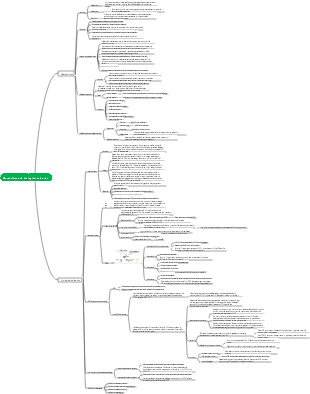
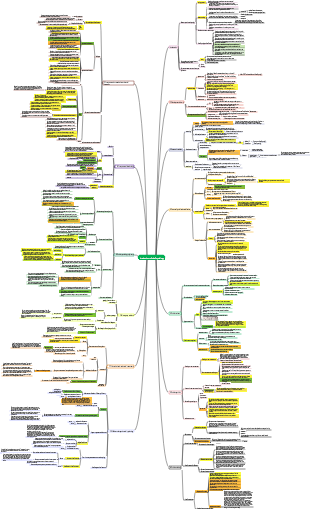
This mind map revolves around connective tissue. Connective tissue contains inherent connective tissue, which is divided into loose connective tissue, dense connective tissue, adipose tissue and reticular tissue.
Edited at 2025-03-09 23:39:05Rumi: 10 dimensions of spiritual awakening. When you stop looking for yourself, you will find the entire universe because what you are looking for is also looking for you. Anything you do persevere every day can open a door to the depths of your spirit. In silence, I slipped into the secret realm, and I enjoyed everything to observe the magic around me, and didn't make any noise. Why do you like to crawl when you are born with wings? The soul has its own ears and can hear things that the mind cannot understand. Seek inward for the answer to everything, everything in the universe is in you. Lovers do not end up meeting somewhere, and there is no parting in this world. A wound is where light enters your heart.
Chronic heart failure is not just a problem of the speed of heart rate! It is caused by the decrease in myocardial contraction and diastolic function, which leads to insufficient cardiac output, which in turn causes congestion in the pulmonary circulation and congestion in the systemic circulation. From causes, inducement to compensation mechanisms, the pathophysiological processes of heart failure are complex and diverse. By controlling edema, reducing the heart's front and afterload, improving cardiac comfort function, and preventing and treating basic causes, we can effectively respond to this challenge. Only by understanding the mechanisms and clinical manifestations of heart failure and mastering prevention and treatment strategies can we better protect heart health.
Ischemia-reperfusion injury is a phenomenon that cellular function and metabolic disorders and structural damage will worsen after organs or tissues restore blood supply. Its main mechanisms include increased free radical generation, calcium overload, and the role of microvascular and leukocytes. The heart and brain are common damaged organs, manifested as changes in myocardial metabolism and ultrastructural changes, decreased cardiac function, etc. Prevention and control measures include removing free radicals, reducing calcium overload, improving metabolism and controlling reperfusion conditions, such as low sodium, low temperature, low pressure, etc. Understanding these mechanisms can help develop effective treatment options and alleviate ischemic injury.
Rumi: 10 dimensions of spiritual awakening. When you stop looking for yourself, you will find the entire universe because what you are looking for is also looking for you. Anything you do persevere every day can open a door to the depths of your spirit. In silence, I slipped into the secret realm, and I enjoyed everything to observe the magic around me, and didn't make any noise. Why do you like to crawl when you are born with wings? The soul has its own ears and can hear things that the mind cannot understand. Seek inward for the answer to everything, everything in the universe is in you. Lovers do not end up meeting somewhere, and there is no parting in this world. A wound is where light enters your heart.
Chronic heart failure is not just a problem of the speed of heart rate! It is caused by the decrease in myocardial contraction and diastolic function, which leads to insufficient cardiac output, which in turn causes congestion in the pulmonary circulation and congestion in the systemic circulation. From causes, inducement to compensation mechanisms, the pathophysiological processes of heart failure are complex and diverse. By controlling edema, reducing the heart's front and afterload, improving cardiac comfort function, and preventing and treating basic causes, we can effectively respond to this challenge. Only by understanding the mechanisms and clinical manifestations of heart failure and mastering prevention and treatment strategies can we better protect heart health.
Ischemia-reperfusion injury is a phenomenon that cellular function and metabolic disorders and structural damage will worsen after organs or tissues restore blood supply. Its main mechanisms include increased free radical generation, calcium overload, and the role of microvascular and leukocytes. The heart and brain are common damaged organs, manifested as changes in myocardial metabolism and ultrastructural changes, decreased cardiac function, etc. Prevention and control measures include removing free radicals, reducing calcium overload, improving metabolism and controlling reperfusion conditions, such as low sodium, low temperature, low pressure, etc. Understanding these mechanisms can help develop effective treatment options and alleviate ischemic injury.
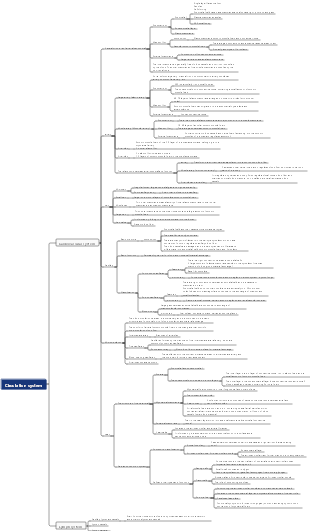
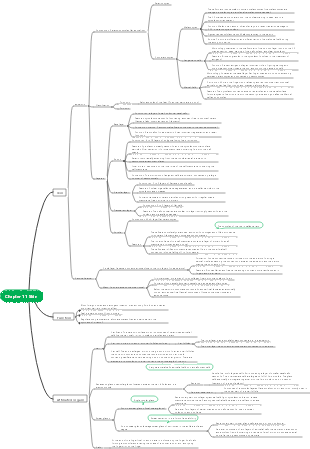
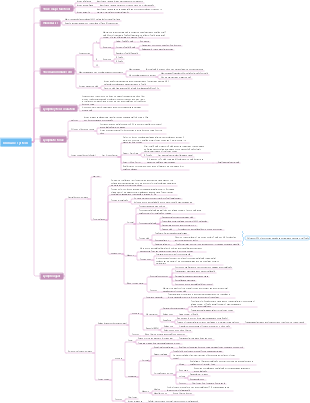
Connective tissue
Consisting of cells and extracellular matrix
External matrix includes filamentous fibers and amorphous matrix secreted by connective tissue cells
Features
Fewer cells, rich in species, and many extracellular matrix
Infinite
Rich blood vessels, lymphatic vessels, and nerve endings
include
Intrinsic connective tissue
Loosen connective tissue
Tight connective tissue
Fat tissue
Mesh tissue
Other special types
blood
lymph
Cartilage and bone tissue
Intrinsic connective tissue
Loosen connective tissue
Features: Many types of cells, many substrates, few fibers, sparse arrangements, rich in blood vessels and nerve endings
Distribution: between organs, between tissues, and between cells
cell
Fibroblasts
The most numerous cells in connective tissue
Features
Large cells, many protrusions
Cytoplasm is abundant, weak basophilic, rich in rough endoplasmic reticulum, free ribosomes and Golgi complexes
Large nucleus, oval, obvious coloring, obvious nucleolus
Function
Secrete collagen and elastin, growth factor
Fibroblasts decline in function and turn to rest state called fibroblasts
Fibroblasts
form
Smaller volume and long ridges
Features
Nucleus concentrates and stains deeply
Cytoplasm
Coarse endoplasmic reticulum
Fibroblasts can be converted into fibroblasts under specific stimulation (such as trauma) to participate in repair
Macrophages
Source: Mononuclear cells in the blood
Features
Various forms and changes in functions. Functional actives can extend pseudopodophysis (including microfilaments and microtubules)
Cytoplasm is abundant and eosinophilic
Contains many lysosomes, phagosomes, phagocytosis vesicles and residual bodies, etc.
Small nucleus, round or kidney-shaped, dark color
There are a lot of wrinkles and micro-fluffy on the surface
When in a functional quiescent state, it is a tissue cell, chemotaxis, activated by chemokine
effect
Swallow
Particular and nonspecific
Can be fused when swallowing larger substances
Capture, process and present antigens
Secretes various biologically active substances such as lysinobacteria and interferon
Plasma cells
Source: Hematopoietic Stem Cells
Features
Nucleus round or oval
Spherical arrangement of heterochromatin under nuclear membrane There is a shallow staining area around the nuclear
Cytoplasmic rich basophilic
Filled with coarse endoplasmic reticulum, free ribosomes
Function: Synthesize immunoglobulins, namely antibodies, and participate in liquid immunity
Mast cells
Source: Hematopoietic Progenitor Cells
Features
The cells are large, the nucleus is small, and the center is
Cytoplasm
Full of coarse basophilic particles
Can be dyed purple by re-red aldehyde
Contains a large number of membrane-capsule secretion particles
The particles contain histamine, heparin, eosinophil chemokines, etc.
Histamine and leukotrienes can dilate the skin's veins and capillaries, forming lumps, i.e. urticaria, which can cause bronchial smooth muscle spasms, increase mucus, cause asthma, dilate small arteries, and sharply drop in blood pressure, causing shock.
Synthesis of leukotrienes in the cytoplasm
Function: This cell is involved in allergic and anticoagulant (heparin action)
Adipocytes
Clustered in groups Small number of single distributions
Features
The cell body is large, the cytoplasm contains a large lipid droplet, and the cell nucleus is squeezed into a meniscus
During HE staining, the lipid droplets become vacuoles after being dissolved.
Function: Synthesis and storage of fats and participate in lipid metabolism
Undifferentiated mesenchymal cells
Very small number of adult stem cells
fiber
Collagen fibers
The largest number
Features
Bright white when fresh, also known as "white fiber"
Eosinophilic, wavy, and periodic transverse lines with alternating light and dark under electron microscope
Fibroblasts synthesize collagen, collagen polymerizes into collagen fibers, and the adhesion and bonding form collagen fibers, and the biochemical component is type I collagen
Function: High tensile strength and strong tensile resistance
Elastic fiber
Wide distribution
Features
Yellow when fresh, also known as "yellow fiber"
Weak eosinophilicity Strong refractive
The fibers are small and have branches, interwoven into a net, easily broken, forming a curled break
Function: The elastic fiber is elastic and makes the tissue elastic
Mesh fiber
distributed
Reticular tissue in hematopoietic organs
Features
Consisting of type III collagen
HE dyed to light red, can be dyed black and brown by silver salt, also known as "silver-loving fiber"
Features: thin and short, multi-branched, interwoven into a net
Substrate
Amorphous gel-like substances composed of biological macromolecules such as proteoglycans and structural glycoproteins, distributed between cells and fibers, containing tissue fluid.
Protein
It is a complex formed by the combination of proteins and glycosaminoglycans. Proteins mainly include conjunctive proteins and core proteins.
Hyaluronic acid is the backbone, and other glycosaminoglycans bind to core proteins to form a proteopolysaccharide subunit; then connect to the backbone of hyaluronic acid through binding proteins. Repeated folding, binds to a large number of water molecules to form a three-dimensional structure of tiny pores. Foreign matter that blocks large and micropores, plays a barrier role. It is called molecular sieve. Hemolytic streptococci can secrete hyaluronidase, decomposes hyaluronic acid, destroys molecular sieve, and infection can spread rapidly.
Fibronectin
It is a multifunctional macromolecule
Cells, collagen, proteoglycan binding sites have a direct effect on the recognition, adhesion, migration, proliferation and differentiation of cells
Tissue fluid
Formation: High pressure on the capillary artery end, water, gas and small molecule substances in the plasma penetrate through the capillary wall into the extracellular matrix, forming tissue fluid
When the ooze or reflux of tissue fluid is hindered, the increase or decrease of tissue fluid will cause edema or dehydration to the body.
Tight connective tissue
Rule dense connective tissue
Distributed in tendons, sarcoma, and most ligaments
Tenocytes are special morphological fibroblasts distributed among collagen fiber bundles
Irregular dense connective tissue
Distributed in the dermis, dura, sclera and many organs
Features: The thick collagen fiber bundles interwoven to form a dense plate structure Distribution: The matrix and fibroblasts are distributed between the fiber bundles
Elastic tissue
Distributed in ligamentum calcareous and nether ligament
Fat tissue
Main functions: storing and providing energy
Yellow fat tissue single bubble
Main distribution: subcutaneous, omentum, mesangial, etc., accounting for about 10% of the body weight
Function: The largest energy storage library in the body participates in energy metabolism, generate energy, maintain body temperature, buffer and support filling, etc.
Brown fat tissue with multiple bubbles
Very few in adults, more newborns and hibernating animals
Main function: emitting a lot of heat energy under the stimulation of cold
Mesh tissue
Made of reticular cells, reticular fibers and matrix
Multiprotruding reticulocytes are connected to each other and can synthesize reticulum fibers
Reticular tissues are involved in the composition of hematopoietic and lymphoid tissues
Contains a large number of micropores to provide a timely environment for the occurrence of blood cells and the development of lymphocytes