MindMap Gallery Anna Karenina
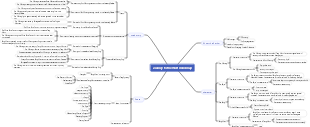
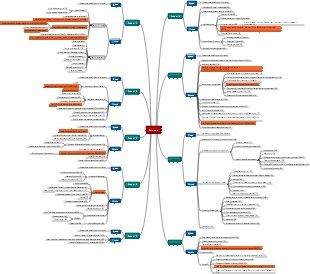
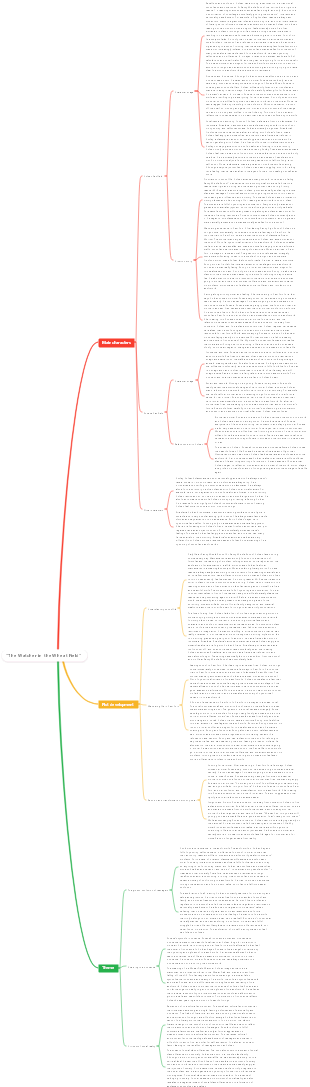
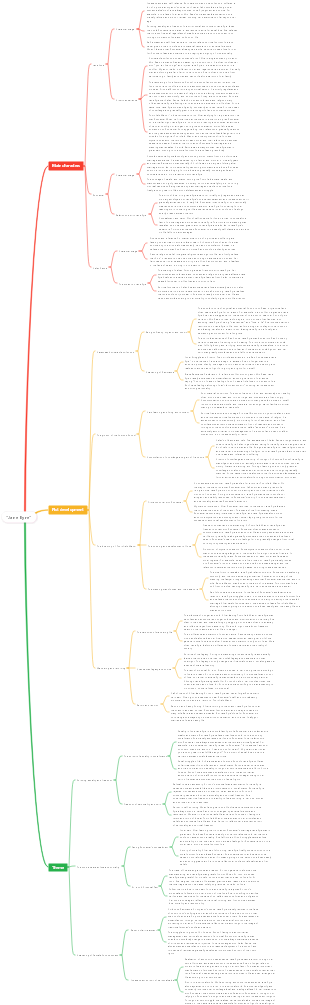
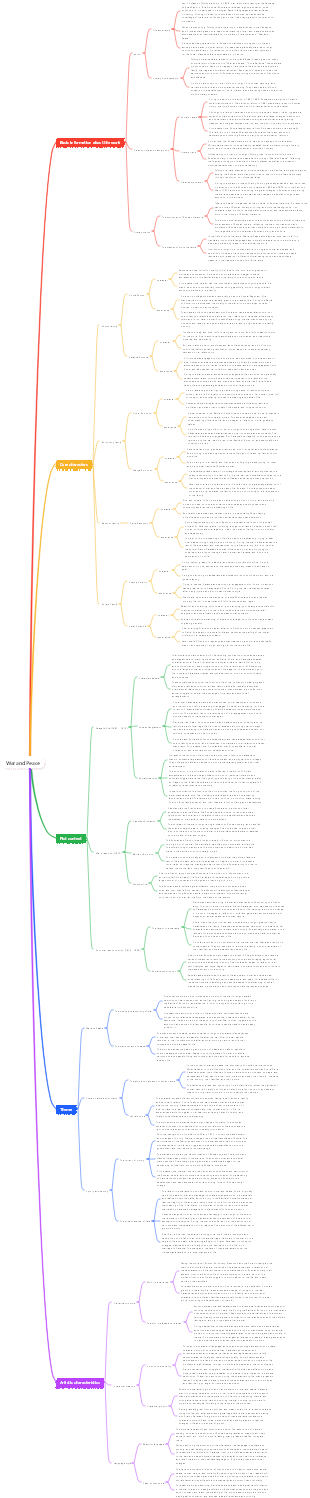
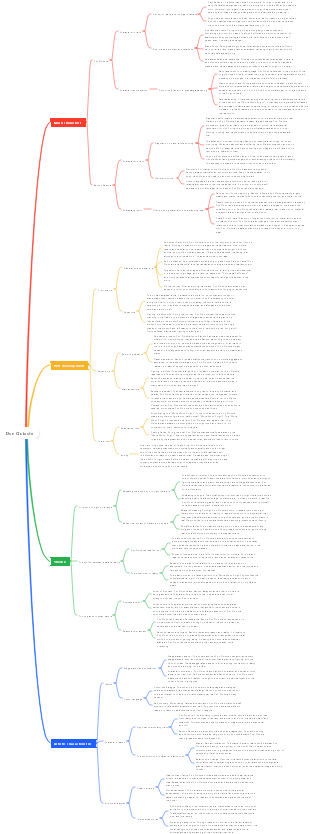
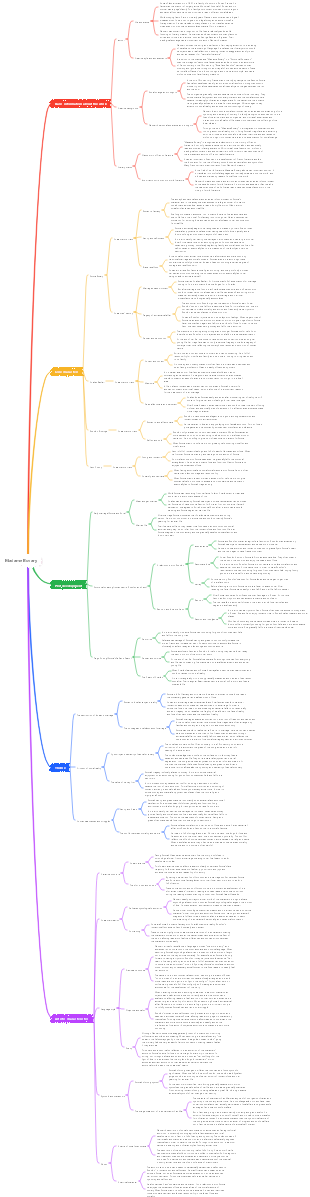
This is a mind map about "Anna Karenina", which mainly includes: artistic characteristics, themes, plot context, and core characters. Through the love tragedy of the heroine Anna, the novel reveals the weaknesses of human nature and the complexity of society, and has profound thematic significance.
Edited at 2025-02-20 19:09:21This template shows the structure and function of the reproductive system in the form of a mind map. It introduces the various components of the internal and external genitals, and sorts out the knowledge clearly to help you become familiar with the key points of knowledge.
This is a mind map about the interpretation and summary of the relationship field e-book, Main content: Overview of the essence interpretation and overview of the relationship field e-book. "Relationship field" refers to the complex interpersonal network in which an individual influences others through specific behaviors and attitudes.
This is a mind map about accounting books and accounting records. The main contents include: the focus of this chapter, reflecting the business results process of the enterprise, the loan and credit accounting method, and the original book of the person.
This template shows the structure and function of the reproductive system in the form of a mind map. It introduces the various components of the internal and external genitals, and sorts out the knowledge clearly to help you become familiar with the key points of knowledge.
This is a mind map about the interpretation and summary of the relationship field e-book, Main content: Overview of the essence interpretation and overview of the relationship field e-book. "Relationship field" refers to the complex interpersonal network in which an individual influences others through specific behaviors and attitudes.
This is a mind map about accounting books and accounting records. The main contents include: the focus of this chapter, reflecting the business results process of the enterprise, the loan and credit accounting method, and the original book of the person.
Anna Karenina
Core characters
Anna Karenina
Characteristic traits
Passionate and brave: She lived in a noble family since childhood, received a good education, and developed the habit of independent thinking, which made her dare to break through the many constraints of feudal marriage and aristocratic society when facing love.她不顾世俗眼光,毅然决然地与沃伦斯基相爱,展现出与传统决裂的非凡勇气。
Sincere emotions: full of pure desire for love, and once you fall into love, you will devote yourself to it. When she was with Warensky, every look and conversation was full of affection. She longed to find her true self and happiness in love.
Sensitive and fragile: In the process of pursuing love, due to the public opinion pressure in the aristocratic society and inner moral struggles, her psychological endurance gradually became fragile. A look or a comment from others may make her fall into painful thoughts and constantly doubt whether her choice is correct.
Characters' destiny
Marrying Karenin: When Anna was young, out of family and social arrangements, she married Karenin, who was much older than herself. Karenin devoted himself to his career and lacked emotional care for Anna. Their marriage life was as dull as water and had no passion at all. Anna felt extremely depressed in this marriage.
Falling with Warrensky: At a dance in Moscow, Anna meets the handsome young Volensky. Warrensky was attracted by Anna's beauty and unique temperament and pursued passionately. Anna was also moved by Warensky's enthusiasm, and the two quickly fell in love. However, this love made her fall into a dilemma between love and morality, on the one hand, it was a passionate love for Warensky, and on the other hand, it was a constraint on social morality and family responsibilities.
Social Exclusion and Suicide: Anna's extramarital affair was ruthlessly despised by the aristocratic society, and she was completely excluded from the social circle. In the face of social pressure and career pursuit, Warrensky's feelings for Anna gradually wavered. After Anna felt the changes in Warensky, she felt extremely painful and fell into despair. In the end, under the double blow of loneliness and despair, she chose to commit suicide by lying on the track, ending her young and tragic life.
Alexander Karenin
Characteristic traits
Hypocrisy and indifferent: He has been struggling in the officialdom for a long time, which has taught him to disguise himself. In public, he always looks hypocritical, but in fact he is indifferent and lacks true care for his family. He is more concerned about his career and social status, and regards his family as a tool to maintain his image.
Steady and rigid: The way of thinking and behavior patterns are deeply bound by traditional social rules and moral concepts, and it is difficult to understand Anna's pursuit of love. He believes that marriage should follow social norms, and that Anna's behavior is a betrayal of marriage and family and must be condemned.
Character experience
Pursuit of the official career: As a high-ranking official, Karenin was determined to pursue promotion in the official career. He is busy with official duties all day long, indifferent to family affairs, and rarely has time to accompany Anna and her son.
Marriage Crisis: After discovering Anna's extramarital affair, the first thing he considered was to maintain his reputation and family dignity, and firmly refused to divorce. He tried to get Anna back to her family in various ways, even restraining her with religion and morality.
Change of human nature: When Anna was seriously ill, some of his inner human nature was awakened and he chose to forgive Anna. This transformation reveals a complex side of his character and reflects his struggles between moral and emotional.
Warrensky
Characteristic traits
Handsome and handsome: He was born in a noble family, with outstanding appearance and elegant temperament, which made him attract the attention of many women in social occasions.
Passionate and impulse: full of passion in love. After meeting Anna, she was quickly attracted by her and started her passionate pursuit. She soon fell in love with Anna. But he lacks firm belief and sense of responsibility, and when facing social pressure and career pursuits, he is easily shaken his feelings for Anna.
Character experience
Pursuing Anna: After meeting Anna at a dance in Moscow, she was deeply attracted by Anna's charm and embarked on a passionate pursuit. He ignored Anna's married identity and frequently dated her, and the two fell in love.
Love shaken: With Anna's extramarital affair exposed, they face tremendous social pressure. At the same time, Warensky is also pursuing his career. In the face of social pressure and career pursuit, his feelings for Anna gradually became shaky, and he was shaking between love and career. In the end, his shakenness led to Anna's despair and also caused herself to fall into deep pain and self-blame.
Levin
Characteristic traits
Kind and upright: Born in a noble family, but unlike other nobles, he is kind-hearted, upright, and has sympathy for the people at the bottom of society. He could not stand the hypocrisy and corruption of aristocratic society and had his own profound thoughts on life and society.
Sincerity and persistence: treat love sincerely and pursue spiritual harmony with your lover. In the agricultural reform, he also showed a persistent attitude and worked hard to explore a path suitable for rural development in Russia. He did not give up easily even if he encountered many difficulties.
Character experience
Love and Marriage: At the beginning, he pursued Giti but was rejected because Giti fell in love with Warensky at the time. But Levin did not give up on his pursuit of love. Later, after experiencing emotional setbacks, Giti gradually discovered Levin's advantages and the two eventually got married. After marriage, they run their family together, understand and support each other, and live a happy life.
Agricultural Reform: Levin is committed to agricultural reform and tries to find a way out for Russian society. He personally participated in agricultural production and tried to adopt new agricultural technologies and management methods, hoping to improve the living conditions of farmers and promote the development of rural Russia. In this process, he kept thinking about the meaning and value of life and understood many life philosophy from agricultural production and family life.
Giti
Characteristic traits
Simple and kind: Growing up in a relatively simple environment, simple personality, kind-hearted, and full of beautiful fantasies about love. She longs to find someone she truly loves and live a happy and fulfilling life.
Gentle and Tough: After experiencing the emotional setbacks rejected by Warensky, she did not fall into a slump, but gradually grew up and became more mature and tenacious. She learned to face reality and reexamine her feelings and life.
Character experience
Emotional setbacks: At first, he fell in love with Warrensky and believed that he was his ideal lover. However, Warrensky was attracted by Anna, which made Kitty suffer and fall into pain.
Marrying Levin: After experiencing emotional setbacks, Giti began to reexamine his life. She gradually discovered Levin's kindness, sincerity and affection for herself, and eventually married Levin. In family life, she and Levin supported each other, grew up together, and became a good wife and mother.
Plot context
The opening and the characters appear
The crisis of the Oblonsky family: Oblonsky is Anna's brother. He cheated on the governess, which triggered family conflicts. When his wife Dolly found out, she made a big fuss with him and her family fell into chaos. In order to mediate the conflict between his brother and sister-in-law, Anna came to Moscow from Petersburg, which led to the main characters in the story.
Anna and Warrensky meet: At a dance party in Moscow, Anna and Warrensky meet. As soon as Warrensky saw Anna, she was attracted by her beauty and unique temperament. Anna's graceful manner, bright eyes and vibrant temperament were particularly eye-catching at the dance, and Warrensky was involuntarily attracted to her and began to talk to her and invite her to dance. From this moment on, a subtle emotional connection was created between the two, laying the groundwork for the subsequent development of the story.
Anna's Love and Marriage Crisis
The development of love: After Anna and Warrensky met, Warrensky embarked on a passionate pursuit. He frequently dated Anna and took her to various social activities. Their relationship quickly heated up and they fell in love. While getting along with Warrensky, Anna felt the sweetness and passion of love like never before, and she gradually fell into the struggle between love and morality. On the one hand, she loved Warensky deeply and couldn't extricate herself; on the other hand, she felt guilty about her husband and family.
The breakdown of marriage: Karenin gradually noticed Anna's changes and discovered her extramarital affair with Warensky. He asks Anna to return to her family and give up her relationship with Warensky, but Anna refuses his request. Karenin tried to redeem Anna in various ways, including threats, persuasion and moral constraints, but none of them helped. Eventually, the marriage between the two broke down and Anna chose to leave Karenin and live with Warensky.
Social pressure and Anna's dilemma
Public opinion accusations: After Anna's extramarital affair was exposed, she was despised by the aristocratic society. She is regarded as a morally corrupt woman and is excluded from the social circle. The nobles who had had close contact with her avoided her, and even pointed at her behind her back and maliciously slandered her. Anna suffered all kinds of cold treatment and humiliation in social occasions and was under tremendous mental pressure.
Warrensky's shaken: As social pressure increases, Warrensky begins to waver between career and love. On the one hand, he loves Anna deeply, but on the other hand, he cannot ignore the influence of public opinion on him. At the same time, he also desires success in his career. Under this circumstance, his feelings for Anna gradually became shaken, and there were more and more conflicts and quarrels with Anna, and there were cracks between the two.
Anna's Despair and Tragedy Ending
Anna's Despair: Anna felt extremely painful in her heart after feeling the changes of Warensky. She originally pinned all her hopes on her love with Warensky, but now she finds that this love has become so fragile. She kept doubting about Warensky's feelings for her and fell into deep despair. She tried to win back Warensky's heart, but nothing helped.
Suicide on the track: Under the double blow of despair and loneliness, Anna feels that her world completely collapses. She felt that she had lost everything and life had no meaning. Finally, at the train station, she looked at the speeding train and chose to commit suicide by lying on the rails, ending her young and tragic life. Her death was not only a personal tragedy, but also reflected the suppression and distortion of human nature in society at that time.
Levin's Life and Exploration
Love and Marriage: Levin pursues Giti, but was rejected at first. But he did not give up, but continued to strive for his own happiness. Later, after experiencing emotional setbacks, Giti gradually discovered Levin's advantages and the two eventually got married. After marriage, they run their family together, understand and support each other, and live a happy life. They experienced the joys, sorrows and joys of life together, grew up together, and found the meaning of life in family life.
Agricultural Reform: Levin is committed to agricultural reform. He personally participates in agricultural production and tries to adopt new agricultural technologies and management methods. He worked with the farmers, understood their needs and difficulties, and tried to improve the living conditions of farmers through reforms and promote the development of rural Russia. In this process, he kept thinking about the meaning and value of life and understood many life philosophy from agricultural production and family life. Although his agricultural reform faced many difficulties and challenges, he always persevered and worked hard to contribute his strength to the development of Russian society.
Theme
Love and marriage
The pursuit and struggle of love: The novel vividly shows Anna's passionate pursuit of love. She bravely breaks through the shackles of feudal marriage and social norms and pursues the true love in her heart. However, in the process of pursuing love, she constantly struggled between love and morality and social norms. On the one hand, she loved Warensky deeply and could not give up this relationship; on the other hand, she was condemned by public opinion and inner morality, and this struggle put her into the abyss of pain.
The essence and dilemma of marriage: Through Anna's marriage with Karenin, the hypocrisy and repression of aristocratic marriage is revealed. Karenin and Anna's marriage was not based on love, but on the combination of social status and interests. In this marriage, Anna feels extremely depressed and lonely, and her emotional needs are not met. At the same time, the novel also shows the status and difficulties of women in marriage. Women are often in a passive and subordinate position in the society at that time. Their marriages are often arranged by the family and society, and lack the right to choose independently.
Social Criticism
Hypocrisy of aristocratic society: profoundly criticizes the hypocrisy, corruption and moral depravity of aristocratic society. The nobles were hypocritical on the surface and followed strict social etiquette and moral norms, but in fact they lived in extravagant life and were morally corrupt. They talked about the right and wrong of others behind their backs, made ruthless accusations of Anna's extramarital affair, but turned a blind eye to their indulgence. Through the description of aristocratic society, the novel reveals the ugly nature behind its superficial glamor.
Thoughts on social change: Through Levin's agricultural reform, the problems and ways of findings faced by Russian society during the period of change are discussed. Levin tried to improve the living conditions of farmers and promote the development of rural Russia through agricultural reforms, but his reforms faced many difficulties and challenges, such as the constraints of traditional concepts, the conservativeness of farmers and the opposition of aristocrats. This reflects the complexity and arduousness of Russian society in the period of change, and also triggers people's thinking about the future development direction of Russian society.
Human nature and destiny
The complexity of human nature: The novel successfully shows the complexity of the characters' personalities, such as Anna's courage and fragility, Karenin's indifference and tolerance, Warrensky's enthusiasm and wavering, etc. Anna is brave and fearless in pursuing love, but becomes fragile when facing social pressure; Karenin is indifferent and rigid most of the time, but shows a tolerant side when Anna is seriously ill; Volensky is full of passion in love, but is easily shaken when facing social pressure and career pursuits. The complexity of the characters' personalities makes their images more three-dimensional and real.
The impermanence of fate: Anna's tragic ending reflects the impermanence of fate, as well as the helplessness and powerlessness of an individual in the face of fate. Anna originally had a wonderful life, but an accidental encounter changed her fate. Although she fought bravely in the process of pursuing love, she could not escape the teasing of fate in the end. Her death makes people sigh at the impermanence of fate and the helplessness of life, and also triggers people's thinking about fate.
Artistic characteristics
Narrative structure
Two-line narrative: Taking the stories of Anna and Levin as the main line, the two clues are intertwined, showing different levels of Russian society. Anna's story mainly revolves around love, marriage and social contradictions, reflecting the hypocrisy and corruption of aristocratic society; Levin's story focuses on life, ideals and social changes, showing the current situation and development issues of rural Russia. The two clues complement each other, making the content of the novel richer and more comprehensive.
The plot is ups and downs: by setting up a series of conflicts, such as the marriage conflict between Anna and Karenin, the emotional conflict between Anna and Warrensky, and the difficulties encountered by Levin in agricultural reform, the plot is full of tension. These contradictions and conflicts continue to promote the development of the plot, attract readers' interest in reading, and keep readers nervous and curious during the reading process, wanting to know the ending of the story.
Character creation
Delicate psychological description: Through delicate psychological description, the author deeply portrays the inner world of the characters and shows the emotional changes and ideological conflicts of the characters. For example, when describing Anna's struggle between love and morality, readers can deeply feel her pain and contradictions through her inner monologues, memories and dreams. This delicate psychological description makes the characters more full and three-dimensional, and enhances the appeal of the work.
The characters are vivid: successfully created a series of characters with distinct personalities, each character has unique personality traits and destiny trajectory. Anna's enthusiasm and courage, Karenin's hypocrisy and indifference, Warrensky's handsomeness and enthusiasm and impulse, Levin's kindness and integrity and sincerity and persistence, and Kitty's simplicity, kindness and gentleness and tenacity all left a deep impression on readers.
Language style
Beautiful language: beautiful and smooth words, poetic, and the description of natural scenery and characters' emotions is delicate and moving. When describing natural scenery, it is like "the sunlight shines through the gaps of leaves and sprinkles on the grass, forming light spots", making readers feel as if they are there; when describing the emotions of the characters, it is like "Anna's heart is full of desire for love, and the fiery emotions are like burning flames", which vividly depicts the emotions of the characters.
Rich in philosophy: The narrative contains profound philosophy and has made in-depth thinking on issues such as love, marriage, and life. For example, the discussion on the relationship between love and morality, the meaning and value of life in the novel has aroused the resonance and thinking of readers, making the work have higher ideological value.