MindMap Gallery ICBC Market Segmentation, Targeting and Positioning Analysis
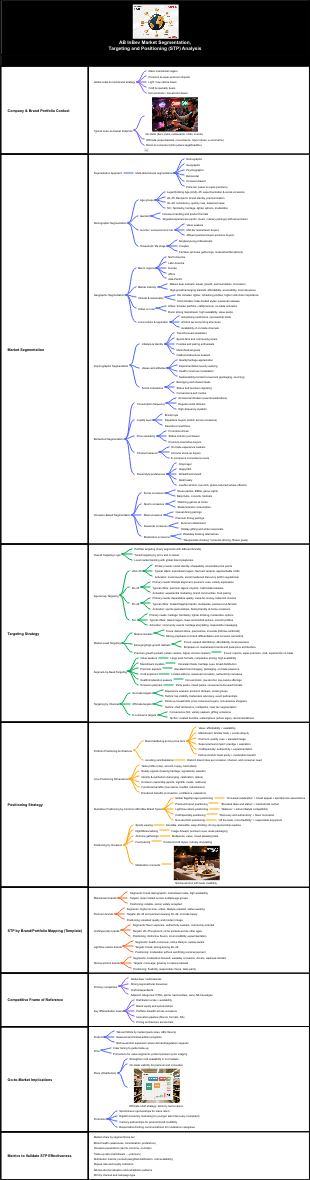
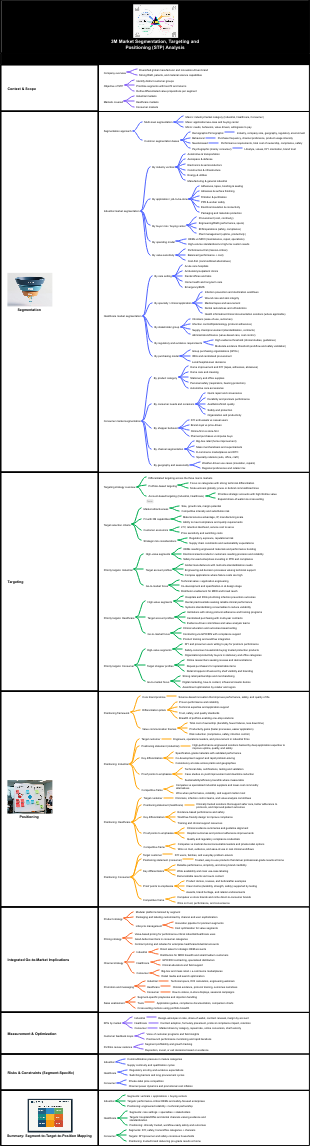
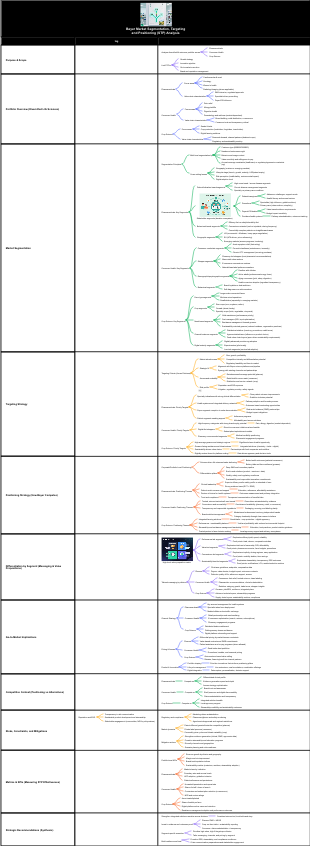
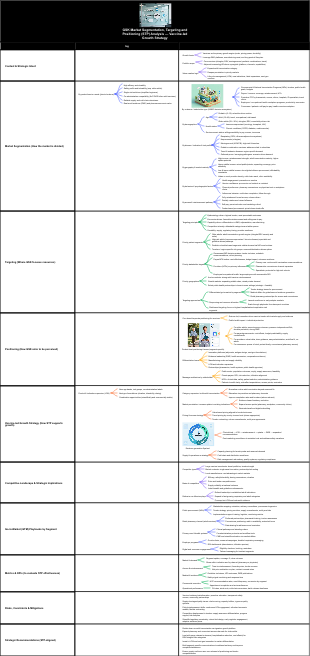
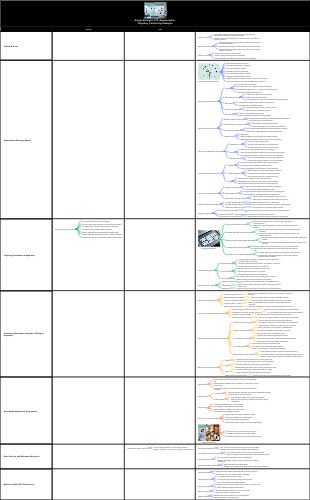
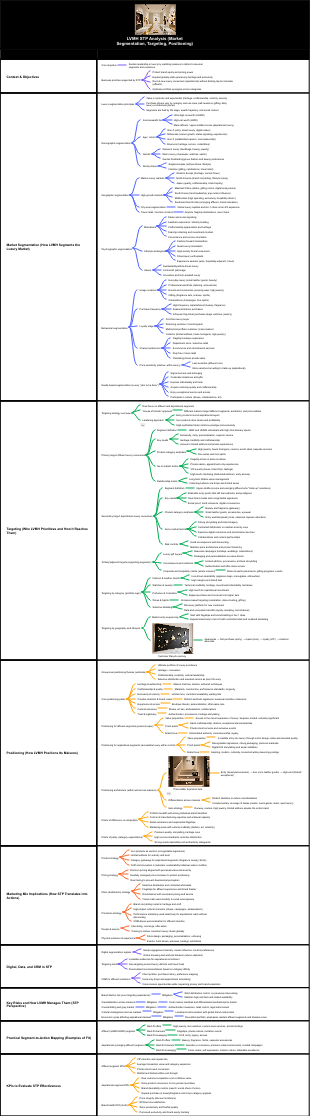
This mind map template provides a comprehensive framework for conducting STP (Segmentation, Targeting, Positioning) analysis for the Industrial and Commercial Bank of China (ICBC), offering a structured approach to understanding how a universal bank segments its markets, prioritizes targets, and articulates positioning themes. The template begins with clear objectives: identifying how ICBC segments markets across corporate, retail, and global banking, clarifying target priorities by segment, value, risk, and geography, and articulating positioning differentiators per business line. The context and assumptions section establishes ICBC’s universal banking model—characterized by a strong domestic base, expanding cross-border network, and core competencies in risk management, scale efficiencies, and digital delivery. The segmentation framework systematically deconstructs how ICBC splits the market across multiple dimensions: customer type (corporate, retail, institutional), size and value (mass market, affluent, HNW; SME, mid-market, large), needs-based (payments, credit, investment, trade, wealth, liquidity), risk profile, channel preference (branch-led, digital-first, API), geography, lifecycle stage, and product usage depth. The by firm size module provides granular segmentation across enterprise categories, including micro and small enterprises, SMEs, mid-market corporates, large corporates/national champions, state-owned enterprises, multinational corporations operating in or with China, and key industry verticals such as infrastructure, manufacturing, industrials, energy, and utilities. Designed for banking strategists, marketing professionals, business school students, and competitive intelligence analysts, this template delivers a systematic methodology for STP analysis in the financial services sector.
Edited at 2026-03-25 02:15:01Diese Vorlage ist ein umfassendes Managementtool für die systematische Planung und Umsetzung von Projektrisikomanagement, entwickelt für Projektmanager, Risikomanager und PMO. Sie kombiniert eine Risiko-Heatmap zur visuellen Klassifizierung von Risiken nach Wahrscheinlichkeit und Impact, mit klar definierten Risikostufen von Low bis Kritisch, sowie die vier zentralen Risikobehandlungsstrategien Avoid, Transfer, Mitigate und Accept, um eine strukturierte Risikobewertung und -steuerung zu gewährleisten. Ergänzt werden die Module durch Felder zur Festlegung von Version, Projekt/Paket und Zeitraum, um die kontinuierliche Überwachung und Anpassung der Risikostrategie zu ermöglichen. Die Vorlage standardisiert das Projektrisikomanagement, minimiert Projekt-Risiken durch unzureichende Risikosteuerung und unterstützt eine nachhaltige Projektstabilität, wobei sie flexibel anpassbar für Projekte jeder Größe und Branchen ist.

Diese Vorlage ist ein umfassendes Managementtool für die systematische Kontrolle und Analyse von Projektumfang, entwickelt für Projektmanager, PMO und Scope Manager. Sie gliedert das gesamte Umfangsmanagement in zwei zentrale Module, beginnend mit WBS Umfangsabschlüsselung zur hierarchischen Strukturierung des Projektumfangs in Lieferbare und zugehörige Arbeitspakete, um eine transparente und nachvollziehbare Projektstruktur zu schaffen, gefolgt von Geltungsbereichsgrenze / Ausschlüsse zur Definition von im Geltungsbereich befindlichen und ausgeschlossenen Inhalten, Annahmen, Einschränkungen sowie Schnittstellen und Abhängigkeiten, um Scope Creep und unkontrollierte Projektveränderungen zu verhindern. Ergänzt werden die Module durch Felder zur Festlegung von Version, Projekt und Ausgangsdatum, um die kontinuierliche Überwachung und Anpassung des Projektumfangs zu gewährleisten. Die Vorlage standardisiert das Umfangsmanagement, maximiert die Projekttransparenz und minimiert Risiken durch unzureichende Umfangssteuerung, wobei sie flexibel anpassbar für Projekte jeder Größe und Branchen ist.
Diese Vorlage ist ein umfassendes Managementtool für die systematische Planung und Umsetzung von Beschaffungs- und Vertragsmanagement in Projekten, entwickelt für Einkaufsmanager, Projektmanager und Vertragsmanager. Sie gliedert das gesamte Beschaffungsmanagement in zwei zentrale Module, beginnend mit End-to-End Phasenfluss zur strukturierten Abbildung des gesamten Beschaffungsprozesses von Lieferanten Sourcing über Präqualifizierung, Verhandlungen, Vertragsausarbeitung, Änderungskontrolle bis hin zu Akzeptanz und Closeout, um eine transparente und nachvollziehbare Beschaffungsabwicklung zu gewährleisten, gefolgt von Risiko- und Compliance-Checkpoints zur Festlegung von zentralen Prüfpunkten wie genehmigte Lieferantenliste, Kapazitätsprüfung, Umfangsklärungstor, Genehmigung von Variationsbestellung und Schließung der Punch List, um Beschaffungsrisiken und Compliance-Verstöße zu minimieren. Ergänzt werden die Module durch Felder zur Festlegung von Version, Paket/Umfang und Zeitraum, um die kontinuierliche Überwachung und Optimierung der Beschaffungsstrategie zu ermöglichen. Die Vorlage standardisiert das Beschaffungs- und Vertragsmanagement, maximiert die Lieferantenzusammenarbeit und minimiert Beschaffungsrisiken, wobei sie flexibel anpassbar für Unternehmen jeder Größe und Branchen ist.
Diese Vorlage ist ein umfassendes Managementtool für die systematische Planung und Umsetzung von Projektrisikomanagement, entwickelt für Projektmanager, Risikomanager und PMO. Sie kombiniert eine Risiko-Heatmap zur visuellen Klassifizierung von Risiken nach Wahrscheinlichkeit und Impact, mit klar definierten Risikostufen von Low bis Kritisch, sowie die vier zentralen Risikobehandlungsstrategien Avoid, Transfer, Mitigate und Accept, um eine strukturierte Risikobewertung und -steuerung zu gewährleisten. Ergänzt werden die Module durch Felder zur Festlegung von Version, Projekt/Paket und Zeitraum, um die kontinuierliche Überwachung und Anpassung der Risikostrategie zu ermöglichen. Die Vorlage standardisiert das Projektrisikomanagement, minimiert Projekt-Risiken durch unzureichende Risikosteuerung und unterstützt eine nachhaltige Projektstabilität, wobei sie flexibel anpassbar für Projekte jeder Größe und Branchen ist.
Diese Vorlage ist ein umfassendes Managementtool für die systematische Kontrolle und Analyse von Projektumfang, entwickelt für Projektmanager, PMO und Scope Manager. Sie gliedert das gesamte Umfangsmanagement in zwei zentrale Module, beginnend mit WBS Umfangsabschlüsselung zur hierarchischen Strukturierung des Projektumfangs in Lieferbare und zugehörige Arbeitspakete, um eine transparente und nachvollziehbare Projektstruktur zu schaffen, gefolgt von Geltungsbereichsgrenze / Ausschlüsse zur Definition von im Geltungsbereich befindlichen und ausgeschlossenen Inhalten, Annahmen, Einschränkungen sowie Schnittstellen und Abhängigkeiten, um Scope Creep und unkontrollierte Projektveränderungen zu verhindern. Ergänzt werden die Module durch Felder zur Festlegung von Version, Projekt und Ausgangsdatum, um die kontinuierliche Überwachung und Anpassung des Projektumfangs zu gewährleisten. Die Vorlage standardisiert das Umfangsmanagement, maximiert die Projekttransparenz und minimiert Risiken durch unzureichende Umfangssteuerung, wobei sie flexibel anpassbar für Projekte jeder Größe und Branchen ist.
Diese Vorlage ist ein umfassendes Managementtool für die systematische Planung und Umsetzung von Beschaffungs- und Vertragsmanagement in Projekten, entwickelt für Einkaufsmanager, Projektmanager und Vertragsmanager. Sie gliedert das gesamte Beschaffungsmanagement in zwei zentrale Module, beginnend mit End-to-End Phasenfluss zur strukturierten Abbildung des gesamten Beschaffungsprozesses von Lieferanten Sourcing über Präqualifizierung, Verhandlungen, Vertragsausarbeitung, Änderungskontrolle bis hin zu Akzeptanz und Closeout, um eine transparente und nachvollziehbare Beschaffungsabwicklung zu gewährleisten, gefolgt von Risiko- und Compliance-Checkpoints zur Festlegung von zentralen Prüfpunkten wie genehmigte Lieferantenliste, Kapazitätsprüfung, Umfangsklärungstor, Genehmigung von Variationsbestellung und Schließung der Punch List, um Beschaffungsrisiken und Compliance-Verstöße zu minimieren. Ergänzt werden die Module durch Felder zur Festlegung von Version, Paket/Umfang und Zeitraum, um die kontinuierliche Überwachung und Optimierung der Beschaffungsstrategie zu ermöglichen. Die Vorlage standardisiert das Beschaffungs- und Vertragsmanagement, maximiert die Lieferantenzusammenarbeit und minimiert Beschaffungsrisiken, wobei sie flexibel anpassbar für Unternehmen jeder Größe und Branchen ist.
ICBC Market Segmentation, Targeting and Positioning (STP) Analysis
Overview & Objectives
Purpose
Identify how ICBC segments markets across corporate, retail, and global banking
Clarify target priorities by segment, value, risk, and geography
Articulate positioning themes and differentiators per business line
Context & Assumptions
Universal banking model with strong domestic base and expanding cross-border network
Emphasis on risk management, scale efficiencies, and digital delivery
Market Segmentation
Segmentation Framework (How ICBC Splits the Market)
Customer type (corporate vs retail vs institutional)
Size/value (mass market, affluent, HNW; SME vs mid-market vs large)
Needs-based (payments, credit, investment, trade, wealth, liquidity)
Risk profile (credit quality, industry cyclicality, KYC/AML complexity)
Channel preference (branch-led, RM-led, digital-first, API/host-to-host)
Geography (domestic regions, tiered cities, overseas corridors)
Lifecycle (start-up/growth/mature; student/young professional/family/retiree)
Product usage (single-product vs multi-product relationship depth)
Segmentation combines who the client is, what they need, how they behave, and how risky/complex they are to serve.
Corporate Banking Segmentation
By firm size
Micro & Small Enterprises (MSEs)
Small & Medium Enterprises (SMEs)
Mid-market corporates
Large corporates / national champions
State-Owned Enterprises (SOEs)
Multinational Corporations (MNCs) operating in/with China
By industry
Infrastructure & construction
Manufacturing & industrials
Energy & utilities
Real estate & property-related supply chains
Technology/telecom
Healthcare & pharmaceuticals
Agriculture & food supply chain
Transportation & logistics
Trade & e-commerce platforms
By needs/solutions
Working capital & liquidity management
Trade finance (L/C, collections, guarantees)
Supply chain finance (anchor-led, distributor/dealer finance)
Cash management & treasury (collections, payroll, pooling)
Investment banking linkages (bonds, syndication, advisory) where permitted/partnered
FX & hedging for import/export clients
Custody/settlement for institutional-type corporates
By ownership/governance
SOE vs private enterprise vs foreign-invested
By relationship depth
Single-product borrowers
Primary bank relationships (multi-product, cash management)
Strategic accounts (full ecosystem and cross-border)
Retail Banking Segmentation
By income/wealth
Mass market depositors & borrowers
Emerging affluent
Affluent / Premier
High-Net-Worth (HNW) / Private banking
Ultra-HNW family office-style needs (selective)
By lifecycle & goals
Students/early career (payments, first credit, savings)
Young families (mortgage, education, protection)
Mid-career (investment, business-owner banking)
Pre-retirement/retirees (income products, preservation)
By needs/behaviors
Payments-heavy users (cards, mobile, transfers)
Credit seekers (mortgage, consumer loans)
Investors (funds, wealth products, brokerage access)
Protection-oriented (insurance-linked solutions)
Digital-first vs branch/RM-led
By geography
Tier 1–2 urban affluent clusters
Lower-tier cities and county markets (financial inclusion, deposits)
Cross-border retail (students abroad, migrants, travelers)
Global Banking Segmentation (Cross-border & Overseas)
By client type
Chinese corporates “going global” (outbound investment, overseas ops)
Global corporates trading/investing with China
Financial institutions (correspondent banking, clearing, custody)
Overseas Chinese communities / cross-border retail clients
By corridor/region
Asia-Pacific trade corridors
Europe–China trade and investment flows
Middle East energy and infrastructure flows
Africa infrastructure and resource corridors
Americas trade and capital flows
By service need
Cross-border RMB and FX settlement/clearing
Trade finance and guarantees
Cross-border cash management (multi-currency pooling where feasible)
Project and structured finance (selective, risk-controlled)
Syndicated loans and agency roles (where network permits)
Offshore/onshore linkage solutions (within regulation)
Targeting Strategy
Targeting Principles (What ICBC Prioritizes)
Scale + relationship depth (primary bank status, share of wallet)
Risk-adjusted returns (industry appetite, collateral, PD/LGD discipline)
Strategic alignment (national/strategic industries, policy priorities where relevant)
Cross-sell potential (payments + deposits + lending + wealth)
Operational efficiency (digital onboarding, automated servicing)
Compliance feasibility (KYC/AML complexity vs economic value)
Corporate Banking Targeting
Core targets
Large corporates and SOEs needing comprehensive financing + cash management
High-quality mid-market corporates with stable cash flows
Supply chain anchors enabling scalable SME financing
Exporters/importers with recurring trade flows needing trade finance + FX
Growth targets
Innovation-driven manufacturing and strategic emerging industries (selective underwriting)
Platform/e-commerce ecosystems for merchant acquisition and payments
Green/transition projects (where policy and risk metrics align)
Selective/defensive targets
Cyclical sectors managed with tighter limits and collateralization
Real estate exposure managed via prudential caps and differentiated sub-sectors
Targeting tactics
Key account management for strategic clients
Industry specialization teams for underwriting and solutioning
Ecosystem targeting (anchor → suppliers → distributors → employees)
Retail Banking Targeting
Core targets
Mass affluent and affluent households for deposits + wealth + mortgage
Payroll customers via corporate relationships (low-cost funding, cross-sell)
Mortgage-ready families in urban areas (risk-screened)
Growth targets
Digital-first young professionals (low-cost acquisition, high lifetime value)
Affluent upgrading into private banking
SME owners as hybrid retail-corporate clients (wealth + business finance)
Selective/defensive targets
Higher-risk unsecured lending segments controlled with scoring/limits
Fraud-prone channels managed with enhanced verification
Targeting tactics
Tiered customer programs (benefits by AUM/relationship)
Data-driven propensity models (next-best-offer)
Bundling (account + card + wealth + insurance)
Global Banking Targeting
Core targets
Chinese enterprises expanding overseas requiring integrated cross-border services
Trade corridor clients with frequent settlement needs
Financial institutions needing RMB clearing/correspondent services
Growth targets
Multinationals with China supply-chain dependencies
Overseas project finance aligned with risk and strategic corridors (selective)
Selective/defensive targets
Higher-sanctions-risk geographies and industries approached conservatively
Complex structures requiring heightened compliance resources
Targeting tactics
Corridor-focused coverage (relationship managers by region/industry)
Cross-border product bundles (settlement + trade finance + FX hedging)
Network leverage (branches/subsidiaries/partnerships for local access)
Positioning Strategy
Core Brand Positioning (Enterprise-wide)
“Trusted, large-scale universal bank” emphasizing stability, safety, and reliability
“Comprehensive solutions provider” across deposits, lending, payments, wealth, trade, and FX
“Network and reach” with broad domestic footprint and growing overseas presence
“Technology-enabled banking” improving convenience and efficiency
Corporate Banking Positioning
Value proposition
One-stop integrated financing + transaction banking for complex enterprises
Strong capacity for large-ticket financing and syndicated participation
Robust cash management and settlement infrastructure
Differentiators
Scale and balance-sheet strength
Deep domestic network for collections and regional coverage
Trade finance capabilities supporting import/export ecosystems
Relationship-driven coverage for strategic accounts
Proof points (typical)
Large client base and extensive branch network enabling service coverage
Capability to serve supply chains from anchor to SME tiers
Retail Banking Positioning
Value proposition
Safe place for savings + broad everyday banking convenience
Accessible wealth solutions with tiered advisory for affluent/HNW
End-to-end household financial lifecycle support (payments → credit → wealth)
Differentiators
Ubiquitous access (branches/ATMs + digital channels)
Strong trust perception and stability
Broad product shelf (deposit, credit, wealth, insurance-linked offerings)
Proof points (typical)
Large customer base enabling ecosystem benefits (payments, merchant acceptance)
Digital service improvements for account management and investing
Global Banking Positioning
Value proposition
Bridge between China and global markets for settlement, trade, and financing
RMB and FX capabilities for cross-border commerce
Network-supported service for clients operating in multiple jurisdictions
Differentiators
China connectivity (onshore expertise, client access)
Cross-border corridor specialization
Institutional-grade compliance and risk controls (positioned as confidence factor)
STP by Business Line (Summary Matrix)
Corporate
Segments: SOEs, large corporates, mid-market, SMEs, exporters/importers, industry verticals
Targets: strategic accounts, high-quality mid-market, supply-chain anchors, trade-intensive firms
Positioning: stable, large-capacity partner delivering integrated transaction + financing solutions
Retail
Segments: mass, emerging affluent, affluent, HNW; lifecycle and digital preference
Targets: mass affluent/affluent, payroll customers, mortgage households, digitally active youth
Positioning: trusted everyday bank with broad access and scalable wealth capabilities
Global
Segments: outbound Chinese corporates, inbound MNCs, FIs, corridor-based clients
Targets: China-linked trade/investment flows, RMB clearing needs, cross-border treasury clients
Positioning: China-global bridge bank with network reach and cross-border expertise
Implementation Enablers
Data & Analytics
Unified customer view across retail/corporate
Segmentation models (value, churn, propensity, risk)
Early warning systems for corporate and retail credit
Channel & Coverage Model
Corporate: key account teams + industry specialists + product experts
Retail: tiered RM coverage (affluent/HNW) + digital self-serve for mass
Global: corridor desks + local compliance-supported coverage
Product & Pricing
Relationship-based pricing (bundled benefits for deposits/settlement volume)
Risk-based pricing and limit setting
Packaged solutions (trade + FX + cash management; salary + consumer finance + wealth)
Risk, Compliance, and Governance
Sector limits and concentration management
KYC/AML screening and transaction monitoring (especially cross-border)
Conduct risk controls for wealth product suitability
Technology & Operations
Straight-through processing for payments and trade documentation where feasible
API/host-to-host connectivity for corporate treasury clients
Digital onboarding and remote servicing to reduce cost-to-serve
Key Performance Indicators (KPIs)
Corporate
Share of wallet, primary bank penetration, cash management volumes
Trade finance issuance and utilization
Risk-adjusted return (RAROC), NPL ratio, concentration metrics
Retail
Customer acquisition cost, active users, digital engagement
AUM growth by tier, wealth penetration rate
Net interest margin by segment, credit delinquency rates
Global
Cross-border settlement volumes (RMB/FX)
Trade corridor revenue, FI relationships
Compliance outcomes (alerts, remediation time), country/sector exposure limits
Strategic Insights & Implications
Corporate
Deepen ecosystem banking via supply chain finance and cash management stickiness
Balance scale lending with tighter sector risk governance
Retail
Move customers up the value ladder (mass → affluent → HNW) through tiered offers
Use digital to defend mass market and reduce servicing costs
Global
Prioritize China-linked corridors where ICBC has informational and network advantages
Compete on trust, compliance strength, and settlement infrastructure rather than price alone