MindMap Gallery Amgen Market Segmentation, Targeting and Positioning Analysis
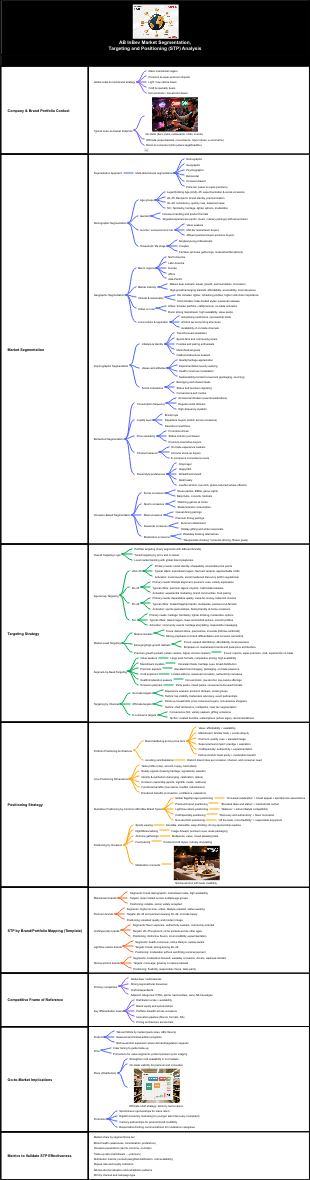
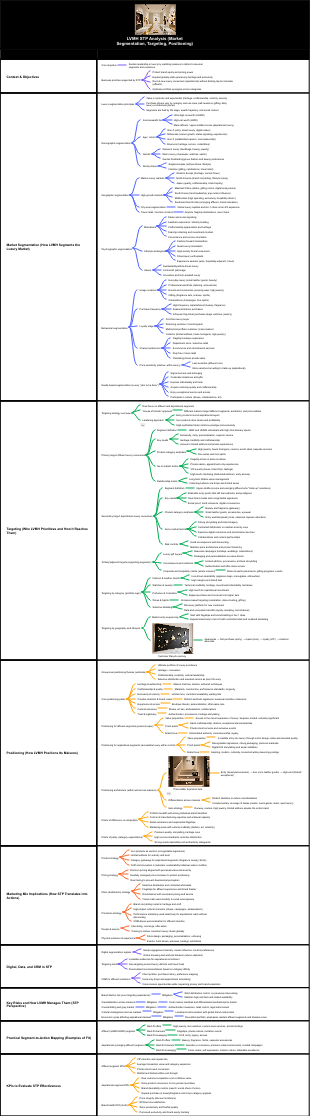
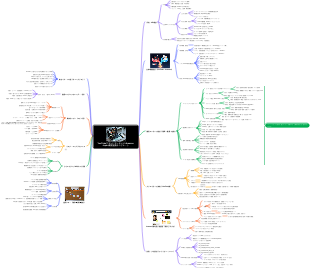
This analysis explores Amgen’s market segmentation, targeting, and positioning (STP) in the biopharmaceutical landscape, focusing on biologics (monoclonal antibodies, bispecifics, biosimilars). Biologics market characteristics: high costs (R&D, manufacturing), stringent regulations (FDA, EMA), complex administration (IV, SC), limited competition (biosimilars later). Differentiation: efficacy (response rates, survival), safety (side effects, monitoring), dosing (frequency, convenience), evidence (RCTs, real-world data). Segmentation strategy: Disease areas: oncology (multiple myeloma, lung cancer), inflammation (rheumatoid arthritis, psoriasis), cardiovascular (high cholesterol), rare diseases (acromegaly, hemophilia). Patient demographics: age, disease severity, prior treatments, comorbidities, genetics. Administration routes: IV (infusion center), SC (self-injection), oral (small molecule). Provider types: specialists (oncologists, rheumatologists), community vs. academic, infusion centers. Payer types: commercial, Medicare (Part B, D), Medicaid. Targeting: high-potential segments – rare diseases (unmet need, orphan designation), oncology (advanced, refractory), inflammation (biologic-naive, inadequate responders). Positioning: Amgen offers science-driven, high-efficacy biologics with robust patient support. Resonant positioning for stakeholders: patients (outcomes, QOL), providers (efficacy, safety, ease), payers (cost-effectiveness, budget impact). Amgen navigates complexity through clinical differentiation, patient support, and value-based pricing.
Edited at 2026-03-25 15:02:44Diese Vorlage ist ein umfassendes Managementtool für die systematische Planung und Umsetzung von Projektrisikomanagement, entwickelt für Projektmanager, Risikomanager und PMO. Sie kombiniert eine Risiko-Heatmap zur visuellen Klassifizierung von Risiken nach Wahrscheinlichkeit und Impact, mit klar definierten Risikostufen von Low bis Kritisch, sowie die vier zentralen Risikobehandlungsstrategien Avoid, Transfer, Mitigate und Accept, um eine strukturierte Risikobewertung und -steuerung zu gewährleisten. Ergänzt werden die Module durch Felder zur Festlegung von Version, Projekt/Paket und Zeitraum, um die kontinuierliche Überwachung und Anpassung der Risikostrategie zu ermöglichen. Die Vorlage standardisiert das Projektrisikomanagement, minimiert Projekt-Risiken durch unzureichende Risikosteuerung und unterstützt eine nachhaltige Projektstabilität, wobei sie flexibel anpassbar für Projekte jeder Größe und Branchen ist.

Diese Vorlage ist ein umfassendes Managementtool für die systematische Kontrolle und Analyse von Projektumfang, entwickelt für Projektmanager, PMO und Scope Manager. Sie gliedert das gesamte Umfangsmanagement in zwei zentrale Module, beginnend mit WBS Umfangsabschlüsselung zur hierarchischen Strukturierung des Projektumfangs in Lieferbare und zugehörige Arbeitspakete, um eine transparente und nachvollziehbare Projektstruktur zu schaffen, gefolgt von Geltungsbereichsgrenze / Ausschlüsse zur Definition von im Geltungsbereich befindlichen und ausgeschlossenen Inhalten, Annahmen, Einschränkungen sowie Schnittstellen und Abhängigkeiten, um Scope Creep und unkontrollierte Projektveränderungen zu verhindern. Ergänzt werden die Module durch Felder zur Festlegung von Version, Projekt und Ausgangsdatum, um die kontinuierliche Überwachung und Anpassung des Projektumfangs zu gewährleisten. Die Vorlage standardisiert das Umfangsmanagement, maximiert die Projekttransparenz und minimiert Risiken durch unzureichende Umfangssteuerung, wobei sie flexibel anpassbar für Projekte jeder Größe und Branchen ist.
Diese Vorlage ist ein umfassendes Managementtool für die systematische Planung und Umsetzung von Beschaffungs- und Vertragsmanagement in Projekten, entwickelt für Einkaufsmanager, Projektmanager und Vertragsmanager. Sie gliedert das gesamte Beschaffungsmanagement in zwei zentrale Module, beginnend mit End-to-End Phasenfluss zur strukturierten Abbildung des gesamten Beschaffungsprozesses von Lieferanten Sourcing über Präqualifizierung, Verhandlungen, Vertragsausarbeitung, Änderungskontrolle bis hin zu Akzeptanz und Closeout, um eine transparente und nachvollziehbare Beschaffungsabwicklung zu gewährleisten, gefolgt von Risiko- und Compliance-Checkpoints zur Festlegung von zentralen Prüfpunkten wie genehmigte Lieferantenliste, Kapazitätsprüfung, Umfangsklärungstor, Genehmigung von Variationsbestellung und Schließung der Punch List, um Beschaffungsrisiken und Compliance-Verstöße zu minimieren. Ergänzt werden die Module durch Felder zur Festlegung von Version, Paket/Umfang und Zeitraum, um die kontinuierliche Überwachung und Optimierung der Beschaffungsstrategie zu ermöglichen. Die Vorlage standardisiert das Beschaffungs- und Vertragsmanagement, maximiert die Lieferantenzusammenarbeit und minimiert Beschaffungsrisiken, wobei sie flexibel anpassbar für Unternehmen jeder Größe und Branchen ist.
Diese Vorlage ist ein umfassendes Managementtool für die systematische Planung und Umsetzung von Projektrisikomanagement, entwickelt für Projektmanager, Risikomanager und PMO. Sie kombiniert eine Risiko-Heatmap zur visuellen Klassifizierung von Risiken nach Wahrscheinlichkeit und Impact, mit klar definierten Risikostufen von Low bis Kritisch, sowie die vier zentralen Risikobehandlungsstrategien Avoid, Transfer, Mitigate und Accept, um eine strukturierte Risikobewertung und -steuerung zu gewährleisten. Ergänzt werden die Module durch Felder zur Festlegung von Version, Projekt/Paket und Zeitraum, um die kontinuierliche Überwachung und Anpassung der Risikostrategie zu ermöglichen. Die Vorlage standardisiert das Projektrisikomanagement, minimiert Projekt-Risiken durch unzureichende Risikosteuerung und unterstützt eine nachhaltige Projektstabilität, wobei sie flexibel anpassbar für Projekte jeder Größe und Branchen ist.
Diese Vorlage ist ein umfassendes Managementtool für die systematische Kontrolle und Analyse von Projektumfang, entwickelt für Projektmanager, PMO und Scope Manager. Sie gliedert das gesamte Umfangsmanagement in zwei zentrale Module, beginnend mit WBS Umfangsabschlüsselung zur hierarchischen Strukturierung des Projektumfangs in Lieferbare und zugehörige Arbeitspakete, um eine transparente und nachvollziehbare Projektstruktur zu schaffen, gefolgt von Geltungsbereichsgrenze / Ausschlüsse zur Definition von im Geltungsbereich befindlichen und ausgeschlossenen Inhalten, Annahmen, Einschränkungen sowie Schnittstellen und Abhängigkeiten, um Scope Creep und unkontrollierte Projektveränderungen zu verhindern. Ergänzt werden die Module durch Felder zur Festlegung von Version, Projekt und Ausgangsdatum, um die kontinuierliche Überwachung und Anpassung des Projektumfangs zu gewährleisten. Die Vorlage standardisiert das Umfangsmanagement, maximiert die Projekttransparenz und minimiert Risiken durch unzureichende Umfangssteuerung, wobei sie flexibel anpassbar für Projekte jeder Größe und Branchen ist.
Diese Vorlage ist ein umfassendes Managementtool für die systematische Planung und Umsetzung von Beschaffungs- und Vertragsmanagement in Projekten, entwickelt für Einkaufsmanager, Projektmanager und Vertragsmanager. Sie gliedert das gesamte Beschaffungsmanagement in zwei zentrale Module, beginnend mit End-to-End Phasenfluss zur strukturierten Abbildung des gesamten Beschaffungsprozesses von Lieferanten Sourcing über Präqualifizierung, Verhandlungen, Vertragsausarbeitung, Änderungskontrolle bis hin zu Akzeptanz und Closeout, um eine transparente und nachvollziehbare Beschaffungsabwicklung zu gewährleisten, gefolgt von Risiko- und Compliance-Checkpoints zur Festlegung von zentralen Prüfpunkten wie genehmigte Lieferantenliste, Kapazitätsprüfung, Umfangsklärungstor, Genehmigung von Variationsbestellung und Schließung der Punch List, um Beschaffungsrisiken und Compliance-Verstöße zu minimieren. Ergänzt werden die Module durch Felder zur Festlegung von Version, Paket/Umfang und Zeitraum, um die kontinuierliche Überwachung und Optimierung der Beschaffungsstrategie zu ermöglichen. Die Vorlage standardisiert das Beschaffungs- und Vertragsmanagement, maximiert die Lieferantenzusammenarbeit und minimiert Beschaffungsrisiken, wobei sie flexibel anpassbar für Unternehmen jeder Größe und Branchen ist.
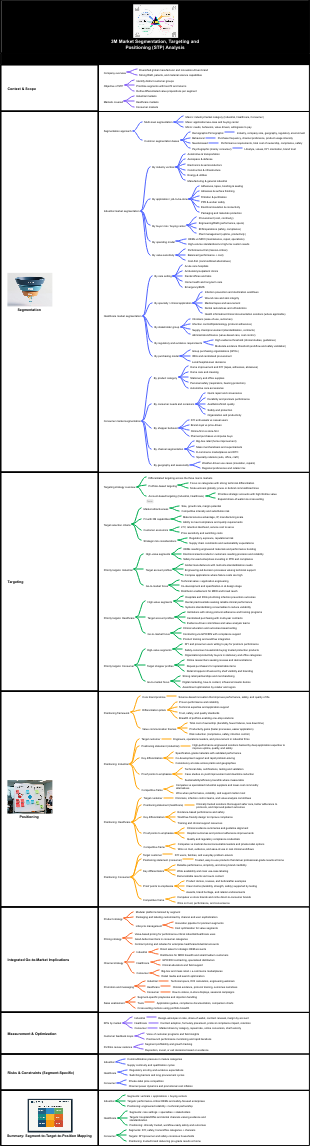
Amgen Biologics STP (Segmentation, Targeting, Positioning) Analysis
Context & Scope
Company context
Global biopharmaceutical company with strengths in biologics discovery, development, manufacturing, and commercialization
Portfolio includes monoclonal antibodies, recombinant proteins, biosimilars, and specialty medicines
Market context (biologics)
High clinical complexity; stringent regulatory requirements; cold-chain and specialized administration
High COGS and R&D; payer scrutiny and value demonstration essential
Differentiation driven by efficacy, safety, dosing convenience, real-world evidence, and services
Objectives of STP
Identify actionable biologics market segments
Prioritize targets with strongest fit and value potential
Define positioning that resonates with clinical and economic stakeholders
Segmentation (Biologics Market)
Segmentation dimensions overview
Disease/therapy area and unmet need
Patient phenotype/biomarkers and severity
Site of care and delivery modality
Prescriber specialty and care pathway
Payer type and reimbursement constraints
Geography and healthcare system maturity
Competitive intensity (innovators, biosimilars, small molecules, generics)
Value drivers (outcomes, total cost of care, adherence, convenience)
Therapy-area segmentation (macro)
Oncology
Tumor type (solid vs hematologic)
Line of therapy (1L, 2L+, maintenance, adjuvant/neoadjuvant)
Biomarker-defined populations (e.g., receptor status, mutation-positive)
Combination compatibility and sequencing
Inflammation/Immunology
Indications (e.g., RA, psoriasis, IBD, asthma)
Disease severity and flare frequency
Prior biologic exposure (naïve vs experienced; primary/secondary failure)
Bone health
Postmenopausal vs glucocorticoid-induced vs high-fracture-risk
Prior fracture history and BMD thresholds
Cardiovascular/metabolic
High-risk secondary prevention vs primary prevention
Statin intolerance or residual risk segments
Rare disease
Ultra-rare vs rare; diagnostic journey length
Genetic confirmation and newborn screening availability
Patient-level segmentation (micro)
Biomarker/companion diagnostics
Biomarker-positive responders vs biomarker-negative/non-responders
Diagnostic access and turnaround times
Clinical severity and comorbidity burden
Mild/moderate vs severe/refractory disease
Multi-morbidity affecting safety monitoring and adherence
Demographic and behavioral
Age cohorts impacting administration preference (self-inject vs infusion)
Health literacy, digital engagement, treatment persistence risk
Treatment history
Biologic-naïve
Switching candidates (loss of response, AEs, formulary changes)
Multi-failure/refractory patients (high unmet need, higher risk/monitoring)
Site-of-care and administration segmentation
Administration route
IV infusion (hospital, infusion center)
SC injection (clinic-administered vs self-administered)
On-body devices/autoinjectors (ease-of-use segment)
Setting
Academic centers (specialist-led, trial-driven, early adopters)
Community practices (workflow simplicity and reimbursement logistics critical)
Home infusion/home injection (convenience, payer rules, nursing support)
Monitoring intensity
High-monitoring biologics (lab tests, infection risk management)
Lower-monitoring options (preferred by resource-limited sites)
Customer and stakeholder segmentation
Prescribers
Key opinion leaders (guideline influence, early evidence adoption)
High-volume community specialists (efficiency-driven)
Primary care gatekeepers (referral dynamics in some indications)
Providers/organizations
IDNs/hospital systems (protocol and formulary committees)
Specialty pharmacies (distribution, adherence programs)
Infusion networks (chair time, buy-and-bill economics)
Payers
Commercial plans (rebates, step edits, prior authorization)
Medicare/Medicaid (coverage rules, ASP dynamics, access variability)
Integrated payers/providers (outcomes-based contracting receptivity)
Economic and access segmentation
Budget impact sensitivity
High-cost biologic categories with strict utilization management
Lower budget impact niches allowing faster uptake
Reimbursement model
Buy-and-bill (provider margin sensitivity; acquisition cost management)
Specialty pharmacy (patient affordability and refill adherence)
Price elasticity and willingness to pay
Premium segment (clear differentiation, high unmet need)
Value segment (comparable outcomes; prefers lower net cost)
Competitive landscape segmentation
Innovator-dominated segment
Differentiation via superior outcomes or convenience
Biosimilar-competitive segment
Net price, contracting, interchangeability perceptions, switching support
Small-molecule alternative segment
Oral convenience vs biologic efficacy/safety trade-offs
Geographic segmentation
Mature markets (US, EU5, Japan)
Strong payer management; high evidence requirements; established biologics use
Growth markets
Variable biologics access; infrastructure constraints; pricing pressure
Local regulatory and tender dynamics
Hospital tenders and national procurement impacting biosimilar adoption
Targeting (Prioritization of Segments)
Targeting criteria (biologics-specific)
Unmet medical need and clinical value potential
Size and growth (incidence/prevalence trends; earlier-line expansion)
Accessibility (payer coverage, guideline alignment, pathway fit)
Competitive intensity and differentiation sustainability
Evidence readiness (trial data, RWE feasibility, HEOR strength)
Operational feasibility (manufacturing capacity, cold-chain, distribution)
Profitability and lifecycle runway (indication expansion, label durability)
Priority target archetypes
High-unmet-need refractory patients
Rationale: strong willingness to try innovative biologics; high value of incremental benefit
Requirements: robust safety/benefit-risk narrative; support services; specialist education
Biomarker-defined high-responder populations
Rationale: higher response rates enable premium positioning and payer acceptance
Requirements: diagnostic partnerships; testing access programs; clear treatment algorithms
Earlier-line segments with compelling differentiation
Rationale: larger addressable population; durable market share if embedded in guidelines
Requirements: head-to-head/indirect comparative evidence; strong real-world outcomes
Convenience-driven switch segments
Rationale: adoption based on dosing frequency, device, administration setting
Requirements: patient experience proof; training; adherence and persistence data
Biosimilar conversion segments (if applicable)
Rationale: payer-driven demand for cost savings; broad volume potential
Requirements: interchangeability strategy, switching data, contracting, pharmacovigilance confidence
Customer targeting approach
Prescriber targeting
Identify high-impact specialties per indication (oncology, rheumatology, gastroenterology, endocrinology)
Segment by adoption behavior (innovators, early adopters, conservative)
Prioritize high-volume prescribers and referral hubs
Account targeting
IDNs and top systems with centralized formulary control
High-throughput infusion centers for IV products
Specialty pharmacy networks for SC self-injectables
Payer targeting
Plans with high disease burden and openness to outcomes contracts
Employers seeking productivity and total cost-of-care benefits
Access and evidence targeting
Pathway inclusion targeting
Guidelines, clinical pathways, order sets, and EMR prompts
HEOR targeting
Segment-specific models (hospitalizations avoided, steroid sparing, fracture reduction, PFS)
RWE targeting
Registries and claims-based studies to address payer and provider objections
Positioning (How Amgen Competes in Biologics Segments)
Positioning foundations (biologics)
Clinically meaningful outcomes
Superior efficacy vs standard of care (response rates, durability, survival, flare reduction)
Differentiated safety and tolerability
Lower immunogenicity, fewer serious AEs, manageable monitoring
Convenience and patient experience
Less frequent dosing, faster administration, home use, device usability
Total value (clinical + economic)
Reduced hospitalizations, fewer complications, improved adherence and persistence
Reliability and supply assurance
High-quality manufacturing, continuity of supply, pharmacovigilance strength
Core positioning themes (adaptable by segment)
Science-led biologics with proven outcomes
Emphasize strong clinical evidence and mechanistic rationale
Integrated value for patients, providers, and payers
Pair outcomes with access support and economic justification
Confidence in quality and supply
Particularly important in biosimilar and high-volume segments
Patient-centric delivery and support
Training, nurse support, affordability programs, digital adherence tools
Segment-specific positioning examples (templates)
Refractory/high-severity segment
Promise: meaningful improvement when other options fail
Proof: efficacy in hard-to-treat cohorts; durability; manageable safety
Support: specialist education, monitoring tools, patient navigation
Biomarker-defined responders
Promise: right therapy for the right patient, predictable benefit
Proof: biomarker-stratified outcomes; diagnostic accuracy
Support: testing access, clinical decision support
Convenience-driven switchers
Promise: similar or better control with simpler regimen
Proof: non-inferiority/superiority; adherence/persistence advantages
Support: device training, home delivery, refill reminders
Payer value segment
Promise: better outcomes at sustainable net cost
Proof: budget impact models; RWE; pathway alignment
Support: contracting options, outcomes-based agreements
Biosimilar segment (where relevant)
Promise: trusted, high-quality alternative with meaningful savings
Proof: totality-of-evidence comparability; switching data; safety surveillance
Support: conversion toolkits, reimbursement assistance, supply reliability
Messaging hierarchy by stakeholder
Patients
Outcomes that matter (symptom control, function, quality of life)
Convenience and support (injection comfort, training, affordability)
HCPs
Evidence and guidelines; patient selection; safety management
Practical workflow: administration time, monitoring, reimbursement clarity
Payers
Comparative effectiveness, cost offsets, adherence, risk sharing
Population management tools and utilization criteria alignment
Health systems/formulary committees
Protocol fit, total cost of care, operational burden, inventory/supply
Go-to-Market Implications (By Segment)
Product strategy
Indication sequencing: start with high-unmet-need niches → expand earlier lines
Formulation/device: prefilled syringes, autoinjectors, on-body delivery to unlock home segment
Combination and lifecycle: new dosing schedules, new presentations, label expansions
Evidence strategy
Clinical trials
Endpoints aligned to stakeholder needs (PROs, hospitalizations, durability)
Pragmatic trials for real-world relevance
HEOR and RWE
Cost-effectiveness, budget impact, and outcomes registries
Subgroup analyses aligned to segmentation (biomarkers, severity, comorbidities)
Access strategy
Contracting and rebates tailored to payer segments
Prior authorization support aligned to clinical criteria
Specialty distribution optimization (SP vs buy-and-bill)
Patient assistance and affordability programs
Field force and engagement strategy
KOL development in academic centers for credibility
Community specialist focus for volume growth
Account teams for IDNs and large payers
Omnichannel education: webinars, clinical tools, digital detailing
Patient services strategy
Injection training, nurse hotline, adherence programs
Home delivery coordination and cold-chain handling
Side-effect management education and monitoring reminders
Risks, Barriers, and Mitigations (Biologics)
Access and pricing pressure
Risk: step edits, non-preferred status, aggressive rebate competition
Mitigation: strong HEOR, outcomes contracts, pathway integration
Immunogenicity and safety perceptions
Risk: switching hesitancy; black box warnings; monitoring burden
Mitigation: transparent safety data, education, pharmacovigilance programs
Operational and supply constraints
Risk: manufacturing capacity, cold-chain failures, shortages
Mitigation: redundancy, quality systems, supply assurance messaging
Competitive responses
Risk: new entrants, biosimilar price erosion, oral alternatives
Mitigation: differentiation via device, dosing, evidence, services, lifecycle management
Regulatory and labeling limitations
Risk: limited claims reduce differentiation
Mitigation: post-marketing studies, RWE, and permissible scientific exchange
Metrics and KPIs (STP Performance)
Segmentation health
Share within priority segments (biomarker-positive, refractory, early-line)
Penetration by site of care (infusion centers vs home/clinic)
Targeting effectiveness
HCP adoption rates by prescriber segment
Formulary wins and pathway placements in priority accounts
Payer coverage breadth and restriction intensity
Positioning resonance
Message recall and preference drivers (efficacy, safety, convenience, value)
Patient satisfaction and device usability scores
Business outcomes
New starts, persistence, adherence, discontinuation reasons
Net revenue, gross-to-net, contracting ROI
Evidence impact
RWE publication output and influence on coverage/guidelines
HEOR model adoption in payer discussions