MindMap Gallery Main properties of cement concrete
Civil engineering materials - the main properties of cement concrete. This diagram evaluates the performance of concrete mixtures and the strength of hardened concrete. I hope this mental diagram will be helpful to you.
Edited at 2023-07-27 12:21:00This is a mind map about bacteria, and its main contents include: overview, morphology, types, structure, reproduction, distribution, application, and expansion. The summary is comprehensive and meticulous, suitable as review materials.

This is a mind map about plant asexual reproduction, and its main contents include: concept, spore reproduction, vegetative reproduction, tissue culture, and buds. The summary is comprehensive and meticulous, suitable as review materials.
This is a mind map about the reproductive development of animals, and its main contents include: insects, frogs, birds, sexual reproduction, and asexual reproduction. The summary is comprehensive and meticulous, suitable as review materials.
This is a mind map about bacteria, and its main contents include: overview, morphology, types, structure, reproduction, distribution, application, and expansion. The summary is comprehensive and meticulous, suitable as review materials.
This is a mind map about plant asexual reproduction, and its main contents include: concept, spore reproduction, vegetative reproduction, tissue culture, and buds. The summary is comprehensive and meticulous, suitable as review materials.
This is a mind map about the reproductive development of animals, and its main contents include: insects, frogs, birds, sexual reproduction, and asexual reproduction. The summary is comprehensive and meticulous, suitable as review materials.
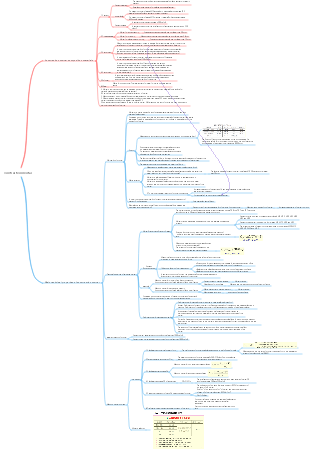
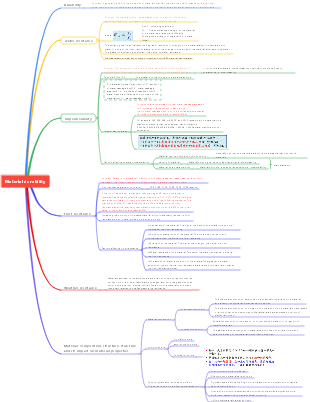
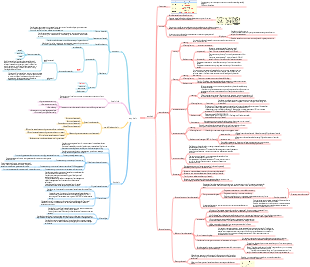
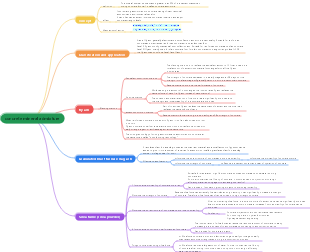
Main properties of cement concrete
evaluate Properties of concrete mixes
1. Workability
concept
Concrete mixtures are convenient for construction operations (mixing, transportation, pouring, and vibrating) under certain construction conditions. And can obtain the properties of uniform quality and dense molding - called "workability".
fluidity
1. Easy to form and dense
cohesiveness
Water retention
Easy to reach uniform structure
Ensure the quality of concrete after hardening
It refers to the performance of the concrete mixture that can flow under its own weight or external force and fill the formwork surface evenly and densely.
It means that there is a certain cohesion between the materials of the concrete mixture, so that delamination and segregation will not occur during construction.
It means that the concrete mixture has a certain ability to retain moisture and prevent it from leaking out.
Evaluation methods and indicatorsP79
fluidity
Slump: suitable for plastic concrete and fluid concrete
The slump expansion that should be measured when the slump is >220mm
Concrete with a mixture slump of zero is difficult to pour and form. When the pouring density is not guaranteed, the strength of the concrete will be reduced.
Weibo consistency method: suitable for dry hard concrete
The factors that affect fluidity are not only the cement dosage, but also the addition of admixtures and admixtures.
cohesiveness
Look at the state of the mixture cone
Poor cohesion → Concrete will appear delamination and segregation (cement slurry will float, aggregates will sink, and concrete will be uneven) →After the formwork is removed, honeycomb pitting will appear on the concrete, and in severe cases, cavities will appear.
Water retention
Check to see if there is slurry or water secreted out
Poor water retention → concrete will appear slurry and bleeding → the density of hardened concrete will become worse.
Selection of fluidity (slump) indicators
The fluidity (slump) of the concrete mixture should be determined based on the structure type, component cross-section size, steel bar density, construction technology and tamping method. The basic principles are:
(1) When the cross-sectional size of the structure or components is large, select a smaller slump.
(2) When the steel bars of the structure and components are sparsely arranged, select a smaller slump.
(3) When mechanically vibrating, choose a smaller slump; when manually vibrating, choose a larger slump.
(4) The principle of selecting slump should be to use a smaller slump as much as possible to save cement and obtain higher quality concrete under the conditions of meeting the construction requirements.
Factors affecting the workability of concrete mixture P79
①Unit water consumption W (cement slurry consumption)
②Water-cement ratio W/B or water-cement ratio W/C (slurry thickness)
③Sand content (Bs or Sp)
④Constituting material properties
⑤Storage time and ambient temperature
⑥Construction technology, etc.
Measures to improve the workability of concrete mixtures83
Adjust material composition
Adding additives and admixtures
Improve vibrating equipment performance
When the concrete mixture has good cohesion, no bleeding, and the slump is too small, the available measures are: appropriately increase the amount of cement slurry while keeping the water-cement ratio unchanged.
As the fluidity of ordinary concrete increases, its water retention will become worse.
When there is slurry in the concrete mixture and the concrete cone collapses and loosens in the slump test, the amount of sand should be kept unchanged and the sand rate should be increased appropriately.
The larger the slump, the better the fluidity of the concrete and the easier the construction. However, if the slump is too large, it will be accompanied by concrete slurry and bleeding (i.e., deterioration of cohesion and water retention), which will worsen the compactness and uniformity of the concrete after vibration.
2. Condensation time P83
·The setting time of the concrete mixture is related to the setting time of the cement used, but it is not consistent. ·Setting time of concrete mixture: measured by "penetration resistance method".
Strength of hardened concrete
concrete strength
1. Cube compressive strength and strength grade
"C" is the concrete strength symbol, and the number after "C" is the standard value of concrete cube compressive strength.
For hydraulic mass concrete, the design age is generally not 28d, but 90d or 180d.
Strength conversion coefficient P85
When using a cube specimen with a side length of 100 mm, the size conversion factor is 0.95
2 Axial compressive strength of concrete
3Splitting tensile strength
The splitting tensile strength is low, generally 1/10 to 1/20 of the compressive strength.
4 Factors Affecting the Compressive Strength of Concrete
Cement strength and water-cement ratio
A. Decreases as the water-binder ratio increases. B. If there is too much cement, the water-cement ratio will be too small, the concrete will be dry and thick, the concrete will be difficult to form and not dense, and the strength will be reduced.
The 28d strength of ordinary concrete is linearly related to its cement-to-cement ratio (i.e., the reciprocal of the water-to-cement ratio).
⑵Quality and variety of aggregates
When the cement stone strength and other conditions are the same → the strength of gravel concrete is higher than that of pebble concrete.
⑶Maintenance conditions
Under humid environmental conditions, the strength of concrete continues to grow.
The curing temperature of concrete should not be higher than 40℃ and not lower than 4℃. The suitable curing temperature is 5~35℃.
(4) Maintenance period
The strength of concrete increases with age, significantly in the early stage and gradually slowly in the later stage.
(5)Test conditions
Test loading speed, specimen shape, size and surface condition.
(6)Construction technology
Mechanical mixing, mechanical vibration, SEC method, pumping construction, etc. are all beneficial to improving the strength of concrete.
5 Measures to Improve Concrete Strength
①Using high-strength cement and low water-cement ratio
If the W/C is too low, the concrete will be dry and thick and difficult to construct. When the pouring density cannot be guaranteed, the strength of the concrete will be reduced.
②Incorporate concrete admixtures and admixtures ③Use moist heat treatment (steam curing, autoclave curing) ④Use mechanical stirring and vibration
Deformation properties of concrete
Chemical shrinkage (autogenous volumetric deformation)
The shrinkage value is small and cannot be restored. It has no destructive effect on the concrete structure, but micro cracks may occur inside the concrete and affect the load-bearing performance and durability.
Dry and wet deformation (physical shrinkage) Concrete shrinkage cracks are caused by physical shrinkage
Beneficial deformation of concrete
The wet expansion deformation of concrete is very small and generally has no destructive effect.
Dry shrinkage deformation is more harmful to concrete. Dry shrinkage can cause greater tensile stress on the surface of the concrete and lead to cracking, thereby reducing the durability of the concrete such as impermeability, frost resistance, and erosion resistance.
temperature deformation
Temperature deformation refers to the thermal expansion and contraction deformation of concrete as the temperature changes.
When the temperature changes greatly, it will have an impact on the concrete; in addition, the large temperature difference between the inside and outside of the concrete structure will also lead to temperature deformation of the concrete, which can easily cause temperature cracks in the concrete.
Deformation under short-term loading (elastoplastic deformation)
The deformation and damage of concrete under short-term load is mainly due to the occurrence of plastic degeneration of concrete, which causes internal cracks and gradually expands.
Deformation (creep) under long-term loading
The phenomenon that the deformation of concrete increases with time under continuous load is called creep.
concrete durability
Definition: The ability of concrete to resist the effects of environmental factors and maintain its good performance and appearance integrity, thereby maintaining the safety and normal use of the concrete structure, is called the durability of concrete.
1.Impermeability
Concept: Concrete impermeability - the ability of concrete to resist the penetration of pressure water. (It is not only related to the water-retaining and waterproofing effect of concrete, but also directly affects the frost resistance and erosion resistance of concrete.)
Water-binder ratio (W/B) → directly affects the impermeability of concrete.
For details, see Chapter 1: Material Durability
For C30 concrete with an impermeability grade of w8, its water-cement ratio should not be greater than (0.55). P94
2. Frost resistance
Concept: Frost resistance of concrete - refers to the ability of concrete to resist freeze-thaw cycles (center temperature of specimen [-18±2]℃~[5±2]℃) without damage when in a water-saturated state. Strength There is also no significant performance degradation.
Concrete anti-freeze grade: expressed by the maximum number of freeze-thaw cycles it can withstand when the relative dynamic elastic modulus drops to 60% of the initial value or the mass loss reaches 5% under saturated water conditions. Such as: F50, F100, F150, F200, F250, F300.
Water-binder ratio (W/B) → is the main factor affecting the frost resistance of concrete.
The main measures to improve the impermeability and frost resistance of concrete are ()
Improve construction technology and adopt a reasonable maintenance system to improve concrete density
Control the maximum water-cement ratio and minimum cement dosage
Reasonable selection of cement and aggregates
Add air-entraining agents to improve pore characteristics and reduce open connected pores
3. Anti-wear and anti-cavitation properties
Spillway concrete (suffered by sand-laden high-speed water flow), road pavement concrete (suffered from repeated impact loads and cyclic wear), etc., require high wear resistance.
For structures such as channels and spillways with uneven surfaces, sudden changes in section, or sharp turns, the concrete is required to have anti-cavitation properties to avoid cavitation when high-speed water flows through it, causing high-frequency, local, and Impact stress causes concrete erosion.
4.Corrosion resistance
When concrete is corroded by environmental water, the essence is that the cement stone structure is corroded.
5. Carbonization of concrete
CO2 in the air diffuses into the interior of the concrete through the capillary pores. In the presence of moisture, it reacts with Ca(OH)2 to form CaCO3, which reduces the concentration of Ca(OH)2 in the concrete, which is called "carbonization ( or neutral)".
Main factors affecting carbonization
CO2 concentration
High concentration → fast carbonization speed
environment humidity
Air with relative humidity of 50%-75% → carbonization is the fastest
Concrete mix ratio
Portland cement using mixed materials → poor carbonation resistance
Beneficial effects of carbonization
The CaCO3 generated by carbonization fills the pores → the density of concrete increases. Carbonization produces water → promotes further hydration of cement → improves the strength of concrete.
Adverse effects of carbonization
Reduce the alkalinity of concrete → weaken the protective effect of steel bars
Causes corrosion of steel bars
Causes the concrete to shrink → produce micro cracks on the surface.
Reduce the tensile and flexural strength of concrete.
Alkali-aggregate reaction
Excessive alkali in the raw materials of concrete will react with the active ingredients in the aggregate. The reaction products will absorb water and expand, causing internal stress in the concrete, causing the concrete to expand, crack, and lose design properties. This phenomenon is collectively called "alkali-active aggregate reaction" .
Soluble base (Na2o, K2o)
Alkali-carbonate reaction
Alkali-silicate reaction
① Excessive alkali content: The alkali content in concrete is high (For example, the alkali equivalent content of cement is >0.6% or the alkali content of concrete is >3kg/m3).
②Active aggregate: The aggregate contains active ingredients and exceeds a certain amount.
③Moisture: Humid environment, with sufficient supply of moisture or humid air.
Concrete expands, cracks, and even destroys
Precautions
① Try to choose inactive aggregates.
②Choose low-alkali cement and control the total alkali content in the concrete.
③ Add active admixtures into concrete.
④Improve the pore structure of concrete.
⑤Improve the use conditions and carry out protective treatment on the concrete surface.
Measures to improve the durability of concrete
① Check the quality of the constituent materials.
(Reasonably select cement varieties; use well-graded aggregates, and strictly control the content of harmful impurities.)
② Strictly control the water-cement ratio and ensure the amount of cement.
③Appropriately mix admixtures (such as water-reducing agents and air-entraining agents).
④ Check the construction quality.
Water-cement ratio is the most important factor affecting concrete (freeze resistance, impermeability, carbonation resistance, strength)
Water-cement ratio is too large → concrete strength and durability are reduced, and the mixture has poor water retention