MindMap Gallery Flavonoid compounds overview, physical and chemical properties, color reaction, extraction and separation, chromatographic separation
This is a mind map about the overview, physical and chemical properties, color reaction, extraction and separation, and chromatographic separation of flavonoid compounds. I hope this mind map will be helpful to you!
Edited at 2024-01-16 20:34:41This is a mind map about bacteria, and its main contents include: overview, morphology, types, structure, reproduction, distribution, application, and expansion. The summary is comprehensive and meticulous, suitable as review materials.

This is a mind map about plant asexual reproduction, and its main contents include: concept, spore reproduction, vegetative reproduction, tissue culture, and buds. The summary is comprehensive and meticulous, suitable as review materials.
This is a mind map about the reproductive development of animals, and its main contents include: insects, frogs, birds, sexual reproduction, and asexual reproduction. The summary is comprehensive and meticulous, suitable as review materials.
This is a mind map about bacteria, and its main contents include: overview, morphology, types, structure, reproduction, distribution, application, and expansion. The summary is comprehensive and meticulous, suitable as review materials.
This is a mind map about plant asexual reproduction, and its main contents include: concept, spore reproduction, vegetative reproduction, tissue culture, and buds. The summary is comprehensive and meticulous, suitable as review materials.
This is a mind map about the reproductive development of animals, and its main contents include: insects, frogs, birds, sexual reproduction, and asexual reproduction. The summary is comprehensive and meticulous, suitable as review materials.
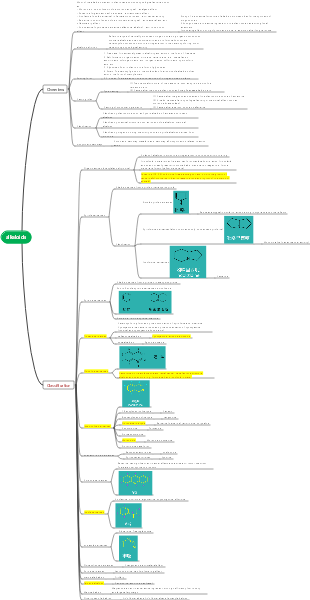
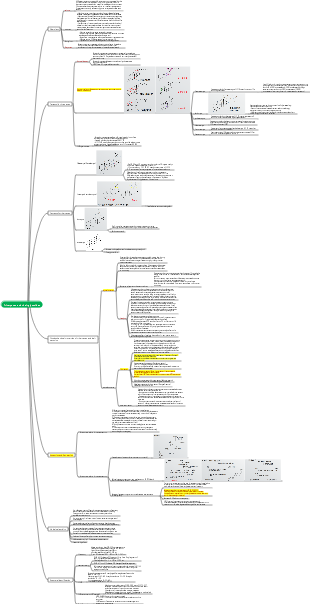
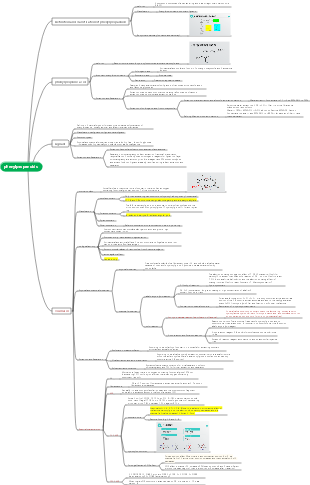
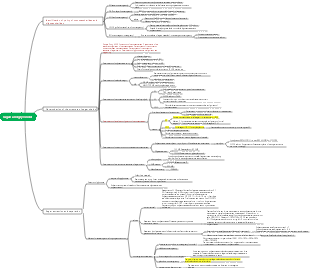
flavonoids
Overview
Definition: Compounds with C6- C3- C6 units
Basic structure: 2-(or 3-)phenylbenzoγ-pyrone
-OH often appears in 7-position, 4‘-position, 3-position and 5-position
Classification of flavonoids: Classification based on the difference in C ring, B ring connection position, and degree of polymerization
Flavonoids, flavonols, isoflavones, chalcones easy to test spectrum
The carbon chain may be straightened in the chalcone test, and chalcones and dihydroflavones are isomers of each other.
Structural classification: • Diflavonoids: 2 molecules of flavonoids, 2 molecules of dihydroflavones, 1 molecule of flavonoids and 1 molecule of dihydroflavones, connected through C-O-C, C-C • Flavonolignans: 1 molecule of flavonoid and 1 molecule of lignan (silymarin has both flavonoid and lignan structures) • Alkaloid flavonoids • There are alkaloids attached to the flavonoid skeleton
Classification of flavonoid glycosides: according to the type of glycoside bond and the number of monosaccharides
Master the abbreviations and structural differences of several sugars (sophorose and gentiobiose are composed of two molecules of glucose; rutose and noriose are composed of one molecule of rhamnose and one molecule of glucose)
Glc,Man,Gal,Xyl,Ara,Rha
Biosynthetic pathways: cinnamic acid pathway acetate-malonate pathway
A ring: from 2 malonylCoA B C ring: from cinnamyl CoA dihydroflavone Other types of flavonoids are derived from dihydroflavones
Biological activity(7)
• Effect on the cardiovascular system: Reduce capillary fragility and abnormal permeability: rutin (flavonol), hesperidin; dilate coronary arteries, treat coronary heart disease: puerarin; lower blood pressure; inhibit platelet aggregation and thrombosis • Anti-hepatotoxic effects: silymarin, ( )-catechin • Anti-inflammatory effect: dihydroquercetin • Estrogen-like effects: daidzein, genistein, etc. • Antibacterial and antiviral effects: luteolin, baicalin (flavonoid), baicalein (flavonoid), quercetin (flavonol), kaempferin, etc. • Purgative effect: pyroside A • Antispasmodic effect: isoliquiritigenin, daidzein
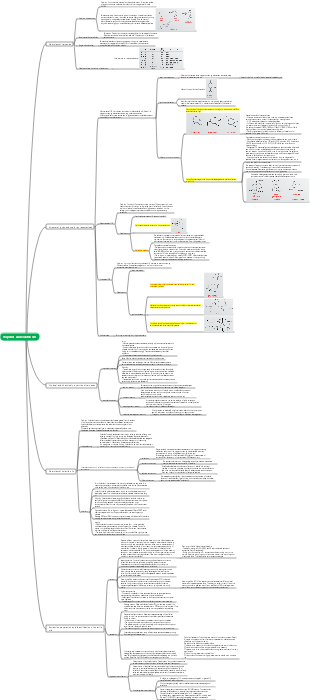
Physical and chemical properties
Traits
Material state: mostly crystalline solids, a few amorphous powders
Optical activity: Glycones: flavonoids (alcohols), optically inactive; dihydroflavones (alcohols), flavanols, optically active Glycoside: Optically active
color
The existence of cross-conjugated systems: Introduction of auxiliary chromophore → color deepening 7,4’ introduces auxochromophores (-OH, -OCH3, etc.) → deepens the color
Chromone (A C ring): colorless; flavonoids (alcohols): gray-yellow; isoflavones: light yellow; dihydroflavones (alcohols): colorless
Solubility
• Glycoside and aglycone: similar and compatible • Related to the planarity of the molecule: the stronger the planarity, the worse the water solubility; flavones (alcohols) < chalcones < dihydroflavones < dihydroflavonols < anthocyanins (the molecules exist in ionic form) • Depends on the type of parent core substituent: -OH substitution, water solubility ↑; after hydroxymethylation, water solubility ↓ • Depends on the position of the parent core substituent: 3-O-glycoside > 7-O-glycoside
Acidic
Source of acidity: phenol OH Affects acidity: number and position of OH; 7,4′-diOH > 7-OH or 4'-OH > generally Ar-OH > 5-OH; soluble in (strong base extracts weak acid): 5% NaHCO3 → 5% Na2CO3 → 0.2% NaOH → 4% NaOH
alkaline
Source: γ-pyrone ring-O-lone pair of electrons
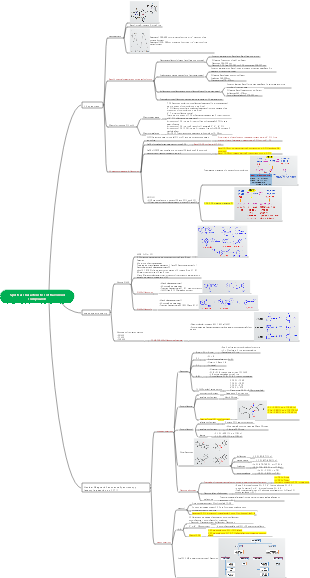
color reaction
reduction reaction
Hydrochloric acid-magnesium powder (or zinc powder) reaction (HCl-Mg/Zn)
• (Dihydro)flavonoids (alcohols): positive; most are: orange-red to purple-red, a few are: purple to blue (3'-OR→color deepening) • Chalcones, auronans, isoflavones, catechins: negative • False positive reaction: anthocyanins, chalcones HCl → light red, adding Mg will not deepen the color!
Sodium tetrahydroborate (NaBH4) reaction
Dihydroflavones (alcohols): red to purple Other flavonoids: (-)
Dihydroflavone and phosphomolybdic acid reagent → brown
Metal salt reagent complexation reaction: Reactive functional groups: 3-OH, 4-C=O; 5-OH, 4-C=O; o-diphenol OH
Aluminum salt reaction: AlCl3 reaction
Reagent: 1% AlCl3 Complex: mostly yellow (λmax= 415 nm) Most of them are fluorescent, and the fluorescence is enhanced under UV: it can be used for qualitative and quantitative purposes. Can be used as a chromogen for paper chromatography (PC)
Magnesium salt reaction: MgAc2 reaction (dihydroflavones (alcohols), other flavonoids)
Dihydroflavonoids (alcohols): Sky blue fluorescence (especially 5-OH) Other flavonoids: yellow ~ orange ~ brown Can be used as a chromogen for paper chromatography (PC)
Zirconium salt-citric acid reaction (flavonoids containing 3-OH/5-OH)
Reagents: 2% ZrOCl2→2% citric acid Conditions: Flavonoids containing 3 or 5-OH Complexes: mostly yellow-green, with fluorescence; stability: after adding citric acid, the yellow color disappears to 5-OH flavonoids; the yellow color does not fade to 3-OH flavonoids Can be used as paper chromatography (PC) chromogen
Ammoniacal strontium chloride reaction (o-diphenolic hydroxyl group)
When SrCl2 is added to the o-diphenolic hydroxyl group under alkaline conditions, it turns into green~brown~black precipitate.
Lead salt reaction (o-diphenol hydroxyl/3-OH 4-C=O/5-OH 4-C=O)
With 1% lead acetate or basic lead acetate, it produces yellow to red↓ Pb(Ac)2: o-diphenol OH or 3-OH, 4-C=O or 5-OH, 4-C=O Pb(OH)(Ac): strong precipitation ability, can be combined with general phenol OH ↓
FeCl3 reaction (5-OH)
The color is obvious when containing 5-OH; adding FeCl3 to the phenolic hydroxyl group turns green~dark green~black
Boric acid complex reaction
Reaction conditions: acidic conditions; 5-OH flavonoids (alcohols), 2-OH chalcone Phenomenon: bright yellow Dihydroflavones (alcohols), isoflavones, orange ketones: (-)
Alkaline reagent color reaction
Wessely-Moser rearrangement (special, only available in flavonoids)
Under the acidic condition of flavonoid 6,8-C, hydrolysis cannot occur and rearrangement reaction occurs!
Extraction and Separation
Extraction and refining
Choice of extraction solvent
• Aglycon: weakly polar solvent: CHCl3, Et2O (diethyl ether), EtOAc (ethyl acetate) • Glycosides: EtOAc, acetone, ethanol, methanol, water, alcohol/water, be careful to kill enzymes and preserve glycosides • Anthocyanins: A small amount of acid can be added, such as: 0.1% HCl
refined
• Solvent extraction method • Alkali extraction acid precipitation method • Carbon powder adsorption method: boiling water → boiling methanol → 7% phenol/water → 15% phenol/alcohol, mostly 7% phenol/water? wash off
separation
R
Silica gel column chromatography
Adsorption principle: silica gel activation treatment (increased adsorption), using non-aqueous mobile phase; applicable: aglycone
Distribution principle: no activation required, use aqueous mobile phase; suitable for: polyhydroxyflavonols and their glycosides
Polyamide column chromatography
Separation principle: hydrogen bond adsorption, semi-chemical adsorption
Factors affecting adsorption (solute): same as below
Elution power: water < methanol < acetone < sodium hydroxide aqueous solution < formamide < dimethylformamide < urea aqueous solution Organic Solvents: Normal Phase Partition Chromatography (Example!)
Sephadex LH-20
Multiple separation principle: • Adsorption principle: aglycone • Principles of molecular sieves: glycosides • Allocation principle
Commonly used eluents: • CH3OH, CH3OH-H2O • Acetone, Acetone-H2O • CHCl3 - CH3OH • Alkaline water, salt water
Elute out of the column in descending order of molecular weight
pH gradient extraction method
Correspondence between acidity and extraction agent (above)
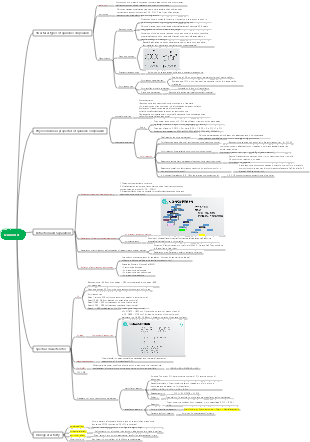
chromatographic separation
Paper Chromatography (PC)
The stationary phase of paper chromatography: water adsorbed on paper fibers. Belongs to partition chromatography
Normal phase PC and reversed phase PC: depends on the polarity of the mobile phase • Alcoholic flow agent: less polar than water, for reversed-phase chromatography • Aqueous developing agent: more polar than water, normal phase chromatography
bidirectional paper chromatography
• First phase: alcoholic developing agent BAW: n-BuOH-HAc-H2O (4:1:5, upper layer) TBA: t-BuOH-HAc-H2O (3:1:1) • Second phase: water or aqueous developing agent 2%~6%HAc 3%NaCl HAc-concentrated HCl-H2O (30:3:10) • Inspection: UV / Ammonia discoloration / 2%AlCl3 • For the separation of mixtures of flavonoids and their glycosides
Rf value of bidirectional paper chromatography
• Alcoholic developing agent: normal phase BAW: aglycone (comes out first, >0.7) > Monoglycoside > Diglycoside (<0.7) • Aqueous developing agent: reversed phase 2%-8%HAc, 3%NaCl: aglycone (≈ 0) < monoglycoside < diglycoside (comes out first, >0.5) 3%-5%HAc: free flavonoids (alcohols), chalcones: Rf < 0.02; free dihydroflavones (alcohols), dihydrochalcones: Rf 0.1-0.3
Silica gel thin layer chromatography
Silica gel • Normal phase adsorption chromatography • Separation mechanism including normal phase partitioning when using aqueous mobile phases
Commonly used mobile phases • CHCl3-CH3OH system • CHCl3-CH3OH-H2O system
polyamide thin layer chromatography
Adsorption principle: intermolecular hydrogen bonding, semi-chemical adsorption
Factors affecting adsorption (solute): strong • More -OH • C=O more • Few H bonds in the molecule • High degree of aromatization • Small MW
reversed phase mobile phase • Ethanol-water system • Water-ethanol-acetylacetone system • Water saturated n-butanol-acetic acid system • Acetone-water system • Acetone-ethanol-water system • Ethanol-acetic acid system
Normal phase mobile phase • Chloroform-methanol system • Chloroform-methanol-butanone system