MindMap Gallery digestive system
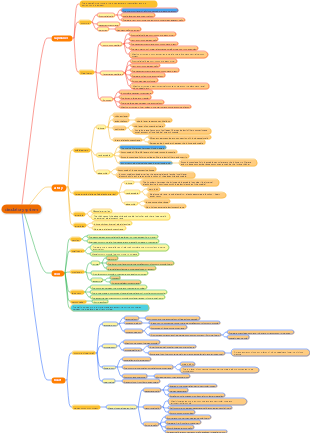
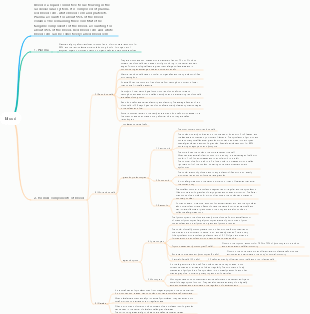
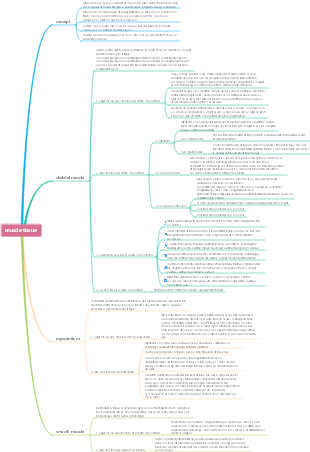
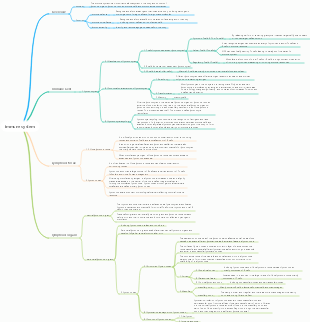
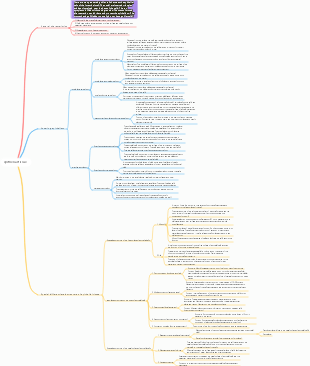
Mind map of the digestive system, digestive tubes and digestive glands. The digestive tubes are written more carefully, and the digestive glands are outlined. It’s full of useful information, friends in need should quickly collect it!
Edited at 2023-12-23 18:26:10This Valentine's Day brand marketing handbook provides businesses with five practical models, covering everything from creating offline experiences to driving online engagement. Whether you're a shopping mall, restaurant, or online brand, you'll find a suitable strategy: each model includes clear objectives and industry-specific guidelines, helping brands transform traffic into real sales and lasting emotional connections during this romantic season.

This Valentine's Day map illustrates love through 30 romantic possibilities, from the vintage charm of "handwritten love letters" to the urban landscape of "rooftop sunsets," from the tactile experience of a "pottery workshop" to the leisurely moments of "wine tasting at a vineyard"—offering a unique sense of occasion for every couple. Whether it's cozy, experiential, or luxurious, love always finds the most fitting expression. May you all find the perfect atmosphere for your love story.
The ice hockey schedule for the Milano Cortina 2026 Winter Olympics, featuring preliminary rounds, quarterfinals, and medal matches for both men's and women's tournaments from February 5–22. All game times are listed in Eastern Standard Time (EST).
This Valentine's Day brand marketing handbook provides businesses with five practical models, covering everything from creating offline experiences to driving online engagement. Whether you're a shopping mall, restaurant, or online brand, you'll find a suitable strategy: each model includes clear objectives and industry-specific guidelines, helping brands transform traffic into real sales and lasting emotional connections during this romantic season.
This Valentine's Day map illustrates love through 30 romantic possibilities, from the vintage charm of "handwritten love letters" to the urban landscape of "rooftop sunsets," from the tactile experience of a "pottery workshop" to the leisurely moments of "wine tasting at a vineyard"—offering a unique sense of occasion for every couple. Whether it's cozy, experiential, or luxurious, love always finds the most fitting expression. May you all find the perfect atmosphere for your love story.
The ice hockey schedule for the Milano Cortina 2026 Winter Olympics, featuring preliminary rounds, quarterfinals, and medal matches for both men's and women's tournaments from February 5–22. All game times are listed in Eastern Standard Time (EST).
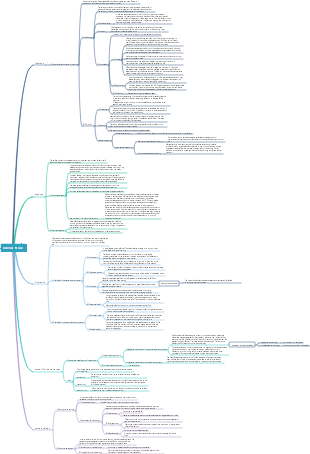
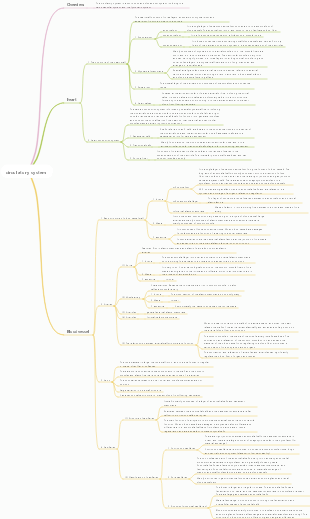
digestive system
Digestive tube
Digestive tube composition
oral cavity
General structure of the mouth
Only epithelium and lamina propria, no muscularis mucosae. The epithelium is stratified squamous epithelium with keratinization only in the hard palate. The connective tissue of the lamina propria protrudes into the epithelium to form papillae, which are rich in capillaries, so the mucosa is red. There are many sensory nerve endings in the nipple and epithelium. The epithelium at the floor of the mouth is thin and highly permeable, which is conducive to the absorption of certain chemicals. There are minor salivary glands in the lamina propria, and the lamina propria is connected to the skeletal muscles or periosteum.
tongue
Lingual tonsils
tongue papilla
filiform papillae
The largest number, the nipple is cone-shaped, white in appearance, and is called tongue coating
fungiform papillae
The number is small, mostly located at the tip and edge of the tongue. They are mushroom-shaped. The epithelium is not keratinized and contains taste buds. The lamina propria is rich in capillaries, making the papilla appear red.
Contoured nipples
There are more than 10 of them, located in front of the lingual groove. They are large in shape and have a flat top. The mucosal depression around the nipple forms a ring groove, and there are more taste buds in the epithelium on both sides of the groove. There are serous taste glands in the lamina propria, and the ducts open at the bottom of the groove. The thin liquid secreted by the taste glands continuously flushes the food debris on the surface of the taste buds, so that the taste buds can continuously receive new material stimulation.
tooth
Dentin
Dentin tubules and mesenchyme
enamel
The dentin surface covering the crown of the tooth is about 96% inorganic and very little organic. It is the hardest structure in the human body.
cementum
The dentin that surrounds the root of the tooth has a structure similar to that of bone
dental pulp
Loose connective tissue, which has a nutritional effect on dentin and enamel
periodontal ligament
The dense connective tissue located between the tooth root and the alveolar bone contains thick collagen fiber bundles. One end is buried in the cementum and the other end is buried in the alveolar bone, firmly connecting the two.
gums
Mucosa composed of stratified squamous epithelium and lamina propria
pharynx
It is the intersection of the digestive tract and respiratory tract and is divided into oropharynx, nasopharynx and hypopharynx
Mucous membrane
The surface of the oropharynx is covered by unkeratinized stratified squamous epithelium, and the nasopharynx and oropharynx are mainly composed of pseudostratified ciliated columnar epithelium. The connective tissue of the lamina propria is rich in lymphoid tissue and mucosal gonads or mixed gonads, and there is a layer of elastic fibers deep in it.
Muscle layer
It is composed of internal longitudinal and external oblique or circular skeletal muscles, and there may be mucus gonads in between.
adventitia
fiber membrane
esophagus
Mucous membrane
Stratified squamous epithelium, the lamina propria is a fine connective tissue, and forms papillary epithelium. A small number of mucosal gonads can be seen in the lamina propria at the upper and lower ends of the esophagus. The mucosal muscle layer is composed of longitudinal smooth muscle bundles.
submucosa
The connective tissue contains more mucinous esophageal glands, and the ducts penetrate the mucosa and open into the esophageal lumen.
Muscle layer
The upper third of the inner circular and outer longitudinal layers is skeletal muscle, the lower third is smooth muscle, and the middle third is mixed. The inner circular muscles at both ends of the esophagus are slightly thicker, forming the upper and lower esophageal sphincters respectively.
adventitia
for fiber membrane
Stomach
Mucous membrane
epithelium
Single layer of columnar cells, mainly composed of surface mucus cells. Normal gastric epithelium does not have goblet cells like those in the intestine.
lamina propria
There are a large number of closely arranged tubular glands, which can be divided into
fundic glands (oxyntic glands)
Chief cells (pepsin cells)
secrete pepsinogen
Parietal cells (oxyntoblasts)
cervical mucus cells
The secretion is soluble acidic mucus
stem cell
endocrine cells
Mainly ECL cells and D cells
cardia gland
mucous gonads
Pyloric gland
The more branched and curved tubular mucinous gonads have many G cells and produce gastrin, which can stimulate parietal cells to secrete hydrochloric acid and promote the proliferation of gastrointestinal mucosal cells.
muscularis mucosa
It is composed of two thin layers of smooth muscle: inner circular and outer longitudinal smooth muscles.
submucosa
Dense connective tissue, containing thick blood vessels, lymphatic vessels and nerves, and groups of fat cells can also be seen
muscularis and adventitia
The muscular layer of the stomach wall is thicker and generally consists of three layers of smooth muscle: internal oblique, middle circular, and external longitudinal smooth muscles. serous membrane
small intestine
Villi are broad leaf-shaped in the duodenum, long finger-shaped in the jejunum, and short conical in the ileum.
Mucous membrane
epithelium
absorbing cells
Digestion and absorption
Involved in the release process of secretory immunoglobulin A, the absorptive cells in the duodenum and upper jejunum also secrete enterokinase into the intestinal lumen, which can activate trypsinogen secreted by the pancreas and convert it into active trypsin.
goblet cells
Scattered between absorptive cells, secreting mucus, which has lubrication and protective effects. From the duodenum to the end of the ileum, goblet cells gradually increase
endocrine cells
I cells
S cells
Paneth cells (Paneth cells)
Characteristic cells of the small intestinal glands, which have a killing effect on intestinal microorganisms
stem cell
lamina propria
Composed of loose connective tissue, in addition to a large number of small intestinal glands, there are also abundant lymphocytes, plasma cells, macrophages, eosinophils and mast cells
muscularis mucosa
Composed of two thin layers of smooth muscle, inner circular and outer longitudinal
submucosa
Dense connective tissue has more blood vessels and lymphatic vessels
muscularis and adventitia
The muscular layer is composed of two layers of smooth muscle, the inner circular and the outer longitudinal layers. The outer membrane is composed of serosa except for the duodenal wall, which is fibrous membrane.
the large intestine
Cecum, colon and rectum
appendix
The lumen is small and irregular, the large intestine glands are short and few, and the lamina propria is rich in lymphoid tissue. A large number of lymph nodes can be continuously layered and protrude into the submucosa, resulting in incomplete mucosal muscle layer, thin muscle layer, and outer covering. Serosa
anal canal
The structure of the digestive tract wall (except the oral cavity and pharynx)
Mucous membrane
epithelium
The two ends of the digestive tract (oral cavity, pharynx, esophagus and anus) are composed of stratified squamous epithelium, whose main function is protection, while the rest are single-layer columnar epithelium, whose main function is digestion and absorption.
lamina propria
Loose connective tissue has more cellular components, denser fibers, and rich capillaries and lymphatic capillaries. The gastrointestinal lamina propria is rich in glandular and lymphoid tissue
muscularis mucosa
It is a thin layer of smooth muscle. Its contraction can promote the discharge of glandular secretions and blood circulation in the lamina propria, which is beneficial to the absorption and transportation of substances.
submucosa
Dense connective tissue containing arterioles, venules and lymphatic vessels. There are esophageal glands and duodenal glands in the submucosa of the esophagus and duodenum respectively. There is also a submucosal nerve plexus in the submucosa, which is composed of multipolar neurons and unmyelinated nerve fibers, which can regulate the contraction of mucosal muscles and gland secretion. In parts such as the esophagus, stomach, and small intestine, the mucosa and submucosa protrude toward the luminal surface to form folds.
Muscle layer
Except for the upper esophagus and anus, which are skeletal muscles, most of the rest are smooth muscles. The muscle layer is generally divided into two layers: inner circular and outer longitudinal layers. There is a myenteric nerve plexus that regulates the movement of the smooth muscles of the muscle layer. In the intermuscular connective tissue, there are interstitial Cajal cells, which are multi-processed, with oval nuclei and less cytoplasm. They may be the pacemaker cells of the gastrointestinal autonomous rhythm.
adventitia
What is composed of a thin layer of connective tissue is called fibrous membrane. It is mainly distributed in the end of the esophagus and large intestine. It has no obvious boundary with the surrounding tissues. What is composed of a thin layer of connective tissue and mesothelium is called serosa. It is found in the stomach and large intestine in the abdominal cavity. Parts of the small intestine and large intestine have smooth surfaces that facilitate gastrointestinal motility
lymphoid tissue of digestive tract
gastrointestinal endocrine cells
digestive glands
salivary glands
The major salivary glands are all compound duct-alveolar glands with thin dorsal membranes.
acini
serous acini
mucinous acini
mixed acini
catheter
Leap tube
striate duct
interlobular duct and common duct
Structural characteristics of three pairs of major salivary glands
parotid gland
The largest salivary gland in the human body is a pure serous acini with long intercalary ducts and short striate ducts. There are many fat cells in the glandular interstitium, and the secretion contains salivary amylase.
submandibular gland
It is a mixed gonad with many serous acini, short intercalary ducts, well-developed striate ducts, secretions containing less salivary amylase and more mucus.
sublingual gland
Mixed gonads, mainly composed of mucinous acini and mixed acini, without intercalary ducts, short striatal ducts, and the secretions are mainly mucus
saliva
Composed of a mixed fluid secreted by large and small salivary glands, which lubricates the oral cavity, sterilizes, and has immune functions
Biologically active peptides secreted by the submandibular gland
Factors that promote cell growth and differentiation
internal environment stabilizing factor
Digestive enzymes
pancreas
exocrine department
acini
catheter
Formation and release of acinar cell zymogen granules
pancreatic juice
Secretion and regulation of pancreatic juice
Department of Endocrine-Pancreatic Islet
B cells
A cells
D cells
PP cells
D1 cells
Neuromodulation of the pancreas and its relationship with the endocrine and exocrine departments
liver
liver lobules
Hepatocyte
liver sinusoids
Peri-sinusoidal space and fat storage cells
bile canaliculi
gate area
intrahepatic blood circulation
nerves of liver
liver lymph
Portal lobules and hepatic acini
portal lobule
hepatic acini
liver regeneration
Gallbladder and bile duct