MindMap Gallery Chapter 7 Conjunctival Disease
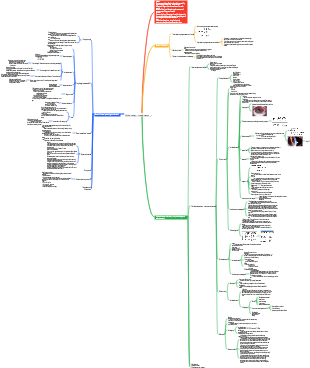
An article about medicine - ophthalmology mind map, including bacterial conjunctivitis, viral conjunctivitis, chlamydial conjunctivitis, etc.
Edited at 2023-11-23 19:44:14This is a mind map about bacteria, and its main contents include: overview, morphology, types, structure, reproduction, distribution, application, and expansion. The summary is comprehensive and meticulous, suitable as review materials.

This is a mind map about plant asexual reproduction, and its main contents include: concept, spore reproduction, vegetative reproduction, tissue culture, and buds. The summary is comprehensive and meticulous, suitable as review materials.
This is a mind map about the reproductive development of animals, and its main contents include: insects, frogs, birds, sexual reproduction, and asexual reproduction. The summary is comprehensive and meticulous, suitable as review materials.
This is a mind map about bacteria, and its main contents include: overview, morphology, types, structure, reproduction, distribution, application, and expansion. The summary is comprehensive and meticulous, suitable as review materials.
This is a mind map about plant asexual reproduction, and its main contents include: concept, spore reproduction, vegetative reproduction, tissue culture, and buds. The summary is comprehensive and meticulous, suitable as review materials.
This is a mind map about the reproductive development of animals, and its main contents include: insects, frogs, birds, sexual reproduction, and asexual reproduction. The summary is comprehensive and meticulous, suitable as review materials.
Chapter 7 Conjunctival Disease
Section 1 General Introduction to Conjunctivitis
—Causes of conjunctivitis: Conjunctivitis is one of the most common diseases in ophthalmology
2. Classification of conjunctivitis: Acute conjunctivitis lasts for less than 3 weeks
3. Common signs of conjunctivitis
Symptoms of conjunctivitis include foreign body sensation, burning sensation, itching, photophobia, and tearing.
(1) Conjunctival congestion: the most common sign of acute conjunctivitis. Conjunctival hyperemia is characterized by congestion of superficial blood vessels, which is obvious in the fornix and extends toward the limbus of the cornea. Congestion is reduced in the direction, and these superficial blood vessels can move with the mechanical movement of the conjunctiva, and can be filled after local dripping of epinephrine. The blood disappears.
(2) Conjunctival secretions
Signs common to all types of acute conjunctivitis. The discharge may be purulent, mucopurulent, or serous.
Allergic conjunctivitis discharge is sticky and filamentous. The discharge from viral conjunctivitis is watery or serous.
(3) True membrane and false membrane: True membrane is formed by the condensation of exudate from severe inflammatory reaction on the conjunctival surface, involving the entire epithelium. After forcible removal, the wound surface will be rough and easy to rupture. Bleeding.
(4) Subconjunctival hemorrhage: severe conjunctivitis such as epidemic conjunctivitis caused by adenovirus and enterovirus and acute conjunctivitis caused by Kochweeks bacilli etc., in addition to conjunctival congestion, punctate or flaky subconjunctival hemorrhage may also occur, which is bright red in color and dark red when the amount is large. color.
4. Common diagnostic methods for conjunctivitis
Cytological examination: Bacterial conjunctivitis smears account for the majority of polymorphonuclear leukocytes. In viral conjunctivitis, monocytes, especially lymphocytes, predominate. An increase in neutrophils during pseudomembrane formation (epidemic keratoconjunctivitis) suggests conjunctival necrosis. chlamydial conjunctivitis smear neutrophils Cells and lymphocytes account for half each. Allergic conjunctivitis shows eosinophils and basophils in biopsy specimens, but in conjunctival smears The amount is very small. A large number of eosinophilic granules are seen in the epithelial cells of vernal conjunctivitis.
Section 2 Bacterial conjunctivitis
Clinical manifestations: There is secretion from the eyelid margin when I wake up in the morning. At first, the secretion is thin and serous, and as the disease progresses, it becomes mucus and purulent.
1. hyperacute bacterial conjunctivitis
Caused by bacteria of the genus Neisseria (gonococci or meningococci). The disease progresses rapidly, with conjunctival congestion and edema accompanied by large amounts of purulent secretions. About 15% to 40% of patients quickly develop corneal opacity, infiltration, and peripheral or central corneal ulcers. If not treated in time, corneal perforation may occur in a few days, seriously threatening vision.
The incubation period of neonatal gonococcal conjunctivitis is 2 to 5 days, and it is mostly a birth canal infection. Those who develop the disease 7 days after birth are postpartum infections. Both eyes are often affected at the same time. There are photophobia, tearing, and high degree of edema of the conjunctiva. In severe cases, it protrudes beyond the palpebral fissure, and pseudomembrane may be formed. The secretion quickly changes from the serous nature at the beginning of the disease to purulent. The amount of pus is large and constantly flows out of the palpebral fissures, so it is also known as "pus leaking eyes".
2. Acute or subacute bacterial conjunctivitis
Also known as "acute catarrhal conjunctivitis", commonly known as "pink eye", the onset is acute, with an incubation period of 1 to 3 days, and the disease occurs in both eyes at the same time or 1 to 2 days apart. The inflammation is the most severe 3 to 4 days after the onset of symptoms, and then gradually decreases.
(1) Haemophilus influenzae: The incubation period is about 24 hours, and the clinical manifestations are conjunctival congestion, edema, and subconjunctival discharge. Blood, purulent or mucopurulent discharge, symptoms peak in 3 to 4 days.
(2) Others: acute membranous or pseudomembranous conjunctivitis caused by Diphtheria bacilli.
3. Chronic bacterial conjunctivitis
It is more common in patients with nasolacrimal duct obstruction or chronic dacryocystitis, or in patients with chronic blepharitis or meibomian gland dysfunction.
Chronic conjunctivitis progresses slowly, lasts for a long time, and can occur unilaterally or bilaterally. The symptoms of patients are diverse, with the main symptoms being eye itching, burning, dryness, eye stinging and visual fatigue. The conjunctiva is mildly congested, and there may be thickening of the palpebral conjunctiva, hyperplasia of the nipple, and the secretion is mucus or self-colored foam.
Section 3 Viral conjunctivitis
—Adenoviral keratoconjunctivitis
epidemic keratoconjunctivitis
Clinical manifestations: acute onset, severe symptoms, and disease in both eyes. The main symptoms include red eyes, pain, photophobia, and watery eyes secretion. In the early stages of the disease, one eye is often affected first, and the other eye is affected a few days later. Eyelid edema in the acute stage, Conjunctival congestion and edema, with follicular and subconjunctival hemorrhage occurring within 48 hours.
2. Epidemic hemorrhagic conjunctivitis
Clinical manifestations: short incubation period, 18 to 48 hours; short course of disease, 5 to 7 days. Common symptoms include eye pain, photophobia, foreign body sensation, tearing, subconjunctival hemorrhage, Eyelid edema, etc. Subconjunctival hemorrhage occurs in the form of spots or patches, starting from the upper bulbar conjunctiva and spreading to the lower bulbar conjunctiva. Most patients have follicular with epithelial keratitis and preauricular lymphadenopathy.
Treatment and prevention: No special treatment, self-limiting, mainly symptomatic treatment, local application of broad-spectrum antiviral drugs such as interferon eye drops and ribavirin Eye drops, etc. Strengthening personal hygiene and hospital management to prevent transmission is the key to prevention.
Section 4 Chlamydial conjunctivitis
trachoma·
Cause: Endemic trachoma is mostly caused by A, B, C or Ba antigen types. Types D~K mainly cause genitourinary system infection and inclusion conjunctivitis.
clinical manifestations
There is no obvious discomfort in the chronic stage, only eye itching, foreign body sensation, dryness and burning sensation. The conjunctival congestion is reduced, the conjunctiva is dirty and thick, and there is papillary and follicular hyperplasia at the same time. The conjunctiva is obvious in the fornix above the lesion and the upper edge of the tarsal plate, and a curtain-shaped corneal pannus may appear. During the course of the disease, the conjunctival lesions are gradually replaced by connective tissue, forming scars. It first appears in the subtarsal groove of the upper eyelid conjunctiva, which is called the Arl line, and gradually becomes a reticular shape. Later, it all turns into a self-colored smooth scar. The limbal follicles undergo scarring changes, which are clinically called Herbert's follicles.
Complications such as entropion and trichiasis, ptosis, symblepharon, corneal opacity, parenchymal conjunctivitis sicca, and chronic dacryocystitis occur in the late stage, which can seriously affect vision and even lead to blindness.
Diagnosis: WHO requires that at least 2 of the following criteria be met when diagnosing trachoma: ① There are more than 5 follicles in the upper palpebral conjunctiva; ②Typical conjunctival scar; ③ Limbal follicle or Herbert's fovea; ④Extensive corneal pannus.
Differential diagnosis
Chronic follicular conjunctivitis: common in children and adolescents, usually bilateral. Uniformly sized and neatly arranged follicles were seen in the lower fornix and lower palpebral conjunctiva, with no Integration tendency. The conjunctiva is hyperemic and has secretions, but is not hypertrophic. It will heal itself without leaving traces after a few years, and there is no corneal pannus. Those without inflammatory symptoms such as secretions and conjunctival congestion are called conjunctival follicular disease.
Treatment: For active trachoma, it is recommended to use 1% tetracycline eye ointment, 2 times a day, levofloxacin eye drops, 4 times a day, and oral administration of azithromycin 1g, once a day. The course of treatment is 8 weeks; you can also use erythromycin eye ointment topically, twice a day, and take 1.5~2.0g of tetracycline daily, divided into three times, for a course of 3 weeks, which is equally effective.
Section 5 Immune conjunctivitis
—Vernal keratoconjunctivitis
Vernal keratoconjunctivitis (VCK), also known as vernal catarrhal conjunctivitis, seasonal conjunctivitis, etc., is a recurrent bilateral chronic ocular surface disease with environmental and racial tendencies. It mainly affects children and adolescents, and is more common in men under the age of 20.
Cause: VKC is a hypersensitivity reaction involving both humoral and cellular immunity.
clinical manifestations
The main symptom of VKC is itching of the eyes. Other symptoms include pain, foreign body sensation, photophobia, burning sensation, increased tearing and sticky discharge.
The palpebral conjunctiva type is characterized by pink palpebral conjunctiva and large papillae of the upper palpebral conjunctiva arranged in a paving stone-like arrangement. The nipples are of varying shapes, flat in appearance, and contain capillary plexuses.
Diagnosis: Patients with severe VKC have typical signs: paving stone hyperplasia of the palpebral conjunctival papilla, corneal shield ulcers, Horner-Trantas nodules, etc. in the conjunctiva Eosinophils or eosinophilic granules were found in the scraping, suggesting a local allergic reaction.
2. Seasonal allergic conjunctivitis
Clinical manifestations: The main signs are conjunctival congestion and non-specific palpebral conjunctival papilla hyperplasia, sometimes combined with conjunctival edema or eyelid edema, which is more likely to occur in young children. It rarely affects the cornea, with occasional mild punctate epithelial keratitis. Many patients have a history of allergic rhinitis and bronchial asthma.
3. Perennial allergic conjunctivitis
Clinical manifestations: Since the antigen is present all year round, the symptoms persist, and some patients experience seasonal aggravation. Eye symptoms are often more common than seasonal allergies Conjunctivitis is mild. Conjunctival congestion, papillary conjunctivitis with a few follicles, and transient eyelid edema are often found during examination. Some patients may There may be no obvious positive signs.
4. Giant papillary conjunctivitis
Cause: Giant papillary conjunctivitis (GPC) is more common in people who wear contact lenses or prosthetic eyes.
clinical manifestations
It often first manifests as contact lens intolerance and itchy eyes. Visual blurring (caused by contact lens deposits), foreign body sensation and secretions may also occur. The average time to develop giant papillary conjunctivitis in people who continue to wear soft contact lenses is 8 months.
The examination first showed mild papillary hyperplasia of the upper eyelid conjunctiva, which was later replaced by large papillae (>0.3mm), and finally turned into giant papillae (>1mm). Clinically, it is divided into four stages according to the progression of the disease. Stage I: The patient has itchy eyes, mild palpebral conjunctival congestion, and hyperplasia of tiny papillae; Stage II: Eye itching worsens, there is more sticky secretion, and upper eyelid conjunctival congestion occurs.
5. Allergic conjunctivitis
Treatment: Find the allergen. Type I hypersensitivity reactions can be relieved by avoiding contact with the allergen or discontinuing medication. Topical glucocorticoid eye drops (such as 0.1% dexamid pine), vasoconstrictor (0.1% epinephrine or 1% ephedrine), if the eyelid skin is red, swollen and papules, you can use 2% to 3% boric acid water for wet compress. Severe cases Systemic anti-allergic drugs, such as chlorpheniramine, astemizole and other antihistamines or glucocorticoids, can be added.
6. Alveolar keratoconjunctivitis
Common pathogenic microorganisms include: Mycobacterium tuberculosis, Staphylococcus aureus, Candida albicans, Coccidioides, and Chlamydia trachomatis.
Clinical manifestations: More common in women, adolescents and children.
Diagnosis: A correct diagnosis can be made based on the typical solid nodular vesicles at the limbus or bulbar conjunctiva and symptoms such as congestion around them.
Treatment: topical corticosteroid eye drops.
Section 6 Conjunctival Tumors
primary benign conjunctival tumor
(1) Conjunctival dermoid tumor and dermoid lipoma: Conjunctival dermoid tumor and dermoid lipoma are common congenital benign tumors. Dermoid lipoma is more common in the superior temporal quadrant near the lateral canthus Under the bulbar conjunctiva, there is a yellow, soft, smooth mass.
(2) Conjunctival hemangioma: Conjunctival hemangioma is mostly congenital and appears at birth or soon after birth. Conjunctival hemangiomas can appear solitary, massy, or diffuse Dilated cavernoma.
Section 7 Other conjunctival diseases
—Conjunctival degenerative diseases
(1) Palpebral fissure spots: Palpebral fissure spots are horizontal, triangular or oval, raised, gray-yellow bulbar conjunctival nodules at the junction of the corneoscleral limbus in the palpebral fissure area.
(2) Pterygium
Pterygium is a fibrovascular-like tissue that grows toward the surface of the cornea and is connected to the conjunctiva. It often occurs in the palpebral fissure area on the nasal side.
Clinical manifestations: The hypertrophic bulbar conjunctiva and its underlying fibrovascular tissue in the palpebral fissure area invade into the cornea in a triangular shape.
Treatment: If the pterygium develops progressively and invades the pupil area, surgical treatment can be performed. Postoperative antibiotics are applied locally to prevent infection, and glucocorticoids are applied locally to reduce postoperative inflammatory reactions.
2. Subconjunctival hemorrhage
Subconjunctival hemorrhage can occur due to rupture of subconjunctival vessels or increased permeability. Relevant medical history includes: trauma (eye trauma or head crush injury), conjunctival inflammation, hypertension, arteriosclerosis, nephritis, blood diseases (such as leukemia, hemophilia), certain infectious diseases (such as sepsis, typhoid fever) wait.