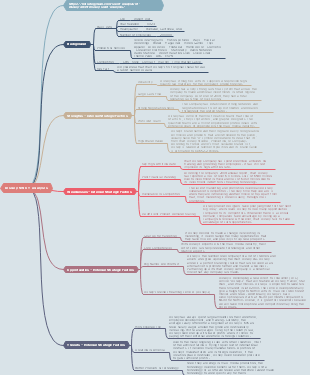
MindMap Gallery How to be a good manager in human resources positions in the garment industry
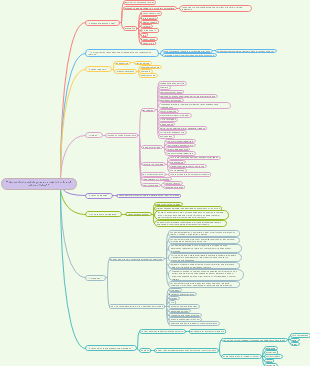
Garment industry, human resources management, management, team management, management methods. It’s full of useful information, interested friends can refer to it!
Edited at 2023-11-21 13:53:32This is a mind map about bacteria, and its main contents include: overview, morphology, types, structure, reproduction, distribution, application, and expansion. The summary is comprehensive and meticulous, suitable as review materials.
This is a mind map about plant asexual reproduction, and its main contents include: concept, spore reproduction, vegetative reproduction, tissue culture, and buds. The summary is comprehensive and meticulous, suitable as review materials.
This is a mind map about the reproductive development of animals, and its main contents include: insects, frogs, birds, sexual reproduction, and asexual reproduction. The summary is comprehensive and meticulous, suitable as review materials.
This is a mind map about bacteria, and its main contents include: overview, morphology, types, structure, reproduction, distribution, application, and expansion. The summary is comprehensive and meticulous, suitable as review materials.
This is a mind map about plant asexual reproduction, and its main contents include: concept, spore reproduction, vegetative reproduction, tissue culture, and buds. The summary is comprehensive and meticulous, suitable as review materials.
This is a mind map about the reproductive development of animals, and its main contents include: insects, frogs, birds, sexual reproduction, and asexual reproduction. The summary is comprehensive and meticulous, suitable as review materials.
manager
1. Employees’ pain points and solutions
Don't know what to do
Missing target
Have no idea what to do
Lack of plan
Things don't go smoothly
Lack of process
Ability cannot be improved
Lack of training
don't know how to do it
Lack of methods
Good or bad, it's the same
Lack of rewards and punishments
The rewards are disproportionate
Missing assessment
2. Management = managing (things) and managing (people)
1. Definition
stewardship
It’s about keeping things clear: Lead the team to set goals and choose strategies Get your team to do the right thing. Then help the team sort out the process of doing things, Make specific and executable plans to do things correctly and get results.
Manager
It is to understand people: Understand what abilities talents in each position need to have and how to put the right people in the right positions; Understand what resources and atmosphere he needs; How should he be motivated, when should he be tutored, and how should he be tutored?
1. Work content framework
stewardship
Get things done (take care of things)
make a plan
Do you know what to do? Know what to do?
Choose a good strategy, make a implementation plan, and let members know how to do things correctly. Only then will members know what to do?
fixed performance
Have motivation to do it
Set team goals and let members know what is the right thing to do. Only when the goals are in the same direction can members be motivated to do things.
construction process
Do it in an orderly manner
Sort out the process of doing things and cooperate with each other so that things can be done in a orderly manner.
Manager
Take care of yourself (keep things in order)
Build a team
Someone has the talent to do it
Understand what positions require what abilities, and put the right people in the right positions so that everything can be done and everyone can do something;
Do team building
Have fun doing it
Promote team atmosphere, improve team cohesion, and allow members to do things happily;
Cast culture
Not just for money
Culture is the soul of the team and the real core competitiveness
get the result
subtopic
Treat junior employees
Support, encourage and praise Criticize less, blame less, complain less
Treating middle management
More requirements, more training, more coaching Less laissez-faire, less excuses, less reasons
Treating top management
Communicate more, review more, and look forward to more Less slogans, less painting, and less empty words
subtopic
From an employee's perspective
If you don’t know how to do it, you need training; if you don’t want to do it, you need motivation; if you are unhappy, you need atmosphere.
from a management perspective
If you don’t know how to take care of things, you need to be inspected; if you don’t want to take care of things, you need to be evaluated; if you don’t care, you need to be punished.
From a business perspective
Empty culture needs to be implemented, dead systems need to be optimized, and old processes need to be upgraded.
2. What is leadership and leadership?
3. What is leadership?
1) In doing things
Give people methods, direction, and strength
2) In life
Give people examples, give people wisdom, give people happiness
3) In terms of thought
Give people faith, confidence and hope
Leading a team means bringing execution and cohesion
Lead → lead, hold the direction
guide → guide, give methods
The leader decides everything about the team! Napoleon said: A flock of sheep led by a lion can defeat a flock of lions led by a sheep.
3. Skills managers need to possess
Nine skills that good managers must practice
1) Practice courage
Dare to look into anyone’s eyes, don’t dodge
2) Practice your face
Only by letting go of face can you gain face. Don’t lose face when you don’t have enough ability.
3) Practice stability
No matter how big the problem is, you must remain calm, no matter how big the difficulty is, you must face it calmly, and learn to deal with things without being alarmed.
4) Practice carefulness
Details are key, details determine success or failure
5) Practice eloquence
A good manager should not be too eloquent. He should be able to praise, be humorous and reject, and he should speak fluently.
6) Practice confidence
If you are not confident in yourself, who will believe you? Confidence makes you more calm
7) Practice your temperament
When walking, keep your head up and your chest straight, your back straight, and your eyes looking straight ahead.
8) Practice experience
Know how to deal with things, know how to handle things, know how to behave, and summarize from what you encounter
9) Practice your speech
Most successful people are masters of public speaking. They can watch speech videos every day, practice by themselves in front of the mirror, and record and listen to their own voices repeatedly.
A manager’s surefire way to speak on stage
1) Speak loudly
No leader still speaks submissively after becoming a leader. Opening up your voice not only improves your voice, but also reflects your temperament and self-confidence.
2) Speak slower
Speaking too fast will not only make you appear nervous, but also cause the audience to be confused and bored.
3) Organized and organized
If the same content is divided into parts one, two, and three, it will make it easier for others to clarify their thoughts. It can also give others a feeling that your thoughts are very clear, and others can also prioritize them after listening.
4) Good at telling stories and talking about feelings
When speaking, you must be good at telling stories and talking about your feelings. Stories have content, and talking about feelings can resonate more and move people's hearts; a powerful leader must be a successful speaker! Churchill said: The number of people a person can speak to shows how great his achievements are! The future must be an era of speeches. Don’t let your inability to express yourself ruin your future.
To lead people, you need to be on the same page, and to manage people, you need to be empathetic (4 elements)
1) Resources
Need support? For employees, do they have the confidence to win to complete this goal/job?
2) Willingness
Do you really want to do this well? Some people can do it, but are actually unwilling to do it. Then you need to find a way to talk to them about what causes their concerns? Inquire step by step during communication: Is there a way to resolve concerns?
3) Expectations
What effect do you hope to achieve? How do employees view this matter/work? What effect do you want to achieve?
4) Fear
Are there any concerns? Do employees have any major concerns? Is there anything you are afraid of or want to ask?
2. Management methods
Taking charge = wiping the butt, striving for benefits, protecting the calf, daring to let go
1. Wipe your butt: As long as you do something, you will inevitably make mistakes. Everything has the cost of trial and error. Leaders must take the initiative to stand up.
3. Protect the calf: When subordinates make mistakes, they should not be criticized behind closed doors based on principle.
2. Fight for interests: help subordinates fight for qualified honors and interests as much as possible.
4. Dare to let go: Don’t hold your child all the time, otherwise he will never walk, or he will never lose the ability to walk.
Managing people = uniting, striving for, transforming, and fighting
Unite those who can be united, win over those who are not united; reform those who are unwilling to cooperate, and fight to death those who are unwilling to cooperate;
10 tips and methods to help you manage people and things well
1. Standardize the system and do things in a reasonable manner
2. Only when WeChat is established can you respond to everything at once
3. Only by living the method can you get twice the result with half the effort.
4. Only by being fair and just can all the stars support the moon.
5. Only by engaging in competition can we be as stable as a rock.
6. Only when communication becomes smooth can everyone be united
7. Only when power is delegated can soldiers use their lives.
8. Only by using grace and prestige can you win people's hearts.
9. Encourage them to catch them, and then they can point them to where to hit.
10. Only when supervision is strict can implementation be in place.
If you memorize it, the employees will not leave.
1. If you change jobs, you will be poor for six months, and if you change your career, you will be poor for three years. The old saying is true.
2. Don’t leave your team easily, otherwise you will start from scratch; don’t give up as soon as something goes wrong. Every team has problems. Complaining about the team’s problems is giving up your chance to stand out.
3. It’s important to follow the right leader. Leaders who are willing to teach you and let you do what you want must know how to cherish them.
4. Creating profits and output value is the core value of your existence. Otherwise, without your place, no team will continue to do charity.
5. Spend a lot of time learning and improving yourself so that your team needs you more.
We always like to let nature take its course to cope with the thorns and bumps on the road of life. In fact, truly letting nature take its course means not forcing it after you have tried your best, rather than just inaction!
Always remember one sentence: If you want things to change, you must first change yourself; if you want to make things better, you must first make yourself better.
Where does employee loyalty come from?
1. Salary is support
2. Enterprise respect for employees is a prerequisite
3. Leadership must be motivation
4. Development space is the long-term driving force
5. The leader’s personal charisma is the catalyst
6. Effective communication is a strengthener that enhances employee loyalty.
7. Give employees a sense of belonging and do not treat them as outsiders.
8. Create a corporate culture of integrity and mutual benefit
Organization Structure
Job Responsibilities
Daily management
performance appraisal
Incentives
3. 4R principles of management
Find the right person
Put it in the right place
Use the right method
do the right thing
4. Necessary abilities for managers
Clarify job responsibilities
Understand the meaning of work
Unify the way of doing things
Set work standards
3. How to employ people to achieve success?
Example: When a team cannot get results, many managers will say: "It's not my problem, it's my people who are not good, their execution ability is poor; or their ability is not enough. Q: Is that really the case? As the leader of the team, you choose the people. If you use the wrong people and you fail to get results, it is ultimately your problem. Management is about managing things and managing people, and people are the key to success, so we must learn to "employ people to make things happen."
select
Choose the right person
ability
Capability
values
Behind the selection of people is the correct concept. It is not necessarily to find the best person, but to find the most suitable person. For example: a highly capable person is recruited, but he is not interested in what you are doing and does not recognize the team. When the team is in danger, he will leave immediately. Recruiting the wrong person will often cost you a lot in the end.
educate
Development person
power enhanced
performance goals
career planning
Developing people is essentially about how you view people. Do you treat subordinates as tools or as resources? ●Treat people as tools: If I pay you, then you have to work hard. I won’t train you. If your subordinates don’t do well, you will scold them. ●Treat people as resources: I will let you grow, help you improve your abilities, and challenge higher performance goals.
Keep
Assessor
performance appraisal
Performance Coaching
Empower subordinates
Evaluators are not simply performance appraisals, but performance management. The evaluator does not end with a score, but helps employees grow through performance interviews and coaching. All assessments that fail to empower employees are just rogue.
use
Use the right person
Set up posts according to people
Catch the big and let go the small
Appropriate decentralization
Put the right people in the right positions ●Setting up posts based on people: Rules are dead, but people are alive. We should set up posts based on people so that their potential and abilities can be maximized. ●Learn to focus on the big and let go of the small, and avoid doing everything by yourself: Seize the most important things, and hand over some of the things that can be handed over to the people below, so that the team can grow.