MindMap Gallery 15 leadership misunderstandings
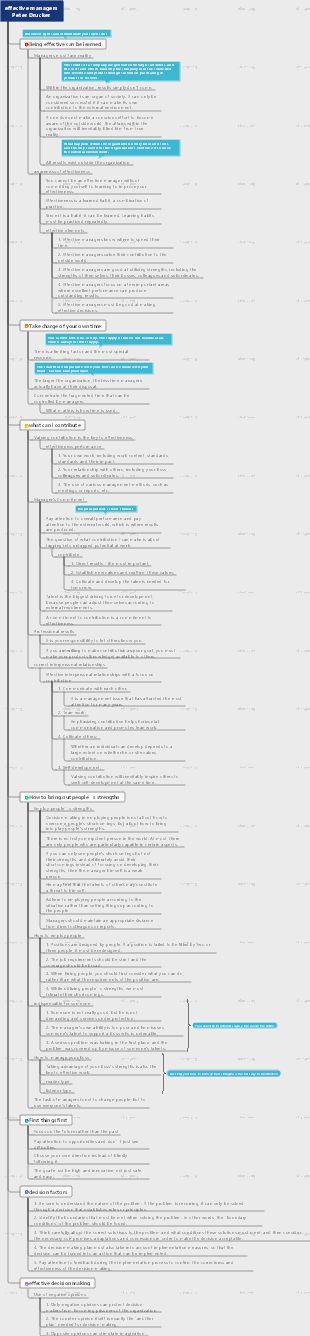
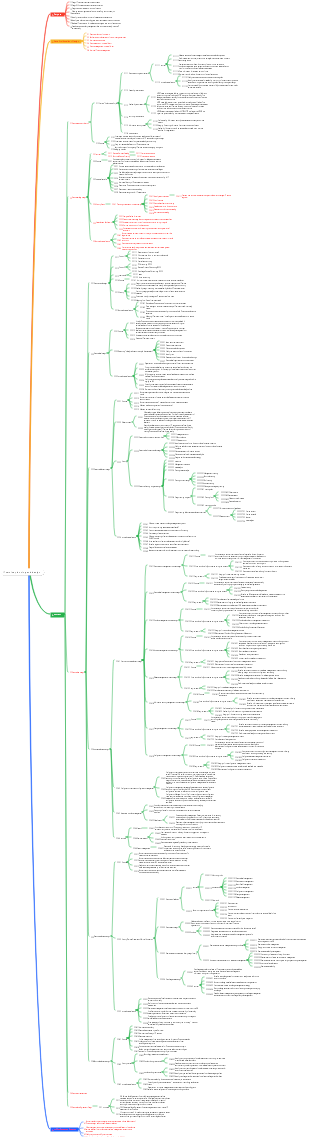
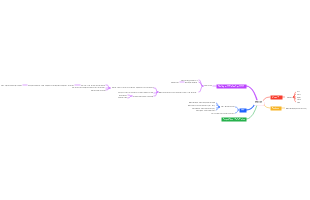
This is a mind map about 15 leadership misunderstandings, the main contents include: 1. Misunderstandings in thinking patterns and mentality, 2. Misunderstandings in resource and time management, 3. Misunderstandings in interpersonal relationships and team management, 4. Misunderstandings in personal brand and influence, 5. Misunderstandings in strategic decision-making and planning, 6. Misunderstandings in self-improvement and feedback, classification logic and improvement paths.
Edited at 2025-08-20 15:13:56Avatar 3 centers on the Sully family, showcasing the internal rift caused by the sacrifice of their eldest son, and their alliance with other tribes on Pandora against the external conflict of the Ashbringers, who adhere to the philosophy of fire and are allied with humans. It explores the grand themes of family, faith, and survival.

This article discusses the Easter eggs and homages in Zootopia 2 that you may have discovered. The main content includes: character and archetype Easter eggs, cinematic universe crossover Easter eggs, animal ecology and behavior references, symbol and metaphor Easter eggs, social satire and brand allusions, and emotional storylines and sequel foreshadowing.
[Zootopia Character Relationship Chart] The idealistic rabbit police officer Judy and the cynical fox conman Nick form a charmingly contrasting duo, rising from street hustlers to become Zootopia police officers!
Avatar 3 centers on the Sully family, showcasing the internal rift caused by the sacrifice of their eldest son, and their alliance with other tribes on Pandora against the external conflict of the Ashbringers, who adhere to the philosophy of fire and are allied with humans. It explores the grand themes of family, faith, and survival.
This article discusses the Easter eggs and homages in Zootopia 2 that you may have discovered. The main content includes: character and archetype Easter eggs, cinematic universe crossover Easter eggs, animal ecology and behavior references, symbol and metaphor Easter eggs, social satire and brand allusions, and emotional storylines and sequel foreshadowing.
[Zootopia Character Relationship Chart] The idealistic rabbit police officer Judy and the cynical fox conman Nick form a charmingly contrasting duo, rising from street hustlers to become Zootopia police officers!
15 leadership misunderstandings
1. Misconceptions about thinking patterns and mentality
Core issue: Intrinsic cognitive bias leads to misbehavior behavior and hinders self-improvement and teamwork.
1. Thinking of yourself as a victim of work (Misconception 1)
Performance: Attribute workplace pressure to the external environment (such as high-level decision-making and colleague competition), and fall into a passive defensive mentality.
Impact: Reduce subjective initiative, damage leadership brand, and trigger confrontational thinking of "you vs me".
Improvement plan: Reject the confrontational mentality of "you vs me", adopt the collaborative thinking of "hand-tightening" and regard workplace challenges as growth opportunities. When facing problems, prioritize “coping” (calmly accepting and looking for positive aspects) or “conquer” (prove opinions rationally based on facts and propose solutions), and avoid shrinking or extreme withdrawal to enhance self-leadership and professional brand image.
2. Fear of failure (Misconception 2)
Performance: Escape challenges because of fear of making mistakes, and focus too much on risks rather than opportunities.
Impact: Suppress innovation, weaken team trust, and lead to conservative decision-making (such as rejecting new project applications).
Improvement plan: Use the "what you think is what you get" pyramid model management idea and actively transform negative ideas (such as "I will definitely fail") into positive thinking (such as "this is an opportunity to accumulate experience"). By recording the relationship between thoughts, feelings, behaviors and results, we deliberately train our inner voice to change in a constructive direction and enhance the courage to face challenges
3. The way of thinking about "black or white" (misunderstanding 3)
Performance: Look at problems in an extreme manner (such as "all right or all wrong"), relying on experience rather than factual analysis.
Impact: Missing innovation opportunities in the gray area and undermining teamwork (such as simply expelling performance-related employees).
Improvement plan: Improve thinking flexibility by focusing on discomfort in the gray area, and avoid judging others or things with labels such as "strong/weak" and "smart/stupid". Stay open to disagreement views and explore the reasons behind it; recognize the value of success and failure, learn from other organizations' flexible processing experiences, and gradually adapt to complex decision-making environments
2. Resource and time management errors
Core issue: Imbalance in resource allocation leads to weak strategic execution and limited career development.
4. No time to think strategically (Misconception 4)
Performance: More than 80% of the time is spent on execution details, neglecting long-term planning (such as strategic thinking less than 1 hour a week).
Impact: Unable to identify systemic problems, hindering promotion (high-level officials pay more attention to strategic vision).
Improvement plan: Fixed 1-2 hours per week (gradually increasing) as a “interference-free strategic thinking time” that focuses on systemic problems of the team/company (such as recurring challenges, cross-departmental associations, etc.) rather than detailed execution. By drawing the "Execution and Strategic Time Allocation Pie Chart", the proportion of strategic thinking is gradually adjusted to more than 40%, and the habit of solving problems from the perspective of organizational goals
5. Ignore the importance of time management (misunderstanding 5)
Performance: Invalid meetings and inefficient email processing occupy a large amount of time (such as attending more than 6 meaningless meetings per week).
Impact: Core tasks are delayed and teams are inefficient (such as project delivery delay).
Improvement plan: Record all actions (in 15 minutes) for 14 consecutive days, analyze the time allocation pattern (such as meaningless meetings, inefficient email processing proportion), and create a "current and ideal time allocation comparison chart". Strictly evaluate the meeting (such as whether it is necessary, whether it can be replaced, whether it is required to participate in the whole process), reduce the valueless meeting by more than 60%, and focus time on core goals
6. When you want to say "no" but always say "yes" (Misunderstanding 6)
Performance: Excessive commitment leads to distracting energy (such as taking on 3 cross-departmental projects at the same time).
Impact: The quality of core work is degraded and personal credibility is damaged (such as the failure of key projects).
Improvement plan: Establish a "request evaluation list" to determine whether to accept tasks based on personal priorities. When rejecting, adopt the "Thank you Reason Alternative" model (such as "Thank you for your trust, but I am focusing on the XX project, and it is more appropriate to be responsible for XX"), firmly maintain the boundaries and avoid overcommitment affecting the quality of core work
3. Misconceptions about interpersonal relationships and team management
Core issue: Ignoring diverse collaboration and conflict management, weakening team cohesion.
7. Escape from conflict (Misconception 7)
Performance: Avoiding team conflicts (such as silence on subordinates’ performance issues), leading to accumulation of problems.
Impact: Team morale is low and decision-making quality declines (if important proposals fail due to insufficient discussion).
Improvement plan: Treat conflicts as opportunities for team growth, and use the fourth and fifth levels of "focus on the five levels" (understanding the other party's views and seeking win-win results) to deal with contradictions. Specific steps: clarify the problem (focus on behavior rather than personal attack), listen to confirm understanding, express feelings with "me" statements, brainstorm solutions, follow up on implementation, and avoid the accumulation and deterioration of problems
8. Not ready for the challenge of diversified workplaces (Misconception 8)
Performance: Unconscious bias (such as underestimation of female technicians’ abilities), lack of cultural sensitivity.
Impact: Talent loss and innovation is limited (such as inefficient cross-cultural team collaboration).
Improvement plan: Reduce unconscious bias through "cognition - education - action" three steps: first acknowledge your own biases; secondly, learn the experiences and needs of different groups to break stereotypes; finally, use structured standards (such as fixed interview questions and objective performance indicators) in recruitment and promotion to create a fair environment
9. Only downward management, rarely upward management or horizontal management (misunderstanding 9)
Performance: Ignore the alignment with superiors’ goals (such as not reporting progress regularly) and lack of cross-departmental collaboration.
Impact: Inadequate access to resources and hindered career development (such as missing promotion opportunities).
Improvement plan: Upward management needs to report work progress regularly (such as weekly), align superior priorities, predict problems in advance and prepare alternative plans; level management should actively establish relationships (such as understanding colleagues’ work priorities), share resources and information, enhance trust through "chat", and balance the ratio of "task completion" and "relationship maintenance"
4. Personal brand and influence misunderstanding
Core issue: The lack of awareness of actively shaping an image has led to underestimation of leadership.
10. Ignoring the importance of demeanor (Misconception 10)
Performance: Emotional loss of control under stress (such as yelling at subordinates during meetings), lack of empathy.
Impact: Destroy team trust and reduce willingness to follow (such as core members leaving).
Improvement plan: Focus on the core components of demeanor (emotional stability, empathy, sincerity, etc.), and improve through daily exercises: such as using deep breaths to regulate emotions under pressure; actively listening to others' opinions to enhance empathy; and maintaining consistency in words and deeds to reflect sincerity. Regularly self-assess (such as “response under stress” and “respect for others”) and seek feedback to continuously optimize performance
11. Underestimate the importance of self-promotion and visibility (Misconception 11)
Performance: Only focus on execution and do not actively display results (if not speak in high-level meetings).
Impact: Contribution is ignored and promotion opportunities are reduced (such as marginalization).
Improvement plan: Self-promotion based on facts (such as “improving project efficiency by XX method”), emphasizing teamwork while appropriately sharing personal contributions in key links. Balance "Good and bad news", which not only shows results in the report, but also shows challenges and solutions; actively participate in cross-departmental projects and speak in meetings to improve visibility
12. Don’t know how to influence others outside of power (Misconception 12)
Performance: Relying on positional power rather than professional ability (such as mandatory obedience by subordinates).
Impact: The team is superficially obedient but lacks internal recognition and has low execution ability.
Improvement plan: Use the "Influence Toolbox": Explain the rationality of the plan through data and logic (logic); understand the other party's emotional needs (such as stimulating the team's enthusiasm for the goal); inviting others to participate in decision-making to enhance recognition (cooperation). Pursuing “commitment”-level influence (others sincerely agree and actively engage) rather than just staying at the “obedience” level
5. Strategic decision-making and planning misunderstandings
Core issue: The lack of long-term vision and decision-making mechanisms has led to stagnation of career development.
13. Striving hard in difficult decisions (Misconception 13)
Performance: Unable to make decisive decisions due to information overload or emotional interference (such as delaying key investments).
Impact: Missing market opportunities and damaging the competitiveness of the organization (such as competitors leading the way to launch new products).
Improvement plan: Self-promotion based on facts (such as “improving project efficiency by XX method”), emphasizing teamwork while appropriately sharing personal contributions in key links. Balance "Good and bad news", which not only shows results in the report, but also shows challenges and solutions; actively participate in cross-departmental projects and speak in meetings to improve visibility
14. No clear long-term career planning (misunderstanding 14)
Performance: Going with the flow and lacking phased goals (such as no promotion path is clarified within 5 years).
Impact: Career development is in a bottleneck and it is difficult to adapt to industry changes (such as being eliminated by new technologies).
Improvement plan: Set 5-year long-term goals based on personal vision and break them down into annual and quarterly short-term steps. Evaluate progress regularly (such as quarterly) and adjust the plan according to industry changes. Think of career planning as a continuous process rather than a one-time event, ensuring that every move is aligned with the long-term vision
6. Self-improvement and feedback misunderstandings
Core issue: The lack of a systematic improvement mechanism has led to slow improvement of capabilities.
15. No regular seeking of true feedback (Misconception 15)
Performance: Avoid criticism (such as rejecting 360-degree assessment), relying on self-feeling.
Influence: Form a blind spot in ability and hinder personal growth (such as communication style not corrected).
Improvement plan: Take the initiative to ask for specific feedback from trusted colleagues, superiors or coaches (such as “What do I express in team communication need to be improved?”), and create a safe environment (indicating sincerity to accept criticism). After receiving feedback, distinguish facts from opinions, develop improvement plans (such as “Practice 3 times a month to actively listen”), and make progress to the feedbacker to encourage continuous feedback
Classification logic and improvement path
Thinking patterns and mentality are the underlying logic, and breakthroughs are needed through mindfulness training and cognitive reconstruction (such as daily reflection on the "open learning state").
Resource and time management need to establish a priority matrix to increase the proportion of strategic thinking time to more than 40%.
Relationships and team management emphasize conflict resolution techniques (such as the “hand-ticking” collaboration model) and diversified inclusion strategies.
Personal brand and influence need to combine professional abilities (such as KOL creation) and emotional resonance (such as story-based communication).
Strategic decision-making and planning recommend adopting the "three brains" decision-making model (instinct, emotion, rationality) and setting SMART career goals.
Self-improvement and feedback need to establish a regular assessment mechanism (such as reviewing with the coach every month) to transform feedback into specific actions.