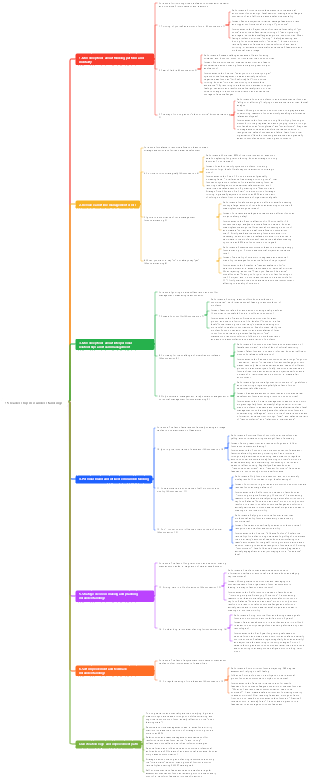
MindMap Gallery IT service planning and design-system planner and manager
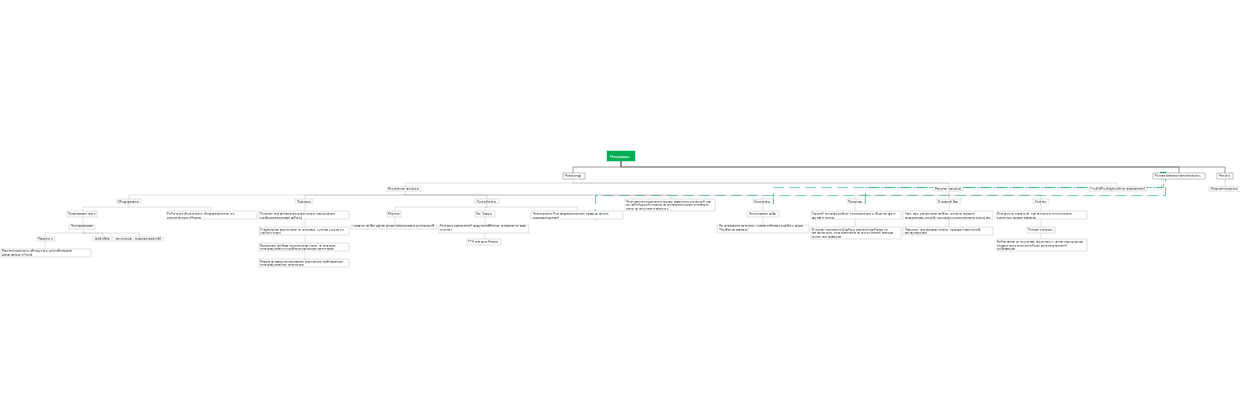
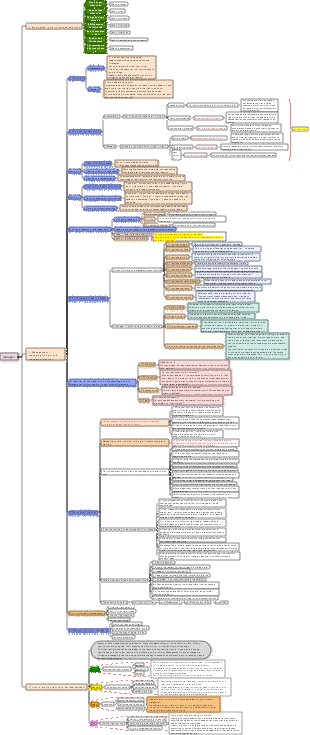
This is an article about IT service planning and design - a mind map for system planners and managers. IT service planning and design is at the front end of the entire IT service life cycle and aims to help IT service providers understand customer needs and comprehensively implement them. needs analysis.
Edited at 2024-10-29 15:32:12Chronische Herzinsuffizienz ist nicht nur ein Problem der Geschwindigkeit der Herzfrequenz! Es wird durch die Abnahme der Myokardkontraktion und der diastolischen Funktion verursacht, was zu unzureichendem Herzzeitvolumen führt, was wiederum Staus im Lungenzirkulation und Stau der systemischen Zirkulation verursacht. Aus den Ursachen sind die pathophysiologischen Prozesse der Herzinsuffizienz für Kompensationsmechanismen komplex und vielfältig. Durch die Kontrolle von Ödemen, die Reduzierung der Vorder- und Nachlast des Herzens, die Verbesserung der Herzkomfortfunktion und die Verhinderung und Behandlung grundlegender Ursachen können wir auf diese Herausforderung effektiv reagieren. Nur durch das Verständnis der Mechanismen und klinischen Manifestationen von Herzinsuffizienz und Beherrschung der Präventions- und Behandlungsstrategien können wir die Herzgesundheit besser schützen.
Ischämie-Reperfusionsverletzung ist ein Phänomen, dass sich die Zellfunktion und Stoffwechselstörungen und strukturelle Schäden verschlimmern, nachdem Organe oder Gewebe die Blutversorgung wiederhergestellt werden. Zu den Hauptmechanismen gehören eine erhöhte Erzeugung des freien Radikals, die Kalziumüberladung sowie die Rolle von mikrovaskulären und Leukozyten. Das Herz und das Gehirn sind häufige beschädigte Organe, die sich als Veränderungen des Myokardstoffwechsels und ultrastrukturelle Veränderungen, verringerte Herzfunktion usw. manifestieren usw. umfassen die Entfernung von freien Radikalen, die Verringerung der Kalziumüberlastung, die Verbesserung des Stoffwechsels und die Kontrolle von Reperfusionsbedingungen, z.
Stress ist ein unspezifischer Schutzmechanismus, der im Körper unter interner und externer Umweltstimulation auftritt, aber übermäßiger Stress kann zu internen Umweltstörungen und -krankheiten führen. Die Stressreaktion beinhaltet mehrere Systeme wie neuroendokrine, zelluläre und körperliche Flüssigkeiten, und seine Hauptmanifestationen umfassen emotionale Reaktionen, Veränderungen der kognitiven Fähigkeiten und Veränderungen des sozialen Verhaltens. Übermäßige Konzentration von Katecholamin ist einer der Hauptmechanismen des Stresses, die körperliche Erkrankungen wie Herz -Kreislauf -Erkrankungen, Stressgeschwüre und psychische Probleme wie traumatische Belastungsstörungen verursachen können. Das Verständnis des Stadiums und des Aufprallmechanismus von Stress kann dazu beitragen, Stress besser zu bewältigen und die körperliche und psychische Gesundheit aufrechtzuerhalten.
Chronische Herzinsuffizienz ist nicht nur ein Problem der Geschwindigkeit der Herzfrequenz! Es wird durch die Abnahme der Myokardkontraktion und der diastolischen Funktion verursacht, was zu unzureichendem Herzzeitvolumen führt, was wiederum Staus im Lungenzirkulation und Stau der systemischen Zirkulation verursacht. Aus den Ursachen sind die pathophysiologischen Prozesse der Herzinsuffizienz für Kompensationsmechanismen komplex und vielfältig. Durch die Kontrolle von Ödemen, die Reduzierung der Vorder- und Nachlast des Herzens, die Verbesserung der Herzkomfortfunktion und die Verhinderung und Behandlung grundlegender Ursachen können wir auf diese Herausforderung effektiv reagieren. Nur durch das Verständnis der Mechanismen und klinischen Manifestationen von Herzinsuffizienz und Beherrschung der Präventions- und Behandlungsstrategien können wir die Herzgesundheit besser schützen.
Ischämie-Reperfusionsverletzung ist ein Phänomen, dass sich die Zellfunktion und Stoffwechselstörungen und strukturelle Schäden verschlimmern, nachdem Organe oder Gewebe die Blutversorgung wiederhergestellt werden. Zu den Hauptmechanismen gehören eine erhöhte Erzeugung des freien Radikals, die Kalziumüberladung sowie die Rolle von mikrovaskulären und Leukozyten. Das Herz und das Gehirn sind häufige beschädigte Organe, die sich als Veränderungen des Myokardstoffwechsels und ultrastrukturelle Veränderungen, verringerte Herzfunktion usw. manifestieren usw. umfassen die Entfernung von freien Radikalen, die Verringerung der Kalziumüberlastung, die Verbesserung des Stoffwechsels und die Kontrolle von Reperfusionsbedingungen, z.
Stress ist ein unspezifischer Schutzmechanismus, der im Körper unter interner und externer Umweltstimulation auftritt, aber übermäßiger Stress kann zu internen Umweltstörungen und -krankheiten führen. Die Stressreaktion beinhaltet mehrere Systeme wie neuroendokrine, zelluläre und körperliche Flüssigkeiten, und seine Hauptmanifestationen umfassen emotionale Reaktionen, Veränderungen der kognitiven Fähigkeiten und Veränderungen des sozialen Verhaltens. Übermäßige Konzentration von Katecholamin ist einer der Hauptmechanismen des Stresses, die körperliche Erkrankungen wie Herz -Kreislauf -Erkrankungen, Stressgeschwüre und psychische Probleme wie traumatische Belastungsstörungen verursachen können. Das Verständnis des Stadiums und des Aufprallmechanismus von Stress kann dazu beitragen, Stress besser zu bewältigen und die körperliche und psychische Gesundheit aufrechtzuerhalten.
IT service planning and design
1. Purpose
1.1. Design IT services that meet business needs
1.2. Design SLAs, measurement methods and metrics
1.3. Design service process and its control method
1.4. Planning service organizational structure, staffing, positions and job requirements
1.5. Identify risks and define risk control measures and mechanisms
1.6. Identify and plan the technology and resources needed to support services
1.7. Evaluate IT service costs, formulate service budgets, and control service costs
1.8. Develop a service quality management plan to comprehensively improve IT service quality
2. Benefits/Excellent Design
2.1. Reduce total cost of ownership
2.2. Facilitate the implementation of new or changed services
2.3. Improve service process
2.4. Service execution is more efficient
2.5. Service management is more efficient
2.6. Improve IT service management
3. content
3.1. Service need identification
3.1.1. Content "Violence pits Anjia"
3.1.1.1. Service reporting requirements
3.1.1.1.1. content
3.1.1.1.1.1. Measure service performance against established service level objectives
3.1.1.1.1.2. Performance reports on major tasks, such as regular service overviews, incidents, and change reports
3.1.1.1.1.3. Characteristics and workload information of the work, such as incidents, problems, changes and tasks, categories, locations, customers, seasonal trends, mix of priorities, and volume of assistance requested
3.1.1.1.1.4. Trend information for a certain period of time
3.1.1.1.1.5. The report should include information on future planned work
3.1.1.1.2. critical success factors
3.1.1.1.2.1. Clarify service scope, service content and service goals
3.1.1.1.2.2. Identify customer needs for availability, continuity, information security, service capabilities, pricing and service reporting while planning the program design
3.1.1.1.2.3. Communicate fully with demand parties to fully understand explicit and implicit service requirements
3.1.1.2. Capability requirements
3.1.1.3. Availability requirements
3.1.1.3.1. MTBT mean time between failures = system running time/number of failures in system running time. The longer MTBF, the higher the system reliability. The average time between recovery from one event and the occurrence of the next event, also known as uptime.
3.1.1.3.2. MTTR mean failure repair time = system failure time/number of failures. The shorter the MTTR, the easier the system is to recover. The average time between failure occurrence and IT service recovery is the sum of detection time and resolution time, also known as downtime. machine time
3.1.1.3.3. MTSBI mean time between failures = MTBF MTTR, the larger the MTSBI, the higher the system reliability, the time between two adjacent events
3.1.1.4. continuity requirements
3.1.1.5. Information security needs
3.1.1.5.1. Confidentiality: Information can only be accessed and used by authorized persons
3.1.1.5.2. Integrity: Protecting information from unauthorized modification
3.1.1.5.3. Availability: Information should be accessible and usable within the time specified in the agreement
3.1.1.6. price demand
3.1.2. Purpose
3.1.2.1. Understand the basic needs of customers, analyze the different needs of potential customers, and lay the foundation for IT service planning and design.
3.1.2.2. Understand customer needs for system availability and continuity
3.1.2.3. Carry out reasonable allocation of IT service resources
3.1.2.4. Lay the foundation for budgeting IT service costs and designing pricing and charging models
3.2. Service catalog design
3.2.1. content
3.2.1.1. Business Services Catalog
3.2.1.1.1. Customer perspective
3.2.1.2. Technical Service Directory
3.2.1.2.1. business perspective
3.2.2. Purpose
3.2.2.1. Provide a single, consistent source of information for all agreed services and ensure that this information is available to all persons authorized to use the relevant services.
3.2.3. potential benefits
3.2.3.1. Promote departmental communication with external and internal parties
3.2.3.2. Gain a better understanding of business requirements and challenges
3.2.3.3. Can effectively and actively change the consumption quantity and consumption behavior of end users
3.2.3.4. Enhance customers' awareness of needs and improve the market visibility of IT service providers
3.2.3.5. Improve efficiency of IT services and processes
3.2.3.6. Redistribute IT service resources to core business systems
3.2.3.7. Reduce error rates in service delivery
3.2.3.8. Reduce operating costs for IT departments
3.2.4. Activity-Steps
3.2.4.1. "Xiaoqing shares and promotes charity"
3.2.4.1.1. Identify team members
3.2.4.1.1.1. Demand-side business representative, system planner and manager, IT service engineer
3.2.4.1.2. List of services
3.2.4.1.3. Service classification and coding
3.2.4.1.4. Detailed description of service items
3.2.4.1.5. Review and publish service catalog
3.2.4.1.6. Improve service catalog
3.2.5. Variables and Facilitators
3.2.5.1. Charge a flat fee for services
3.2.5.2. Determine service usage fees or charge amounts based on service capabilities
3.2.5.3. Increase the number or units of service consumption during the cycle
3.2.5.4. Prioritize the provision of similar services
3.2.5.5. Processes and procedures for acquiring new services or adding additional customers
3.2.6. critical success factors
3.2.6.1. Ensure that each service provided to the buyer is independent and not part of a larger service
3.2.6.2. Service content can be controlled and measured based on user needs or internal conditions
3.2.6.3. Service costs can vary based on customer needs
3.2.6.4. Customers can easily recognize and appreciate services that have a greater impact on service costs
3.3. Service plan design
3.3.1. Service model design
3.3.1.1. Division 1
3.3.1.1.1. Remote support (phone or email)
3.3.1.1.2. On-site service (door-to-door technical service)
3.3.1.1.3. Permanent on site
3.3.1.1.4. Centralized monitoring
3.3.1.2. Division 2
3.3.1.2.1. IT Outsourcing (OTO)
3.3.1.2.2. Business Process Outsourcing (BPO)
3.3.1.2.3. Knowledge Process Outsourcing (KPO)
3.3.1.3. new model
3.3.1.3.1. saas
3.3.1.3.2. cloud computing
3.3.1.4. Purpose
3.3.1.4.1. In order to better meet customer needs and improve customer satisfaction
3.3.1.5. Activity
3.3.1.5.1. Design the customer service model based on customer needs and the IT service provider's own business capabilities, mainly including availability and continuity
3.3.1.5.2. Availability design is ensuring that the availability levels of IT services are met
3.3.1.5.3. Continuity design generally considers large risk control and disaster response measures
3.3.1.5.4. Discuss and modify the designed IT service model with users
3.3.1.5.5. Matching for different It service models
3.3.1.6. critical success factors
3.3.1.6.1. The selected IT service model is consistent with customer needs
3.3.1.6.2. Track changes in customer needs and adjust IT service models in a timely manner
3.3.1.6.3. IT service providers have the ability to provide multiple IT service models at the same time
3.3.1.6.4. Matching IT service provider’s staffing and resource allocation with service model
3.3.2. Service level design
3.3.2.1. Purpose
3.3.2.1.1. It helps IT service providers make better decisions about their service levels. It can also have an impact on costs by adjusting customer demands for higher service levels and limit the expansion of user demand.
3.3.2.1.2. Take appropriate actions to eliminate or improve IT services that do not meet level requirements and avoid expectation creep, i.e. effectively manage and limit services that are undocumented by customers
3.3.2.1.3. Increase customer satisfaction and improve relationships with customers
3.3.2.1.4. Supervise IT service providers
3.3.2.2. The activity "clearly talks about the style of assessment"
3.3.2.2.1. Learn about service content
3.3.2.2.2. Determine service scope
3.3.2.2.3. Define service level objectives
3.3.2.2.4. Clarify the responsibilities of both parties
3.3.2.2.5. Identify risks
3.3.2.2.6. Review and modification of service level settings
3.3.2.2.7. Service level negotiation and communication
3.3.2.3. critical success factors
3.3.2.3.1. Pay attention to service level setting and invest sufficient resources and time
3.3.2.3.2. During the service level setting process, the service level should obtain the consent and recognition of the majority of people as much as possible to obtain the necessary support.
3.3.2.3.3. Fully considering customer needs, service levels are set based on the interface between IT and business needs.
3.3.2.3.4. Verify whether service goals are achievable and verify these service goals before signing an SLA
3.3.2.3.5. Correctly understand the supplier's service capabilities and obtain adequate support from operational level agreements or support contracts
3.3.2.3.6. The responsibilities of each party in setting service levels are clearly defined
3.3.3. Personnel element design
3.3.3.1. Purpose
3.3.3.1.1. Ensure team organizational structure is aligned with business needs and service model
3.3.3.1.2. Ensure that the number of service personnel allocated can meet both service and cost needs
3.3.3.1.3. Ensure that service personnel’s capabilities continue to meet service needs
3.3.3.1.4. Maintain stable working status of service personnel
3.3.3.1.5. Maintain service staff continuity
3.3.3.2. Selection basis
3.3.3.2.1. When selecting and allocating personnel, service providers need to evaluate personnel capabilities and service workload. First of all, the ability assessment of IT service personnel should be based on customer needs and customer characteristics, and evaluation indicators that meet the requirements of IT service work should be selected. Knowledge, skills and experience are the main elements.
3.3.3.2.2. Secondly, evaluate the current situation of IT service personnel's ability and quality to measure the ability and quality level of IT service personnel; identify the ability and quality gap of IT service personnel to guide the direction of training IT service personnel's ability and quality.
3.3.3.3. Activity
3.3.3.3.1. Personnel positions and responsibilities
3.3.3.3.1.1. management post
3.3.3.3.1.2. Technical post
3.3.3.3.1.3. Operation post
3.3.3.3.2. Personnel performance plan design
3.3.3.3.2.1. Identification and definition of personnel performance indicators
3.3.3.3.2.2. Clarify the calculation and assessment methods for personnel performance indicators
3.3.3.3.2.3. Define assessment information sources
3.3.3.3.2.4. Define personnel performance appraisal cycle
3.3.3.3.2.5. Design a performance appraisal strategy
3.3.3.3.3. Personnel training program design
3.3.3.3.3.1. inspection
3.3.3.3.3.2. Management interviews
3.3.3.3.3.3. data analysis
3.3.3.3.3.4. Training needs analysis
3.3.3.3.3.5. Training content design
3.3.3.3.3.5.1. Management training
3.3.3.3.3.5.2. Technical training
3.3.3.3.3.5.3. Tool training
3.3.3.3.3.5.4. process training
3.3.3.3.3.5.5. Delivery and emergency training
3.3.3.3.3.6. Design training program
3.3.3.3.3.6.1. training plan
3.3.3.3.3.6.2. Training form
3.3.3.3.3.6.2.1. Questionnaire
3.3.3.3.3.6.2.2. take an exam
3.3.3.3.3.6.2.3. Classroom performance
3.3.3.3.3.6.2.4. Practical operation
3.3.3.3.3.6.3. training discipline
3.3.3.3.3.7. Design training effectiveness evaluation methods
3.3.3.3.3.7.1. Forms and methods of evaluation
3.3.3.3.3.7.2. Review content
3.3.3.3.3.7.2.1. Course content
3.3.3.3.3.7.2.2. Course schedule
3.3.3.3.3.7.2.3. lecturer
3.3.3.3.3.7.2.4. personal gain
3.3.3.4. critical success factors
3.3.3.4.1. Whether it has a mature knowledge management system
3.3.3.4.2. Is on-the-job training adequate and applicable?
3.3.3.4.3. Conduct service awareness and communication skills training
3.3.3.4.4. Competency of team members
3.3.3.4.5. Whether the setting of personnel assessment indicators complies with the SMART principle
3.3.3.4.6. Is the application of personnel assessment results truly effective?
3.3.3.4.7. Establish a good communication and collaboration mechanism
3.3.3.4.8. Design effective personnel reserve measures
3.3.3.4.9. Lead a positive team culture, hold team events or other means of team building
3.3.4. process element design
3.3.4.1. Common process element design
3.3.4.1.1. Service report management process design
3.3.4.1.1.1. Purpose
3.3.4.1.1.1.1. It is necessary to ensure that the supplier should establish limited information communication with the demander through timely, accurate and reliable reports to provide decision-making support for the management of both parties.
3.3.4.1.1.2. Note: should be fully considered during the process
3.3.4.1.1.2.1. Activities consistent with the service reporting process, including creation, approval, distribution, archiving, etc.
3.3.4.1.1.2.2. Service report plan, including submission method, time, recipients of demand parties, etc.
3.3.4.1.1.2.3. Service report template, including format, outline, etc.
3.3.4.1.1.3. key indicators
3.3.4.1.1.3.1. Integrity of the service reporting process
3.3.4.1.1.3.2. Timeliness and accuracy of service reports. Attached are service report categories and templates
3.3.4.1.2. Service level management process design
3.3.4.1.2.1. Purpose
3.3.4.1.2.1.1. It is necessary to ensure that the supplier meets the demander's service quality requirements by defining, signing and managing service level agreements.
3.3.4.1.2.2. Note: should be fully considered during the process
3.3.4.1.2.2.1. Create directory
3.3.4.1.2.2.2. The buyer signs a service level agreement
3.3.4.1.2.2.3. Establish an SLA assessment self-evaluation mechanism based on the assessment and evaluation requirements of the demander.
3.3.4.1.2.3. key indicators
3.3.4.1.2.3.1. Completeness of service catalog definitions
3.3.4.1.2.3.2. Standardization of signing service level agreement documents
3.3.4.1.2.3.3. Effectiveness and completeness of SLA assessment and evaluation mechanism
3.3.4.1.3. Problem management process design
3.3.4.1.3.1. Purpose
3.3.4.1.3.1.1. It is necessary to ensure that the supplier prevents the recurrence of similar incidents by identifying the cause of the incident and solving the problem.
3.3.4.1.3.2. Note: should be fully considered during the process
3.3.4.1.3.2.1. Activities consistent with the problem management process, including problem establishment, classification, investigation and diagnosis, resolution, error assessment, closure, etc.
3.3.4.1.3.2.2. Problem classification management mechanism
3.3.4.1.3.2.3. Question import knowledge base mechanism
3.3.4.1.3.2.4. Problem Solving Assessment Mechanism
3.3.4.1.3.3. key indicators
3.3.4.1.3.3.1. Integrity of the problem management process
3.3.4.1.3.3.2. Effectiveness of Problem Solving Assessment Mechanism
3.3.4.1.4. Incident management process design
3.3.4.1.4.1. Purpose
3.3.4.1.4.1.1. It is necessary to ensure that the supplier has the ability to detect incidents and resolve them as soon as possible
3.3.4.1.4.2. Note: should be fully considered during the process
3.3.4.1.4.2.1. Activities consistent with the incident management process, including incident acceptance, classification and initial support, investigation and diagnosis, resolution, progress monitoring and tracking, closure, etc.
3.3.4.1.4.2.2. Event classification and grading mechanism
3.3.4.1.4.2.3. Event escalation mechanism
3.3.4.1.4.2.4. Satisfaction survey mechanism
3.3.4.1.4.2.5. incident resolution evaluation mechanism
3.3.4.1.4.3. key indicators
3.3.4.1.4.3.1. Integrity and effectiveness of the incident management process
3.3.4.1.4.3.2. Effectiveness of incident resolution assessment mechanism
3.3.4.1.5. Release management process design
3.3.4.1.5.1. Purpose
3.3.4.1.5.1.1. Must ensure that one or more changes are successfully imported
3.3.4.1.5.2. Note: should be fully considered during the process
3.3.4.1.5.2.1. Establish activities consistent with the release management process, including planning, design, construction, configuration, and testing
3.3.4.1.5.2.2. Establish a management mechanism for release types and scope
3.3.4.1.5.2.3. Develop a complete plan, including release plan, fallback plan, release record, etc.
3.3.4.1.5.2.4. Perform statistical analysis on release completion status
3.3.4.1.5.3. key indicators
3.3.4.1.5.3.1. Integrity of the release management process
3.3.4.1.5.3.2. Completeness and accuracy of release process records
3.3.4.1.6. Information security management process design
3.3.4.1.6.1. Purpose
3.3.4.1.6.1.1. To ensure that suppliers provide services that meet information security requirements
3.3.4.1.6.2. Note: should be fully considered during the process
3.3.4.1.6.2.1. Establish activities consistent with the safety management process, including identification, assessment, treatment and improvement, etc.
3.3.4.1.6.2.2. Establish information security strategies, guidelines and measures that are consistent with operation and maintenance service requirements
3.3.4.1.6.3. key indicators
3.3.4.1.6.3.1. Confidentiality of information during operation and maintenance
3.3.4.1.6.3.2. Availability of information during operation and maintenance
3.3.4.1.6.3.3. Integrity of information during operation and maintenance
3.3.4.1.7. Change management process design
3.3.4.1.7.1. Purpose
3.3.4.1.7.1.1. It is necessary to ensure that suppliers go through the process of managing and controlling changes to ensure that changes are implemented in an orderly manner
3.3.4.1.7.2. Note: should be fully considered during the process
3.3.4.1.7.2.1. Establish activities consistent with the change management process, including request, assessment, review, implementation, validation and review, etc.
3.3.4.1.7.2.2. Establish a change type and scope management mechanism
3.3.4.1.7.2.3. Perform statistical analysis on change completion status
3.3.4.1.7.3. key indicators
3.3.4.1.7.3.1. Integrity of the change management process
3.3.4.1.7.3.2. Completeness of change records
3.3.4.1.8. Configuration management process design
3.3.4.1.8.1. Purpose
3.3.4.1.8.1.1. It is necessary to ensure that the supplier maintains the necessary records of operation and maintenance service objects, ensures the reliability and effectiveness of configuration data, and associates it to support other service processes.
3.3.4.1.8.2. Note: should be fully considered during the process
3.3.4.1.8.2.1. Activities consistent with the configuration management process, including identification, recording, updating, and auditing
3.3.4.1.8.2.2. Configure database management mechanism
3.3.4.1.8.2.3. Configuration item audit mechanism
3.3.4.1.8.3. key indicators
3.3.4.1.8.3.1. Integrity of the configuration management process
3.3.4.1.8.3.2. Configuration data is accurate, complete, valid, available, and traceable
3.3.4.1.8.3.3. Effectiveness of configuration item audit mechanism
3.3.4.2. Configuration items and configuration management
3.3.4.2.1. Configuration items are any components that need to be managed to provide certain IT services (PCs, servers, phones, printers, graphics cards, optical drives, network cards, programs, documents, etc.). Different levels are determined according to customer needs. Typical configuration items include: Projects Plans, design documents, source code, executable code, test cases, and various data required to run the software enter configuration management after review and inspection.
3.3.4.2.2. Configuration management database: A database used to save configuration records throughout the life cycle: CMDB records the attributes of each configuration item and its relationship to other configuration items
3.3.4.2.3. Configuration Manager-Control: Confirm that only authorized configuration items and their updates can be included in the configuration management database. Ensure that the addition, deletion, replacement, and removal of configuration items can only be done after obtaining necessary documents and approvals
3.3.4.3. Issues and problem management
3.3.4.3.1. A problem describes an unanticipated situation that represents the underlying cause of one or more existing or potential events.
3.3.4.3.2. Known bugs: Issues for which the root cause and workarounds have been identified
3.3.4.3.3. Classification
3.3.4.3.3.1. Proactive problem management: Prevent the recurrence of incidents by proactively identifying weak links in the IT infrastructure and making recommendations to eliminate these weak links (deadlock prevention)
3.3.4.3.3.2. Reactive problem management: identifying the root cause of past events and proposing solutions or corrections
3.3.4.4. concept
3.3.4.4.1. event
3.3.4.4.1.1. An unplanned interruption of IT services, or a reduction in the quality of IT services, or any situation that can affect IT services in the future is an event.
3.3.4.4.2. service request
3.3.4.4.2.1. User requests for support, delivery, information, suggestions, or changes to standards
3.3.4.4.2.2. Including status inquiry, password reset, request to submit data reports, document reports, etc.
3.3.4.4.2.3. Service requests are generally handled by the service desk
3.3.4.4.3. event management
3.3.4.4.3.1. Responsible for recording, classifying and arranging personnel to handle incidents and supervising the entire processing process until the incident is resolved and the process is closed
3.3.5. Resource element design
3.3.5.1. Purpose
3.3.5.1.1. Ensure that service providers have the ability to provide sufficient resources. To meet customer service needs
3.3.5.1.2. Ensure that service providers can use effective means and methods to accept customer service requests, track the progress of service requests in a timely manner, and ensure that SLA requirements are met
3.3.5.1.3. Analyze current business needs and predict future business needs to ensure that these needs are guaranteed by sufficient service resources
3.3.5.1.4. Ensure that current service resources can maximize their effectiveness and provide the best service quality
3.3.5.2. Activity "Service Preparation Worker Information"
3.3.5.2.1. Service tool selection
3.3.5.2.1.1. content
3.3.5.2.1.1.1. Monitoring tools
3.3.5.2.1.1.2. process tools
3.3.5.2.1.1.2.1. Service level management
3.3.5.2.1.1.2.2. Service report management
3.3.5.2.1.1.2.3. Event (fault) management
3.3.5.2.1.1.2.4. problem management
3.3.5.2.1.1.2.5. Configuration management
3.3.5.2.1.1.2.6. Change management
3.3.5.2.1.1.2.7. Release management
3.3.5.2.1.1.3. Other tools
3.3.5.2.1.2. Factors in Judgment and Choice
3.3.5.2.1.2.1. Service content
3.3.5.2.1.2.2. consider cost
3.3.5.2.1.2.3. Consider customer expectations
3.3.5.2.1.2.4. Consider the technical architecture of the tool and the technical level of the team
3.3.5.2.1.2.5. Consider tool versatility and integration
3.3.5.2.2. Service desk design
3.3.5.2.2.1. Called a help desk or call desk, it is not a service process, but a service function. The purpose is to provide a unified point of contact for users and IT service organizations.
3.3.5.2.2.2. include
3.3.5.2.2.2.1. Set up dedicated communication channels (hotline, fax, website, email)
3.3.5.2.2.2.2. Designate a dedicated person to handle service requests
3.3.5.2.2.2.3. Integrate service processes and establish management systems for communication channels
3.3.5.2.3. Spare parts and spare parts library design library
3.3.5.2.3.1. Spare parts warehouse management design includes
3.3.5.2.3.1.1. Spare parts response methods and level definitions can meet the spare parts support agreed in the SLA
3.3.5.2.3.1.2. Spare parts supplier management
3.3.5.2.3.1.3. Beijing inbound and outbound management
3.3.5.2.3.1.4. Spare parts availability management
3.3.5.2.3.2. Indicators that need attention in spare parts management
3.3.5.2.3.2.1. Authenticity of spare parts library information
3.3.5.2.3.2.2. Standardization of spare parts operation management
3.3.5.2.3.2.3. Spare parts warehouse incoming and outgoing accounting management
3.3.5.2.3.2.4. institutional completeness
3.3.5.2.3.2.5. Spare parts availability
3.3.5.2.4. Knowledge base design
3.3.5.2.4.1. Knowledge accumulation related to IT service activities should be available to ensure the collection, sharing, and reuse of accumulated knowledge and information throughout the organization.
3.3.5.2.4.2. content
3.3.5.2.4.2.1. Establish a knowledge base for the description, analysis and solutions to common problems
3.3.5.2.4.2.2. Ensure knowledge is available and shareable across the organization
3.3.5.2.4.2.3. Choose an appropriate knowledge management strategy
3.3.5.2.4.2.4. The knowledge base has the functions of adding, updating and querying knowledge.
3.3.5.2.4.2.5. Develop relevant management systems based on knowledge management requirements and conduct knowledge life cycle management
3.3.5.3. critical success factors
3.3.5.3.1. The service personnel's abilities are up to standard and they can use various service tools correctly.
3.3.5.3.2. The functions of the service desk are clear and the service process is standardized.
3.3.5.3.3. Spare parts management specifications are consistent with the terms in the SLA
3.3.5.3.4. An effective monitoring platform can increase the probability of proactively detecting accidents or events and prevent them in advance.
3.3.5.3.5. Timely adjust the configuration of service resources according to changes in service levels and service requirements
3.3.5.3.6. If the spare parts library is provided by a third party, the third party’s support service level fully meets the service needs.
3.3.6. Technical element design
3.3.6.1. Purpose
3.3.6.1.1. Improve service quality
3.3.6.1.2. Reduce losses caused by staff turnover
3.3.6.1.3. Improve the efficiency of IT services
3.3.6.1.4. Reduce service costs
3.3.6.1.5. Unified management of the technologies required for various IT services enables timely promotion of mature technologies and the development of new technologies at any time.
3.3.6.1.6. Provide consistent technical standards for IT service providers and buyers
3.3.6.1.7. Explain the technologies and methods, and you can select the technologies required for IT service projects according to your own needs.
3.3.6.2. Activity content
3.3.6.2.1. Technology research and development
3.3.6.2.2. Problem-finding techniques
3.3.6.2.2.1. Identify monitoring objects and formulate equipment monitoring indicators and threshold table preparation plans
3.3.6.2.2.2. Develop a test environment construction plan, and simulate the test environment by simulating scenarios in the real application system environment
3.3.6.2.3. problem solving techniques
3.3.6.2.3.1. Identify common technologies and formulate standard operating procedures for common technical activities.
3.3.6.2.3.2. Identify the type and level of emergencies and formulate emergency plans
3.3.6.2.3.3. Identify knowledge transfer needs and formulate knowledge transfer plans
3.3.6.3. critical success factors
3.3.6.3.1. The technical ability of service personnel meets the job requirements
3.3.6.3.2. Correctly identify service demanders’ requirements or technology development trends
3.3.6.3.3. Pay attention to the use, management and maintenance of technology, and establish a technical system for discovering and solving problems
3.4. Service cost assessment
3.5. Service Level Agreement Design
3.5.1. introduce
3.5.1.1. SLA Service Level Agreement: A mutually recognized agreement defined between a service provider and a customer. It is a legal document that includes the parties involved, the terms of the agreement, penalties for breach of contract, fees and arbitration institutions, policies, modification clauses, reporting forms and the obligations of both parties.
3.5.1.2. OLA Operational Level Agreement: A backend agreement with an internal IT department for an IT service
3.5.1.3. UC support contract: A formal contract signed between an organization and an external service provider regarding service implementation, mainly the responsibilities, rights and obligations in the SLA content legal document.
4. critical success factors
4.1. Ensure that planning and design are comprehensive and include all activities of IT service design and business-related interfaces
4.2. When changes or additions are made to any individual element of the planned service, relevant functional, operational and management issues must be considered.
4.3. Clarify key points and fully communicate
4.4. Plan, Implement, Check, Improve (Plan-Do-Check-Act, PDCA)