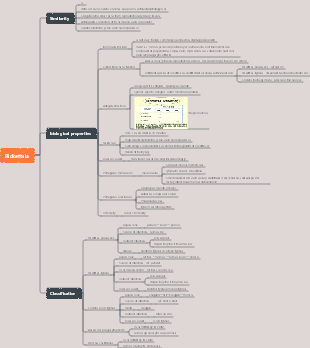
MindMap Gallery Anaerobic bacteria mind map
This is a mind map about anaerobic bacteria, medical microorganisms, which are mainly divided into anaerobic Bacillus, non-spore anaerobic bacteria, etc.
Edited at 2023-11-09 12:14:13This is a mind map about bacteria, and its main contents include: overview, morphology, types, structure, reproduction, distribution, application, and expansion. The summary is comprehensive and meticulous, suitable as review materials.

This is a mind map about plant asexual reproduction, and its main contents include: concept, spore reproduction, vegetative reproduction, tissue culture, and buds. The summary is comprehensive and meticulous, suitable as review materials.
This is a mind map about the reproductive development of animals, and its main contents include: insects, frogs, birds, sexual reproduction, and asexual reproduction. The summary is comprehensive and meticulous, suitable as review materials.
This is a mind map about bacteria, and its main contents include: overview, morphology, types, structure, reproduction, distribution, application, and expansion. The summary is comprehensive and meticulous, suitable as review materials.
This is a mind map about plant asexual reproduction, and its main contents include: concept, spore reproduction, vegetative reproduction, tissue culture, and buds. The summary is comprehensive and meticulous, suitable as review materials.
This is a mind map about the reproductive development of animals, and its main contents include: insects, frogs, birds, sexual reproduction, and asexual reproduction. The summary is comprehensive and meticulous, suitable as review materials.
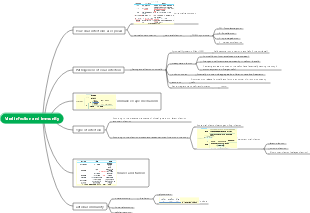
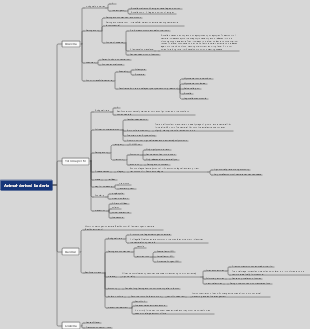
anaerobic bacteria
Classification
According to whether spores can be formed
There are spores
Anaerobic Clostridium
exogenous infection
Produce exotoxins
Diseases have specific forms
No spores
Many bacterial genera
Normal human flora/opportunistic pathogenic bacteria
endogenous infection
No specific disease type
Anaerobic Clostridium
Features
distributed
Soil, human and animal intestines and feces
type
Most saprophytic bacteria, few pathogenic bacteria
spores
Strong resistance, the spore diameter is wider than the bacterial body (the spore diameter of Clostridium perfringens is narrower than the bacterial body)
Most are flagellated and non-capsulated (Clostridium perfringens is non-flagellated and has a capsule)
include
Clostridium tetani
Biological traits
G
The spores are round in shape, with a diameter larger than the bacterial body, and are located at the top of the bacterial body
Spores have strong resistance and are widely found in nature. They do not produce toxins when dormant.
stick-like
Cultivation characteristics
strictly anaerobic
Easy to migrate and spread on the surface of the culture medium, with B hemolytic rings and feather-like colonies
Does not ferment sugars and does not break down proteins
Pathogenic conditions
Invasion route
Spores invade from wounds or umbilical cord stumps
Important conditions for infection to occur
An anaerobic microenvironment is formed locally in the wound, which is conducive to the development of spores into propagules.
Narrow and deep wounds (stab wounds), accompanied by contamination with soil or foreign matter
Large-area trauma, lots of necrotic tissue, and local tissue ischemia
Accompanied by aerobic bacteria or facultative anaerobic bacteria
Pathogenic substances
Not invasive
Exotoxins
Tetanus hemolytic toxin
Tetanospasm toxin (TT)
Features
The main pathogenic substance has high affinity for cranial nerves and anterior horn motor nerve cells.
A highly toxic neurotoxin, second only to botulinum toxin
plasmid encoding
Not heat-resistant and can be destroyed by pepsin
Disulfide bonds connect the light chain (A chain) and the heavy chain (B chain)
Heavy chain function
binding receptor
Binds very strongly to gangliosides and glycoproteins on the cell membrane of motor neurons located at the neuromuscular junction
transport toxins
The toxin travels retrogradely along the axon through synaptic vesicles and converges in the cytoplasmic endosomes of inhibitory neurons.
release light chain
Mediates the entry of light chains from endosomes into the cytoplasm of inhibitory neurons
Light chain function
toxicity
Zinc endopeptidase activity, which destroys membrane proteins on synaptic vesicles responsible for the release of inhibitory neurotransmitters
Pathogenic process
Clostridium tetanus spores infect the wound → an anaerobic microenvironment is formed locally in the wound, and the spores germinate → produce tetanus spasm toxin and enter the blood → the heavy chain acts on the neuromuscular junction motor neuron cell membrane → endocytosed into synaptic vesicles and along the nerve The axon travels retrogradely and transports toxins to the inhibitory nerve cytoplasmic endosomes in the anterior horn of the spinal cord → releases light chains → prevents the release of inhibitory neurotransmitters (y-aminobutyric acid and glycine) from the presynaptic membrane → tonic spasms
Pathogenic
tetanus
Whole body type
Onset within three weeks of trauma
Wry smile, trismus, opisthotonus
Limited
local muscle tonic spasm
neonatal tetanus
Using unclean instruments to cut the umbilical cord or not strictly disinfecting the umbilicus during delivery
Immunity
Humoral immunity
Spasmotoxin is very toxic and can cause disease in very small amounts, so it is not enough to effectively stimulate the immune system to produce TAT.
Microbiological examination is generally not performed
Prevention and control principles
prevention
Treat wounds correctly
Timely debridement and expansion, and flush with 3% hydrogen peroxide
Establish basic immunity
Diphtheria-tetanus-pertussis triple vaccine preparation (DPT) (pertussis vaccine, diphtheria toxoid, tetanus toxoid)
Three vaccinations for children aged 3 to 5 months
After trauma, boost vaccination with tetanus toxoid once in addition to basic immunity.
treat
emergency prevention
Those with large-area burns and no basic immunization → Immediately intramuscular injection of TAT or TIG
Neutralize toxins
Those who have been infected should use human anti-tetanus immune globulin (TIG)/tetanus antitoxin (TAT) in sufficient amounts
Do a skin test first to prevent allergic reactions, and treat positive patients with desensitization
Remove bacteria
Penicillin, metronidazole→kill Clostridium tetanus propagules
Control symptoms and enhance care
Keep airway open
Clostridium perfringens
Biological traits
G
The oval diameter of the spores is smaller than that of the bacteria and is difficult to observe.
Cultivation characteristics
Anaerobic (not strict), short division cycle (8 minutes per generation), active metabolism
Blood agar plate—double layer hemolysis ring
The inner ring is complete hemolysis caused by B toxin
The outer ring is incomplete hemolysis caused by a toxin
Egg yolk agar plate (Nagler reaction) - milky white turbid circle
a toxin (lecithinase) breaks down lecithin in egg yolk
Milk culture medium—turbulent fermentation
Breaks down lactose and produces acid and gas. A large amount of gas breaks through the coagulation of casein in the milk, moves the coagulated layer of petroleum jelly on the liquid surface upward, and even washes away the cotton plug at the mouth of the test tube.
Meat cooking medium (based on all anaerobic bacteria) - produces a lot of gas, the meat residue is light pink
Pathogenicity
Types
Type A is mainly pathogenic to humans, and type C is the pathogenic bacteria of necrotizing enteritis.
Pathogenic substances
a toxin
The most toxic, destroying various biofilms
=Phospholipase C, can be produced by all types of bacteria, with type A producing the largest amount
Dissolve blood cells → edema compression, ischemia, necrosis
B toxin
Type C is produced and is related to intestinal mucosal damage and necrosis.
Disease caused
gas gangrene
Most are caused by type A and have a short incubation period
Emphysema, local edema, tissue necrosis, accompanied by foul odor. Severe tissue swelling and pain, crepitus when touched by water vapor mixture
Causes toxemia, shock, and high mortality
food poisoning
Ingestion of food (meat) contaminated with large amounts of enterotoxin-producing type A bacteria
necrotizing enteritis
Type C bacteria contaminate food
microbiological examination
Direct smear microscopy – valuable rapid diagnosis
Smear taken from deep wound, Gram stain
G. coli
The number of white blood cells is very small and the shape is atypical (toxic effect)
Accompanied by other miscellaneous bacteria
Prevention and control
surgical debridement
Removal of dead tissue and amputation if necessary
antibiotic treatment
high dose penicillin
hyperbaric oxygen chamber method
Clostridium botulinum
Biological traits
The oval diameter of the spore is larger than that of the bacterium and is located at the secondary end, giving the bacterium a spoon shape.
Pathogenicity
botulinum toxin
The most violent toxin known, paralyzing respiratory muscles leading to death
Structure, function and pathogenic mechanism are very similar to tetanospasm toxin
It is not heat resistant and can be destroyed by boiling it for one minute.
Pathogenic mechanism
After entering the small intestine, it is absorbed into the blood circulation and acts on peripheral cholinergic nerves.
The heavy chain binds to the receptor and forms toxin-containing synaptic vesicles in the cytoplasm, which are retained at the neuromuscular junction and fuse with endosomes
Light chain dissociation, zinc endopeptidase activity, inhibits acetylcholine release at the neuromuscular junction, leading to flaccid paralysis
Disease caused
foodborne botulism
Most of them are caused by fermented soy products. Gastrointestinal symptoms are rare, and flaccid paralysis is the main cause.
Fatigue and headache → Paralysis of eye muscles, pharyngeal muscles, and diaphragm muscles → difficulty breathing, death from suffocation
clear mind
High case fatality rate
infant botulism
Ingestion of food contaminated with botulinum toxin (honey)
The special environment of infant intestinal tract lacks normal flora that are antagonistic to Clostridium botulinum
Closing the stool, sucking, crying → flaccid paralysis
low mortality rate
traumatic botulism
iatrogenic botulism
inhalation botulism
Microbiological examination
specimen
Remaining food, feces. Heat at 80°C for ten minutes and then incubate anaerobically.
Animal experiment
Prevention and control principles
Similar to tetanus
Clostridium difficile
Asymptomatic carriers—an important source of infection
Iatrogenic diarrhea: watery diarrhea/antibiotic-associated diarrhea
pseudomembranous colitis
non-spore-forming anaerobic bacteria
Features
The largest number of normal human intestinal flora
Pathogenic conditions
Changes in the host site, decreased host immune function, and dysbiosis
Formation of local anaerobic microenvironment (burns, radiotherapy and chemotherapy, severe oral compression)
Characteristics of infection
endogenous infection
systemic chronic infection
No specific disease type, mostly purulent infection
Formation of local abscess or tissue necrosis
sepsis
Aminoglycoside therapy is ineffective