MindMap Gallery stomach cancer
Gastric cancer is a malignant tumor originating from the gastric mucosal epithelium. The vast majority of gastric cancers are adenocarcinomas. In addition, they also include other types such as signet ring cell carcinoma, adenosquamous carcinoma, squamous cell carcinoma, carcinoid, small cell carcinoma and undifferentiated carcinoma. , but relatively rare.
Edited at 2024-11-15 17:30:36ルミ:精神的な目覚めの10次元。あなたが自分自身を探すのをやめるとき、あなたが探しているのはあなたを探しているので、あなたは宇宙全体を見つけるでしょう。あなたが毎日忍耐することは何でもあなたの精神の深みへの扉を開くことができます。沈黙の中で、私は秘密の領域に滑り込み、私は私の周りの魔法を観察するためにすべてを楽しんだが、何の騒ぎをしなかった。翼で生まれたときに、なぜcraいるのが好きですか?魂には独自の耳があり、心が理解できないことを聞くことができます。すべてへの答えを内向きに求めてください、宇宙のすべてがあなたの中にあります。恋人たちはどこかで会うことはなく、この世界には別れもありません。傷は光があなたの心に入るところです。
慢性心不全は、心拍数の速度の問題だけではありません!これは、心筋収縮と拡張期機能の減少によって引き起こされ、それが不十分な心拍出量につながり、肺循環の鬱血と全身循環のうっ血を引き起こします。原因、誘導、補償メカニズムまで、心不全の病態生理学的プロセスは複雑で多様です。浮腫を制御し、心臓の前面と後負荷を減らし、心臓の快適機能を改善し、基本的な原因を予防し、治療することにより、この課題に効果的に対応できます。心不全とマスタリング予防と治療戦略のメカニズムと臨床的症状を理解することによってのみ、心臓の健康をよりよく保護できます。
虚血再灌流損傷は、臓器や組織が血液供給を回復すると、細胞機能と代謝障害、構造的損傷が悪化する現象です。その主なメカニズムには、フリーラジカル生成の増加、カルシウム過負荷、および微小血管および白血球の役割が含まれます。心臓と脳は一般的な損傷した臓器であり、心筋の代謝と超微細構造の変化、心機能の低下などの変化として現れます。予防と制御の測定には、フリーラジカルの除去、カルシウム過負荷の減少、代謝の改善、低温、低温、低圧などの再灌流条件の制御が含まれます。これらのメカニズムを理解することは、効果的な治療オプションの開発に役立ち、虚血性損傷を軽減するのに役立ちます。
ルミ:精神的な目覚めの10次元。あなたが自分自身を探すのをやめるとき、あなたが探しているのはあなたを探しているので、あなたは宇宙全体を見つけるでしょう。あなたが毎日忍耐することは何でもあなたの精神の深みへの扉を開くことができます。沈黙の中で、私は秘密の領域に滑り込み、私は私の周りの魔法を観察するためにすべてを楽しんだが、何の騒ぎをしなかった。翼で生まれたときに、なぜcraいるのが好きですか?魂には独自の耳があり、心が理解できないことを聞くことができます。すべてへの答えを内向きに求めてください、宇宙のすべてがあなたの中にあります。恋人たちはどこかで会うことはなく、この世界には別れもありません。傷は光があなたの心に入るところです。
慢性心不全は、心拍数の速度の問題だけではありません!これは、心筋収縮と拡張期機能の減少によって引き起こされ、それが不十分な心拍出量につながり、肺循環の鬱血と全身循環のうっ血を引き起こします。原因、誘導、補償メカニズムまで、心不全の病態生理学的プロセスは複雑で多様です。浮腫を制御し、心臓の前面と後負荷を減らし、心臓の快適機能を改善し、基本的な原因を予防し、治療することにより、この課題に効果的に対応できます。心不全とマスタリング予防と治療戦略のメカニズムと臨床的症状を理解することによってのみ、心臓の健康をよりよく保護できます。
虚血再灌流損傷は、臓器や組織が血液供給を回復すると、細胞機能と代謝障害、構造的損傷が悪化する現象です。その主なメカニズムには、フリーラジカル生成の増加、カルシウム過負荷、および微小血管および白血球の役割が含まれます。心臓と脳は一般的な損傷した臓器であり、心筋の代謝と超微細構造の変化、心機能の低下などの変化として現れます。予防と制御の測定には、フリーラジカルの除去、カルシウム過負荷の減少、代謝の改善、低温、低温、低圧などの再灌流条件の制御が含まれます。これらのメカニズムを理解することは、効果的な治療オプションの開発に役立ち、虚血性損傷を軽減するのに役立ちます。
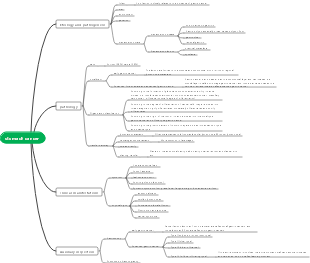
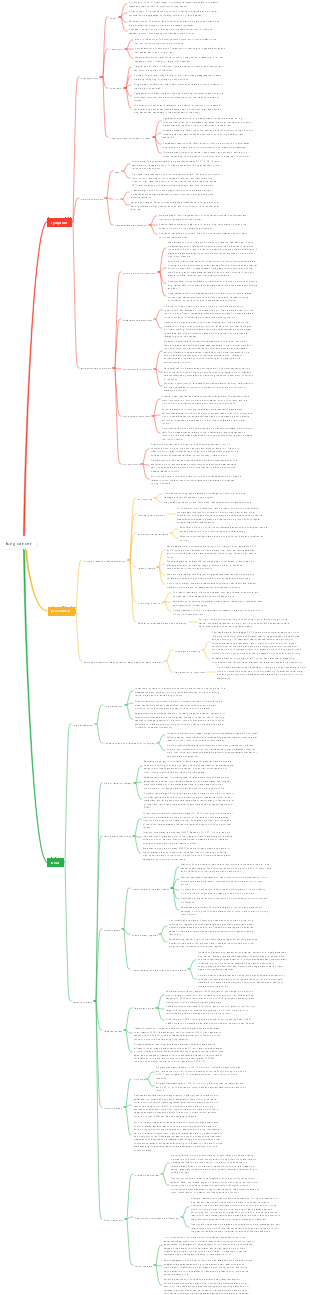
stomach cancer
symptom
Early symptoms
indigestion
Upper abdominal fullness and discomfort: often occurs after eating, with a feeling of fullness in the stomach and slight pressure, varying in severity, and may occur intermittently.
Belching: Frequent belching, with gas gushing upward from the stomach, often without a sour smell, is related to gastric peristalsis dysfunction.
Loss of appetite: lack of interest in food and reduced food intake, which may be due to gastric lesions that affect digestive function, resulting in delayed gastric emptying.
Dull pain in upper abdomen
Irregular pain: There is no obvious pattern in the time and degree of pain. It may occur before or after meals, or may occur at night. The pain is mostly dull or dull.
Mild pain: The pain is relatively mild, tolerated by some patients and easily ignored. Sometimes it can be temporarily relieved by rest or simple dietary adjustments.
Progressive symptoms
Worsening of upper abdominal pain
Rhythmic changes (such as gastric ulcer type gastric cancer): If there is a history of gastric ulcer, the pain pattern may change, such as eating - pain - relief to irregular pain, the duration of pain is prolonged, and the frequency of attacks increases.
Persistent severe pain (such as tumor invasion of nerves, etc.): When a tumor invades the deep tissue or nerves of the gastric wall, persistent severe pain may occur, and the pain may radiate to the lower back, which is often unbearable for patients and seriously affects the quality of life.
weight loss
Unexplained weight loss: Gradual weight loss without deliberate dieting or increased exercise. This is due to the tumor consuming body energy and the patient eating less due to stomach discomfort and insufficient nutritional intake.
Muscle atrophy: Long-term malnutrition can lead to a loss of muscle mass, which is manifested by gradual physical weakness and reduced physical strength and endurance.
Vomiting blood, black stool
A small amount of hematemesis (coffee-colored substance, due to the action of blood by gastric acid): When the surface of the tumor ruptures and bleeds, the blood and gastric acid will turn into coffee color. When the amount of bleeding is small, it will appear as a small amount of coffee-colored liquid in the vomitus.
Massive vomiting of blood (rare, may be accompanied by shock symptoms): If the tumor invades larger blood vessels, it can cause massive bleeding, manifested as vomiting blood. A large amount of vomiting blood in a short period of time can cause the patient to suffer from shock symptoms such as dizziness, palpitation, pale complexion, and drop in blood pressure. .
Melena (tarry stool): When the bleeding is small and slow, the blood undergoes a series of chemical reactions in the intestines to form black, sticky, shiny stool that looks like tar, indicating bleeding in the upper gastrointestinal tract.
Difficulty swallowing (tumor located near the cardia)
Progressive exacerbation: At first, the obstruction may only occur when eating solid food. As the disease progresses, it will also be difficult to eat semi-liquid or even liquid food, and the degree of dysphagia gradually increases.
Accompanied by vomiting (mostly mucus and food): When food cannot pass through the esophagus smoothly into the stomach, it will accumulate in the esophagus, causing vomiting. The vomitus is mostly undigested food and mucus and does not contain bile.
abdominal mass
Palpable mass in the upper abdomen: The mass is generally hard in texture, has a rough surface, and can be nodular in shape. It is mostly located in the middle and upper abdomen, and may sometimes be accompanied by tenderness. As the disease progresses, the mass may gradually increase in size.
Fixed or mobile (depending on tumor infiltration): If the tumor is adherent to surrounding tissue, the mass is mostly fixed; if the tumor has not extensively invaded surrounding tissue, the mass may have a certain degree of mobility.
Late symptoms
anemia, fatigue
Pale complexion, dizziness, and palpitation (anemia due to long-term blood loss, malnutrition, etc.): Due to chronic blood loss, nutrient absorption impairment, and tumor consumption caused by gastric cancer, patients may experience varying degrees of anemia, manifested as pale complexion, pale lips, and dizziness , palpitation, shortness of breath and other symptoms.
Extreme general fatigue: The body's energy reserves are severely insufficient, muscle strength is weakened, the patient feels extremely tired, has extremely poor activity tolerance, and is even unable to perform simple daily activities.
ascites
Abdominal distension (due to increased fluid accumulation in the abdominal cavity): The abdomen gradually bulges, and the patient feels that the abdominal distension is obvious. In severe cases, it can affect breathing, causing difficulty in breathing and further loss of appetite.
Positive moving dullness (when there is a large amount of ascites): Doctors can find moving dullness during physical examination, indicating that there is more free fluid in the abdominal cavity. Causes of ascites formation include tumor invasion of the peritoneum, hypoalbuminemia, etc.
Supraclavian lymph node enlargement (distant metastasis)
Left supraclavicular lymph nodes (Virchow lymph nodes) are common: enlarged lymph nodes are hard in texture and non-tender, and multiple lymph nodes can fuse together. This is a manifestation of gastric cancer cells metastasizing to the supraclavicular lymph nodes through lymphatic channels.
It can indicate disease progression and poor prognosis: supraclavicular lymph node enlargement indicates that gastric cancer has metastasized to distant sites, indicating that the disease is in an advanced stage and the patient's prognosis is relatively poor.
Other symptoms of metastasis
Liver metastasis (pain in the liver area, jaundice, etc.): If the tumor metastasizes to the liver, it can cause pain in the liver area. The nature of the pain is mostly swelling or dull pain. It can be accompanied by liver function damage, jaundice (yellowing of the skin and sclera), and ascites. and other symptoms.
Lung metastasis (cough, hemoptysis, dyspnea, etc.): Metastasis to the lungs may cause cough, hemoptysis, chest pain, dyspnea and other pulmonary symptoms, which are similar to the symptoms of primary lung cancer.
Bone metastasis (bone pain, pathological fracture, etc.): When cancer cells metastasize to the bone, it can cause bone pain at the metastasis site. The pain is severe and persistent. As the disease progresses, bone destruction may lead to pathology. Fractures affect the patient's mobility and quality of life.
prevention
living habits
Diet rules
Eat meals at regular intervals to avoid overeating
Control the amount you eat at each meal so you don’t feel full
Reasonable meals
Increase the intake of fresh fruits and vegetables (rich in vitamins C, E, beta-carotene and other antioxidant substances)
Eat more whole grains, beans and other foods rich in dietary fiber
Reduce the intake of high-salt foods (pickles, cured meats, etc.) and limit the daily salt intake to no more than 6 grams
Limit red meat (pig, beef, lamb) and processing meat (sausage, ham, etc.) consumption, and take the appropriate amount of white meat (chicken, duck, fish)
Avoid eating moldy food (containing aflatoxin)
Quit smoking and limit alcohol
Strictly quit smoking. Smoking is one of the important risk factors for gastric cancer.
Limit alcohol consumption to no more than 25 grams per day for men and 15 grams for women
Helicobacter pylori infection prevention and control
Detection
Get regular carbon 13 or carbon 14 breath tests to detect Helicobacter pylori
For those with family history of gastric cancer, indigestion and other symptoms, timely testing
treat
Once infection is confirmed, eradication treatment is performed with standard quadruple therapy (proton pump inhibitor, bismuth, and two antibiotics)
Review after treatment to ensure that Helicobacter pylori has been completely eliminated
Stomach disease management
Chronic gastric disease treatment
For chronic gastritis, gastric ulcer and other diseases, follow the doctor’s instructions for standardized treatment, and regularly review gastroscopy
Actively treat gastroesophageal reflux disease to reduce gastric acid irritation to the gastric mucosa
Gastric polyp management
If gastric polyps are found, choose an appropriate resection method (such as endoscopic resection) based on the size and type of the polyps, and follow up regularly
Mental health and exercise
Reduce stress
Learn to relieve mental stress through appropriate methods, such as meditation, yoga, listening to music, traveling, etc.
Maintain a good attitude and avoid long-term anxiety and depression
moderate exercise
Do at least 150 minutes of moderate-intensity aerobic exercise (such as brisk walking, jogging, swimming, etc.) per week
Appropriate strength training can be carried out to enhance physical fitness
treat
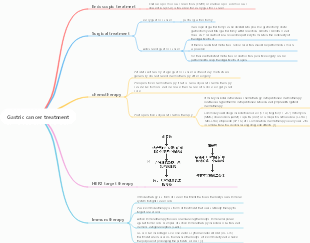
surgical treatment
radical surgery
Total gastrectomy: suitable for tumors located in the body, fundus, etc. of the stomach that are widely infiltrating or multifocal.
Subtotal gastrectomy: remove most of the stomach and retain part of the gastric tissue. Depending on the location of the tumor, choose Bi type I (gastric and duodenal anastomosis) or Bi type II (gastric and jejunal anastomosis).
palliative surgery
The main purpose is to relieve symptoms, such as relieving obstruction and stopping bleeding, such as gastrojejunostomy, gastrostomy, etc.
Chemotherapy
neoadjuvant chemotherapy
Chemotherapy is performed before surgery to shrink the tumor and improve the surgical resection rate and radical cure.
Commonly used chemotherapy drugs include fluorouracil, oxaliplatin, paclitaxel, etc., and combination chemotherapy regimens are often used.
Adjuvant chemotherapy
Chemotherapy is performed after surgery to eliminate any remaining cancer cells and reduce the risk of recurrence.
Determine the chemotherapy cycle and plan based on the patient’s pathological stage, physical condition, etc.
Chemotherapy for advanced gastric cancer
For advanced gastric cancer that cannot be surgically removed or has relapsed or metastasized, chemotherapy can relieve symptoms and prolong survival.
Different chemotherapy regimens such as first-line and second-line can be chosen, and targeted therapy drugs can also be combined
targeted therapy
Anti-HER2 treatment
For patients with HER2-positive gastric cancer, anti-HER2 drugs such as trastuzumab can be used in combination with chemotherapy
anti-angiogenic therapy
Drugs such as ramucirumab exert anti-cancer effects by inhibiting tumor angiogenesis and blocking tumor nutrient supply.
Immunotherapy
immune checkpoint inhibitors
Such as pembrolizumab, nivolumab, etc., by removing the suppression of the immune system by tumor cells and activating the body's immune cells to kill tumor cells.
Suitable for patients with specific types of gastric cancer, such as microsatellite instability high (MSI-H) or mismatch repair deficiency (dMMR), etc.
radiotherapy
Preoperative radiotherapy
Reduce tumor size, increase surgical resection rate, and reduce local recurrence
Postoperative radiotherapy
For patients with high-risk factors for local recurrence (such as more lymph node metastases, extraserosa tumor invasion, etc.), reduce the risk of local recurrence
Polical radiotherapy
Relieve pain, bleeding, obstruction and other symptoms caused by gastric cancer, and improve patients’ quality of life
Supportive care and recovery
nutritional support
For patients with gastric cancer, especially after surgery or during chemotherapy, adequate nutritional intake can be ensured through oral nutritional supplements, nasogastric feeding, parenteral nutrition, etc.
Regularly assess patients’ nutritional status and adjust nutritional plans
Symptom management
Pain relief: Choose appropriate analgesic drugs (nonsteroidal anti-inflammatory drugs, opioids, etc.) according to the degree of pain
Antiemetics: Using antiemetic drugs to prevent and treat chemotherapy-induced nausea and vomiting
Improve anemia: For patients with anemia, blood transfusion or use of drugs such as erythropoietin may be used if necessary
psychological rehabilitation
Provide psychological support and guidance to patients to help them cope with the psychological pressure caused by cancer diagnosis and treatment
Encourage patients to participate in cancer rehabilitation organization activities and enhance their confidence in fighting cancer
Regular review
After gastric cancer treatment, regular blood tests (tumor markers such as carcinoembryonic antigen CEA, carbohydrate antigen CA19-9, etc.), gastroscopy, and imaging examinations (CT, B-ultrasound, etc.) are performed to facilitate early detection of recurrence or metastasis and timely intervention. .