MindMap Gallery Heidegger's Philosophical Thoughts
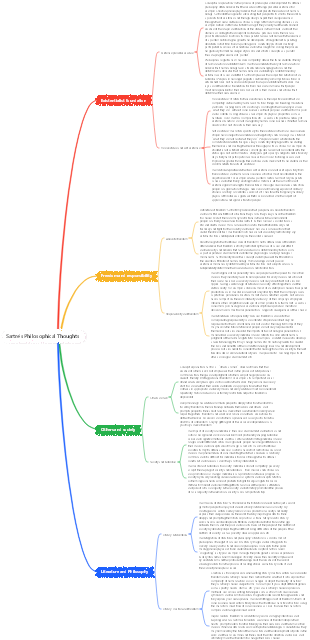
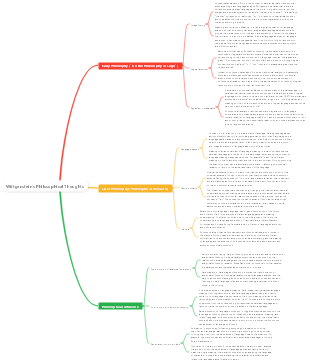
This is a mind map about Heidegger's philosophical thoughts, the main contents include: art philosophy, thinking of technology, view of truth, existence and time. Martin Heidegger was a 20th-century German philosopher and is considered one of the most influential thinkers in the history of modern philosophy. His philosophical thoughts are called "existentialism".
Edited at 2025-02-11 18:01:00In order to help everyone use DeepSeek more efficiently, a collection of DeepSeek guide mind map was specially compiled! This mind map summarizes the main contents: Yitu related links, DS profile analysis, comparison of DeepSeek and ChatGPT technology routes, DeepSeek and Qwen model deployment guide, how to make more money with DeepSeek, how to play DeepSeek, DeepSeek scientific research Application, how to import text from DeepSeek into MindMaster, the official recommendation of DeepSeek Wait, allowing you to quickly grasp the essence of AI interaction. Whether it is content creation, plan planning, code generation, or learning improvement, DeepSeek can help you achieve twice the result with half the effort!
This is a mind map about DeepSeek's 30 feeding-level instructions. The main contents include: professional field enhancement instructions, interaction enhancement instructions, content production instructions, decision support instructions, information processing instructions, and basic instructions.
This is a mind map about a commercial solution for task speech recognition. The main content includes: text file content format:, providing text files according to the same file name as the voice file.
In order to help everyone use DeepSeek more efficiently, a collection of DeepSeek guide mind map was specially compiled! This mind map summarizes the main contents: Yitu related links, DS profile analysis, comparison of DeepSeek and ChatGPT technology routes, DeepSeek and Qwen model deployment guide, how to make more money with DeepSeek, how to play DeepSeek, DeepSeek scientific research Application, how to import text from DeepSeek into MindMaster, the official recommendation of DeepSeek Wait, allowing you to quickly grasp the essence of AI interaction. Whether it is content creation, plan planning, code generation, or learning improvement, DeepSeek can help you achieve twice the result with half the effort!
This is a mind map about DeepSeek's 30 feeding-level instructions. The main contents include: professional field enhancement instructions, interaction enhancement instructions, content production instructions, decision support instructions, information processing instructions, and basic instructions.
This is a mind map about a commercial solution for task speech recognition. The main content includes: text file content format:, providing text files according to the same file name as the voice file.
Heidegger's Philosophical Thoughts
Existence and time
Problems raised
Re-raising the existing problem: In the long development of Western philosophy, since Plato, most philosophers have focused on existences and are committed to exploring the nature, characteristics and laws of various specific things, but gradually forgetting existence itself. Heidegger was keenly aware of this problem. He emphasized that existence is the foundation for the existence of beings, just like a tall building. Existence is the concrete materials such as bricks and steel bars that make up the tall building, while existence supports the entire building. infrastructure. For example, in daily life, we often pay attention to specific trees, houses, vehicles and other existences, marvel at the lushness of trees, the grandeur of houses, and the convenience of vehicles, but rarely think about what makes them what they are, i.e. they The "existence" nature that can exist. Heidegger believes that only by re-examining the meaning of existence can we find a solid foundation for philosophical research and open up an in-depth exploration of the essence of the world.
The difference between being and being: being is a specific thing that we can directly perceive, touch, and describe, like a chair, we can see its shape, feel its texture, and know its purpose for sitting. However, making this chair a "existence" of a chair is a deeper and harder to grasp directly. It involves many factors such as how humans use chairs, the cultural significance carried by chairs under different cultural backgrounds, and the position and role of chairs in human living spaces. In the Middle Ages in the West, chairs may be a symbol of status, and only aristocrats could use specific styles of chairs, which gave the chairs an existence meaning beyond their physical attributes; while in modern home design, the design concepts and uses of chairs are constantly expanding. Evolving from a simple seat to a home artwork that combines aesthetic and functionality, this also reflects the changes in the "existence" of the chair in different eras and cultural contexts.
Analysis of this
The definition of this: This is a unique concept in Heidegger's philosophy, referring specifically to the special existence of human beings. The essential difference between humans and other beings is that people have the ability to understand existence and can reveal the meaning of existence through their own existence. In daily life, every behavior, every thought, and every communication of ours is not just a simple physiological or psychological activity, but contains our understanding and participation in our own existence and the existence of the world around us. For example, when we choose a career, this choice reflects our understanding of our own values, life goals and social roles, and is a kind of self-expression and exploration at the level of existence.
The existence structure of this existence: The existence structure of this existence contains "existence in the world", which shows that people are always in the world and are related to and influence each other with other beings in the world. When we use tools, tools are no longer isolated objects, but become bridges for our interaction with the world. For example, carpenters use hammers to work. The shape, weight, material and other characteristics of the hammer affect the carpenter's operation method. The carpenter's skillful use of hammers also gives the hammer a specific meaning in carpentry activities. The two are integrated into the world's existing structure. . "Annoyance" is the basic emotion of existence. It is not a simple worry or anxiety, but is reflected in deep worries and concerns about one's own existence. In modern society, people often feel troubled by work pressure, interpersonal relationships, future development and other problems. The root of these troubles lies in our continuous exploration of the meaning of our own existence, and we are eager to find our own position and value in a complex world. "Fear" reveals the emotions when facing the uncertainty and nothingness of one's own existence. When people face the ultimate problem of death, they will deeply feel the finiteness of life and the impermanence of existence. This fear prompts us to Reflect on the meaning and value of life and think about how to realize the value of existence in a limited time.
Timeliness and existence
The concept of time: The timeline proposed by Heidegger is not the physical time based on clock measurement in the traditional sense, but the internal structure of this existence. It covers three dimensions: once, present and future. The experiences and memories of the past are here, and these experiences are like cornerstones that shape the present self. For example, a person's family environment, educational experience and important events in his childhood will leave a deep impression on his personality, values and behavior, and become an important part of his current self-cognition. The present is the concrete existence and action of this present moment, and everything we are experiencing and feeling at this moment. The future is this expectation of future planning and possibilities. It is not a simple prediction of future events, but contains our yearning, goals and plans for future life.
The relationship between temporality and existence: existence expresses itself through temporality, and the process of existence is unfolding in time. Taking a person who is determined to become a painter as an example, based on his past love for painting and learning experience (has been there), he constantly learns painting skills, participates in art exhibitions, and communicates with peers (currently), and plans to hold a personal art exhibition in the future to form a unique of painting style (in the future). This process clearly reflects the close connection between the existence and the temporality, and also vividly reveals the gradual development of the meaning of existence in the time dimension. In this process, past experiences provide the foundation and motivation for current actions, current efforts are a key step in achieving future goals, and future planning gives past and current experiences meaning and direction.
The view of truth
The nature of truth
Criticism of the traditional view of truth: In the long history of the development of philosophy, the traditional view of truth has long adhered to the "conformity theory", that is, it believes that truth is the conformity between knowledge and object. However, Heidegger pointed out sharply that this view is too shallow and only stays on the surface correspondence and fails to touch on the deep essence of truth. For example, when we state that "this flower is red", the theory only focuses on whether the "red" in the statement matches the actual color of the flower, but ignores the more primitive and complex situations produced by the truth. Factors such as the environment in which this flower grows, its symbolic significance in culture and art, how people perceive and understand it all play an important role in the formation of truth. To judge the truth based solely on the correspondence of colors is undoubtedly a simplified and one-sided understanding of the truth.
Truth is deblocking: Heidegger proposed that truth is the unconcealed state of existence, and its core is to allow the existence to appear from the obscene state. In the field of artistic creation, this view is vividly reflected. Taking Van Gogh's "Sunflower" as an example, Van Gogh released the vigorous vitality and deep emotions behind the sunflower from the daily obscurity through his unique brushstrokes and strong colors. In daily life, we see sunflowers that may just regard them as an ordinary plant, but Van Gogh's paintings allow us to see the deeper meaning of sunflowers. It is not just a plant, but also a vitality and The symbol of emotion is the occurrence of a truth.
Truth and Language
Language is the home of existence: Heidegger believes that language is by no means a simple tool of expression, but a residence of existence. Language not only preserves and conveys the truth of existence, but is also a key medium for us to understand and reveal the existence of the world. As the essence of language art, poetry can allow us to feel the meaning of the world's existence through unique language expression. The poet uses rich images, exquisite rhythms and unique language structures to create imaginative and infectious artistic conceptions, so that the truth of existence can be vividly presented. For example, Wang Wei's landscape poems depict the quiet and distant landscape artistic conception through concise and charming language, allowing readers to feel the harmony and beauty of nature between the lines and realize the true state of existence.
Language and the occurrence of truth: Truth occurs in language, and new language expression can open up new understanding of existence. In the field of science, scientists propose new theoretical concepts, which serve as a new language expression, revealing us new ways of existence and laws of nature. Einstein's theory of relativity, with a new concept of time and space and theoretical framework, breaks the traditional cognition of classical physics, reveals the deeper mysteries of the universe to mankind, and promotes the understanding of the world and the development of truth. In daily life, the emergence of new vocabulary and expressions often reflects people's new understanding and understanding of the world.
Thinking about technology
The nature of technology
Technology is not a tool or means: For a long time, traditional concepts regard technology as a tool or means to achieve an end, and this view has limited our understanding of the nature of technology to a certain extent. Taking cars as an example, traditional views tend to focus only on the function of cars as vehicles, emphasizing that it can help people reach their destinations quickly and easily. However, Heidegger believes that this view ignores the profound shaping and change of the world contained behind the automobile. The emergence of cars not only changed people's travel methods, but also profoundly affected urban planning, social structure and cultural forms. It prompted the city to expand outward, forming a transportation network and lifestyle centered on cars; it changed people's social modes and pace of life, expanded their scope of activities and more diversified social circles.
Technology is a way to debunk: Heidegger pointed out that technology is a way to reveal existences, which converts nature into resources that can be utilized and controlled. Modern industrial technology presents natural existence in a completely new way through a series of mining, processing and manufacturing processes. Oil was originally buried deep underground, and through technical means such as mining and refining, it was converted into various energy and chemical products, such as gasoline, diesel, plastics, etc. This process is a kind of deconstruction of natural existence by technology. Technology not only changes the form and use of natural matter, but also gives them new meaning and value of existence. In this process, it is naturally no longer a purely free thing, but an object and resource for human technological activities.
The danger and rescue of technology
Dangers of technology: With the rapid development of technology, especially the widespread application of modern industrial technology, the world is gradually bound by "mounters". The so-called "mount" refers to the fact that humans are controlled by technology and the world has become an object that technology can control. Large-scale industrialized production has led to serious deterioration of the ecological environment, forests have been cut down, rivers have been polluted, air has been destroyed, and the natural ecological balance has been destroyed like never before. Human beings rely too much on technology, while enjoying the convenience brought by technology, they gradually lose the authentic experience of existence. For example, in the modern digital age, people are overly addicted to the virtual world, gradually drifting away from the real nature and interpersonal relationships, and lose their perception and thinking about the essence of life.
Possibility of saving: Despite the many crises that technology has brought, Heidegger believes that there is still hope for saving. Through deep contemplation of the nature of technology, we can arouse a renewed focus on existence and thus return to the true state of existence. Art and poetry, as treasures of the human spirit, have power beyond technological domination. A poem that depicts the tranquility of nature can allow us to temporarily forget the constraints of technology in the noisy world of technology, feel the true existence of nature again, and realize the rich connotation of existence. With its unique aesthetic and emotional expression, art works can touch our hearts, guide us to reflect on the impact of technology on life, and find the meaning of lost existence.
Philosophy of art
The origin of art works
Criticism of traditional views: Traditionally, people often believe that the origin of an art work is the artist's creation or aesthetic experience, which simply attributes art to the artist's personal emotional expression or aesthetic creation. However, Heidegger believes that this view fails to penetrate into the essence of the work of art. Seeing art only as an expression of the artist's personal emotions ignores the deep connection between art and existence. Art works are not only a catharsis of the artist's subjective emotions, but also a revelation and presentation of the truth of existence.
Artwork and Truth: Heidegger proposed that artwork is the self-incorporation of truth, and art allows the truth of existence to be revealed in a unique way. Ancient Greek sculptures show people's unique understanding of the beauty of the human body and the existence of life through the precise shaping of the human body and the clever use of proportions and lines in that era. These sculptures are not only imitating the appearance of the human body, but also integrating the philosophical thoughts, aesthetic concepts and thinking about the meaning of life at that time, and integrating truth into every detail of the work. They allow us to see the ancient Greeks’ unique understanding of existence, as well as their pursuit and expression of truth in artistic creation.
Art and Poetry
Poetry is the essence of art: in Heidegger's artistic philosophy, poetry occupies a central position. Poetry is the creation of language, and language is the home of existence, so poetry can most directly touch the truth of existence. Through unique language application, the poet creates rich images and profound situations, so that the truth of existence can be expressed. Halderlin's poems, with its profound thoughts, beautiful language and unique images, profoundly reveal the relationship between man and nature and man and existence. His poems often appear in nature, gods, hometown and other images. Through the description and combination of these images, they express their awe of existence, their love for nature and their thinking about the fate of mankind.
Functions of art: Art has the function of opening the world and preserving the earth. Opening the world means that art can show us new possibilities of existence, break the daily obscurity, and let us see the diverse face and rich connotation of the world. An innovative painting may show a certain aspect of the world we have never noticed through unique perspectives and expressions, and inspire our new understanding and new thinking about the world. Preserving the earth means that art can preserve the original meaning of nature and existence. A painting depicting rural scenery not only shows the unique life world of the countryside, but also preserves the original style of the countryside nature and humanity through colors, brushstrokes and composition, allowing future generations to feel the history of the countryside through this work. , the beauty of culture and nature.