MindMap Gallery Kant's Philosophical Thoughts
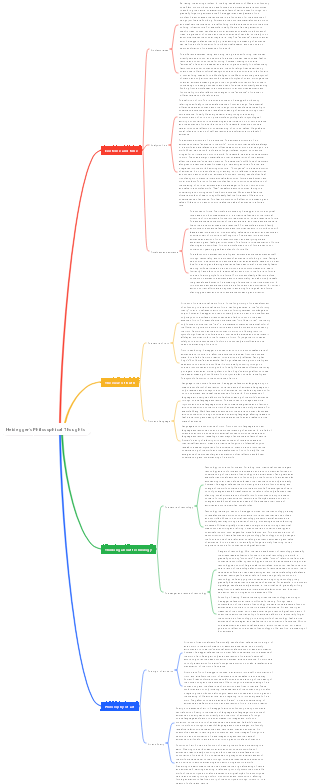
This is a mind map about Kant's philosophical thoughts, and its main contents include: historical philosophy, aesthetics, ethics, and epistemology. His thoughts not only laid a solid foundation for the development of German classical philosophy, but also had a profound impact on later philosophy.
Edited at 2025-02-11 17:28:12In order to help everyone use DeepSeek more efficiently, a collection of DeepSeek guide mind map was specially compiled! This mind map summarizes the main contents: Yitu related links, DS profile analysis, comparison of DeepSeek and ChatGPT technology routes, DeepSeek and Qwen model deployment guide, how to make more money with DeepSeek, how to play DeepSeek, DeepSeek scientific research Application, how to import text from DeepSeek into MindMaster, the official recommendation of DeepSeek Wait, allowing you to quickly grasp the essence of AI interaction. Whether it is content creation, plan planning, code generation, or learning improvement, DeepSeek can help you achieve twice the result with half the effort!
This is a mind map about DeepSeek's 30 feeding-level instructions. The main contents include: professional field enhancement instructions, interaction enhancement instructions, content production instructions, decision support instructions, information processing instructions, and basic instructions.
This is a mind map about a commercial solution for task speech recognition. The main content includes: text file content format:, providing text files according to the same file name as the voice file.
In order to help everyone use DeepSeek more efficiently, a collection of DeepSeek guide mind map was specially compiled! This mind map summarizes the main contents: Yitu related links, DS profile analysis, comparison of DeepSeek and ChatGPT technology routes, DeepSeek and Qwen model deployment guide, how to make more money with DeepSeek, how to play DeepSeek, DeepSeek scientific research Application, how to import text from DeepSeek into MindMaster, the official recommendation of DeepSeek Wait, allowing you to quickly grasp the essence of AI interaction. Whether it is content creation, plan planning, code generation, or learning improvement, DeepSeek can help you achieve twice the result with half the effort!
This is a mind map about DeepSeek's 30 feeding-level instructions. The main contents include: professional field enhancement instructions, interaction enhancement instructions, content production instructions, decision support instructions, information processing instructions, and basic instructions.
This is a mind map about a commercial solution for task speech recognition. The main content includes: text file content format:, providing text files according to the same file name as the voice file.
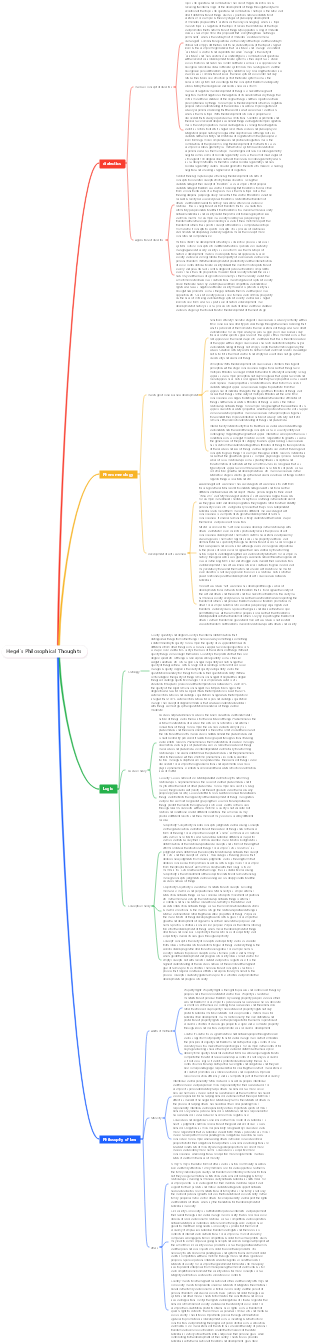
Kant's Philosophical Thoughts
Epistemology
Innate Comprehensive Judgment
Conceptual explanation: In Kant's era, empiricism emphasized that knowledge originates from experience, and theory focuses on the concept of talent, and each has its limitations. Kant proposed a comprehensive innate judgment and broke through this dilemma. Like the mathematical proposition "7 5=12", analyzing the concepts of "7" and "5", it is impossible to directly obtain "12". It requires intuitiveness to add the two to the result, which reflects the characteristics of synthesis; at the same time, This proposition has universality and necessity that is universal and inevitable, and is innate. Another example is the natural science proposition "Everything happens has a cause". The concept of "what happens" does not have the meaning of "cause". It is comprehensive and has universal necessity in the field of natural sciences. It is an innate comprehensive judgment.
Significance: Kant reconciled the contradiction between empiricism and rational theory through innate comprehensive judgment. Empirical theory is difficult to explain the universality and necessity of knowledge, and theory is difficult to explain how knowledge is expanded. Innate comprehensive judgment shows that knowledge relies on experience to provide content, and also on innate forms to give universality and necessity, laying a solid foundation for the possibility of scientific knowledge and revealing the way humans acquire scientific cognition that combines universality and new knowledge. .
Sensibility, intellect and rationality
Sensibility: Sensibility is the starting point of human knowledge, which contacts the outside world through the senses and receives appearances. Time and space, as the innate intuitive form of sensibility, are the basic framework for us to perceive things. Taking daily perception as an example, the house we see must be in a certain space, with dimensions of length, width and height; the four seasons we observe are presented in the order of time. Time and space are not derived from experience, but are prerequisites for us to perceive things. Without time and space, our perceptions will be chaotic and disorderly.
Intellectuality: Intellectuality uses concepts and categories to process and organize the messy representations provided by sensibility. Kant proposed the twelve pairs of intellectual categories, such as causality, entity, and quantitative categories (uniformity, majority, and totality). When we see the phenomenon of apple landing, using the causal category will link the gravity of the earth with the landing of the apple, forming the cognition that "the apple landing due to the gravity of the earth"; when judging that the table is a entity, use the entity category, Unify the various attributes of the table and realize that the table is an independent entity.
Reason: Reason pursues absolute and unconditional knowledge, and tries to grasp transcendental ideas such as the soul, the world, and God. However, when reason goes beyond the boundaries of experience to understand these ideas, it will fall into a rebellion. For example, when discussing whether the world has its beginning, we argue from a positive perspective. If the world has no beginning, then it has been unlimited time so far, which is impossible, so the world has its beginning; from a negative perspective, if the world has its beginning, then the beginning was There is no time in the void, and the void cannot produce a world, so the world has no beginning. Both positive and negative propositions can be verified in accordance with theories, which shows that there are limitations in the understanding of reason in the transcendental field, warning us that the category of reason cannot be applied beyond experience.
The world of matter and the phenomenon
Things: Things are objective existences independent of human cognition. They are the root of phenomena and stimulate our senses to produce sensations. However, because human cognition is limited by innate intuitive forms (time, space) and intellectual categories, it cannot touch the true appearance of the object itself. For example, the properties of red apples we see, such as "red", "circular", and "sweet", are phenomena that appear under the action of our senses and cognitive forms, while the apple itself cannot directly recognize the body of the body.
Phenomenon: The world we recognize through sensibility and intellect is the phenomenon world, which is the appearance of the object itself after "filtering" and shaping through the categories of time, space and intellectuality. Things in the phenomenon world are all in the framework of causality, space-time order, etc., and all our cognition of the world, whether it is scientific research or perception in daily life, are limited to the phenomenon world.
Ethics
Moral Law
Absolute Command: Absolute Command is the highest criterion of morality, it is unconditional and universal. Its basic form "act only according to the principle that you can also want it to be a universal law", emphasizing the universalization of moral codes. Take lying as an example. If lying is regarded as a universal law and everyone can lie at will, then language will lose its function of conveying real information, communication cannot proceed normally, and social order will fall into chaos, so lying cannot become a universal law and does not conform to absolute Order. For example, if we keep our promises, if we keep our promises universally, social interactions will be more honest and orderly, and in line with absolute orders.
Man is the purpose: This principle emphasizes the intrinsic value and dignity of man, and man itself is the purpose, not just a means to achieve other purposes. In medical scenarios, when treating patients, doctors cannot simply regard the patient as an experimental subject or a tool to obtain benefits, but should respect the patient's wishes, privacy and personal dignity, and treat them based on the patient's recovery and well-being, which reflects the fact that the patient's rehabilitation and well-being are the starting point. The moral requirement of "people are the purpose".
Freedom and self-discipline
Freedom: Freedom is the cornerstone of morality, and only actions performed under free will have moral value. In the phenomenal world, our behavior is restricted by the natural law of cause and effect. If we are hungry, we will look for food, which is an inevitable behavior caused by physiological needs. But in the ontological realm, people have free will and can transcend the constraints of natural law of cause and effect. For example, when facing the temptation of interests, a person can choose to stick to the moral bottom line by relying on his free will and not be driven by interests. This choice reflects the role of free will and also makes the behavior have moral significance.
Self-discipline: Moral self-discipline refers to people choosing their own behavior based on their absolute commands, rather than being influenced by external desires, interests and other factors. A person abides by traffic rules not because he is afraid of being fined or deducted points (external constraints), but because he recognizes that observing traffic rules is a moral obligation and is based on respect for absolute commands. This is a manifestation of moral self-discipline.
aesthetics
Aesthetic judgment
Pleasure without interests: Aesthetic judgment is a subjective judgment based purely on the form of an object and does not involve any material interests or utilitarian purposes. When we appreciate Van Gogh's "Sunflower", it is not because the painting can bring monetary benefits or practical uses, but is attracted by its formal elements such as color and composition, and obtain pure spiritual pleasure from it. For example, when we appreciate the beautiful sunset, we are just immersed in the colors and forms of the sunset, without any utilitarian ideas, and simply enjoy this beautiful experience.
Universality and Inevitability: Although aesthetic judgment is subjective, it has universality and necessity. When we think a music is beautiful, we expect others to have the same aesthetic feeling. This universality is not based on concepts, unlike the mathematical concept "the sum of the inner angles of a triangle is 180 degrees", but is based on the common aesthetic psychological structure of human beings. For example, when most people see the majestic Great Wall, they will be shocked by its spectacular momentum and have a sense of beauty, which reflects the universality and necessity of aesthetic judgment.
Sublime
The sublime of mathematics: When we face huge quantities or volumes, like the vast universe, with countless stars, the number of them exceeds our imagination, allowing us to feel our insignificance in front of the universe. But at the same time, our reason is able to understand and think about this infinite, realize the infinite potential of human reason, and thus create a sense of sublimity. For example, facing the majestic height of Mount Everest, its huge size allows us to intuitively feel our insignificance, but it also inspires us to affirm human rationality beyond the limitations of sensory.
The sublime of mechanics: Facing the powerful natural forces, like the surging sea, the huge impact of the waves makes us feel physically threatened, and life seems to be swallowed at any time. But at the spiritual level, we realize that our rational and moral power can transcend this power of nature, and we can understand and respect nature, and even maintain dignity and courage in the face of disaster, resulting in a sense of sublimity. For example, when facing natural disasters such as earthquakes, the spirit of mutual assistance and perseverance displayed by human beings reflects the spiritual transcendence of human beings in the face of powerful natural forces.
Philosophy of history
The development of human history
Natural intention and purpose: Kant believes that the development of human history is purposeful, and behind it is natural plans. Although the historical process is full of individual selfish desires and conflicts, such as war and power struggle, from a macro perspective, these conflicts and contradictions have become the driving force for social progress. For example, during the Industrial Revolution, capitalists pursued profit maximization and continuously improved production technology. Although their original intention was to obtain more wealth, they objectively promoted the great development of productivity, promoted social progress, and ultimately benefited human freedom and Moral perfection.
The ideal of world civil society: human history develops in the direction of building world civil society, in which countries abandon war and achieve permanent peace. People live in harmony under common legal and moral constraints and pursue human welfare together. For example, the establishment of the United Nations and the signing of various international cooperation agreements are attempts to move towards world civil society, aiming to promote peace and cooperation among countries through international rules and moral norms and achieve common development of mankind.