MindMap Gallery Schopenhauer's Philosophical Thoughts
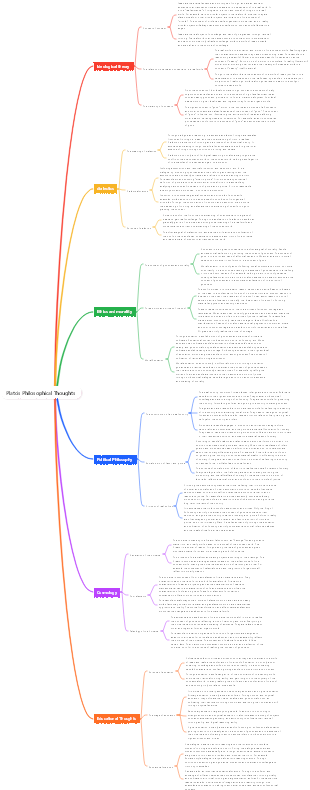
This is a mind map about Schopenhauer's philosophical thoughts, which mainly include: influence on later philosophy and other fields, pessimistic philosophy, suffering and liberation in life, and the world as will and representations.
Edited at 2025-02-11 18:13:35In order to help everyone use DeepSeek more efficiently, a collection of DeepSeek guide mind map was specially compiled! This mind map summarizes the main contents: Yitu related links, DS profile analysis, comparison of DeepSeek and ChatGPT technology routes, DeepSeek and Qwen model deployment guide, how to make more money with DeepSeek, how to play DeepSeek, DeepSeek scientific research Application, how to import text from DeepSeek into MindMaster, the official recommendation of DeepSeek Wait, allowing you to quickly grasp the essence of AI interaction. Whether it is content creation, plan planning, code generation, or learning improvement, DeepSeek can help you achieve twice the result with half the effort!
This is a mind map about DeepSeek's 30 feeding-level instructions. The main contents include: professional field enhancement instructions, interaction enhancement instructions, content production instructions, decision support instructions, information processing instructions, and basic instructions.
This is a mind map about a commercial solution for task speech recognition. The main content includes: text file content format:, providing text files according to the same file name as the voice file.
In order to help everyone use DeepSeek more efficiently, a collection of DeepSeek guide mind map was specially compiled! This mind map summarizes the main contents: Yitu related links, DS profile analysis, comparison of DeepSeek and ChatGPT technology routes, DeepSeek and Qwen model deployment guide, how to make more money with DeepSeek, how to play DeepSeek, DeepSeek scientific research Application, how to import text from DeepSeek into MindMaster, the official recommendation of DeepSeek Wait, allowing you to quickly grasp the essence of AI interaction. Whether it is content creation, plan planning, code generation, or learning improvement, DeepSeek can help you achieve twice the result with half the effort!
This is a mind map about DeepSeek's 30 feeding-level instructions. The main contents include: professional field enhancement instructions, interaction enhancement instructions, content production instructions, decision support instructions, information processing instructions, and basic instructions.
This is a mind map about a commercial solution for task speech recognition. The main content includes: text file content format:, providing text files according to the same file name as the voice file.
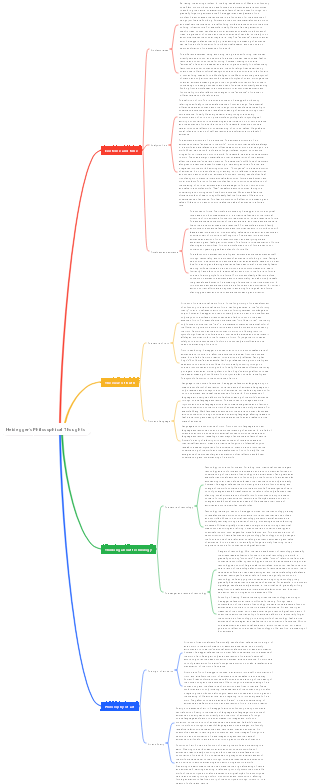
Schopenhauer's Philosophical Thoughts
The world as will and appearance
The world is a representation
Conceptual explanation: Schopenhauer was in a period of turning to epistemology of Western philosophy. He absorbed Kant's theory on the phenomenon and proposed the idea that the world is an appearance. The world we perceive is a manifestation presented through sensory and cognitive forms. Taking vision as an example, when we see that the sky is blue, it is because the blue light in the sun's light has a short wavelength and is more likely to be scattered in the atmosphere. The visual senses transmit this light information to the brain, which undergoes complex neural processing. The process eventually formed the appearance of "the sky is blue". Not only natural landscapes, but also all artificial objects such as tall buildings in the city, mobile phones used in daily use, also appear in our consciousness in the form of appearance. This means that the world we come into contact with and recognize are subjectively processed and not the true appearance of the world itself.
Relativity of cognition: Due to the differences in each person's sensory acuity, knowledge reserves, life experiences, etc., the perception of the appearance of the same thing will be completely different. For example, different people appreciate Leonardo da Vinci's "Mona Lisa", art historians may analyze it from the perspectives of painting skills, composition methods, historical background, etc.; painters may pay more attention to the use of colors and brushstroke characteristics; while ordinary audiences may be simply painted The mysterious smile of the characters in the characters is attracted by. This fully demonstrates that our understanding of the world is relativistic and depends entirely on our own unique subjective cognitive forms.
The world is will
The essence of will: Will is the core concept of Schopenhauer's philosophy. He believes that will is the essence of the world and is a blind, irrational, and never-ending impulse to life. This will is not controlled by reason and purpose, but drives the survival and development of all things. In the plant world, sunflowers always chase the sun and rotate. This is the instinct of plants to obtain more sunlight for photosynthesis to maintain their own growth, and this instinct is the intuitive manifestation of will. Will is an internal and powerful driving force that drives life to continue to develop.
Will and phenomenon: Phenomenon is the external manifestation of will. The changes and movements of all things in the world are the concrete expressions of will. In the animal world, cheetahs prey on antelope for survival. Behind this predation behavior is driven by their will to survive; the instinct of animals' reproduction and offspring is also a manifestation of will inspire to promote the continuation of species. In human society, people pursue power may be to satisfy their desire to control others; to pursue wealth is to obtain a better material life; to pursue love is to meet emotional and physical needs. Behind these actions, will is all the work.
Suffering and liberation in life
The root of life suffering
Driven by will: The reason why life is full of suffering is that human will is endless. People are always pursuing the satisfaction of various desires, but when a desire is satisfied, new desires will quickly arise and will never be truly satisfied. Take a business tycoon as an example. After accumulating huge wealth, he may be eager to enter politics, gain a higher social status, and have greater influence; when he achieves certain achievements in politics, he will pursue the spirit of reputation, reputation and other spirits. Level satisfaction. This infinite cycle of desire makes people always in a painful state of "seeking but not getting" or "geting but losing again".
Individual survival struggle: In nature and human society, individuals have to participate in the fierce survival struggle in order to survive and reproduce. In nature, animals often compete for limited food, territory and mates. In human society, this struggle is not only reflected in the competition for material resources, such as competition for promotion opportunities and salary in the workplace; it also includes competition at the spiritual level, such as the competition for academic status and reputation in the academic community. This all-round survival struggle further aggravates the suffering of life.
The Way to Liberation
Art aesthetics: Through the appreciation and creation of art, people can temporarily get rid of the shackles of will. When we listen to Beethoven's Symphony of Destiny, the passionate melody and strong rhythm will deeply infect us, immerse us in it, forget our own desires and pains, and enter a state of selflessness. When appreciating paintings, we will be attracted by the artistic conception created by the painter and temporarily free ourselves from the troubles of reality. Art can allow us to transcend reality's suffering and gain peace and comfort in our hearts.
Philosophical Contemplation: In-depth philosophical thinking can help us recognize the essence of the world and life, and thus look at suffering with a detached attitude. Schopenhauer's philosophy guides people to realize the illusion of will and no longer blindly pursue desires, but face life with a peaceful mindset. When we understand that the suffering in life comes from the blind drive of our will, we will try to let go of excessive desires and face setbacks and difficulties in life with a more open-minded attitude.
Asceticism: Totally deny the will of life and achieve liberation by restraining desires and enduring pain. Ascetics give up their pursuit of material and emotion and live an extremely simple life. They stay away from the hustle and bustle of the world and achieve inner peace and spiritual sublimation through meditation, practice, etc. For example, some ascetic monks abandon material enjoyment, endure physical pain, and pursue spiritual transcendence.
Pessimistic Philosophy
The meaning of pessimism
Views on the world and life: Schopenhauer believes that the world is essentially painful and nothingness, and life is full of endless suffering and setbacks. No matter how hard people try, it is difficult to get rid of the painful fate, because the existence of will determines the tragedy of life. From the perspective of human history, wars, diseases, natural disasters, etc. continue to bring great pain to mankind. Even in peacetime, people will be troubled by various troubles and anxiety.
Contrast with optimism: Unlike optimism that the world is beautiful and life is full of hope, pessimism emphasizes the suffering and helplessness of life. Optimists see positive aspects in life, such as the convenience brought by technological progress and the opportunities brought by social development; while Schopenhauer is more concerned about the suffering and difficulties of life, such as the greed and selfishness in human hearts. various conflicts and pains.
The value of pessimism
A profound insight into human nature and the world: Pessimism prompts people to face the sufferings of life and think deeply about the essence of human nature and the world. It reminds people not to be blindly optimistic and to have a clear understanding of the difficulties and setbacks in life. For example, when we recognize that selfishness and greed in human nature can lead to social injustice and conflict, we look at social phenomena more rationally and strive to find solutions to problems.
The pursuit of spiritual transcendence: After realizing the sufferings of life, people will be more eager for spiritual transcendence and liberation. Pessimism inspires people to pursue higher levels of spiritual realms, such as seeking spiritual comfort through art, philosophy and religion. Many great artists, philosophers and religious people have created works or ideological systems with profound connotations through their profound experiences and reflections on the sufferings of life.
Influence on later philosophy and other fields
Impact on philosophy
Inspiration on Nietzsche's philosophy: Nietzsche's will to power and superhuman philosophy were influenced by Schopenhauer's theory of will to a certain extent. Nietzsche inherited Schopenhauer's critical spirit of traditional morality and values, and at the same time reinterpreted the connotation and role of will. Schopenhauer believed that will is the root of pain, while Nietzsche regarded will as the power of life, encouraging people to actively play the role of will, transcend traditional constraints, and become superhuman.
Embodiment in existential philosophy: existential philosophy focuses on human existence and freedom, and Schopenhauer's thinking on life suffering and individual existence provides an important ideological basis for existential philosophy. In the existentialist thought of Sartre and others, the shadow of Schopenhauer's philosophy can be seen. For example, existentialism emphasizes people's free choice and responsibility for choice, which is related to Schopenhauer's thinking on individual existence, and they all focus on the individual's situation and destiny in the world.
Impact on literature and art
Theme of literary creation: Many literary works were influenced by Schopenhauer's pessimistic philosophy, with the theme of suffering in life and the impermanence of destiny. Dostoevsky's "Sin and Punishment" deeply depicts the complexity of human nature and the suffering of life. The protagonist Raskolnikov committed murder in poverty, loneliness and inner struggle. His Experience reflects the helplessness and pain of life. In Tolstoy's "Anna Karenina", Anna pursues freedom of love but ends in a tragedy, which also reflects the impermanence and suffering of life.
Changes in artistic style: In the field of art, Schopenhauer's philosophy has prompted some artists to change their creative styles, paying more attention to expressing inner emotions and profound thinking about the world. Expressionist painting emphasizes the expression of human inner pain and anxiety, and shows the struggles in human inner self through exaggerated colors and distorted images. Edward Monk's "Scream" uses extremely exaggerated techniques to depict a screaming character, with a blood-red sky behind it, vividly expressing the fear and loneliness of human beings.