MindMap Gallery 6. Distribution and histological characteristics of salivary glands
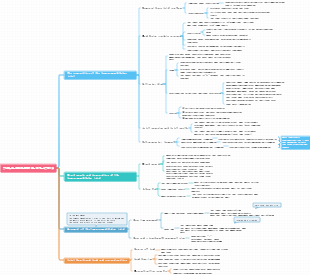
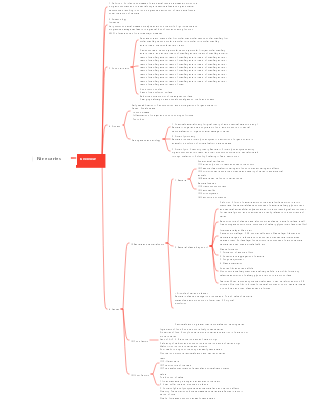
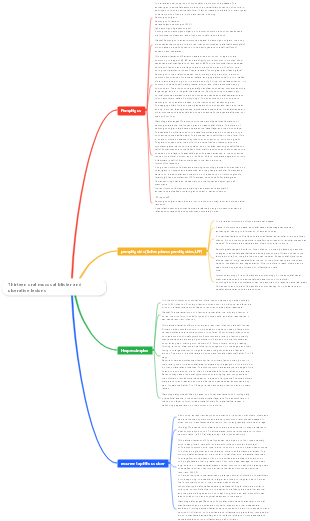
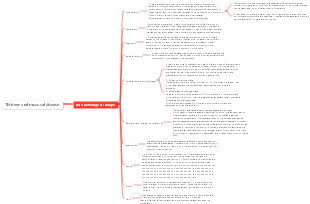
This is a mind map about the distribution and histological characteristics of the six salivary glands, and its main contents include: minor salivary glands, large salivary glands.
Edited at 2025-02-25 20:48:57This template shows the structure and function of the reproductive system in the form of a mind map. It introduces the various components of the internal and external genitals, and sorts out the knowledge clearly to help you become familiar with the key points of knowledge.
This is a mind map about the interpretation and summary of the relationship field e-book, Main content: Overview of the essence interpretation and overview of the relationship field e-book. "Relationship field" refers to the complex interpersonal network in which an individual influences others through specific behaviors and attitudes.
This is a mind map about accounting books and accounting records. The main contents include: the focus of this chapter, reflecting the business results process of the enterprise, the loan and credit accounting method, and the original book of the person.
This template shows the structure and function of the reproductive system in the form of a mind map. It introduces the various components of the internal and external genitals, and sorts out the knowledge clearly to help you become familiar with the key points of knowledge.
This is a mind map about the interpretation and summary of the relationship field e-book, Main content: Overview of the essence interpretation and overview of the relationship field e-book. "Relationship field" refers to the complex interpersonal network in which an individual influences others through specific behaviors and attitudes.
This is a mind map about accounting books and accounting records. The main contents include: the focus of this chapter, reflecting the business results process of the enterprise, the loan and credit accounting method, and the original book of the person.
Six salivary glands
Overview It belongs to the exocrine gland, where secretions flow into the mouth through the catheter and form saliva, also known as the salivary gland.
Large salivary glands - parotid glands, submandibular glands, sublingual glands Small salivary glands - labial glands, buccal glands, palatal glands, posterior molar glands, etc. Salivary glands are vesicular, local, complex, exocrine glands with duct opening in the oral mucosa: vesicular: the state of secretory cells Local secretion: Only the secretions of cells are released during secretion Compound: More than one catheter enters the main catheter Exocrine: The gland secretes fluid to the free surface
General tissue structure of salivary glands
Parenchymal-Gental epithelium: Secretion unit--acini (glandular lobe) catheter Interstitial—coated, interleaved or interleaved
1. Acinus acinus
Located at: the end of the tiniest catheter
Structure: spherical and tubularly surrounded by several monolayers of acinar cells, and a narrow vesicle cavity is surrounded by a thin base film on the periphery of the acinar. Myoepithelial cells are located between the acinar and the basement membrane
Acannins are divided into:
1.Serrous acinus serous acinus
Light Mirror: It is spherical and consists of serous cells, and is not commonly seen in obvious glandular cavity. The serous cells are conical, with the tip facing the gland cavity; the nucleus is round, dark stained, located 1/3 of the basal region of the cell, close to the basement membrane; the cytoplasm is weakly basophilic and contains zymogen granules; Thin secretions, containing salivary amylase and a small amount of mucus, also known as slurry mucus cells
2. Mucous acinus mucous acinus
Light Mirror: It is vesicular, composed of mucous cells, and has a clear lumen. Mucus cells are triangular or conical; when there are few secretion products, the nucleus is larger and the staining is light, and when there are many secretion products, the nucleus is flat, located at the bottom of the cell, and the staining is darker. The staining is significantly lighter than serous acinars, and the cytoplasm is transparent and reticular. The reason is that the mucopolysaccharide is damaged during the slice preparation process, and the component is mucopolysaccharide.
3. Mixed acinus mixed acinus
It consists of mucous cells and serous cells, among which mucous cells account for the majority and are located near the end of the duct (intersect tube). The number of slurry cells is small, and it is arranged in a crescent shape to cover the blind end surface of the acinar, so it is also called the meniscus (demilune). Mucous cells are immediately connected to the leap tube, and the secretions of serous cells are generally believed to enter the acinar cavity through the intercellular tubules. Recent studies have shown that meniscus is an artificial illusion during the production process. After minimizing the deformation and two-dimensional changes caused by fixation with rapid freezing and freezing, it was proved that all serous cells were arranged in a row with mucous cells, forming a common cavity.
3. Myoepithelial cell
Located between the glandular epithelium and the basement membrane of the acinar and the small catheter; each acinar has one, or two or three.
Light microscope: The cells are small in size, flat, the nucleus is large and flat, and the cells have multiple protrusions (4-8 branches) radially wrapped around the acinus. The surface, like a basket, is also called basket cells.
2. Catheter duct
Blister cavity → leap tube → secretory tube (tiles) → excretion tube (between lobules) Total excretion tube → oral cavity
1. Intercalated duct
The tiniest terminal branch of the catheter, connecting the acinus to the secretory tube. Mucous cells are numerous—the leap tube is shorter (sublingual gland) Less mucus cells - longer leap tubes (paratum gland)
Light microscope: A monolayer tube surrounded by 4 to 6 cubic cells, often located between crowded cells, with fewer cytoplasm and lighter staining; the nucleus is round and large, located in the center of the cell
Electron microscopy: There is a small amount of rough endoplasmic reticulum in the basal cytoplasm, and there is a Golgi complex in the top cytoplasm. Occasionally, secretory granules are found. Microvilli at the top of the cell protrude into the gland cavity. Myoepithelial cells can be seen around the duct cells. Interlude tube cells can be regarded as stem cells, which can be differentiated into acinar cells, myoepithelial cells and secretory tube epithelial cells when needed.
2. Secretory duct
Continuous with the leap tube, with a thicker diameter, and the wall of the tube is composed of monolayer columnar cells Myoepithelial cells can also be seen near the leap tube
Light microscope: Cytoplasm is abundant and strong basophilic; nuclear circle is located in the center of the cell; longitudinal streaks arranged perpendicular to the basement membrane can be seen in the cytoplasm near the basement - the streaks
Electron microscopy: The cell membrane near the substrate repeatedly rewinds into the cells, forming parallel arrangements of wrinkles perpendicular to the substrate. The inner cysts of the wrinkled inner cysts contain a large number of vertically arranged mitochondria-longitudinal streaks
Function: The secretory tube has the function of transporting electrolytes and water. When the acinar secretion flows, it maintains sodium and discharges potassium, transports water, and isotonic becomes hypotonic, similar to the distal renal convex tubules.
3. Excretory duct
Also known as a collection tube, it starts in the lobular and then enters the connective tissue between the lobular, called the interlobular catheter
Light microscope: The tube wall cells become columnar, the cytoplasm is diluted, the tube diameter becomes thicker, and the wall cells gradually become pseudo-complex, and become a complex squamous epidermis again. The excretion tube is also involved in the ion transport of saliva and the process of isotonic to hypotonic
3. Connective tissue
Form the salivary gland membrane, interlobular and lobe spaces and surround the salivary gland duct and acinus, and contains nerves and blood vessels that innervate the glands. Contains plasma cells, fibroblasts, macrophages and lymphocytes. It not only supports the glands in structural structure, but also helps maintain the stability of the oral environment.
Distribution and histological characteristics of hexa salivary glands
Large salivary glands
Paleogland Submandibular gland Sublingual gland
1.parotid gland
Anatomical features: The largest gland, with a connective tissue capsule on the outer layer, located in the outer auditory canal, anterior to the mastoid process, under the zygomatic arch, lateral posterior to the mandibular ascendant branch, and surface of the masseter muscle. Superficial lobes-front to the external ear; deep lobes- posterior concave of the mandibular catheter open to the buccal mucosa against the second maxillary molar
Histological characteristics: 1. Pure serous glands (a small amount of mucous cells can be seen in newborns) 2. The leap tube is long and has branches; there are many secretory tubes. 3. The glands are often accompanied by lymphatic tissue (glands are visible in the surrounding lymphatic); it may be related to the development of the salivary glands around the jugular vein lymphatic sac. This is also the histological basis for the salivary glands to develop benign lymphoepithelial lesions, gland lymphomas and malignant lymphomas.
2. Submandibular gland
Anatomical features: There is a clear mask outside Most: Inside the submandibular triangle; A small part: above the free edge of the mandibular hyoid muscle The catheter opens to the meat pubic side of the tongue lace
Histological characteristics: Mixed glands, mainly serous acinars The leap tube is shorter; the secretion tube is longer Diffusion of lymphoid tissue is often found around the catheter
3. Sublingual gland
Anatomical features: 1. No clear connective tissue membrane 2. Located between the oral base mucosa and mandibular hyoid muscle 3. Main duct—submandibular duct, small duct—sublingual duct, submandibular duct, sublingual duct, sublingual duct
Histological characteristics: Mixed gonads, mainly mucous acinars. The leap tube and secretory tube are dysplasia, and the acinars can be directly connected to the excretion tube.
minor salivary gland
Neither of them is surrounded by a membrane, and is located in the mucosal propria and submucosal layer.
Function of salivary glands
Mainly produces and secretes saliva Quantity: 1000~1500ml/day Ingredients: Water (99%) Inorganic ions—sodium, potassium, calcium, bicarbonate Organics—glycoprotein, amylase, peroxidase, lysozyme, globulin, etc.
1. Digestive function (1) Emulsify and dissolve food. (2) Direct digestion: amylase digests starch; fat-soluble enzymes play a synergistic role in the intragastric decomposition of triglycerides. (3) Maintain taste function: taste vegetarian
2. Lubrication, defense and protection functions (1) Lubrication effect: mucopolysaccharide (2) Formation of protective barriers (3) Soft tissue repair: epithelial growth factor (4) Irrigation effect (5) Buffering effect: (6) Proteins that bind calcium to form a saliva film, which can directly exchange ion with teeth. (7) Lipoprotein thrombocytosis, etc. shorten the coagulation time.
3. Antibacterial function (1) Peroxidase (2) Lysozyme (3) Immunoglobulin (4) Lactoferrin
4. Endocrine function (1) The parotid secretion tube secretes parotin (2) Discover vasodilator in catheter cells (3) Growth factor
Changes in salivary gland age
The amount of saliva is reduced Acinar degeneration, atrophy and fibrosis Fat tissue replaces acinus Sediments appear in the catheter Eosinophils in the glands: cells with decreased secretion activity, increased volume, and constriction of the nucleus in large excretion ducts