 Wondershare EdrawMind
MindMap Gallery 100 ways to communicate efficiently
- 59
- 1
100 ways to communicate efficiently
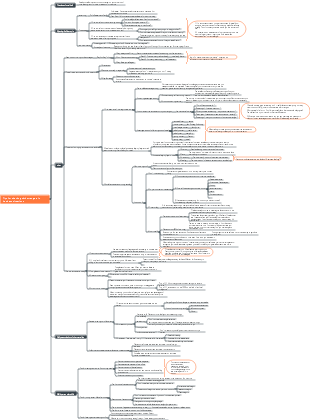
This is a mind map on 100 methods of efficient communication, focusing on efficient communication skills, and improving individuals' communication skills in work and social interaction through 100 specific methods. It advocates that "communication methods are higher than content", emphasizing that communication is a skill that can be trained in the future, not talent. Through systematic learning, ordinary people can also become high-level communicators.
Edited at 2025-08-20 09:03:40
- Analisi controllo gestione portata progetto
Mappa mentale per l’analisi del controllo della gestione del portata di progetto. Tre sezioni principali: 1. WBS Scope Breakdown – scomposizione gerarchica del lavoro con dettaglio dello Scopo del progetto. 2. Scope Boundary / Exclusions – definizione chiara dei confini del progetto e di ciò che è escluso per evitare scope creep. Strumento ideale per project manager e team di controllo per mantenere allineamento e ridurre rischi.
- Miglioramento continuo del sistema di gestione della qualità
Questo template, ideato con EdrawMind, è un modello completo per il miglioramento continuo del sistema di gestione della qualità, con una descrizione di circa 500 parole. È strutturato come un diagramma a lisca di pesce, strumento efficace per analizzare le cause principali dei problemi di qualità e definire le leve di controllo necessarie per risolverli. Il processo è organizzato in quattro fasi chiave: la prima è lo standard e la pianificazione, dove si definiscono gli obiettivi di qualità, i criteri di accettazione, i requisiti di prova e le porte di qualità (Quality Gate). La seconda fase analizza i processi e le porte di controllo, per garantire che ogni passaggio del lavoro segua i standard stabiliti. La terza fase riguarda l’esecuzione QA/QC, con la definizione di metodi di prova e ispezione, nonché regole per la gestione dei difetti e delle non conformità. L’ultima fase è il miglioramento e le azioni correttive e preventive (CAPA), insieme a una catena di audit per monitorare l’efficacia delle misure adottate. In basso, una tabella "Quality Gate" permette di tracciare ogni punto di controllo, con criteri specifici, metodi di prova, proprietario e stato di avanzamento. Grazie alla visualizzazione chiara e intuitiva di EdrawMind, questo strumento aiuta il team a identificare le cause root dei problemi di qualità, implementare azioni efficaci e mantenere un ciclo di miglioramento continuo, garantendo la qualità finale del prodotto o servizio.
- Ottimizzazione del piano di gestione della comunicazione per progetti
Questo template, creato con EdrawMind, è un modello di piano di comunicazione ottimizzato, con una descrizione di circa 500 parole. È uno strumento chiave per evitare incomprensioni tra stakeholder, garantire la trasparenza e mantenere il team allineato agli obiettivi del progetto. Il modello è composto da tre elementi fondamentali e interconnessi: la matrice di comunicazione, la cadenza timeline e le regole di comunicazione/SLA. La matrice di comunicazione è una tabella dettagliata dove per ogni pubblico o stakeholder, si definisce il tipo di informazioni da condividere, lo scopo della comunicazione, il canale da utilizzare (email, riunioni, piattaforme di progetto), la frequenza, il proprietario responsabile, il formato e il percorso di escalazione in caso di problemi. La cadenza timeline è una linea temporale che definisce le scadenze delle comunicazioni chiave, garantendo che le informazioni siano condivise in momento opportuno e non si verifichino ritardi o omissioni. Le regole di comunicazione e gli accordi sul livello di servizio (SLA) definiscono le norme formali della comunicazione, come i tempi di risposta, il tono da adottare e le responsabilità di ciascun membro del team. Grazie alla struttura visuale di EdrawMind, questo template permette di pianificare la comunicazione in modo strategico, trasparente e efficiente, riducendo i rischi di cattiva informazione, migliorando la collaborazione e garantendo che tutti gli stakeholder siano informati e coinvolti nel progetto.
100 ways to communicate efficiently
- Analisi controllo gestione portata progetto
Mappa mentale per l’analisi del controllo della gestione del portata di progetto. Tre sezioni principali: 1. WBS Scope Breakdown – scomposizione gerarchica del lavoro con dettaglio dello Scopo del progetto. 2. Scope Boundary / Exclusions – definizione chiara dei confini del progetto e di ciò che è escluso per evitare scope creep. Strumento ideale per project manager e team di controllo per mantenere allineamento e ridurre rischi.
- Miglioramento continuo del sistema di gestione della qualità
Questo template, ideato con EdrawMind, è un modello completo per il miglioramento continuo del sistema di gestione della qualità, con una descrizione di circa 500 parole. È strutturato come un diagramma a lisca di pesce, strumento efficace per analizzare le cause principali dei problemi di qualità e definire le leve di controllo necessarie per risolverli. Il processo è organizzato in quattro fasi chiave: la prima è lo standard e la pianificazione, dove si definiscono gli obiettivi di qualità, i criteri di accettazione, i requisiti di prova e le porte di qualità (Quality Gate). La seconda fase analizza i processi e le porte di controllo, per garantire che ogni passaggio del lavoro segua i standard stabiliti. La terza fase riguarda l’esecuzione QA/QC, con la definizione di metodi di prova e ispezione, nonché regole per la gestione dei difetti e delle non conformità. L’ultima fase è il miglioramento e le azioni correttive e preventive (CAPA), insieme a una catena di audit per monitorare l’efficacia delle misure adottate. In basso, una tabella "Quality Gate" permette di tracciare ogni punto di controllo, con criteri specifici, metodi di prova, proprietario e stato di avanzamento. Grazie alla visualizzazione chiara e intuitiva di EdrawMind, questo strumento aiuta il team a identificare le cause root dei problemi di qualità, implementare azioni efficaci e mantenere un ciclo di miglioramento continuo, garantendo la qualità finale del prodotto o servizio.
- Ottimizzazione del piano di gestione della comunicazione per progetti
Questo template, creato con EdrawMind, è un modello di piano di comunicazione ottimizzato, con una descrizione di circa 500 parole. È uno strumento chiave per evitare incomprensioni tra stakeholder, garantire la trasparenza e mantenere il team allineato agli obiettivi del progetto. Il modello è composto da tre elementi fondamentali e interconnessi: la matrice di comunicazione, la cadenza timeline e le regole di comunicazione/SLA. La matrice di comunicazione è una tabella dettagliata dove per ogni pubblico o stakeholder, si definisce il tipo di informazioni da condividere, lo scopo della comunicazione, il canale da utilizzare (email, riunioni, piattaforme di progetto), la frequenza, il proprietario responsabile, il formato e il percorso di escalazione in caso di problemi. La cadenza timeline è una linea temporale che definisce le scadenze delle comunicazioni chiave, garantendo che le informazioni siano condivise in momento opportuno e non si verifichino ritardi o omissioni. Le regole di comunicazione e gli accordi sul livello di servizio (SLA) definiscono le norme formali della comunicazione, come i tempi di risposta, il tono da adottare e le responsabilità di ciascun membro del team. Grazie alla struttura visuale di EdrawMind, questo template permette di pianificare la comunicazione in modo strategico, trasparente e efficiente, riducendo i rischi di cattiva informazione, migliorando la collaborazione e garantendo che tutti gli stakeholder siano informati e coinvolti nel progetto.
- Recommended to you
- Outline




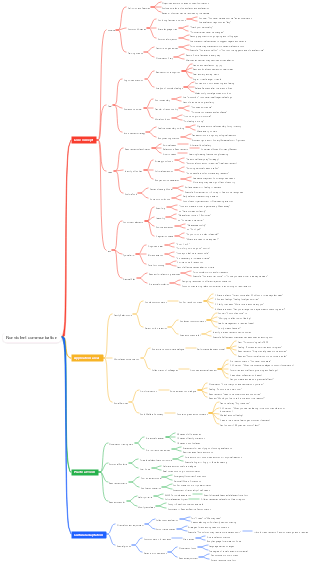

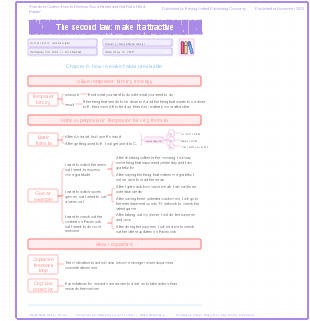
100 ways to communicate efficiently
Preface
In the forest, tigers and lions fought for lack of communication, and both ended up losing both. This fable highlights the importance of communication. Whether it is an individual or a team, whether in work or life, efficient and smooth communication can make things smoother.
Most people think that efficient communication is a talent, but in fact it is not. Communication skills can be improved through acquired efforts and practice. This 10 parts of the mind map introduces 100 efficient communication methods from listening, feedback, persuasion, rejection, humor, praise, etc., to help readers become communication experts and stand out in work and society.
1. Listen --The basics of efficient communication
01. Judging from the physical movements, whether to focus on listening
In communication, it is possible to judge whether the listener is focused on listening through the body movements of the listener. For example, when Yanyan talks with her colleagues, her colleague changes postures, yawns and fiddles with her phone, and then looks around. These physical movements indicate that the colleague is not focused on listening. When Yanyan changes the topic, the colleague smiles, nods, and echoes, indicating that she begins to focus.
Body linguists recommend that you should cooperate with the following body movements when listening to improve communication efficiency:
The body leans forward slightly, showing interest in the topic, making the other party more willing to express it.
Nodding from time to time is a sign of commitment and respect, which can promote smooth conversation.
Looking at the other person's eyes, focusing your eyes can leave a deep impression and express confidence. You can focus on the triangle area between the other person's eyes and mouth for 60% to 70% of the time.
Smile naturally, convey positive messages to the other party, and leave a good impression.
02. Stay active while listening
When Sun Jing was serving as customer service, she was unable to obtain useful information from the customers at first and communication was not smooth. Under the guidance of her old employees, she learns to be an active listener, capture information and understand customer needs while listening, and improves her work efficiency.
Psychologists say that when listening, stay active and effectively receive information and facilitate successful communication. In addition to obtaining valuable information, there are also the following methods:
Develop the habit of taking notes when conditions allow, which shows proactive listening, clarification of key points, and deepening understanding, especially for important meetings or conversations.
Pay attention to the way the other party expresses its opinions and questions, and expresses their opinions in a targeted manner, such as answering questions based on the customer's technical level in sales.
Make feedback in time, use short sentences such as "I understand" and "Yes, yes", and encourage the speaker to continue to express. But don’t interrupt at will, you must interrupt politely at the right time.
03. Listening does not mean saying nothing
When Zhang Kun’s girlfriend He Jie complained about her new job, Zhang Kun remained silent, which led to He Jie’s dissatisfaction. In fact, listening is not just a word. It requires guiding the other party to understand their inner needs.
The host of "Lu Yu's Appointment" Lu Yu knows how to listen. After listening, he will ask questions based on the information, so that the guests can speak freely, and at the same time make the guests feel respected and understood. At work, leaders can express their opinions and appreciation in a timely manner when listening to their subordinates, which can eliminate their subordinates' concerns and obtain more information.
04. Only by listening can you enhance your feelings
When Zhang Chu found that his son Lele always took two things. When he wanted to correct them, he first listened to Lele's thoughts and realized that Lele wanted to give her sweeter apples to her mother, and he wanted to share them with his friends. This shows that being good at listening can enhance feelings.
The key to efficient communication is listening. God gives people two ears and one mouth, which means that people listen more and speak less. "A pair of sensitive and understanding ears are more pleasing than a pair of talking eyes," said Carnegie, an American relationship guru.
Psychologists have shown that people desire to be respected in their hearts, and most people like those who are good at listening more than those who speak. Listening is a skill, cultivation and art. In communication, the other party should be told 80% of the time, and listeners only account for 20%.
How to listen:
Create a natural and harmonious atmosphere of communication, nod or smile politely, and let the other party speak freely.
Interact with the speaker in a timely and appropriate manner, communicate in inquiry tone, so that the other party can feel attentively listening.
Grasp the key points and think about them, refine the key points and confirm them with them, and ensure efficient communication between emotions and thoughts.
05. Choose the right time to interrupt when listening
A general interrupted the soldier and accidentally drank the pot of water, making a joke. This means that you should choose the right time to interrupt when listening, otherwise it will hinder communication and make the speaker unhappy. Interjecting in time can adjust the atmosphere and promote communication.
At a parent meeting in a certain school, a girl complained that the parent meeting was a "criticism meeting". The study committee member interjected and expressed different opinions after she finished speaking, which was effective.
Tips for interjection:
Think about the content of the interruption when listening, avoid incoherence and ensure smooth communication.
When interjecting, you should divide the person you want to interject. Do not interrupt at will when communicating with your leader, but you can be more casual between friends.
Choose the right time to interrupt and interrupt after the speaker has finished speaking.
06. Don't listen selectively
When the sons quarreled, the mother did not just listen to her younger brother, but learned the whole story, handled it fairly, and let the two brothers reconcile. This means not to listen selectively when communicating, listen comprehensively to learn more.
The old saying "listen to both sides, be clear; believing to partially, be dark", means that you must listen to opinions comprehensively to correctly understand things, otherwise you will be one-sided. Emperor Taizong of Tang Dynasty Li Shimin asked Wei Zheng about the difference between Mingjun and Darkjun. Wei Zheng pointed out that Mingjun listened fully, while Darkjun only listened to one-sided words.
Suggestions to be fully listened to:
Managers should humbly listen to and accept different opinions and opinions from themselves, especially so as to discover shortcomings and brainstorm.
Listen and receive all information attentively, distinguish the key points and details and review them in a timely manner.
Understand the speaker's content carefully and hear the expressed content from speech speed, body language, etc.
07. Understand the perspective of others while listening
When Zhang Wei cooperated with his colleague Li Chao, Zhang Wei was aggressive, listened impatiently, and interrupted from time to time, which made Li Chao unwilling to cooperate with him. Listening is divided into five levels. You should focus on listening or be listened to empathetic, that is, think from the perspective of others, understand and pay attention to the other person's thoughts.
Confucius said, "Do not do to others what you do not want others to do to you", and it is also applicable in communication. When American host Link Wright interviewed the little boy, at first everyone laughed at the boy's answer, but later they learned that the boy wanted to go back to get fuel, which means that you should think from the perspective of others during communication.
Suggestions for thinking from others while listening:
Master the principle of listening, listen patiently to the other party's speech, do not rush to comment, and actively consider issues from the other party's perspective.
Follow the speaker's ideas, put yourself in your shoes, and respond in time with body language.
Learning to understand others is the winning magic weapon for dealing with interpersonal relationships and the prerequisite for efficient communication, which can create a relaxed atmosphere and bring the distance closer.
08. Learn to "listen" with your eyes
Doudou wanted to share good news with his father. His father's perfunctory attitude made him disappointed, and his mother listened carefully with gentle eyes, making Doudou willing to talk. This shows that "listening" is very important.
Psychologists say that eyes can make the other party judge whether to listen attentively, and knowing how to "listen" with eyes can leave a good impression and build harmonious feelings. However, you should also look at the other person in moderation. It is advisable to look at the triangle area between the other person’s eyes and mouth in 60%-70% of the time.
Things to note when "listening" with your eyes:
When listening, focus your eyes and affectionate eyes. When arguing, focus your eyes and win.
Use your eyes to attract others and respond with your eyes such as praise, affirmation, harmony, and sympathy based on the other party's speech.
09. Focus on listening
At the job fair, most interviewers were attracted by the game-playing people and did not concentrate on listening to the administrative person in charge of introducing the company's situation, and ultimately failed the interview. This shows that it is impolite to not concentrate on listening during communication and can hinder communication.
When you cannot listen to others, you should explain the reason in a tactful way, and you can generally understand it.
Suggestions for focusing on listening:
Focus on the speaker, behave properly, and give appropriate feedback.
Follow the speed and rhythm of the speaker, listen and think.
Visualize what the speaker said and present it in the form of a picture in the brain.
Ask yourself from time to time, such as "What does this sentence mean?", etc., and keep your attention.
10. Understand the other person's implicit sound
Yu Na confides with Sun Li about her dispute with her roommate. Sun Li first stands on Yu Na's side and complains together, and waits for her mood to improve before comforting her, which has a good effect. This means that you must understand the other person’s implicit meaning during communication and understand his true intentions.
A young man communicates with his boss after buying an official position, misunderstanding his boss's words, resulting in a failure in communication. This shows that not understanding the other person's implicit voice can lead to communication failure.
Suggestions for understanding other people’s implicit comments:
Listen from the speaker's perspective and speak patiently before listening.
Ask a decent question after the other party’s speech, such as “I may not hear clearly, are you saying this?”
2. Feedback -- "Icinn on the cake" for efficient communication
11. Respond in a timely manner and maintain a good communication atmosphere
Fang Yuan contacted classmate Liu Wen on WeChat, but did not receive a response in time. She only received the word "Oh" the next day, which caused Fang Yuan to lose interest in contact. Words such as "Oh" and "Haha" are not real responses and will affect communication.
In communication, "reciting and communicating" responses can promote emotional communication, while perfunctory responses hinder communication. For children, whether they receive timely responses when communicating with adults will affect their future communication skills. Studies have shown that if the baby sends a signal to the mother, if the mother responds within 7 seconds, the baby will not feel frustrated, otherwise the number of signals will be reduced.
Psychologists suggest that you should respond promptly and friendlyly when communicating to create a good atmosphere.
12. Sincerity is the prerequisite for efficient communication
The experiments of American psychologist Anderson show that sincerity is a personal quality that is popular among the public, and hypocrisy and fraud are disgusting. Mencius once said, "If you want to see a wise man but don't follow his own way, you still want to enter and close the door." This means that you must have a sincere heart when dealing with people.
American physicist Benjamin Franklin said, "When you plant what you will gain, you will gain." Treat others sincerely and you will also receive sincere rewards. Bai Juyi's poem says, "How fast is the principle of success? It is to put people in a heart-to-heart sense", which shows that treating people sincerely can make people convinced.
In communication, sincere words can make communication smooth and build trust and friendly relationships.
12. Use encouragement to give the other party positive feedback
Xiaoshuang is diligent at her aunt and aunt's house because she is encouraged, and she is too lazy to do things because her mother is picky at home. This shows that proper encouragement is more beneficial to others' growth than criticism, especially for children.
Parents should appropriately encourage their children to be able to have harmonious relationships, enhance their self-confidence, and benefit their mental health. Leaders encourage employees to be able to improve their relationships with superiors and subordinates and encourage employees to create higher economic benefits.
The encouragement of Kanai Gene stepmother stimulated creativity and imagination and became a famous master and writer.
Use encouragement to give positive feedback:
Encouraging the other party with examples is more effective than empty theory.
Encourage the other person with physical movements, such as patting his subordinates on the shoulder.
Use the "bad" mentality to encourage the other party, let them see their own strengths and increase their confidence.
14. Voice can enhance personal charm
An advertising manager is creative in planning, but his voice is soft and unclear when explaining to customers, which leads to customer dissatisfaction. This shows that voice is an important communication tool, affecting the success or failure of communication and personal charm.
A survey shows that 55% of information in communication is transmitted through body language , 38% are transmitted through sound and 7% are transmitted through oral language. Suggestions to make sounds more pleasant:
Control the speed and volume of speech, and remind yourself to slow down when you are nervous.
The voice is passionate during conversation, which can attract each other and promote communication.
Find out your "range" and understand the space and plasticity of sound.
The sound should be natural and there should be changes in height so that the other party can understand the key points.
15. Know how to stop talking
Cao Cao asked Jia Xu about the establishment of the prince. Jia Xu mentioned Yuan Shao and Liu Biao, which made Cao Cao understand the key points and make a decision. This shows that knowing how to understand it until it is done in communication can make the other party understand it.
Zheng Yi complained to her best friend Li Yan about breaking up with her boyfriend. Li Yan advised her to break up. Later, Zheng Yi reconciled with her boyfriend, which led to Li Yan being out of the way. This means that if you don’t know how to speak until you are right, it will affect the relationship.
Suggestions to do the right thing:
Try to be short and take into account the other person's feelings.
Know how to be implicit and decent, and give the other party plenty of time to speak.
Don’t brag or show off your strengths to avoid being offensive.
16. Clever words are better than long speeches
Mark Twain took $2 from the donation box for his missionary speech from his long speech. This shows that clever words in communication are better than long-term discussions, which can interest others and resonate with each other.
Psychologists suggest that when rejecting or opposing others, use brief and clever words. In important occasions or speeches, clever and interesting opening remarks can be fascinating, such as Lin Yutang said, "The speech should be like a miniskirt, the shorter the better."
When using clever words, you must have limits and not be harsh or indifferent.
17. Euphemistic words are the "buffer" of communication
Emperor Guangwu Liu Xiu wanted to match Song Hong with his sister, but because Song Hong had a family, Liu Xiu used polite words to test and learned about Song Hong's thoughts. This shows that polite words are the "buffer" of communication, which can make the interaction smooth and allow listeners to understand the original intention in a comfortable atmosphere.
Lincoln expressed his boredom with the lengthy official report in polite words. Xiao Li offended his colleagues in the company because he spoke too straightforwardly and was not promoted.
Suggestions for people who are "straightforward":
Reduce what others do to avoid making it difficult for the other party to accept.
Reduce the other party’s character. If you have to say it, use a tactful and tactful approach.
18. Organic expressions make the other party better understand
In the "Longzhong Pair", Zhuge Liang clearly analyzed the situation in the world for Liu Bei, so that Liu Bei could understand the way out and promote efficient communication.
In reality, many people speak unorganizedly when talking. Let the other party be confused. Things to note for organized expression:
Try to slow down your speaking speed and make it more understandable to make it easier for the other party to understand.
When expressing opinions, use numbers, sequential words or narrative words to highlight the sense of layering.
Speech follows the order of time, place, causal relationship, etc., and forms orderly.
19. Etiquette is the "adhesive" for efficient communication
Lu Xiaohui pays attention to etiquette when treating people, and treats visitors with etiquette, believing that "if you want to take it first, you must give it first." Etiquette is the "glue" of communication. The core of Chinese traditional culture is "external etiquette and inner benevolence". Confucius and Xunzi praised etiquette.
Zeng Zi’s “avoiding the seat” and listening to Confucius’ teaching knowledge is a respect for the teacher. Not understanding etiquette in communication will make people reluctant to talk.
Etiquettes that should be paid attention to in communication:
Put yourself in a correct position, such as having a good attitude and speaking appropriately when communicating with your leader.
Abandon "self-centeredness" and focus on the other party, such as asking for opinions when dining with customers.
20. Choose a good angle for speaking when communicating
The queen knocked on the door three times, but did not open the door as "Queen" and "Victoria", and succeeded as "your wife". This shows that changing the angle during communication may make communication smoother and more efficient.
Xiao Xu accompanied the female client to visit the scenic spot and asked twice whether she was hungry and was rejected. Later, she said that she had not eaten. She invited the other party to have a meal together and obtained consent.
Suggestions for choosing a speaking angle:
Consider the problem from the other party’s perspective and make the other party feel that he is “his own person”.
Know how to use the word "you" strategy to make the other party happier and promote communication.
3. Persuasion --Let people "occupy the high ground" in communication
21. Use the "going method to make things easier" to convince others
Xiao Ke first asked her husband to buy perfume, and then asked him to buy a bag, and successfully convinced him. This is the "method of gaining momentum". First, make simple requirements, then make difficult requirements, and use people's desire to maintain a consistent image.
Door-to-door salesmen often use this method, first seek 5 minutes, and then sell products. The experiments of psychologists Jonathan Friedman and Ferrazier also prove the effectiveness of this method, namely the "threshold effect".
In love, first invite the other party to have a drink nearby, and then raise higher requirements, and the probability of success is greater.
22. Use emotional resonance to convince
Chulong, by caring about Empress Dowager Zhao's body, mentioned his son, and then made a long-term plan for Chang'an Jun, persuaded Empress Dowager Zhao to let Chang'an Jun go to Qi as a hostage. This shows that emotional resonance can effectively convince others.
Galileo expressed his love for science to his father, and used his father's emotional analogy to his mother to convince him to support himself.
Humans are emotional animals. When persuading others, they should create a sincere and sincere atmosphere and impress the other person with true feelings.
23. Talk about topics that others are interested in
When Huang Bin sold products to Mr. Zhou, he found that he was interested in movies and turned to talking about movies. He eventually successfully promoted the products and became friends with Mr. Zhou. This shows that talking about topics that the other party is interested in can bring the distance closer and facilitate persuasion.
Dale Carnegie said, "The most clever way to touch people is to talk to him about his most precious things." Theodore Roosevelt will learn about the topics of interest to the visitors in advance so that communication can be smooth.
When you find that the other party is not interested in the topic during communication, you should change the topic and talk about the content that the other party is interested in, as long as you understand the other party.
24. Use the "halo effect" to gain a sense of identity
Xiaojie used the words of a nutrition expert to persuade Vivi, who doesn't like to eat vegetables, to buy vegetables. This is to use the "halo effect", which is to use the views of authoritative people to enhance persuasion.
Magellan invited geographer Louis Pareilo to convince the Spanish king to gain support. The "halo effect" is a double-edged sword that can be appropriately quoted, but it cannot be blindly believed.
25. "Boil the frog in warm water" to conquer the opponent's psychological defense
When Wang Ying was unwilling to fill in the information of the immediate relatives, he gradually guided the customer to fill in the information by assuming the situation. This is the principle of "boiling a frog in warm water", which starts to convince people from the point that the other party can easily understand and accept.
Zhang Ming wanted his girlfriend Xiaoya to get married, and at the suggestion of a friend, he made a small move through action to get Xiaoya to agree.
When persuading others, you can use this method to gradually let the other party accept opinions.
26. Ask questions to guide others to convince themselves
Wu Yi borrowed water from the homeowner and asked him if he had a water dispenser, and successfully promoted the water dispenser. This shows that asking questions can guide others to convince themselves.
Anthony Robin said, “Successful people are good at asking good questions and thus getting good answers.”
How to ask questions:
Guide the other party to eliminate doubts by asking questions, such as sales staff asking questions based on customer needs.
Find out the truth and reality of others by asking questions, avoid being rejected, and understand the other party’s intentions.
27. Grasp the "key points" in communication
The guards analyzed Xiao He's situation to Liu Bang, seized the key points, and persuaded Liu Bang to pardon Xiao He. This shows that grasping the "pivots" in communication, presenting facts, reasoning, and analyzing pros and cons can effectively convince others.
Zhu Zhiwu analyzed the interests of Qin Mu Duke's joint efforts to destroy Zheng, persuade Qin Mu Duke to form an alliance with Zheng and withdraw his troops.
When persuading others, tell the other party the pros and cons of doing or not doing it, and the content should be specific and realistic.
28. Adopt roundabout tactics to effectively persuade
By telling the stories of dragonflies, oriole, swans, and Cai Linghou, Zhuang Xin gradually guided King Xiang of Chu to realize his mistakes and began to work hard to govern. This shows that roundabout tactics can effectively convince others, attack from the side, and let the other party recognize their mistakes.
In daily life, when persuading others, you can use roundabout tactics to explain the "reason" in a concrete and vivid way, so that the other party can think about the pros and cons.
29. Understand the psychological needs of others
Tourists took advantage of the monkey's mentality of imitation and asked the monkey to pick wild fruits and throw them to him, and finally walked out of the forest. This shows that understanding other people's psychological needs can achieve the goal of confronting others and achieve efficient communication.
Maslow divided human needs into five levels: physiology, safety, belonging and love needs, respect, and self-realization.
Things to note when persuading in communication:
Different persuasion is required to target different people's psychology.
Different persuasion methods are adopted according to different objects.
30. Be good at using clever persuasion methods
The head teacher of a certain class was lazy when facing the students being lazy due to the hot weather. He first understood the students, and then suggested waiting for the sun to set to weed, buy cold drinks to relieve the heat, so that the students could actively complete the task. This is a persuasion method of retreating to advance.
A clever way of persuasion:
Take advantage of the "home advantage" and convince yourself in a familiar environment or neutral environment.
Create the impression of "our own people" to bring the distance closer.
To your preferences, understand the other party’s needs, and consider issues from the other party’s standpoint.
Use the method of "please get into the trap" to design a "trap" to let the other party enter and take the initiative.
Use "good threat" to make the other party understand the interests and feel fear, but be friendly and explain the truth clearly. The degree of threat should not be excessive.
4. Reject --The "draft battlefield" of interpersonal communication
31. Timely rejection is a kind of respect for others
As the prime minister of Lu, Gong Yixiu was honest and honest. He refused the fish given by others, believing that accepting it would violate the law, resulting in his dismissal and he could no longer eat fish. This shows that timely rejection is respect for others and yourself.
Master Hsing Yun said, "Rejection is an art. If you do well, you will have the best of both worlds. If you do not do well, you will hurt others and yourself." In today's society, many people are unwilling to reject others in person, but in fact, it is respect for others to refuse and express their true thoughts in a timely manner.
Rejection of request:
First listen carefully to the other party’s request, then politely refuse, and make effective suggestions.
After refusing, care about the other party in time and let it understand its position and difficulties.
When refusing, your tone and attitude should be gentle and firm.
32. Refusal to start by keeping an appropriate distance
In order to integrate into the new company, Xiaoru is enthusiastic about helping her colleagues do things, but her colleagues frequently make unreasonable requests and is difficult to refuse. My friend suggested that she keep an appropriate distance from her colleagues, because refusal should start with maintaining an appropriate distance.
The "Hedgehog Law" shows that people should keep a proper distance when interacting with each other so that they will not hurt each other and can gain warmth.
In communication, you should consciously choose the best distance between communication, and learn to refuse and show your attitude when others cross the line.
33. Use body language to tactfully reject others
Deng Kai used body language to shake his head to decline his friend Chen Jie's request to jump into the team, and explained afterwards that the relationship between the two would be better. This shows that body language can convey the meaning of rejection, solve problems, and maintain relationships.
In daily life, you can convey the meaning of rejection by patting the shoulders and pressing the lower part of your eyebrows. In an intimate relationship, after making rejected physical movements, you can explain the reasons later to avoid complaining to the other party.
Suggestions for expressing rejection using physical movements:
Pay attention to the tone and speech speed, use slow speech speed and soft tone, and take a deep breath before refusing to adjust your emotions.
Look straight at the other person with a gentle look, avoiding the rotation of the eyeballs and enhancing the courage to refuse.
Keep your body stable, lean your body slightly backward, and your hands, knees, etc. will deviate from others. After refusing, you will apologize politely.
34. Humorous words make rejection more pleasant
Shaw rejected Duncan's courtship with humorous words, making Duncan understand the meaning and did not affect the relationship between the two. This shows that humorous words can make rejection more pleasant and make it easier for the other party to accept.
Lincoln used humorous stories to express his refusal to attend the editorial conference. Pythagoras said that "the shortest and oldest word - 'good' or 'no' - requires the most careful consideration", and people have the right to say "no".
Suggestions to make rejection more pleasant:
Reject with humorous words of gag and avoid the focus of the problem.
Reject with a humorous way of "nothing and perverting" to make the other party accept it happily.
35. Use clever induction methods to refuse
Michelangelo faced the accusations of David's nose by officials and pretended to make the officials recognize it. This is to induce rejection. It is to compromise on the surface, but in fact it sticks to your own ideas and make the other party accept the rejection unknowingly.
Roosevelt used the induction method to ask his old friends to say that they could keep it confidential, and then stated that he would keep it confidential, and refused to disclose the submarine base plan.
In daily life, clever inducement methods can be used to reject others so that the other party can accept it unconsciously.
36. Find the right "shield" to refuse
Ruan Ji used drunkenness as a "shield", rejected Sima Zhao's proposal and protected himself and his family. This shows that in order to refuse to find the right "shield", it can make the other party accept it and not harm the relationship.
Suggestions for finding "shields":
Use "others" as a "shield" and refuse on the grounds that you have no right to make a decision.
Use physical discomfort as a "shield", but it cannot be used frequently.
Use urgent matters as a "shield" to let others accept them naturally.
37. Reject bravely after explaining your own difficulties
Yang Hong explained the difficulties to the leader because of the harassment of a male customer, and refused to accompany the customer to eat or watch movies, which was understood by the leader. This shows that bravely rejecting after explaining one's own difficulties is a reasonable way to refuse.
In daily life, you can directly tell your own difficulties and let others accept rejection without affecting the relationship. For example, use words such as "This makes me embarrassed" to explain the reason.
In Lao She's "Four Generations Live in One's Family", the eldest sister-in-law Yunmei used her own difficulties to reject Qi Ruifeng's request for money, eased the atmosphere and maintained the relationship.
38. How to improve the "gold content" in rejection
By talking to himself, Hesto made Naster realize that his comics were not good and asked to throw them away. This shows that increasing the "gold content" in rejection can make the other party accept it with convincing conscience.
Suggestions to increase the "gold content" in rejection:
The attitude and a gentle tone when rejected are kind, which shows the reason.
Don't say rejection easily, avoid rejection immediately or when you are angry.
When refusing, explain the reasons openly and honestly so that the other party can understand.
39. Switch topics to cleverly reject others
When Cao Cao said, "You and I are the only heroes in the world", Liu Bei used thunder to change the topic, concealed his panic, and rejected Cao Cao's evaluation. This shows that changing the topic can cleverly reject and avoid questions that you don’t want to answer.
Suggestions for changing topics:
Insert fresh and interesting topics, divert the original topic, and attract the other person's attention.
When an emergency occurs, immediately change the topic and proceed according to the situation without being stiff.
40. A brilliant strategy to successfully reject others
Gan Luo used the method of making mistakes and refused the Qin King's request to lay eggs laid by the rooster on the grounds that his grandfather had given birth at home. This is a brilliant strategy to successfully reject others.
Other rejection strategies:
Recommend rejection strategies, recommend others to solve the other party’s problems, and reduce the other party’s sense of disappointment.
Use rejection strategies by asking questions, ask back to the other party, strive for time to think about, and find out the flaws.
Use the strategy of agreeing and rejecting, first agreeing with the other party, and then expressing different opinions to make the other party psychologically satisfied.
Using a rejection strategy that takes retreat to advance is a clever negotiation strategy. It seems to be a concession, but actually refuses.
5. Humor --High-quality communication "feast"
41. Use humor to narrow the distance between each other
As a manager, Chen Chen relaxes his employees through humorous words and narrows his distance with them. This shows that humor creates a pleasant atmosphere and brings each other closer.
In social occasions, when facing strangers, using humor skills in time can relax and bring the two sides closer. For example, lawyers use humorous words to resolve conflicts with neighbors and become friends.
American psychologists surveyed and found that students like humorous teachers and feel that their lectures are like spring breeze.
Notes on using humor:
Be friendly and avoid sarcastic behavior.
Use humor to separate the object and consider the other person's personality, emotions, etc.
42. Humor can "cool" contradictions and conflicts
Fangfang used humorous words to resolve the contradiction between waiters' tea breaking. This shows that humor can "cool" contradictions and conflicts and release inner tension and unhappiness.
The taxi driver uses humorous words to make way for the owners on the opposite side and become friends. Fruit supermarket clerks use humorous words to point out the issues that women ignore and avoid quarrels.
Humor can resolve conflicts and promote the development of relationships. In social occasions, you should learn to communicate with high-quality humor.
43. Humorous expression can enhance personal charm
Nana's boyfriend responded to the rudeness of the child's mother with humorous words, which made Nana's favorable impression of her. This shows that humorous expression can enhance personal charm and make others willing to accept it.
Psychologists believe that proper use of humor can make communication more efficient and reflect personal wisdom and cultivation. For example, the customer responded to the waiter's question about the sand in the rice with humorous words.
44. Self-mockery contains self-confidence and wisdom
Chen Fan used self-deprecating words to reassure his wife and showed wisdom. This shows that self-mockery is the highest level of humor and the language art of self-confidence, which can make communication smooth and reflect open-mindedness and wisdom.
Zhang Daqian complained that he was a villain and adjusted the atmosphere of the banquet. The general used his self-deprecating to resolve the embarrassment of the soldiers pouring wine on his bald head, showing his open-mindedness.
Clever use of self-deprecating will not damage your image, but can demonstrate confidence and wisdom, and win the favor and respect of others.
45. Humor is the "lubricant" for efficient communication
Socrates used humorous words to resolve his wife's embarrassment of throwing dirty water on him, making her realize her recklessness. This shows that humor is the "lubricant" of efficient communication and can deal with embarrassing situations.
Feng Jicai used humorous words to get his friend's son off the bed, showing his wit. People who are good at using humor are very popular in interpersonal communication.
46. Incorporating humor into the speech is more fascinating
Lincoln gained support by incorporating humor into his presidential speech. This shows that the incorporation of humor into the speech makes the speech easy and fun and attracts the audience's attention.
Eisenhower ended his speech with humorous words and received positive reviews.
How to incorporate humor into speeches:
Use contrasting sentences to produce a humorous effect.
Create humor with exaggerated expressions, making it easy for the audience to understand and create a relaxed atmosphere.
47. Use humorous strategies when negotiating with others
Chen Lu used humorous words to help Danish merchants lower the price of herring and reach a cooperation. This shows that using humorous strategies in negotiations can ease tension and make negotiations more harmonious.
Customers use humorous words to make the beef seller know that he is in the wrong. The little boy used humorous words to ask his mother to buy him a cat.
During negotiations, humorous methods can be used to make choices to allow the other party to choose more acceptable options.
48. Make humor the "shock absorber" in the family
Lei Ming responded to his wife's divorce application with humorous words, eased the relationship, and then negotiated with his wife to resolve the problem. This shows that humor is the "shock absorber" in the family, which can ease tension and maintain family harmony.
A couple quarreled over trivial matters, and the husband used humorous words to make his wife burst into tears and laugh. Children's humorous words can make the family full of warmth.
Humor is a necessity of family life and can fill the family with a relaxed and pleasant atmosphere.
49. The humorous way in the workplace interview
A young man answered the interviewer's question about who is better, Ronaldo or Jordan, in a humorous way, and was hired. This shows that humor during the interview can adjust the tension, show talent, and make people stand out.
An applicant answered the interviewer's questions in humorous words and was hired on the spot.
Suggestions for using humor during interviews:
Be prepared before the interview and prepare humorous answers.
Be good at listening and show your expertise in a targeted manner.
Be good at observing and use the things around you to express your sense of humor.
50. Humor management, win people's hearts and respect
Yang Si used humorous words to imply that the intern girl was careless in doing things, so that she could work hard and win respect. This shows that leaders can use humor to communicate with their subordinates to convince employees and win people's hearts and respect.
Liu Qi used humorous comments to point out the problems summarized by employees and asked employees to correct them seriously.
In workplace management, humor can enhance employee morale and promote teamwork. When using humor, you must be responsible and explore your own humorous topics.
6. Praise --The "sugar-coated cannonball" that captures others' hearts
51. Give sincere praise to others
The third daughter of an African tribe chief has gone from laziness to hardworking and capable because she has received sincere praise from her husband. This shows that sincere praise can help people get rid of inferiority, build self-confidence, and change their lives.
Psychologists' experiments show that children who receive praise recover faster. Praise should be reserved and let the other party clarify its strengths and problems.
Han Xin sincerely praised Liu Bang for his goodness in controlling generals, and pointed out that he lacked troops, which satisfied Liu Bang.
Suggestions to make praise more sincere:
Praise should be specific to the details and leave a deep impression on the other party.
Develop the habit of praise and naturally and sincerely praise the people around you.
52. Use praise instead of accusations and complaints
Fisherman A's wife made her husband depressed because of her accusations and complaints; Fisherman B's wife encouraged her husband with praise and made her relationship closer. This shows that using praise instead of accusations and complaints can make communication smoother and make others feel warm.
A girl praised the watermelon boss for his good skills in picking melons, so that the boss could choose melons more carefully.
William James said, "The most essential wish in human nature is to be praised." Praise can change a person's life. The story told by Hegel shows that kind-hearted praise can guide people to the right path.
53. Don’t let the praise pass the “shelf life”
The cosmetic salesman timely praised the hostess' dog and then successfully promoted the product. This shows that praise has a "shelf life" and should be given in time and seize the opportunity.
In life and work, we should timely praise others’ happy events and progress, pay attention to others’ subtle changes, and make the other person feel valued.
54. Know how to praise others behind your back
Lin Daiyu overheard Baoyu praise herself in front of others, making the two more close. This shows that praising others behind the scenes is better and can make the other person feel sincere and frank.
Parents’ expectations and concern for their children are learned from others and can motivate their children to study hard. At work, praising the leader when he is not present can enhance his impression in the leader's heart.
Bismarck praised the MP who hated himself in front of others and made him a political ally.
55. Praise should be done in moderation
Li Dan over-praises her husband's cooking skills, which leads her husband to only study recipes and not do housework. This shows that praise should be stopped in moderation, restrained and grasp the standards.
The old saying "too much is not too much", excessive praise will make the other person uncomfortable and even bored. Praise should be appropriate, such as praising others to sing “very charming” is easier to accept than “the best in the world”.
Appropriately praised suggestions:
Don’t be too numb to praise, and avoid exaggeration.
Praise should be natural, not deliberately, and the tone should be moderate.
56. Give others concrete praise
When Lin Xiao communicated with customers, he specifically praised the customer for his eyes like Zhao Wei, gained favorable feelings, and successfully signed the contract. This shows that concrete praise makes the other party feel sincere, easy to accept, and can bring the distance closer.
Praise others to speak in a practical way, such as praising the speech “very thoughtful, especially the sentence…” and praising the room “the calligraphy and paintings on the wall are very tasteful…”.
Roosevelt specifically praised his specially made cars, which moved the engineers.
Methods to embody praise:
Compare with celebrities to improve the other person's image.
Praise and evaluate specific parts so that the other party feels sincere.
57. Let yourself down and praise others
Xiao Fei lowered herself, praised her father for running lightly, and let her father keep exercising. This shows that lowering oneself and raising others can win the other party's favor, making the other party more acceptable, and satisfying their self-esteem.
Shen Congwen lowered himself before class and won applause from his classmates. Friends and colleagues lower themselves and praise others, which can help the other party do better.
Lower yourself and praise others can make communication smoother, and achieving others is also achieving yourself.
58. Give different praises to different objects
Zhu Yuanzhang’s two friends told the same thing, but because of different ways of praise, one became an official and the other was killed. This shows that praise varies from person to person and varies according to the other person's role, personality, etc.
Praise young people to praise their creative talents, praise the elderly to praise their "think back then", and use sweet words to their lovers.
Lenin said, "Speaking to a coachman should be different from a sailor, and speaking to a sailor should be different from a typist." Praise should consider factors such as the other party's profession.
Things to note when praising different objects:
Pay attention to the other person's gender characteristics, such as praising a slightly fat woman for being "full and rich" and praising a slightly fat man for being "a broad-minded heart and fat body".
Pay attention to the other person's personality traits, praise less to introverted and sensitive people, and praise more to extroverted and cheerful people.
Pay attention to the other party’s cultural knowledge level and use simple language to praise people with low cultural level.
59. Grasp the other person’s needs and praise it
The theater manager grasped the psychology of women who love beauty and youth, and made them consciously take off their hats, solving the problem of blocking their sight. This shows that before praising, you must understand the other person's psychology and understand the needs, so that you can grasp the right position and praise better.
Psychologist experiments show that she became cheerful and confident after praising girls with strong inferiority complex.
Lincoln said, "Everyone needs praise, you and I are no exception." Before praise, you must understand the other person's psychological and emotional needs.
60. Newly recommended praise doubles the communication effect
Lu Xin was happy that the reporter praised her tenderness and kindness in her heart and had a cordial conversation with the reporter. This shows that new compliments can make the other party more acceptable and the communication effect is doubled.
The general in Yukio Mishima's works likes others to praise their beards rather than military talents. When praising others, praise their inconspicuous or undiscovered advantages.
Gao Liang praised his wife and classmates for their special earrings, breaking the embarrassment and making communication smooth.
7. Criticism --The "lightning flash" is indispensable for efficient communication
61. You must know what to do when criticizing others
Duke Jing of Qi shot an arrow outside the target, and the ministers cheered. Xian Zhang pointed out that Duke Jing of Qi understood that the ministers flattered him because he did not like to listen to criticism. This shows that criticizing others should be done until they are concise and concise, otherwise they will make the other person disgusted.
Chen Jing was late due to traffic jams due to rain, and the supervisor criticized him severely, which led to Chen Jing being late deliberately and not being serious about his work. If the supervisor criticizes it until the end, the effect will be better.
Criticizing others should stop when you say something is right, leaving room for the other party.
62. Criticize yourself before criticizing others
Fan Bin found that his son likes to play with his mobile phone. He first criticized himself and also liked to play with his mobile phone, and then pointed out his son's problems, so that his son could accept criticism and correct it. This shows that self-criticism before criticizing others can make it easier for the other party to accept and effectively change their behavior.
During a military parade in Alabama, the reviewer only saw the soldiers not buttoning, but did not find that there was also a problem with their uniforms.
Suggestions for criticizing others:
The purpose of clarifying the purpose of criticism is to solve the problem, point out the mistake and tell the other party the correct way.
Pay attention to criticism occasions and do not embarrass the other party.
63. Give praise before criticism
Prince Buno first criticized William II, then praised him and asked him to forgive himself. This shows that giving praise before criticism can create a good atmosphere, allowing the other party to eliminate vigilance and hostility, and easily accept criticism.
Mom A criticizes the child who is not good at the exam, which makes the child unhappy; Mom B first affirms the child, and then makes suggestions to make the child accept it happily.
Melin Kay said, "Don't just criticize but not praise." Praise before criticism can make the other party realize the problem and actively correct it. The Rockefeller family congratulated the partners who lost $1 million, making them blame themselves and work more seriously.
64. Avoid using hurtful words
The hunter criticized the bear for destroying the cornfield and used hurtful words. After saving the hunter, the bear still left because of those words. This shows that you should avoid using hurtful words when criticizing, as the harm to the soul is irreparable.
Suggestions for criticizing others:
Consider the seriousness of the matter, if it is not serious, you will not get angry.
Don't criticize others behind the scenes, especially in the workplace.
Don’t repeat the criticism to avoid upsetting the other person.
65. Learn to criticize others in a tactful way
The hotel waiter pointed out the mistake of the guest taking the cloisonné chopsticks in a tactful way and asked the guest to return it. This shows that criticizing others in a tactful way can make the other party more acceptable and achieve the purpose of criticism.
Rossini pointed out in a euphemistic way that the composer's songs were plagiarized.
Things to note for tactful criticism:
Discuss the matter with the facts and use implicit sounds to let the other party understand the mistakes.
Speak implicitly and do not vent your anger, allowing the other party to accept criticism in a pleasant atmosphere.
Make criticism privately, in a gentle tone.
66. Use a tone of suggestion instead of criticism
Teachers from the school management office severely criticized the students for parking randomly, which led to students' dissatisfaction and deliberately caused trouble. This shows that using a suggestive tone instead of criticism can convey respect and make it easier for the other party to accept.
Engineers use suggestions and reminders to let workers wear safety helmets, which has a good effect.
Carnegie says people don't like to accept tough criticism and be told what to do. Benefits of using a suggested tone:
Weaken the tone and prevent the other party from resistant.
Reflect an equal attitude and make the other party willing to accept it.
67. Use different criticism methods for different objects
Sun Ming leniently criticized new employee Wang Song and harshly criticized old employee Li Fei, which made both of them progress. This shows that different criticism methods should be adopted according to the other party's personality, experience, etc.
People with different personalities respond differently to criticism. The criticism should also be different:
Directly criticize cheerful and straightforward people and make serious analysis of mistakes.
For those who are sensitive and good at face-saving, first admit their shortcomings and then criticize them.
Criticize the rough and impatient people in mild words and affirm their achievements.
Criticism skills for workplace managers: Don’t focus on the details, be a gentle and strict manager, and give support and help to subordinates.
68. Learn to analyze problems objectively when criticizing others
Zhang Tian was inefficient because she was worried about making mistakes in the calculation. The cashier team leader accused her of her. After the manager understood the situation, he affirmed her attitude, pointed out the problems, told her methods, and improved her efficiency. This shows that criticizing others should help them analyze the reasons and tell them how to correct them so that they can easily accept it.
Practice of objectively analyzing problems:
Tell the other party the basis for criticism and do not criticize randomly.
Help find the root cause of the error and tell me how to correct it.
Let those who make mistakes speak and listen to their opinions.
Suggestions for allowing others to accept objective analysis:
Don't comment or tell the other party directly what to do.
Point out obvious problems or mistakes that are easily overlooked.
69. Add some "sugar" in the process of criticism
Du Xi first echoed Cao Cao before criticizing him, and then tactfully advised him, asking Cao Cao to accept the advice and recruit Xu You. This shows that putting criticism in praise can satisfy the other party's psychological needs and make it happy to accept criticism.
Tao Xingzhi used the method of rewarding sugar to make the boys who make mistakes realize their mistakes.
Criticism is an art and wisdom. If others make mistakes, if they condemn them blindly, it will embarrass them. Adding some "sugar" to the criticism can make others accept it happily.
70. Criticism skills that must be known
Ma Ling accused the leader of being biased because he did not understand his colleague's situation. Later, he went to his colleague's house to understand the situation and admitted his mistake to the leader. This shows that criticizing others with facts can convince the other party.
Other Criticism Tips:
Don’t point out the mistakes directly, emphasize better practices, and affirm the other party first.
By suggesting, let the other party understand the problem, implicitly and tactfully.
The purpose of clear criticism is to help others correct their mistakes and not vent their emotions.
8. Improve yourself --The "Shangfang Sword" of efficient communication
71. Do a good job in managing your image
Yuan Jun was eliminated during the interview because he wore slippers, his shirt collar was curled inside, and his hair was messy. This shows that external image is very important in interpersonal communication and determines the first impression.
Psychologists' experiments show that young people dressed as college students have a high probability of free rides, while those dressed as beggars have a low probability of free rides.
In the workplace, good image management will give people a calm and credible feeling, which is conducive to communication. In foreign political campaigns, campaigners attach importance to image details. Lincoln accepted the little girl's advice to grow a beard and get more support.
72. Recognize yourself and bloom your personality in communication
The pastor's son quickly put together the map by compiling the person's avatar on the back of the world map, so that the pastor can understand that "if the person is right, the world is right." This shows that in interpersonal communication, we must correctly understand ourselves in order to bloom our personality and win respect.
Because Hermos could not recognize himself, his statue was told by the boss that he could get free gifts for buying Zeus and Hera's statues.
How to recognize oneself:
Use others as a mirror, accept supervision, and listen to opinions.
Recognize your own relationship with others, communicate differently in different relationships, and avoid "slight communication and deep words".
73. Control your emotions
Yang Yong made a big fuss because others dirty his clothes, which made his friends unwilling to have dinner with him again. This shows that people should control their emotions and be the master of emotions.
Psychologists say that mood is controlled by oneself, and controlling emotions is the "sword of Shangfang" for efficient communication. Zhuge Liang's wife gave him a fan engraved with the Eight Formations to remind him to control his emotions.
Suggestions for controlling emotions:
Cold handling of things that lead to bad emotions gives emotions a buffer space.
Take a deep breath when you encounter unhappiness and calm yourself down.
When you have a dispute with others, divert your attention and calm your emotions.
74. Be confident in communicating with others
Black children are puzzled by the fact that black balloons can fly into the sky. The boss explains whether the balloon can fly depends on the gas inside. Whether a person can succeed has nothing to do with the color of his skin, the key is self-confidence, etc. This shows that communication is full of confidence, which can make communication smooth and convince the other party.
Many people are not confident in public, but in fact, they will feel relaxed and natural when they focus on expressing their content. Schweibo gave a speech confidently and received $1 billion in funding.
Confident advice in communication:
Express your thoughts in an organized manner.
Actively participate in activities to improve self-confidence.
Create the illusion of self-confidence and become more confident after getting hints from the other party.
75. Smile is the "catalyst" for efficient communication
Zhou Wen always kept smiling when interviewing the airline telephone service staff. Although the interviewer turned his back to her, he was still hired. This shows that smile is the key to opening the door to communication and can shorten the distance.
Shelley said, "Smile is really a symbol of benevolence, a source of happiness, and a medium for getting close to others." A smile can ease the tension and make people get along with each other happily.
Franklin Betger said that people with a smile are always popular and should communicate with a smile.
76. "Dancing" your own language before communication
Zhao Shan’s high volume and fast speech speed leads to customers’ reluctance to communicate and old customers are lost; Li Xing’s voice is gentle and his speech speed is moderate, so the customer’s communication time is long. This shows that before communication, you should "dance" language, control volume, speech speed, etc.
Volume affects the success or failure of communication, and the manager will adjust the volume according to the situation.
Things to note about "Dancing" language:
Maintain a stable speaking speed, 120-140 words per minute is appropriate.
Cultivate a tone of ups and downs and convey more information.
Grasp the rhythm of speaking, be familiar with the theme, and make accurate pronunciation.
77. Open your heart and moderate self-exposed
Xia Tong was not used to it after arriving in Chongqing. She opened her heart at the suggestion of her friends and exposed herself moderately, and finally adapted to and fell in love with the city. This shows that moderate self-exposed can bring each other closer and increase your sense of acceptance and trust.
Oprah Winred lets the audience feel affinity through self-exposed, and his interview program has high ratings.
Self-exposure is divided into four levels. The deeper the level, the better the relationship. But the more self-exposed, the better. You should be moderate and consider the person you communicate with and the right person.
78. Optimize your personality and make communication more efficient
Bai Xue is introverted. Under the guidance of Zhu Meng, she participated in activities and found her interests. Her personality became cheerful and her suitors increased. This shows that personality can be optimized, and as long as you make up your mind to change, there will be obvious results.
Character affects a person's thinking and behavior. A good character makes people feel good, while a bad person brings trouble.
Suggestions for optimizing personality:
Develop changes plans and supervise implementation, such as Franklin's character cultivation plan.
Adjust your mindset, explore others' strengths, and sincerely praise and be grateful to each other.
79. Tolerate everything with a tolerant heart
Tian Jun lost the company's materials and official seal, and the general manager tolerated it, making Tian Jun more serious and responsible, and refused to hire other companies with high salaries. This shows that tolerance can keep an open mind, is a manifestation of wisdom, and can lead to good interpersonal relationships.
Psychologists say, "As long as you have a mind that can see through everything, you can be open-minded and generous." Duke Huan of Qi appointed Guan Zhong without regard for his past grudges and achieved hegemony.
Tolerant of others is also to be kind to yourself, which can reflect personal demeanor and cultivation, and allow people to reach a new level in life.
80. Abandon bad habits and improve your character
He Bing missed meeting with customers due to alcohol abuse and lost the opportunity to cooperate. Later, he made up his mind to quit drinking. This shows that bad habits will have negative effects, and we must abandon them and improve our character.
Nina Golanfeld said, "Bad habits will bring many benefits, otherwise people will not be able to live without it." Letting bad habits grow will make people control it.
Suggestions for abandoning bad habits:
Make up your mind to change and take action to let family and friends supervise.
Be patient and persistent, and never give up halfway.
Cultivate good habits and improve your character.
9. Speech and Eloquence --The "magic" who communicates efficiently
81. Make preparations before the speech
Xiao Zhao's leader failed to improvise because he did not prepare the speech and fell into embarrassment. This shows that you must be prepared before the speech, and you cannot simply recite the speech, but understand the content and express it in your own language.
Preparations before speech:
Consider the audience needs and determine the content of the speech.
Select the topic, determine the scope, select familiar content, and integrate it into your own feelings.
The content is layered and the ending is concise.
Find experienced speakers to preview, and there is insufficient improvement.
82. Overcoming the fear of going to the stage
Feng Fei was nervous and frightened when he gave a speech on stage because he was not talking. He failed. This shows that many people will feel fear and nervous when they come to the stage, because they are not used to speaking to most people.
Suggestions to overcome the fear of going on stage:
Understand the causes of fear, find opportunities to speak in public, and build confidence.
Adjust your mindset before the speech, relax, and avoid gains and losses.
Find speech opportunities and train yourself through practice.
83. A unique opening remark is the basis for a successful speech
Feng Jicai started his speech in the United States with a unique way of taking off his clothes, attracting the attention of the audience and winning applause. This shows that a unique opening remark is the basis for a successful speech and can lead the way.
Lin Harold Hu once said, "The opening remarks should attract attention and can capture the hearts of the audience in one go."
How to make a wonderful opening remark:
Ask questions cleverly, attract attention and trigger thinking.
Quoting classic famous mottos or authoritative materials to lay the groundwork for speeches.
Use meaningful stories, related to the theme, short and concise.
84. Find topics that are of interest to the audience to resonate
Under the guidance of the counselor, Zhang Bei learned that senior students were concerned about internships and work, and revised their speeches, which resonated with the speeches. This shows that finding topics that the audience is interested in in the speech can bring the distance closer and achieve twice the result with half the effort.
Jobs' speech at the graduation ceremony of Stanford University narrowed his distance with students with humorous words.
Suggestions for finding topics that are of interest to the audience:
Understand the audience's thoughts, psychological needs, etc., and be targeted.
Use humorous words to adjust the audience's psychology and liven up the atmosphere.
Break through the audience's "emotional fortress", enhance persuasion, and integrate emotions.
85. The language of speech should be humorous and interesting
When Lin Yutang gave a speech at the Lin clan, he listed the characters in the novel and Americans who had nothing to do with the Lin clan to meet the requirements of the clan and show his style. This shows that humorous language is important in speeches.
The pianist faces a small number of listeners and uses humorous words to resolve disappointment and gain favorable impressions.
Suggestions for using humor in speeches:
Dear self-deprecating to your own physical characteristics and narrow the distance from the audience.
Insert humor into distinctive people or things at the right time to become a speech booster.
A brief ending with humorous language.
86. Control the sound and rhythm of the speech
Wang Yong and Sun Bo believe that a certain speech was successful, which was related to the speaker's voice, speed of speech, and ups and downs. This shows that during the speech, you should pay attention to volume, tone changes and speech speed to attract the audience's attention.
Lincoln controls speech speed and voice when he emphasizes key points. Sir Oliver Rogee paused naturally when he gave a speech.
In addition to controlling the volume and speaking speed during the speech, you should also pay attention to:
Use gestures to help express your opinions and focus.
Keep your feet relaxed, spread your feet shoulder-width and close to your heels.
Control facial expressions, naturally look ahead and keep a smile.
87. Good eloquence is easier to gain wealth and opportunities
The boss of breakfast shop A asked the customer "If you want two eggs or one", most customers wanted two; if you want two; if you want eggs, most customers didn't want them. This shows that good eloquence is important in communication and can bring more benefits.
Du Baolin used excellent eloquence to advertise cigarettes, and the results were good. A graduate was admitted to the company using his witty eloquence at the CEO's birthday party.
88. Eloquence skills
The king was angry because the local magistrate had not repaired the road, and the local magistrate was executed without explanation; the official of the Royal Horse Supervision explained that he did not feed the horse because he was worried about the king's condition and was valued by the king. This shows that good eloquence should be clear and well-founded.
Suggestions for practicing without scattering eloquence:
Reserve knowledge over the years to make the expression meaningful.
Have clear logic and organization, speak in an organized manner, speak rigorously, and maintain a sincere and reciprocal mentality.
89. Use rhetoric skillfully to increase the charm of language
Liang Jing used exaggerated techniques to describe the wind at the university, making Xie Nan's sister laugh at her, and was later introduced to work. This shows that using rhetoric in communication can increase the charm of language, win favorable feelings, and make it easier for the other party to understand the views.
Einstein used people's personal feelings to explain the theory of relativity, which is easy to understand.
90. Being thoughtful can bring good popularity
Song Chen’s friends have different evaluations of his expensive curtains, which makes Song Chen’s reactions differently, and the thoughtful friends make him more comfortable. This shows that speaking with thoughtfulness, kindness and tactfulness can bring good popularity.
Yang Xiu was arrogant because he did not consider Cao Cao's feelings and was killed by Cao Cao.
Thoughtful suggestions:
Discuss things on the matter and do not generalize by any means.
Don’t talk nonsense or make decisions when you are emotionally unstable.
Humorous words need to be divided into time and occasion.
10. Complete everything --Use different communication "Treasure Book" for different objects
91. Be clear about your identity when communicating with your leader
As an intern, Luo Hui was fired from disregarding her identity and disobeying the arrangements of the supervisor. This shows that when communicating with leaders, you must be clear about your identity, understand the relationship between superiors and subordinates, and perform leadership tasks.
Things to note when communicating with leaders:
Actively communicate work matters, report progress, and let leaders understand the situation.
Observe your words and expressions, understand the inner needs of your leader, and form a tacit understanding.
Continue to learn, "recharge" yourself, and keep up with the leadership.
92. Don’t talk about taboo topics when communicating with colleagues
Yu Na told her colleague about breaking up with her boyfriend, and was discussed by her colleagues and affected her work. This shows that when communicating with colleagues in the workplace, you should avoid talking about taboo topics such as personal feelings.
Other taboo topics to communicate with colleagues:
Personal career planning to avoid being regarded as dissident by colleagues.
Salary and other sensitive topics to avoid conflicts.
Office rumors to avoid getting involved in right and wrong.
93. You must understand communication skills when communicating with subordinates
Hou Ming communicated with his subordinates by sending emails, frankly talked about his work plans and shortcomings, gained recognition, and improved his work performance. This shows that establishing effective communication channels is the guarantee of good communication with subordinates.
Tips for communicating with subordinates:
Pay attention to your speaking attitude and way, eliminate the concerns of subordinates, and let them express their true thoughts.
Communication with sincerity, heart-to-heart, touching people's hearts with emotions, and gaining trust.
Encourage more, criticize less, and work with subordinates to find out the causes of the mistakes and improve methods.
94. Communicate with the interviewer and answer cleverly
During the interview, Qiao Li introduced herself concisely and realistically, highlighted her strengths and mentioned her weaknesses, used examples to prove her ability, and was hired. This shows that you must grasp the principles and respond cleverly during the interview.
Notes on communicating with the interviewer:
Confident and humorous conversations impress the interviewer.
Consider issues from the other party’s perspective more often, so that the other party can feel a sense of belonging.
Know how to respond to interviewers' improvisational questions.
Taboos in interviews: Don’t answer questions that are not answered, pretend to understand, argue with the interviewer, and be proud.
95. A provocation method can be used when negotiating with others.
Xiaoya uses provocation to women who are hesitant in front of cosmetics and asks them to buy cosmetics. This shows that the method of excitement can be used in negotiations to stimulate the other party's self-esteem and achieve the goal.
The key to using provocation is to detect other people's intentions and needs, anger the other party, and let them speak their hearts.
When Metternich negotiated with Napoleon, he used a provocation to expose Napoleon's inner thoughts and pointed out his weaknesses.
Things to note when using provocation: Use different methods to different objects, be responsible and seize the opportunity.
96. Be rational in communicating with partners
Shen Yao was dissatisfied with the engineer because the engineer missed the customer's requirements and the customer was dissatisfied. Shen Yao was unreasonable, which led to the breakdown of the relationship with the engineer and the cooperation was terminated. This shows that communication with partners should be reasonable, forgive others' mistakes, solve problems successfully, and be respected.
In order to protect the chef at the vegetarian banquet, the monk did not let the owner know that there was meat in the dish, which showed that he was reasonable and merciless.
97. Don’t mistakenly break into the “forbidden zone” when interacting with friends
Liu Chuang borrowed money from Yang Bo and did not repay it in time. After he had money, he bought a mobile phone and traveled, which made Yang Bo dissatisfied and the two had a distant relationship. This shows that you must be restrained and rational when interacting with friends and not break into the "forbidden zone".
The "forbidden zone" for dating with friends:
You cannot speak without trust or keep your promises.
Don't speak sarcastic to your friends in front of everyone.
Do not vent negative emotions to your friends at will.
Don’t have the mentality that making friends will make you prominent.
98. You must know how to lower your posture when communicating with your children
Fang Qiong ignored his daughter Linlin's words because he was upset, which led to Linlin's dissatisfaction. Fang Qiong followed the child's joys, anger, sorrows, and happiness, and the relationship became close. This shows that when communicating with children, you should lower your posture and listen more to their inner voices.
Suggestions for communicating with children:
Don’t regard yourself as an elder, don’t nag, and consider issues from the perspective of the child.
Use encouragement instead of scolding and preaching.
Choose methods that are conducive to children's acceptance, such as direct narration or indirect method.
Respect your child's feelings and express your own thoughts.
99. Be kind in conversation with your parents
Xiaoliang lost his temper with his mother because of his poor work and hurt him. In "The Analects of Confucius", "The difficulty of color" shows that it is not easy to serve parents with a kind face and joy. True filial piety is to make parents happy.
When getting along with your parents, you should restrain your temper and have a friendly conversation. Even if your parents make mistakes, you should explain the reason gently.
Zhou Hao was angry that his father bought counterfeit health products. Later, under his wife's persuasion, he had a friendly conversation with his father to let his father understand the problem.
100. Taboos when communicating with strangers
When Sun Jing was chatting with strangers at the party, she talked endlessly about herself and did not give the other party room to speak, which led to communication failure. This shows that you should pay attention to etiquette and taboos when communicating with strangers.
How to communicate with strangers:
Learn the "general rules", open up topics in a consultative and tentative tone, and talk about topics with a large span.
Tell your feelings openly and honestly to resonate with the other party.
Implement language synchronization and find the other party’s interests and hobbies.
Talk about your surroundings and break the deadlock.