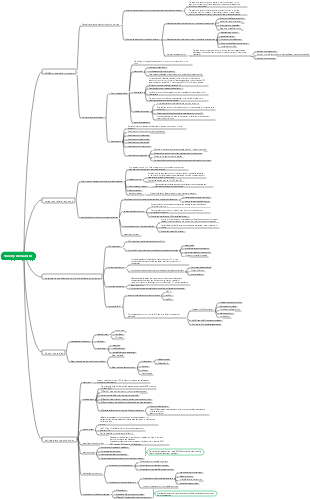
MindMap Gallery Mind map of basic concepts of toxicology
This is a mind map about the basic concepts of toxicology, including poisons, toxicity and toxic effects, classification of poisons, dose-response (effect) relationships, etc.
Edited at 2023-11-12 22:15:07This is a mind map about bacteria, and its main contents include: overview, morphology, types, structure, reproduction, distribution, application, and expansion. The summary is comprehensive and meticulous, suitable as review materials.

This is a mind map about plant asexual reproduction, and its main contents include: concept, spore reproduction, vegetative reproduction, tissue culture, and buds. The summary is comprehensive and meticulous, suitable as review materials.
This is a mind map about the reproductive development of animals, and its main contents include: insects, frogs, birds, sexual reproduction, and asexual reproduction. The summary is comprehensive and meticulous, suitable as review materials.
This is a mind map about bacteria, and its main contents include: overview, morphology, types, structure, reproduction, distribution, application, and expansion. The summary is comprehensive and meticulous, suitable as review materials.
This is a mind map about plant asexual reproduction, and its main contents include: concept, spore reproduction, vegetative reproduction, tissue culture, and buds. The summary is comprehensive and meticulous, suitable as review materials.
This is a mind map about the reproductive development of animals, and its main contents include: insects, frogs, birds, sexual reproduction, and asexual reproduction. The summary is comprehensive and meticulous, suitable as review materials.
Basic concepts of toxicology
Poisons, toxicity and toxic effects
poison
environmental harmful factors
physical factors
chemical factors
biological factors
Exogenous chemicals and endogenous chemicals
Exogenous sources: existing in the human environment, may come into contact with and enter the body, and exhibit certain biological effects in the body
Endogenous: products or intermediates that already exist in the body and are formed during metabolism.
Poison: A substance that can cause damage to the body at lower doses under certain conditions.
Classification of poisons
By purpose and scope
industrial poisons
environmental pollutants
Toxic ingredients in food
agricultural chemicals
Harmful ingredients in daily necessities such as hobby products
biological toxins
medical drugs
military poison
Radionuclides
Different target organs
toxicity
Refers to the inherent, inherent ability of chemicals to cause harmful effects in the body under specific conditions.
Selective toxicity: refers to the differences in the toxicity of chemicals among different species
Target organ: The organ that is directly or mainly damaged by an exogenous chemical is called the target organ of the substance.
cumulative toxicity
When exogenous chemicals enter the body continuously and repeatedly, and the absorption rate (or total amount) exceeds the rate of metabolic conversion and excretion, chemical poisons or their metabolites gradually increase and accumulate in the body.
Classification of toxicity
Toxic effect (toxic effect)
Refers to harmful biological changes in the body caused by chemicals under certain conditions.
Poisoning: a disease state that occurs after functional or organic changes in an organism caused by the action of poisons
Toxic effect spectrum (toxic effect spectrum)
A series of different biological effects manifested by exogenous chemicals acting on organisms as the dose increases
realized as
Increased body load of exogenous chemicals
Physiological and biochemical changes of unknown significance
subclinical changes
clinical poisoning
die
Body load refers to the amount and distribution of chemicals and other metabolites in the body
Classification of toxic effects
Immediate or delayed effects
immediate toxic effects
It refers to the effects caused by certain exogenous chemicals within a short period of time after exposure. immediate poisonous effect
delayed toxic effects
Refers to the toxic effects that appear after a certain time interval after one or more exposures to an exogenous chemical.
local or systemic toxic effects
local toxicity
Refers to the damaging effects directly caused by certain exogenous chemicals on exposed parts of the body
Systemic toxicity
Refers to the damaging effects of certain exogenous chemicals after they are absorbed by the body and distributed to target organs or the whole body.
Reversible or irreversible toxic effects
Reversible
Toxic effects that gradually disappear after cessation of exposure to exogenous chemicals
irreversible
Toxic effects that continue to exist or even develop further after cessation of exposure to exogenous chemicals
acute or chronic toxic effects
acute
The damaging effects of one-time, large-dose exposure to exogenous chemicals on the body
Chronic
The damaging effects of long-term and repeated exposure to certain exogenous chemicals on the body
General or specific toxic effects
generally
The damage caused by exogenous chemicals to the body in a regular and traditional sense
special
Exposure to certain exogenous chemicals causes special damaging effects such as mutations, tumors, and malformations in the body.
Hypersensitivity reaction (a pathological immune response produced by the body to foreign chemicals)
Type I hypersensitivity reaction (allergy)
damaging effects on non-impairing effects
damaging effect
It refers to the biochemical changes, functional disorders or pathological damage that affect the body's behavior, or the reduction of the body's ability to respond to external environmental stress or the body's compensatory ability, or the body's susceptibility to other harmful environmental factors, etc.
non-destructive effect
It means that the biological changes caused by exogenous chemicals to the body are reversible and should be within the range of the body's ability to adapt and compensate, and the body's susceptibility to other adverse external factors should not increase.
Adverse reactions and side effects
Adverse reactions
Refers to harmful and unrelated reactions that occur when normal doses of drugs are used to prevent, diagnose, treat diseases or regulate physiological functions of the body.
drug side effects
Refers to the appearance of a drug at a therapeutic dose that is consistent with the treatment Effects that have nothing to do with the therapeutic purpose but are related to the pharmacological effects of the drug
combined toxic effects
The comprehensive toxic effects caused by two or more exogenous chemicals acting on the body simultaneously or successively within a short period of time
Mode of Action and Toxicity Pathways
Mode of action (MOA)
It refers to a set of events that begin with the interaction of chemicals and biomolecules, are supported by the weight of evidence, and may lead to toxicity-related endpoints.
Often used to describe the specific steps in a biochemical reaction that results from a molecular initiating event leading to a toxic effect.
Toxicity Pathway (AOP)
Also known as the harmful outcome pathway, it is a conceptual framework that describes the existing knowledge about a direct molecular initiating event and the risk assessment that occurs at different levels of biological organization (such as cells, organs, organisms, and populations). Interconnections between “harmful outcomes”
It focuses on the path or process of toxic effects related to molecular initiating events and risk assessment, including the functions of mechanism and mode of action.
Dose-Response (Effect) Relationship
Dosage, effects and reactions
dose
Important factors that determine the damaging effects of exogenous chemicals on the body
Refers to the amount of exogenous chemicals that come into contact with the body or are absorbed by the body or directly cause damage to the body.
Exposure dose (external dose)
Refers to the actual amount of contact with the body or the total amount of toxicants that the body is exposed to in the environment
Absorbed dose (internal dose)
Refers to the amount that has been absorbed into the human blood and reaches the body.
Biologically effective dose (target dose)
The dose that is absorbed and reaches the toxic organs and tissues to produce toxic effects
effect
Also weighing a reaction, it represents the biological changes in an organism, organ or tissue caused by exposure to a certain dose of exogenous chemicals.
reaction
Also known as mass reaction, it refers to the proportion of individuals who experience a certain effect in a group exposed to a certain chemical, usually expressed as a percentage or ratio.
Dose-Response (Effect) Relationship
The relationship between the dose of an exogenous chemical that acts on an organism and the incidence or intensity of the resulting biological changes.
Dose-response (effect) relationship research and its applications