MindMap Gallery Chapter 1_Introduction to Histology
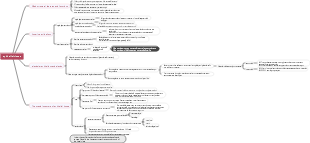
Key contents of the introduction to histology. Introduces the technology, preparation methods, and Dyeing, four major tissues, technology, In situ hybridization technology, etc.
Edited at 2024-01-23 17:05:05Avatar 3 centers on the Sully family, showcasing the internal rift caused by the sacrifice of their eldest son, and their alliance with other tribes on Pandora against the external conflict of the Ashbringers, who adhere to the philosophy of fire and are allied with humans. It explores the grand themes of family, faith, and survival.

This article discusses the Easter eggs and homages in Zootopia 2 that you may have discovered. The main content includes: character and archetype Easter eggs, cinematic universe crossover Easter eggs, animal ecology and behavior references, symbol and metaphor Easter eggs, social satire and brand allusions, and emotional storylines and sequel foreshadowing.
[Zootopia Character Relationship Chart] The idealistic rabbit police officer Judy and the cynical fox conman Nick form a charmingly contrasting duo, rising from street hustlers to become Zootopia police officers!
Avatar 3 centers on the Sully family, showcasing the internal rift caused by the sacrifice of their eldest son, and their alliance with other tribes on Pandora against the external conflict of the Ashbringers, who adhere to the philosophy of fire and are allied with humans. It explores the grand themes of family, faith, and survival.
This article discusses the Easter eggs and homages in Zootopia 2 that you may have discovered. The main content includes: character and archetype Easter eggs, cinematic universe crossover Easter eggs, animal ecology and behavior references, symbol and metaphor Easter eggs, social satire and brand allusions, and emotional storylines and sequel foreshadowing.
[Zootopia Character Relationship Chart] The idealistic rabbit police officer Judy and the cynical fox conman Nick form a charmingly contrasting duo, rising from street hustlers to become Zootopia police officers!
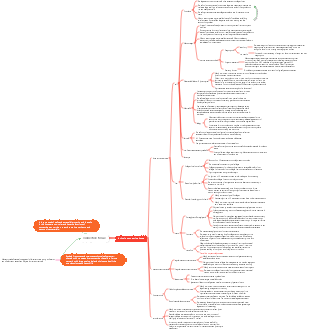
Introduction to Histology
technology corresponding to matter
The periodic acid Schiff reaction (PAS reaction) refers to the formation of polyaldehydes after sugar is oxidized by periodic acid, a strong oxidant. The latter is then combined with the colorless magenta sulfuric acid complex (Schiff's reagent) to form a purple-red reaction product. The PAS reaction shows the sugar chains of glycans and glycoproteins, that is, polysaccharides.
Immunohistochemistry is a technique for detecting peptides and proteins in tissues based on the principle of specific binding of antigens and antibodies.
The principle of in situ hybridization is to use a nucleic acid probe with a marker and a known base sequence to perform specific in situ binding, that is, hybridization, with the ribonucleic acid to be detected in the cell according to the principle of base pairing. Display and detection of markers to know the presence and relative amount of the nucleic acid to be tested.
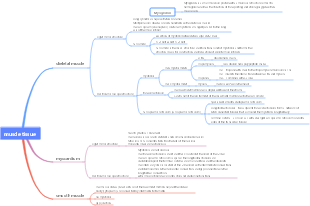
Histology is the science that studies the microstructure of the body and its related functions
Preparation
Collodion embedding: making larger tissue blocks (such as eyeballs, brains)
Frozen sections: preserve enzyme activity and lipids
Smears: blood, body fluids, cultured cells, etc.
Spreading: loose connective tissue, mesentery, etc.
Grinding discs: hard tissues such as bones and teeth
dyeing
Basic dyes (positively charged in solution): hematoxylin, toluidine blue, basic fuchsin, etc.
Acid dyes (negatively charged in solution): eosin, orange G, brilliant green, etc.
In the silver staining method, some organizational structures can directly reduce silver nitrate to display, which is called argyrophilicity. Some structures have no direct reduction effect and require the addition of reducing agents to develop color, which is called argyrophilicity.
in situ hybridization
A specially labeled nucleotide strand with a known base sequence is used as a probe to hybridize with the DNA or mRNA fragment to be tested.
technology
electron microscopy
Transmission electron microscopy: Slice with an ultrathin microtome (ultrathin sections of 50-80nm need to be prepared), and then stain with uranyl acetate and lead citrate (electronic staining). When the electron beam is projected onto a structure with high density and heavy metal adsorption (such as lysosome), the electrons are scattered more. Therefore, fewer electrons fall on the fluorescent screen, resulting in a dark image, which is early black or dark gray in the electron microscope photo. It is customary to call this structure high electron density (electron-density); conversely, light gray is called low electron density. The resolution of transmission electron microscopy can reach 0.2nm.
Scanning electron microscopy: The material acquisition requirements are the same as those of transmission electron microscopy, but ultra-thin sections are not required. The tissue block is fixed with glutaraldehyde and osmic acid, dehydrated and dried, and then a thin gold film is sprayed on the surface. During observation, the electron microscope emits a very thin electron beam to scan the specimen surface. The electrons scattered on the specimen surface (called secondary electrons) are collected by the detector to form an electrical signal and transmitted to the picture tube to display the three-dimensional configuration of the specimen surface on the fluorescent screen. Scanning electron microscopy can be used to observe larger tissue surfaces. Because of its long depth of field, uneven structures can also be clearly imaged, so the image has a three-dimensional effect. The resolution of the scanning electron microscope is 2nm
Optical microscope: 0.2um, section thickness 1-10um
Four major organizations
epithelium
muscle
nerve
connective
Multiple choice questions
A. Histological research includes cells, tissues, organs and systems
B. Cells are the basic units of human body structure and function.
C. A group of cells formed by many cells with similar shapes and related functions and extracellular matrix is called a tissue.
D. Organs are formed by the developmental differentiation and organic combination of several different tissues in the early stages of embryonic development, and perform specific physiological functions at a higher level than tissues in the body.
E. Many organs with similar structures and related functions unite to form a system
F. Extracellular matrix is produced by cells and participates in forming the microenvironment for cell survival.
High electron density
Darker on a fluorescent screen
It is difficult for electron beams to pass through
The image is darker in the photo
Molecular weight is not necessarily larger
Not necessarily difficult to combine with dyes
HE staining: hematoxylin and eosin
The most commonly used staining methods in histology are hematoxylin and eosin staining, referred to as HE staining.
Hematoxylin stains acidic substances such as ribosomes and rough endoplasmic reticulum in the nucleus and cytoplasm purple-blue, and eosin stains alkaline components in the cytoplasm and extracellular matrix light red. A property that has strong affinity with basic dyes and is easily dyed is called basophilia; a property that has strong affinity with acidic dyes and is easily dyed is called acidophilia; if the affinity with both dyes is not strong, it is called acidophilia. , it is called neutral (neutrophilia).
Certain structural components, such as the cytoplasmic granules of mast cells, when stained with basic dyes such as toluidine blue, do not appear blue, but purple-red. This staining characteristic is called metachromasia.
When stained with silver nitrate, some tissue structures can directly reduce silver ions into silver particles and appear black, which is called argen-taffin. Some tissue structures require the addition of reducing agents to develop color, which is called argyrophilia. (argyrophilia).
The Golgi apparatus is neutral and can be stained black by silver nitrate. Acid cells: serous cells, plasma cells, mast cells, basophils, monocytes Acidic substances: cell nucleus, ribosomes, rough endoplasmic reticulum (with ribosomes), lymphocyte cytoplasm, Nissl bodies Basic cells: macrophages, eosinophils, serous cells, mucinous cells (weakly basophilic) Alkaline substances: collagen fibers, elastic fibers