 Wondershare EdrawMind
MindMap Gallery Value Symbiosis-Organizational Management in the Digital Era - Chen Chunhua
- 25
Value Symbiosis-Organizational Management in the Digital Era - Chen Chunhua
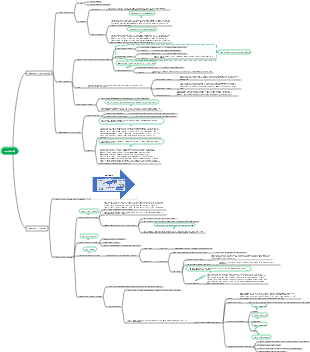
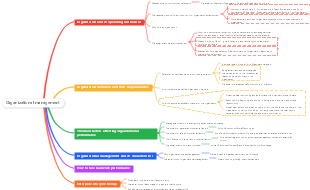
A highly recommended book is Value Symbiosis - Organizational Management in the Digital Era. This article summarizes the content including the nature of digitalization, digital reshaping of organizational management, new individuals, new organizations, new values, new knowledge, etc.
Edited at 2022-11-11 11:53:03
- bacteria
This is a mind map about bacteria, and its main contents include: overview, morphology, types, structure, reproduction, distribution, application, and expansion. The summary is comprehensive and meticulous, suitable as review materials.
- Plant asexual reproduction
This is a mind map about plant asexual reproduction, and its main contents include: concept, spore reproduction, vegetative reproduction, tissue culture, and buds. The summary is comprehensive and meticulous, suitable as review materials.
- Reproductive development of animals
This is a mind map about the reproductive development of animals, and its main contents include: insects, frogs, birds, sexual reproduction, and asexual reproduction. The summary is comprehensive and meticulous, suitable as review materials.
Value Symbiosis-Organizational Management in the Digital Era - Chen Chunhua
- bacteria
This is a mind map about bacteria, and its main contents include: overview, morphology, types, structure, reproduction, distribution, application, and expansion. The summary is comprehensive and meticulous, suitable as review materials.
- Plant asexual reproduction
This is a mind map about plant asexual reproduction, and its main contents include: concept, spore reproduction, vegetative reproduction, tissue culture, and buds. The summary is comprehensive and meticulous, suitable as review materials.
- Reproductive development of animals
This is a mind map about the reproductive development of animals, and its main contents include: insects, frogs, birds, sexual reproduction, and asexual reproduction. The summary is comprehensive and meticulous, suitable as review materials.
- Recommended to you
- Outline
The entire process of the Engineering Project Management Department (including business processes, project incentives, and operations management)
- 31




Author's opening words
A new and strange era has clearly arrived, and the modern world we once knew has become a bygone reality. ——Peter Drucker
The nature of digitalization
Digitizing
It is a reconstruction of the real world in the virtual world, and through "connection", various technological innovations, organizational innovations, and model innovations are achieved
3 essential characteristics
Connection - the ability to connect is greater than having
Symbiosis - the integration of the real world and the digital world
Present - the past and future are compressed in the present
6 key insights
Everything is turning into data
2 specific values of data
Data is insight. Only by understanding data can we understand consumers and the market, and understand the relationship between industry partners.
Data is inclusive. With data, you can integrate more needs and produce more value.
Data triggers three fundamental changes in business activities
From customers to users
Distinguish the difference between customers and users
From products to data
From supply to collaborative symbiosis
Connection is more important than possession
In the digital age
Dynamic is the fundamental feature
Iteration and optimization are the basic forms
Gathering wisdom is the solution
Openness, trust and collaboration are key
Openness to each other, trust and collaboration, and a community of destiny
From the logic of competition to the logic of symbiosis
Many needs in the digital age are newly created
Symbiosis with partners: Find symbiotic partners, innovate customer needs, and create customer value
Symbiosis with competitors: Great companies often appear in pairs and must coexist and advance with competitors.
It is not the content of this book and is perfected by the author of this map.
Return to customer value
The key to innovation is to return to customer value
long term strategy
Only long-termism can transcend time and transcend crises
digital reinvention Organizational management
5 changes brought about by digitalization
Digital reinvention, technological changes make everything possible
Cross-border disruption, digital technology breaks industry boundaries
Strong alliances, links and collaborations have become new capabilities
Boundary fusion, digital technology integrates the consumer side and the production side
With the rise of individuals, individual management must shift from control to activation and empowerment.
Great changes in organizational management
Four propositions of organizational management have changed
Individuals and goals: If there is no synergy between personal goals and organizational goals, the organization will encounter challenges and even impacts.
Individuals and organizations: Individuals become "strong individuals" with the help of new technologies, which will affect organizations
Organization and environment: The environment is uncertain and dynamic, and organizations cannot be in a "steady state"
Organizations and Change: The impact of change itself on organizational performance sometimes transcends the organization itself, so organizations need to dynamically adapt to change
The changing value of human resource management in organizations
The value of human resource management
Support strategy implementation, support strategies to dynamically adapt to the environment, and continue to create value to control uncertainty.
Fundamental changes in human resource management
Human resource management is an important part of the company's strategy and needs to focus on linking performance to the dynamic environment
In the field of appraisal, we need to focus on value creation drive rather than performance appraisal drive.
The HR department is not only a functional professional department, but also a "consultant" to other departments of the company.
While empowering employees to learn and grow, we also need to pay attention to employee happiness.
3 Keywords for Organizational Value Symbiosis
Empower
Shift from control to empowerment
symbiosis
Shift from competition to symbiosis
Collaboration
Shift from division of labor to collaboration
core key
3 changes brought about by digital technology
Efficiency no longer comes from division of labor, but from collaboration
Incentivize innovation, not performance reviews
A new culture is needed, emphasizing mutual subjectivity, co-creation and symbiosis.
Break down departmental walls and break down boundaries
new individual
The rise of individual value
Individual factors that work with the organization
personality
ability
cognition
Cognition is affected by 3 processes: assimilation, accommodation and balance
Some of the most important concepts of individual-organization fit
high self-efficacy
Understand yourself
Very realistic
Don’t blindly follow authority
Diversity
The key difference between individuals in the new era and individuals in the old era, Management should pay special attention to
Competency development
Three main characteristics of competency
related to a specific job
Create high performance
Contains human personality traits
The right people should be used in the right position
Psychological contract dominated by individual expectations
There are 3 types of psychological contracts
Transactional
Relational
Team player
Strong individuals can show good stability-promoting effects in all three types.
A new position for leaders
continuous change
mindset change
True customer orientation
Taking customer value as the guideline of action
human activation
Organizational changes are ultimately changes in people, and people's self-transcendence and self-revolution are also people's activation. Use the right people (people who do not stick to their original experience and are consistent with the company’s values)
open cooperation
Huawei: Mutual growth, symbiosis, and regeneration
Internal Transformation of Systems Thinking
Structural transformation also known as structural gains
Unbounded integration between enterprises and customers
face to the future
Focus on people's growth
Develop skills and talent for the future
Create an organization that is constantly learning
Adjust coordinates to point to the future
What to learn for the future?
What to do for the future?
Create possibilities for the future
First, enable the organization to operate efficiently in a changing environment; Second, point the way, inspire people, and revive hope; Third, respond to the crisis caused by uncertainty and lead the team out of the crisis.
self-development
self-transcendence
All success is a prelude
Become your own leader (3 steps)
Set new goals for yourself
Develop the habit of continuous improvement in practice
Accept practical challenges and solve problems
Be at the forefront of practice and create new possibilities
Have strong learning ability
Have strong learning ability
Insight through learning
Improve resilience through learning
Learn to be persuasive
Gain concentration through learning
Leadership itself is an influence, influencing people to do what they want to do and achieve a common goal
The ability to see the same subject from a distance and up close
The ability to see the world from multiple perspectives
A crisis is not only a danger, but also an opportunity
new organization
New understanding of organization
organizational dynamics
Only organizational dynamics can help organizations continue to achieve continuous stability and growth.
Understanding organizational dynamics requires preparation for uncertainty
Seeking key elements in the organizational development process
Pay attention to the internal development trends and directions of change of the organization and its influencing factors
Make cognitive preparations for the future, learn to recognize uncertainty, and live with uncertainty
organizational effectiveness
Open systems perspective: Organizational proactive adaptability, organizational efficiency
An open system refers to a system that exchanges matter, energy, and information with the external environment.
Achieving organizational efficiency requires organizations to be more adaptable and innovative
Adaptability enables an organization to effectively respond to changes in the external environment and meet customer needs.
Innovation performance enables organizations to seek new resources from the external environment and create value for customers.
Organizational learning perspective: organizational learning capabilities
Organizational effectiveness depends on the organization's ability to acquire knowledge, that is, organizational learning capabilities
The process of organizational learning includes knowledge acquisition, creation, sharing, application and storage
Stakeholder Perspectives: Organizational Diversity Responsibility
In addition to being responsible to shareholders, we are also responsible to employees, customers, suppliers, communities, society, and the environment.
self-evolution
individual evolution
From the awakening of self-awareness to the awareness of altruism and symbiosis
organizational development
The team-based autonomous management model, the spiritual integrity of employees and the organization become a self-evolving living system
self-organizing
Self-organization is the process from disorder to order within a system. It is an organization based on trust relationships of emotion, identity, common cause, and common interests.
Self-organization is a community composed of common values and common rules
Unable to predict changes, evolution becomes the basic way to cope with changes
The organization is a whole
Integration is the true essence of management
Treat the enterprise as a whole, rather than a divided state, with top and bottom in the same bath, and comprehensive and unified effects
Management Holistic discusses 7 principles
The operator's belief is to create customer value
Customer value is a code of conduct and must be used as a benchmark when doing things
Customer value is a strategic thinking mode
Where the customers are, there are the boundaries of the organization
In a dynamic environment, the key factors for business success evolve into: speed, flexibility, integration and innovation
Cost is part of the overall value
There is no minimum cost, only reasonable cost. Products and services are reasonable if they meet customer expectations
The cost is quality, appeal and determination
The core value of management is to activate people
The Internet era has given organizations new attributes: platform, openness, collaboration, and happiness
Managers must solve the matching problem between managers, management objects, and management resources.
Management must do a good job of "making people meaningful in the organization"
Management should make everyone relevant to work goals
Managing uncertainty becomes the core of organizational management
Uncertainty: unpredictability, multidimensionality, open complexity
Managers need to do the following:
Recognize that uncertainty is not only the norm, but also an opportunity and condition for business
Be entrepreneurial and innovative
Ability to transcend one's own experience
Living with uncertainty
Managers need to connect business to basic human ideals
The organization builds a common value sharing system with employees as the core, providing opportunities and conditions for individuals to realize value creation. Only activated individuals can make the organization creative.
Efficiency comes from collaboration rather than division of labor, and organizational management shifts from "division" to "integration"
Flexibility will be the most prominent feature of the business era characterized by Internet technology
Inter-organizational and external efficiency relies on collaboration, information exchange and sharing
Obviously different from the industrial era
new value
New organizational functions: from control to empowerment
Multiple role opportunities
Solidifying task roles is beneficial to organizational stability
Strong individuals look forward to opportunities in multiple roles
high identity
4 aspects of identity activation for individuals
Establish channels for free movement of organizational members so that members can obtain identities commensurate with their abilities
Avoid the situation of solidified hierarchies and roles, and avoid over-protecting the identity system within the organization
Incentives are directly related to value contribution rather than to status system
Identity systems are aligned with responsibility and shared values
Medal of Honor is more effective than a stick
Empowering work scenarios
The level of job empowerment scenarios directly affects the retention and retention of organizational members.
The core of workplace empowerment is to create an organizational atmosphere of trust and cooperation
Management needs to make 4 changes
Give employees lessons and let them share themselves
Set up more roles and positions to give employees more growth opportunities and the possibility of exerting their value
Authorize and allocate resources to employees
Communicate effectively and accompany growth
New organizational structure: from bureaucratic solidification to platform altruism
Bureaucratic structure and functions
Bureaucracy rationally solves the relationship between power and responsibility
In a stable environment, the bureaucratic structure ensures the unity of the organization, helps the organization to manage strictly in accordance with standards and rules, and has a significant role in forming economies of scale, increasing costs, improving competitiveness, and stabilizing quality.
Platformization and its value
The core of platform management is to integrate unity and diversity
The essence of platform management is empowerment and altruism
If an organization does not have unity and stability, it will be difficult to achieve performance; if an organization does not have diversity and flexibility, it will not be able to adapt to the requirements of the environment and organizational members.
Collaborate to achieve value creation
What should you pay attention to when reorganizing the organizational structure?
Adaptable to future environments
Reflect company strategy
Achieve efficient collaboration
customer oriented
Sharing, decentralization, and borderlessness are the intrinsic values of organizational restructuring
3 requirements for management
Adhere to the value orientation of altruism and symbiosis
Adhere to the sharing of technology, information and knowledge
keep an open mind
New organizational capabilities: from division of labor to collaborative symbiosis
Reconstructing organizational value activities
The existing capabilities of an enterprise determine its limitations
Digital technology reshapes business activities and creates value collaboratively
Innovative value activity capabilities
The new operating hypothesis determines the value activities of the enterprise
To maintain interaction with customers and the environment, we need to rely on the ability of the company to coexist and collaborate with customers and the environment.
Respond efficiently to create customer value needs
Information Sharing
Information symmetry itself is also a kind of motivation and recognition. Organization members will feel trusted and gain a sense of security, thus stimulating their own enthusiasm.
One of the sources of trust is symmetrical information and an atmosphere and organizational form of equal and cordial communication.
Management should take the lead in making changes
Have a new business outlook
Organizations must form a thinking logic based on change
Become a “do nothing” leader
"Inaction" does not mean doing nothing, but because you "do nothing", others can make a difference. Here you can refer to "High Performance Coaching"
New organizational goals: from achieving organizational goals to taking into account the meaning of people
2 values in organizations
organizational performance goals
The significance of people in organizations
Ensure that individual value creation and organizational value are integrated into one
Activate individuals and organizations
The key to activating individuals is to establish a new management paradigm
To activate individuals is to create a management system of shared value, integrating individual value with organizational value.
The key to activating the organization is to build a community of destiny
Build an organizational ecological network
Incentivize value creation rather than measuring performance indicators
For new individuals, incentives play a far greater role than assessment.
A culture of trust and transparency
Trust and transparency mechanisms will be the biggest ways for enterprises to reduce costs and improve efficiency.
Activate the creativity of organizational members
Only companies with creativity can achieve organizational goals and navigate uncertainty.
Employees share value with the organization
employee value proposition
Corporation value
Create great companies
work value
Produce a great product
employee value
People who create great companies and great products can enjoy a happy life
The contract between employees and the company
economic contract
social contract
psychological contract
Share design
Managers should do 4 things
Ability to describe vision to organizational members
Let every employee in the organization see better things
Employees know how to be better and can become better
To continuously improve the cognitive level and cognitive abilities of employees
Employees need evolutionary rather than predictive cognitive abilities to dynamically respond to change
Cognitive level and cognitive ability determine the outcome of the enterprise
Do a good job in managing employee expectations
Work together to find suitable positions for employees
Low performance of employees is mostly related to not being placed in the right position
To fulfill the promise
Trust is the biggest incentive, empowerment is the key commitment
Help employees achieve performance
Employee performance is designed. Put the employee in the right position, give him enough resources, fully empower him and accompany him to grow. He will definitely achieve performance. This is the process of management design.
new knowledge
Knowledge Revolution and Organizational Learning
"Sources and Flows" of Knowledge Definition
knowledge definition
a reasonable belief that enhances an entity's ability to act effectively
3 core concepts
“Data”: Data are unprocessed numbers and facts
Transitioning from “data” to “information”: information is processed data
From "information" to "knowledge": knowledge is generated by the identification and judgment of information, and knowledge is information that has been identified
The most important characteristic of knowledge is personalization
Other people's knowledge is just your information. You must identify, judge and transform other people's knowledge, and then this information will become your own knowledge.
Knowledge is a verb, not a noun
Knowledge serves as a rational belief that enhances the results of your actions
The biggest challenge is to identify knowledge
Uncertainty becomes the norm
Iterations are accelerating and new knowledge is constantly emerging.
Cognitive surplus, choice barriers
time is scarce
The requirements for knowledge verification are getting higher and higher
Knowledge that cannot bring you change is garbage
Ask yourself 4 questions
Is it discrimination or discernment?
Is it self-limitation or lack of cognition?
Is it that the world is changing rapidly or that you haven’t changed at all?
Is it due to inertia or an inability to cope?
If you truly possess knowledge, you will have discernment instead of discrimination; If you can improve your awareness, you will no longer set limits on yourself; You will take the initiative to change yourself and dance with the changes; You will take the initiative to meet challenges, no longer follow inertia, and will no longer be complacent.
Organization has knowledge
Appreciation of the system
Understand the knowledge related to changes
theory of knowledge
knowledge of human psychology
Enterprises must have the ability to continuously acquire knowledge, verify knowledge, create and innovate knowledge, which is also the fundamental requirement of the knowledge revolution for enterprises
organizational learning
Organizations in learning must meet the following three conditions:
The organization can continuously acquire knowledge, transfer knowledge within the organization, and continuously create new knowledge
Can continuously enhance the organization's own capabilities
can lead to improved performance
Organizational learning is a process of continuously creating new knowledge, a process of continuously enhancing organizational capabilities, and a process of improving performance.
Organization members need to do three "only" things
Only by integrating
“Define the problem” rather than just “solve the problem”
Systematic analysis of "specific problems"
Develop a "methodology"
Confronting So-Called “Organizational Ignorance”
Only lifelong learning
basic learning ability
process learning ability
Refers to the ability of learners to expand this knowledge and form new knowledge value based on existing knowledge content.
Comprehensive application ability
Includes imagination, understanding and verifiable extension of knowledge
Only by breaking through oneself
Self-avoiding knowledge traps
Facts – avoid subjective facts
Experience – avoid experience becoming a stumbling block
The principle of organizational value symbiosis
stay alert to changes
Change is bound to bring resistance
Change must start with leaders changing themselves
Anticipate failure in collaboration
Stay alert in normalcy
value symbiosis principle
Give up yesterday purposefully
Continuous improvement
Discover successful experiences in innovation
Allocate resources to help innovators successfully explore a path
Summarize it into a replicable way or method
Innovative practices are recognized and promoted by the company
Avoid falling into the trap of systematic innovation
change for the sake of change
Confusing novelty and innovation
Confusing the line between specific actions and action plans
balance
Balancing the relationship between organizational value reconstruction and organizational continuity
Transformation is not a career change
Information communication and sharing
Digitalization is destined to be a watershed
In the digital age, how do we choose?
Establish long-term values
Shift from prediction to continuous evolution
Committed to irreplaceability
From sticking to borders to opening up to partners
Build a shared ecosystem
Doing well now is the future
Introducing the recorder’s closing words
The greatest danger in turbulent times is not the turmoil itself, but the continued use of the logic of the past. ——Peter Drucker