MindMap Gallery Organizational management mind map of multinational companies
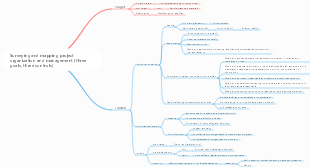
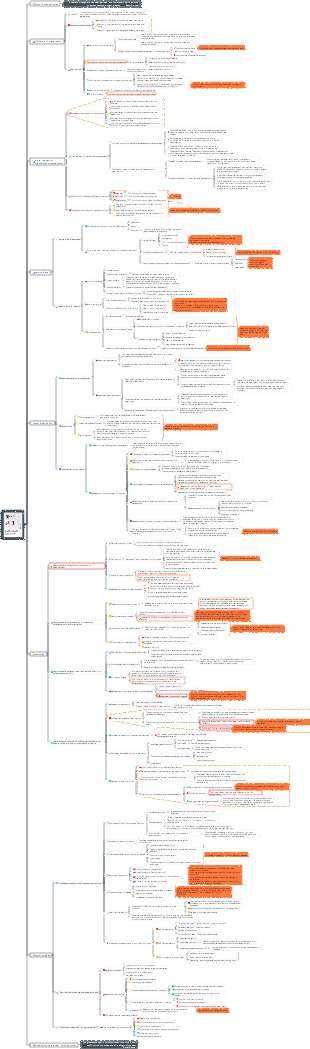
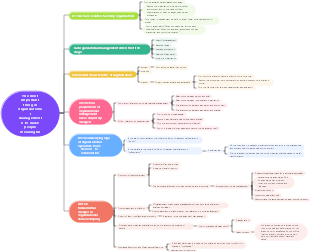
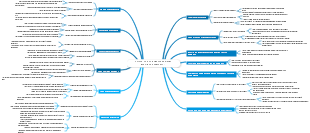
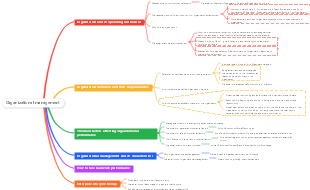
Chapter 6 of "Operation and Management of Multinational Corporations": Organizational Management of Multinational Corporations, including the evolution of the organizational structure of multinational corporations, the basic form of the organizational structure of multinational corporations, the selection of the organizational structure of multinational corporations, and the control of subsidiaries.
Edited at 2021-07-03 02:32:05This is a mind map about bacteria, and its main contents include: overview, morphology, types, structure, reproduction, distribution, application, and expansion. The summary is comprehensive and meticulous, suitable as review materials.

This is a mind map about plant asexual reproduction, and its main contents include: concept, spore reproduction, vegetative reproduction, tissue culture, and buds. The summary is comprehensive and meticulous, suitable as review materials.
This is a mind map about the reproductive development of animals, and its main contents include: insects, frogs, birds, sexual reproduction, and asexual reproduction. The summary is comprehensive and meticulous, suitable as review materials.
This is a mind map about bacteria, and its main contents include: overview, morphology, types, structure, reproduction, distribution, application, and expansion. The summary is comprehensive and meticulous, suitable as review materials.
This is a mind map about plant asexual reproduction, and its main contents include: concept, spore reproduction, vegetative reproduction, tissue culture, and buds. The summary is comprehensive and meticulous, suitable as review materials.
This is a mind map about the reproductive development of animals, and its main contents include: insects, frogs, birds, sexual reproduction, and asexual reproduction. The summary is comprehensive and meticulous, suitable as review materials.
Chapter 6: Organizational Management of Multinational Corporations
The legal organizational form of multinational corporations
1. Parent company and subsidiaries
(1) The concept of parent company and subsidiary company
A parent company refers to a company that can actually control and dominate other companies by owning a certain amount of equity in other companies or through agreements. The most basic characteristic to determine whether it is a parent company is whether it participates in the business operations of the subsidiary, not just holds shares in the subsidiary.
A subsidiary refers to a company in which a certain proportion of shares are owned by another company or is actually controlled and dominated by another company through an agreement. The "ownership" relationship between a parent company and its subsidiaries is essentially the parent company's actual economic control and decision-making rights.
(2) Legal characteristics of the parent company and subsidiaries
①The subsidiary has independent legal personality
② The subsidiary is controlled by the parent company
③The parent company controls the operations of the subsidiary; the parent company has limited liability for the subsidiary
2. Branches
1. The concept of branch office
A branch is a concept corresponding to the head office. It is a part of the head office and is neither legally nor economically independent.
2. Legal characteristics of the branch
①The branch does not have legal personality
②The branch has no independent property
③The branch and the head office are the same legal entity
3. Considerations for multinational companies to establish subsidiaries and branches
1. Benefits of establishing a subsidiary
①Only have limited debt liability
② Subsidiaries report corporate results to the parent company only in terms of production and business activities, while branches must report comprehensive information to the head office.
③Can obtain tax benefits
④ The repatriation of subsidiary profits to the parent company should be more flexible than that of subsidiary companies.
2. Benefits of setting up a branch
① Branch companies are generally easy to operate, and the requirements for financial accounting systems are relatively simple.
② The cost borne by the branch may be less than that of the subsidiary
③ The profits of the branches are consolidated and taxed by the head office. Since the branches are not independent legal persons, when they suffer losses in the early stages of operation, their losses can be offset against the profits of the head office, reducing the tax burden.
④ The profits delivered by the branch to the head office are usually not subject to withholding tax.
⑤The capital transfer between the branch and the head office does not involve any change in ownership, so no tax is required.
The evolution of the organizational structure of multinational corporations
Issues that must be considered in the design and establishment of organizational structure
1. Objectives of organizational structure
2. Management scope and management level
The larger the management scope, the fewer the management levels, and the corresponding organizational structure type is called a flat structure.
The smaller the management scope, the more management levels there are, and the corresponding type of organizational structure is called a high-level structure.
3. Powers and responsibilities of managers at each level of management
The evolution of organizational structure
Export department stage→International department stage→Multinational organization structural stage
The basic form of organizational structure of multinational companies
1. Organizational structure of the export department
Originally, the company's business was limited to domestic operations, and occasionally some products were exported. The product export business was subordinate to the domestic department.
2. Organizational structure of the International Business Department
(1) The enterprise’s export business volume is small, the product varieties are small, and the output scale of the products is not large.
(2) Foreign markets are relatively concentrated geographically, and the quality of foreign business has little impact on the company.
3. Regional organizational structure
(1) There are not many product varieties, and the product requirements of each region and host country within the region are quite different, so the adaptability requirements of the products are high.
(2) The tariffs, quotas or other tariff barriers in the host country are relatively high, and the production and operation of subsidiaries located in the host country are mainly to meet local market demand.
(3) The regional distribution of transnational business activities is relatively scattered
4. Product Organizational Structure
(1) There is a global market for products, that is, the demand for products in most countries is similar, and products do not need to be adapted.
(2) There are many product varieties, a high degree of product standardization, and large-scale production can be carried out
(3) The host country has low import barriers, low transportation costs for products and parts, and can organize the production and sales of products on a global scale.
5. Functional Organizational Structure
The functional organizational structure is suitable for companies with few product varieties and relatively stable markets.
6. Hybrid organizational structure
A multinational company with a large scale, a wide range of products, and business operations in multiple industries
7. Matrix organizational structure
Large multinational companies with larger scale, more product varieties, and wider overseas business distribution areas
Selection of organizational structure of multinational companies
1. Transnational business strategy
International Strategy--International Business Department
Multi-national strategy--regional organizational structure
Global Strategy--Product Organizational Structure
Transnational strategy - hybrid or matrix organizational structure
2. The degree of transnational operations of enterprises
3. Ability of managers
Control over subsidiaries
1. Enterprise’s internal control system
1. Personal control
Control exercised by superiors through individual contact with subordinates
2. Administrative organizational control
The company guides the actions of its subsidiaries through a series of rules and charters. The most important administrative controls are budget and fund use rules.
3. Results control
Set goals for subsidiaries, such as profitability, productivity, growth rate, market share, quality and other specific goals to evaluate the performance of subsidiaries.
4. Cultural control
Corporate Principles and Values
2. Centralization and decentralization
1. Advantages of centralization
(1) Centralization helps coordination between departments
(2) Centralization can ensure that decision-making is consistent with organizational goals
(3) Centralization is conducive to change
(4) Avoid duplication of business activities
2. Advantages of decentralization
(1) Share the work of senior managers so that they can focus on key issues
(2) Inspire people’s work enthusiasm
(3) Greater flexibility and strong market adaptability
(4) Clear rights and responsibilities for easy management
3. Management Tradition of Multinational Corporations
Decentralized alliance model
Mainly found in Western European companies
Coordination alliance model
Mainly found in American companies
centralized center model
Mainly found in Japanese companies