 Wondershare EdrawMind
MindMap Gallery Engineering project organization and management knowledge point learning framework
- 50
Engineering project organization and management knowledge point learning framework
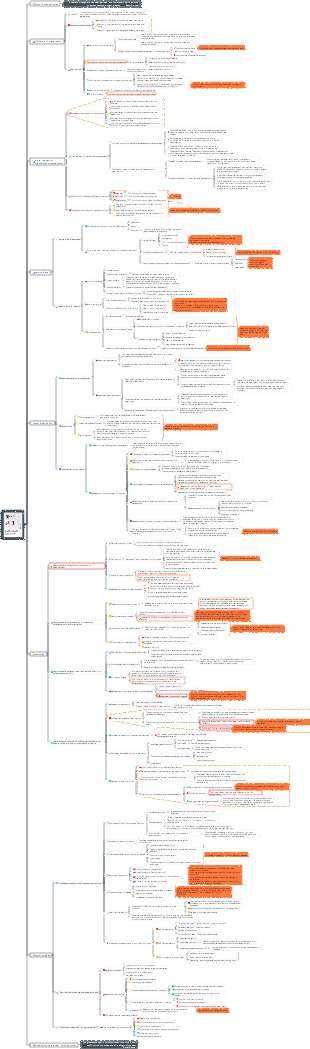
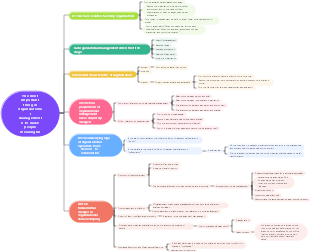
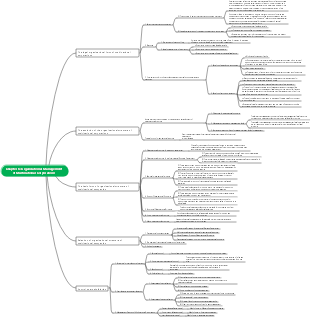
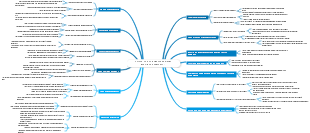
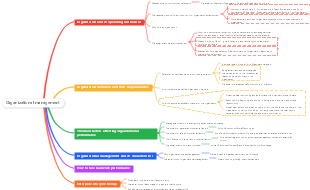
The knowledge point learning framework for engineering project organization and management includes the project management of the main participants in the engineering project, the comprehensive management of the engineering project, the scope management of the engineering project, the organization of the engineering project management, the human resources management of the engineering project, etc.
Edited at 2022-11-04 10:59:40
- bacteria
This is a mind map about bacteria, and its main contents include: overview, morphology, types, structure, reproduction, distribution, application, and expansion. The summary is comprehensive and meticulous, suitable as review materials.
- Plant asexual reproduction
This is a mind map about plant asexual reproduction, and its main contents include: concept, spore reproduction, vegetative reproduction, tissue culture, and buds. The summary is comprehensive and meticulous, suitable as review materials.
- Reproductive development of animals
This is a mind map about the reproductive development of animals, and its main contents include: insects, frogs, birds, sexual reproduction, and asexual reproduction. The summary is comprehensive and meticulous, suitable as review materials.
Engineering project organization and management knowledge point learning framework
- bacteria
This is a mind map about bacteria, and its main contents include: overview, morphology, types, structure, reproduction, distribution, application, and expansion. The summary is comprehensive and meticulous, suitable as review materials.
- Plant asexual reproduction
This is a mind map about plant asexual reproduction, and its main contents include: concept, spore reproduction, vegetative reproduction, tissue culture, and buds. The summary is comprehensive and meticulous, suitable as review materials.
- Reproductive development of animals
This is a mind map about the reproductive development of animals, and its main contents include: insects, frogs, birds, sexual reproduction, and asexual reproduction. The summary is comprehensive and meticulous, suitable as review materials.
- Recommended to you
- Outline
The entire process of the Engineering Project Management Department (including business processes, project incentives, and operations management)
- 31


Engineering project organization and management knowledge point learning framework
1. Chapter 1 Overview
1.1. Engineering project management
1.1.1. definition
1.1.1.1. Construction and installation
1.1.1.2. Equipment purchase
1.1.2. Project characteristics
1.1.2.1. uniqueness
1.1.2.2. Disposable
1.1.2.3. with a clear purpose
1.1.2.4. Conditional constraints
1.1.3. Construction period
1.1.3.1. Early stage
1.1.3.2. Prepare
1.1.3.3. implement
1.1.3.4. Put into operation
1.1.4. connotation
1.1.4.1. multi-agent
1.1.4.2. object
1.1.4.3. management environment
1.1.4.3.1. internal
1.1.4.3.2. external
1.1.5. Stakeholders
1.1.5.1. owner
1.1.5.2. Consulting unit
1.1.5.3. contractor
1.1.5.4. supplier
1.1.5.5. Financial Institutions
1.1.5.6. etc.
1.1.6. Project management knowledge system
1.1.6.1. PMBOK project management knowledge system
1.1.6.1.1. 9 knowledge areas
1.1.6.2. PRINCE2 Project Management in a Controlled Environment
1.1.6.2.1. 8 management elements
1.1.6.2.2. 8 management processes
1.1.6.2.3. 4 techniques
1.1.6.3. ICB International Project Management Qualification Standards
1.1.6.3.1. 7 categories
1.1.6.3.2. 60 items
1.2. Fundamental
1.2.1. system
1.2.2. process
1.2.2.1. Create project products
1.2.2.2. project management
1.3. development trend
1.3.1. Thought
1.3.1.1. sustainable
1.3.1.2. win-win
1.3.2. method
1.3.2.1. Multi-stage management integration
1.3.2.2. professionalization
1.3.2.3. Program management
1.3.2.4. Private participation in public infrastructure construction
1.3.2.5. Integrity
1.3.3. tool
1.3.3.1. standardization
1.3.3.2. Integrated
1.3.3.3. Networking
1.3.3.4. Virtualization
BIM Building Information Model
1.4. management mode
1.4.1. Owner management
1.4.1.1. Owner managed
1.4.1.2. Owner entrusted
1.4.1.2.1. Project ManagementPM
1.4.1.2.2. Project Management Contracting PMC
1.4.1.2.3. Agent CM
1.4.1.2.4. Agency system
1.4.1.2.5. Involving - Admin DM
1.4.2. project finance management
1.4.2.1. BOT (Build Operate Transfer)
1.4.2.2. PFI-PPP
1.4.3. Contract management
1.4.3.1. DBB (Design-Bid-Build)
1.4.3.2. DB (Design-Build)
1.4.3.3. EPC (engineering-procurement-construction)
1.4.3.4. Risky CM
1.4.3.5. DBO (Design-Build-Operate)
2. Chapter 2 Project Management of Major Participants in Engineering Projects
1. owner
1.1. Purpose
1.1.1. income
1.1.2. investment control
1.1.3. design standards
1.2. Features
1.2.1. Interest requirements
1.2.2. control center
1.2.3. indirect management
1.3. Task
2. government
1. management role
1.1. investment trends
1.2. Social Development Planning and Environment and Ecology
1.3. guide investment
1.4. prevent monopoly
2. Management characteristics
2.1. administrative authority
2.2. seriousness of law
2.3. Various management methods
3. Management
3.1. Develop plans, guide and regulate investment projects
3.2. Define investment management authority
3.2.1. Approval system
3.2.2. approval system
3.2.3. Filing system
3.3. Strengthen the management of important resources
3.4. Maintain economic security
3.5. Optimize layout
3.6. environmental protection
3.7. Engineering safety
Project application report
Chapter 1 Project Application Unit and Project Overview
1.1 Overview of project reporting units
1.2 Project Overview
Chapter 2 Development planning, industrial policy and industry access analysis
2.1 Development planning analysis
2.2 Industrial policy analysis
2.3 Industry access analysis
Chapter 3 Resource Development and Comprehensive Utilization Analysis
3.1 Resource development plan
3.2 Resource utilization plan
3.3 Resource conservation measures
Chapter 4 Analysis of Energy Saving Plans
4.1 Energy usage standards and energy conservation regulations
4.2 Analysis of energy consumption status and energy consumption indicators
4.3 Energy-saving measures and analysis of energy-saving effects
Chapter 5 Analysis of construction land, land acquisition, demolition and resettlement
5.1 Project site selection and land use plan
5.2 Analysis of rationality of land use
5.3 Land acquisition, demolition and resettlement planning plan
Chapter 6 Environmental and Ecological Impact Analysis
6.1 Environmental and ecological status quo
6.2 Ecological environment impact analysis
6.3 Ecological impact and ecological protection measures
6.4 Analysis of the impact of geological disasters
6.5 Special environmental impacts
Chapter 7 Economic Impact Analysis
7.1 Economic cost-benefit or cost-effectiveness analysis
7.2 Industry Impact Analysis
7.3 Analysis of regional economic impact
7.4 Macroeconomic impact analysis
Chapter 8 Social Impact Analysis
8.1 Analysis of social impact effects
8.2 Social adaptability analysis
8.3 Analysis of social risks and countermeasures
Chapter 9 Attachments
3.8. other
3. contractor
3.1. Purpose
3.2. Features
3.2.1. Fixed venue
3.2.2. Commission contract
3.2.3. Directly affects project entities
3.2.4. Large capital investment
3.2.5. The final stage of risk control
3.3. Task
4. Consulting Engineers
4.1. Purpose
4.1.1. Achieve the client's goals
4.1.2. legitimate income
4.1.3. social reputation
4.2. Features
4.2.1. intellectual work
4.2.2. Work content changes depending on the commission
4.2.3. No direct construction of project entities
4.2.4. professional standardization
4.2.5. Paid service
4.3. Task
4.4. Work Phase
4.4.1. Obtain consulting tasks
4.4.2. Organization and implementation
4.4.3. Work summary
5. bank
5.1. management purposes
5.1.1. Financial security
5.1.2. fluidity
5.1.3. Efficiency
5.2. Management characteristics
5.2.1. Initiative decreases with capital investment
5.2.2. Financial professionalism
5.2.3. Capital movement is the main line
5.3. Manage content
5.3.1. before loan
5.3.2. After loan
3. Chapter 3 Comprehensive Management of Engineering Projects
1. Overview
1.1. Purpose
1.2. Features
1.2.1. Overall optimization
1.2.2. Dynamic development
1.3. in principle
1.3.1. The realization of comprehensive goals of engineering projects is the core
1.3.2. System perspective, comprehensive integrated management
1.3.3. Continuously improve management performance and achieve dynamic management
1.4. Goal system
1.4.1. outcome goals
1.4.2. binding goals
1.4.2.1. objective factor
1.4.2.2. Restrictions
main target
1.4.3. performance goals
1.4.3.1. schedule
1.4.3.2. quality
1.4.3.3. cost
1.4.3.4. safety and environment
1.5. Target system characteristics
1.5.1. diversity
1.5.2. Correlation
1.5.3. Balance
1.5.4. Hierarchy
1.5.5. Dynamic
2. Implementation process
2.1. Management plan development
2.2. implementation and control
2.2.1. Establish a monitoring and recording system and statistical reporting system for plan implementation
2.2.2. Analyze deviations
2.2.3. Take steps to correct deviations
2.3. change control
2.3.1. control principle
2.3.2. Implementation process
3. Communication and coordination
3.1. importance
3.1.1. provide information
3.1.2. Process basis and means
3.1.3. Team management
3.1.4. Project management required
3.2. form
3.2.1. formal
3.2.1.1. project leaflet
3.2.1.2. written document
3.2.1.3. coordination meeting
3.2.2. informal
3.3. main content
3.3.1. internal communication
3.3.2. external communication
3.4. Eliminate communication barriers
3.4.1. communicate
3.4.1.1. project
3.4.1.1.1. sender
3.4.1.1.2. Information transfer
3.4.1.1.3. recipient
3.4.1.1.4. inherent within the organization
3.4.1.1.5. Feedback ignored
3.4.1.1.6. Improve the sender's language ability and psychological level of communication
3.4.1.1.7. Pay attention to timely and accurate information transmission
3.4.1.1.8. Unity of goals
3.4.1.1.9. Reasonable organizational form to create a harmonious organizational atmosphere
3.4.1.1.10. Establish a feedback mechanism
4. performance appraisal
4.1. meaning
4.1.1. Efficiency of implementation process
4.1.2. Implementation results
4.2. Target
4.2.1. Accurate - Concrete - Quantitative
4.2.2. Reasonable - achievable
4.3. effect
4.4. method
4.4.1. KPI key performance indicators
4.4.2. BSC Balanced Scorecard
4.4.3. EVM Earned Value Method
4. Chapter 4 Engineering Project Scope Management
1. define
1.1. define purpose
1.1.1. Accurate cost, time and resources
1.1.2. Benchmarks for measurement and control
1.1.3. Clearly define the rights and responsibilities of each unit
1.2. Basis for definition
1.2.1. Owner requirements document
1.2.2. Needs of other stakeholders
1.2.3. Project requirements document
1.2.4. Results of each stage
1.2.5. Historical data
1.2.6. Various assumptions
1.3. method of definition
1.3.1. Purpose
1.3.2. set up process
1.4. Achievements
1.4.1. WBS
1.4.2. WBS description
2. confirm
2.1. Classification
2.1.1. intermediate confirmation
2.1.2. Final confirmation
2.2. in accordance with
2.2.1. Deliverables
2.2.2. project contract
2.2.3. evaluation report
2.2.4. work breakdown structure
2.3. method
2.3.1. test
2.3.2. Expert assessment
2.3.3. third party assessment
2.4. result
2.4.1. fully accepted
2.4.2. Reject
2.4.3. Received with defects
3. control
3.1. in accordance with
3.1.1. contract
3.1.2. progress report
3.1.3. change order
3.2. Control System
3.2.1. Apply for changes
3.2.2. Review and approve changes
3.2.3. Prepare change documents and issue change orders
3.2.4. Contractor's notice of intention to request additional payment for variation work to Consulting Engineer
3.2.5. Estimation of change work
3.2.6. Implementation and payment of change work
claim
5. Chapter 5 Organization of Engineering Project Management
1. Function and composition
1.1. Influencing factors
1.1.1. external
1.1.2. internal
1.2. system
1.2.1. direct
1.2.2. Service (indirect)
1.3. Social technical support
2. Organizational structure determined
2.1. structural elements
2.1.1. organizational structure
2.1.2. Organization size
2.1.3. Department settings
2.1.4. span of management
2.1.5. management level
2.2. Department division
2.2.1. Division of functions
2.2.2. program division
2.2.3. Business division
2.2.4. Regional division
2.3. Position determined
2.4. Design basis and principles
2.4.1. Tradition
2.4.2. cutting-edge
2.4.2.1. Target
2.4.2.2. Integrate, divide and combine
2.4.2.3. closed
2.4.2.4. Optimal management span and level
2.4.2.5. elasticity
2.5. Organization building steps
3. Basic form
3.1. functional
3.2. project style
3.3. Matrix
3.4. Compound
6. Chapter 6 Human Resources Management of Engineering Projects
1. Features and Process
1.1. Features
1.1.1. Focus on majors involved in engineering projects
1.1.2. part of corporate human resources
1.1.3. Format varies by project
1.1.4. Depends on size and duty cycle
1.1.5. Management focus is closely related to project content
1.2. process
1.2.1. Organization planning
1.2.2. Staff recruitment
1.2.3. Team development
1.2.4. Finish
2. Fundamental contents
2.1. Team organization plan
2.1.1. Arrangement of roles and responsibilities
2.1.1.1. hierarchical
2.1.1.2. matrix type
2.1.1.3. text type
2.1.2. staffing plan
2.1.2.1. need
2.1.2.2. Configuration
2.1.3. organizational chart
2.1.4. Instructions
2.2. Issues to note when formulating organizational plans
2.2.1. Project interface
2.2.1.1. organizational interface
2.2.1.2. technical interface
2.2.1.3. interpersonal relationships
2.2.2. Plans are consistent with needs
2.2.3. Restrictions
2.3. Staff recruitment
2.3.1. work process
2.3.1.1. Source analysis
2.3.1.2. absorb implementation
2.3.1.3. Team members confirmed
2.3.2. basic method
2.3.2.1. prearranged
2.3.2.2. discuss
2.3.2.3. recruitment
2.4. assessment
2.4.1. effect
2.4.2. content
2.4.2.1. efficiency
2.4.2.2. discipline
2.4.2.3. quality
2.4.2.4. cost
2.4.3. Way
2.4.3.1. Task tracking
2.4.3.2. Regular spot checks
2.4.3.3. Stage summary report
2.4.3.4. Ask for customer feedback
2.4.3.5. Question inquiry
2.4.3.6. Members evaluate each other
2.4.4. manage
3. Team building
3.1. team spirit
3.2. Team development
3.3. Capability development
3.3.1. Improve the environment
3.3.2. training
3.3.3. team building activities
3.3.4. evaluate
3.3.5. Recognition and Awards
3.3.6. external feedback
3.3.7. Adjustment
4. project manager
4.1. effect
1. Ensure goals are achieved
2. Effective daily management
3. specific business decisions
3.1. schedule
3.2. working plan
3.3. Changes in personnel division of labor
3.4. Technical plan modification
4.2. selection
4.2.1. ability
4.2.1.1. decision making
4.2.1.2. lead
4.2.1.3. Communication and Negotiation
4.2.1.4. strain
4.2.1.5. business technology
4.2.1.6. Comprehensive analysis and expression
4.2.1.7. other
4.2.2. Quality
4.2.2.1. social morality
4.2.2.2. Professional ethics
4.2.2.3. Character qualities
4.2.2.4. learning and thinking
4.2.2.5. Wider knowledge
4.2.3. choose
4.2.3.1. Similar experiences
4.2.3.2. Solid foundation of knowledge
4.2.3.3. Grasp the key points
4.2.4. nourish
4.3. The main work
4.3.1. Establish a working foundation
4.3.1.1. understand situation
4.3.1.2. research tasks
4.3.1.3. Analyze project stakeholders
4.3.1.4. Make plans
4.3.2. Officially launch the project
4.3.2.1. Division of powers
4.3.2.2. Determine responsibilities
4.3.2.3. Create workflow
4.3.3. management team
4.3.3.1. guide
4.3.3.2. Three controls
4.3.3.2.1. Division of labor - authorization
4.3.3.2.2. information channel
4.3.3.2.3. Check often
4.3.3.2.4. Necessary adjustments
4.3.3.3. coordination
4.3.4. End project
4.3.4.1. Summary and submission
4.3.4.2. Data organization
4.3.4.3. Follow-up work arrangements
4.3.4.4. Announcing the end
7. Chapter 7 Engineering Project Tendering and Bidding Management
1. The basic principle
1.1. public
1.2. fair
1.3. just
1.4. Honesty
1.5. independent
1.6. Accept administrative supervision
2. Tendering and Bidding Law
2.1. Purpose
2.1.1. specification
2.1.2. Economic benefits
2.1.3. Project quality
2.1.4. national interest
2.2. Suitable
2.2.1. within our country
2.2.2. Bidding activities
2.3. Scope of use
2.3.1. All bidding activities
2.4. Bidding agency system
3. Main consulting work
3.1. Feasibility study
3.2. implement
4. Equipment bidding and bidding work
4.1. in principle
4.1.1. Quality assurance
4.1.2. Safety
4.1.3. Progress guarantee
4.1.4. economy
4.1.5. localization
5. Construction bidding and bidding work
5.1. Bidding qualifications and bidding filings
5.2. Tendering method
5.2.1. public bidding
5.2.2. invitation to bid
the difference
How to publish information
Selection range
Competition scope
degree of publicity
5.3. Tendering organization form
5.3.1. Self-tendering
5.3.2. Entrusted bidding
5.4. Applicant qualification review
5.4.1. pre-trial
5.4.2. Post-trial
5.5. Preparation and issuance of bidding documents
5.6. Project bid base
5.7. On-site inspection and bidding preparatory meeting
5.8. Preparation and delivery of tender documents
5.9. Bid opening, bid evaluation and bid determination
5.10. signing the contract
6. Scope and procedures
6.1. scope
6.1.1. Large infrastructure and public utilities
6.1.2. State-owned capital investment or state financing
6.1.3. Loans and aid projects from international organizations or foreign governments
6.2. Situation in which construction bidding is not conducted
6.2.1. national security secrets
6.2.2. Poverty Alleviation-Work-for-Relief
6.2.3. Patent - proprietary technology
6.2.4. Self-built for own use
6.2.5. Expansion - original winning bidder can
6.3. Prerequisites for bidding
6.3.1. Perform approval procedures
6.3.2. Identify funding sources
6.4. Bidding process
6.4.1. Subtopic 1
8. Chapter 8 Engineering Project Contract Management
1. Overview
1. in principle
1.1. Comply with laws and regulations
1.2. Equality and voluntariness
1.3. fair
1.4. honest
1.5. Equivalent paid
1.6. Public Interest-Economic Order
2. Legal basis
2.1. Civil Law
2.2. contract law
2.3. Tendering and Bidding Law
2.4. construction law
2.5. security law
2.6. insurance law
2.7. Labor Law
2.8. Arbitration Law
2.9. Code of Civil Procedure
specialized law
3. Features
3.1. contract group
3.2. The subject matter is limited to engineering projects
3.3. The contract is complex
3.4. state management
4. system
4.1. Early consultation
4.2. Survey and design
4.3. Project supervision
Serve
4.4. Construction Contract
4.5. Goods procurement
4.5.1. Material
4.5.2. equipment
5. The role of consulting engineers
5.1. Planning contract system
5.2. Draft contract terms
5.3. Negotiate and sign contracts
5.4. Supervise contract performance
2. FIDIC Contract Conditions
2.1. Contract document composition
2.1.1. contract agreement
2.1.2. Letter of winning bid
2.1.3. auction letter
2.1.4. special conditions of contract
2.1.5. general conditions of contract
2.1.6. specification
2.1.7. drawing
2.1.8. Bill of quantities and its schedule
2.1.9. Other files
2.2. guarantee
2.2.1. contractor
2.2.1.1. performance guarantee
2.2.1.2. advance payment guarantee
Letter of guarantee
Guarantee
Letter of guarantee
2.2.2. Owner
2.2.2.1. Period: 6 months after the expiration of the defect notification period
2.2.2.2. Insurance amount: percentage, negotiable
2.2.2.3. Unconditional guarantee
2.3. contract price
2.3.1. Contract amount accepted
2.3.2. contract price
2.4. Designated subcontractor
2.4.1. Designated by owner or engineer
2.4.2. specific project
2.4.3. Same status as general subcontractors
2.4.4. Sign a contract with a general contractor
2.5. Resolve contract disputes
2.5.1. Dispute Adjudication Board
2.5.2. amicable settlement
2.5.3. arbitration
2.6. Contract management during the construction phase
2.6.1. schedule
2.6.2. quality
2.6.3. change
2.6.4. Progress payment
2.6.4.1. Prepayments
2.6.4.2. Advance payments for permanent engineering equipment and materials
2.6.4.3. Owner's funding arrangement
2.6.4.4. retainer
2.6.4.5. Progress Payment Procedure
2.6.4.5.1. Engineering quantity calculation
2.6.4.5.2. Report
2.6.4.5.3. visa
2.6.4.5.4. pay
2.7. Contract management at the completion acceptance stage
2.8. Contract Management during the Defect Notification Period
3. Construction Contract Management
3.1. Standard construction bidding documents
3.1.1. Composition of contract terms
3.1.1.1. Universal
3.1.1.2. dedicated
3.1.1.3. appendix
3.1.2. Explanation order
3.1.2.1. contract agreement
3.1.2.2. Notification of winning bid
3.1.2.3. special contract terms
3.1.2.4. General Contractual Conditions
3.1.2.5. . . .
See 2.1 Same composition as the contract documents
3.2. Contract document content
3.2.1. interested parties
3.2.2. Target
3.2.3. Construction period, quality, price
3.2.4. The contract takes effect
3.3. Main contents of contract terms’
4. Goods procurement contract management
4.1. party
4.2. main content
4.3. performance of contract
4.3.1. expediting
4.3.2. On-site construction and inspection
5. Claims management
5.1. Contractor claims against owner
5.1.1. Unfavorable natural conditions and man-made obstacles
5.1.2. project changes
5.1.3. Project delay
5.1.4. speed up construction
5.1.5. The owner improperly terminated the construction
5.1.6. Inflation
5.1.7. Legal, currency and exchange rate changes
5.1.8. Delay in payment of project payment
5.1.9. force majeure
5.2. Owner claims against contractor
5.2.1. Construction delays
5.2.2. Quality does not meet requirements
5.2.3. Non-payment of insurance premiums
5.2.4. excess profits
5.2.5. Payment of designated subcontractors
5.2.6. Reasonable termination of the contract or unjust abandonment of the works by the contractor
5.3. Cost composition
5.3.1. direct fee
5.3.1.1. Artificial
5.3.1.2. Material
5.3.1.3. mechanical
5.3.2. subcontracting fee
5.3.3. overhead
5.3.4. profit
5.4. Cost calculation
5.4.1. actual expense method
5.4.2. total cost method
5.4.3. modified fee method
5.5. Evidence of claim
5.6. Claims procedure
9. Chapter 9 Engineering Project Progress Management
1. Definition and arrangement
1.1. definition
1.1.1. in accordance with
1.1.1.1. WBS
1.1.1.2. project scope statement
1.1.1.3. Historical data
1.1.2. method
1.1.3. Achievements
1.1.3.1. work list
1.1.3.2. Detailed basis
1.1.3.3. Revised work breakdown structure
1.2. sequence arrangement
1.2.1. in accordance with
1.2.1.1. work list
1.2.1.2. Results documentation
1.2.1.3. Logic
1.2.1.3.1. Parallel-sequential-overlapping
1.2.2. Arrangement method
1.2.2.1. Double code drawing method
1.2.2.1.1. To count
1.2.2.1.1.1. Work
1.2.2.1.1.2. node
1.2.2.1.1.3. line
1.2.2.1.1.4. Before-after-parallel work
1.2.2.1.1.5. Critical lines and critical work
1.2.2.1.2. Drawing principles
1.2.2.1.2.1. Draw according to logical relationship
1.2.2.1.2.2. a starting point - an ending point
1.2.2.1.2.3. Nodes must be numbered
1.2.2.1.2.4. No loops allowed
1.2.2.1.2.5. Duplicate numbers are not allowed
1.2.2.1.2.6. →
1.2.2.1.2.7. Arrow lines without head or tail are not allowed
1.2.2.1.2.8. cannot cross
1.2.2.2. Single code drawing method
1.2.2.3. Dual code name time scale network plan
2. time estimate
2.1. in accordance with
2.1.1. work list
2.1.2. Restrictions
2.1.3. Resource allocation
2.1.4. resource efficiency
2.1.5. Historical data
2.1.6. Identified risks
2.2. method
2.2.1. analogy
2.2.2. historical data
2.2.2.1. quota
2.2.2.2. project files
2.2.2.3. Commercial time estimation database
2.2.2.4. member knowledge
2.2.3. expert judgment
2.2.4. Simulation method
3. schedule
3.1. in accordance with
3.1.1. Network Diagram
3.1.2. time estimate
3.1.3. Resource reserve description
3.1.4. Project and resource calendars
3.1.5. Constraints
3.2. method
3.2.1. Time Dij and duration T
3.2.2. Six time parameters
3.2.2.1. ES earliest start time
3.2.2.2. EF earliest end time
3.2.2.3. LS latest start time
3.2.2.4. LF latest end time
3.2.2.5. TF total time difference
3.2.2.6. FF free time difference
3.2.3. Calculation of time parameters in single and double network diagrams
3.3. Schedule optimization
3.3.1. Construction schedule optimization
3.3.2. cost optimization
3.3.3. Resource optimization
3.4. Compilation results
3.4.1. schedule
3.4.2. Auxiliary schedule
3.4.3. Detailed basis for project progress
3.4.4. progress management plan
3.5. How to express the progress plan
3.5.1. bar chart
3.5.2. time scale network diagram
3.5.3. milestone method
3.5.4. progress curve method
4. Progress Control
4.1. in accordance with
4.1.1. Project schedule
4.1.2. progress report
4.1.3. Change Request
4.1.4. schedule adjustment plan
4.2. method
4.2.1. progress monitoring
4.2.1.1. Follow-up inspection
4.2.1.2. Processing of actual progress data
4.2.1.3. Comparative analysis of actual progress and planned progress
4.2.1.3.1. bar chart
4.2.1.3.2. forward line comparison method
4.2.2. Analyze the reasons
4.2.2.1. Coordination?
4.2.2.2. project changes?
4.2.2.3. Risk factors?
4.2.2.4. Planning or management error?
4.2.3. Analyze the impact and take measures
4.2.4. Change data and learn lessons
Chapter 10 Project Cost Management
1. Overview
1.1. project total investment
1.1.1. Construction Investment
1.1.1.1. Project costs
1.1.1.1.1. Construction and installation engineering fees
1.1.1.1.2. Equipment purchase fee
1.1.1.2. Other construction costs
1.1.1.2.1. Construction land fee
1.1.1.2.2. Project construction related costs
1.1.1.2.3. Expenses related to future enterprise production and operations
1.1.1.3. reserve fee
1.1.1.3.1. basic reserve fee
1.1.1.3.2. Price increase reserve fee
1.1.2. Interest during construction period
1.1.3. working capital
1.2. Construction and installation engineering fees
1.2.1. direct fee
1.2.1.1. direct engineering costs
1.2.1.1.1. Labor cost
1.2.1.1.2. material fee
1.2.1.1.3. Construction machinery usage fees
1.2.1.2. Measures fee
1.2.1.2.1. environmental protection
1.2.1.2.2. Civilization Construction
1.2.1.2.3. Temporary implementation
1.2.1.2.4. Night construction
1.2.1.2.5. Secondary transportation
1.2.1.2.6. . . .
1.2.2. overhead
1.2.2.1. Fees
1.2.2.1.1. Engineering sewage charges
1.2.2.1.2. social security fees
1.2.2.1.3. housing fund
1.2.2.1.4. Dangerous work accident insurance
1.2.2.2. Business management fees
1.2.2.2.1. Management salary
1.2.2.2.2. labor insurance premium
1.2.2.2.3. Tool usage fee
1.2.2.2.4. . . .
1.2.3. profit
1.2.4. taxes
1.2.4.1. business tax
1.2.4.2. city maintenance fee
1.2.4.3. Education fee surcharge
cost
1.3. Construction and installation project fee calculation
1.3.1. unit price method for work and materials
1.3.2. Comprehensive unit price method
2. Resource consumption plan
2.1. Resource consumption plan at each stage
2.2. Compilation basis
2.2.1. WBS
2.2.2. scope statement
2.2.3. schedule
2.2.4. Resource reserve description
2.2.5. organizational policy
2.3. planning method
2.3.1. Resource requirements analysis
2.3.2. Resource supply analysis
2.3.3. Resource cost comparison and pattern combination
2.3.4. Resource allocation and planning
2.3.5. Plan optimization
3. Cost estimate
3.1. Design budget estimate
3.1.1. Unit project budget estimate
3.1.1.1. Construction project budget estimate
3.1.1.2. Installation project estimate
3.1.2. Comprehensive budget estimate for individual projects
3.1.3. Overall project budget estimate
3.2. Construction drawing budget
3.2.1. Unit project construction drawing budget
3.2.1.1. unit price method
3.2.1.1.1. Fixed unit price
3.2.1.1.2. Bill of Quantities unit price
3.2.1.2. physical quantity method
3.2.2. Single project construction drawing budget
3.2.3. Overall estimate of construction drawings for construction projects
3.3. Bidding
3.4. Results of the work
4. Expense planning preparation
4.1. Compilation basis
4.1.1. cost estimate
4.1.2. WBS
4.1.3. Project schedule
4.2. Preparation method
4.2.1. Cost structure
4.2.2. project
4.2.3. time
4.3. Results of the work
4.3.1. Fee schedule
4.3.2. Time-cost accumulation curve
4.3.3. Comprehensive breakdown plan
5. cost control
5.1. in accordance with
5.1.1. fee plan
5.1.2. progress report
5.1.3. project changes
5.1.4. expense management plan
5.2. control steps
5.3. Control method-earned value method EVM
5.3.1. Three basic parameters
5.3.1.1. BCWP completed work budget cost
5.3.1.2. BCWS program work budget costs
5.3.1.3. ACWP Actual Cost of Work Completed
5.3.2. Four evaluation indicators
5.3.2.1. Cost Variance CV (Cost Variance)
5.3.2.2. Schedule Variance SV (Schedule Variance)
5.3.2.3. Cost Performance Index CPI (Cost Performance Index)
5.3.2.4. Schedule Performance Index SPI (Schedule Performance Index)
5.3.3. Deviation cause analysis
5.4. Control work results
Chapter 11 Engineering Project Quality Management
Overview
Features
Many quality features
Large in size, long in cycle, wide in scope, and many risks
Many quality factors
Quality management is difficult
Quality is hidden
Theoretical basis
process management theory
Three controls
Sanquan
The basic principle
customer-focused
leadership role
Everyone participates
process approach
systems approach to management
keep improve
fact-based decision-making approach
Mutually beneficial supplier relationship
Establish and implement quality management system
preliminary work stage
importance
Accountability and planning
quality review system
Way
significance
An important means to ensure quality
Improve the competitiveness of consulting companies
Qualification upgrade and business scope expansion
Improve the prestige of consulting units
Consulting results award-winning
Quality evaluation criteria
National requirements
fundamental interests of the national economy and social undertakings
Owner's requirements
Meet the requirements of relevant parties
design phase
Design process quality management
design manager
Design departments
design and plan
Design to connect with all relevant parties
Design documents countersigned
design review
Process plan
initial design
Construction design
construction stage
Management basis
Quality management work of construction units
Quality management work of consulting (supervision) engineers
Trial operation stage
Features
Comprehensive assessment
Handover assessment process between owner and contractor
Carry out in stages
No load test run
Feeding and trial operation
Require