 Wondershare EdrawMind
MindMap Gallery Health Education Chapter 6 Social Cognitive Theory SCT
- 43
Health Education Chapter 6 Social Cognitive Theory SCT
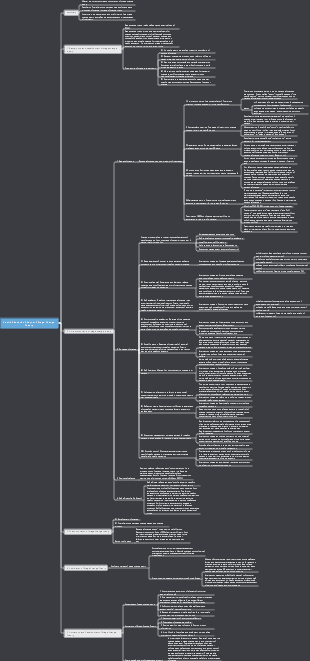
This picture introduces the background and development, core content and components, applications, etc. of social cognitive theory. I hope it is helpful to everyone. Welcome to like and collect it!
Edited at 2024-03-07 15:27:47
- bacteria
This is a mind map about bacteria, and its main contents include: overview, morphology, types, structure, reproduction, distribution, application, and expansion. The summary is comprehensive and meticulous, suitable as review materials.
- Plant asexual reproduction
This is a mind map about plant asexual reproduction, and its main contents include: concept, spore reproduction, vegetative reproduction, tissue culture, and buds. The summary is comprehensive and meticulous, suitable as review materials.
- Reproductive development of animals
This is a mind map about the reproductive development of animals, and its main contents include: insects, frogs, birds, sexual reproduction, and asexual reproduction. The summary is comprehensive and meticulous, suitable as review materials.
Health Education Chapter 6 Social Cognitive Theory SCT
- bacteria
This is a mind map about bacteria, and its main contents include: overview, morphology, types, structure, reproduction, distribution, application, and expansion. The summary is comprehensive and meticulous, suitable as review materials.
- Plant asexual reproduction
This is a mind map about plant asexual reproduction, and its main contents include: concept, spore reproduction, vegetative reproduction, tissue culture, and buds. The summary is comprehensive and meticulous, suitable as review materials.
- Reproductive development of animals
This is a mind map about the reproductive development of animals, and its main contents include: insects, frogs, birds, sexual reproduction, and asexual reproduction. The summary is comprehensive and meticulous, suitable as review materials.
- Recommended to you
- Outline




Health Education Chapter 6 Social Cognitive Theory SCT
1. Background and Development of Social Cognition Theory
Albert Bandura (Albert Bandura, 1925.12.4-2021.7.28) is a famous contemporary American psychologist. He is one of the main representatives of new behaviorism, a master of social learning theory, and the founder of social cognitive theory.
The development of social cognitive theory
1. The conceptual source of social cognitive theory: Edwin B. Holt & Harold Chapman Brown (1931) proposed that the actions of all animals are based on the satisfaction of psychological needs such as “feelings, emotions, and desires.”
2. Neal E. Miller & John Dollard (1941) proposed a modified theory called social learning and imitation. They believe that learning has four factors: drives, cues, expectations, and rewards.
3. Bandura (1963 &1977) proposed social learning theory to show the direct relationship between self-efficacy and behavior change. The source of self-efficacy: refers to people’s confidence in their ability to use their skills to complete a certain work behavior. It affects people’s behavioral choices, motivational efforts, cognitive processes and emotional processes
4. The social cognitive theory proposed by Bandura (1986) emphasizes the important role of cognition in the process of encoding and executing behavior. Human behavior is influenced by individuals, behaviors and environments.
5. Bandura (2001) used SCT theory to analyze how communication affects human thoughts, emotions and actions” and applied SCT to career choice, organizational behavior, motivation, learning and achievement, etc.
Social cognitive theory is developed based on social learning theory (indirect learning, observation and imitation), which can be traced back to the classic Pavlov experiments, Thorndike, Skinner and other behavioral learning theories. Derived from research in experimental psychology and human and animal experiments, including classical conditioning theory and operant conditioning theory (direct learning, personal experience), focusing mainly on observable behavior.
Classical conditioning theory (classical conditioning) states that when a neutral stimulus is linked to a stimulus that triggers a response, it can trigger the same response.
Operant conditioning theory (operant conditioning reflex)-Thorndike cage experiment
Thorndike believed based on this: The essence of learning is that the organism forms a connection between "stimulus" (S) and "response" (R). He believes that the learning process is a gradual process of trial and error. In this process, irrelevant and incorrect responses are gradually reduced, and correct responses are eventually formed.
Laws of Learning (Thorndike)
①Law of Preparation: Emphasizes that learners not only need an external learning environment, but also need internal psychological preparation
②Practice Law: It means that the repetition of a learned response will increase the connection between the stimulus and the response.
③The law of effect: means that the connection between the situation and the reaction is strengthened with satisfactory results and weakened with annoying results.
Operational constraints theory: It is proposed that the key to successful teaching lies in accurately analyzing the reinforcement effect and designing specific reinforcement associations.
Operational Constraint Theory - Skinner Box Experiment
The theory of operational constraints only focuses on the fact that when learners learn a new behavior, they must be rewarded immediately after performing the new behavior to strengthen their motivation to continue the behavior.
Bandura: Learning does not consist entirely of their own experiences; children observe and imitate other children around them. → Social Learning Theory
Experiment 1: Put a white mouse into a box with a button. Every time the button is pressed, food will drop. (award)
Result: The mice spontaneously learned to press the button
Experiment 2: Put a white mouse into a box with a button. Every time the mouse does not press the button, the box is powered on. (punish)
Result: The mice learned to press buttons
Experiment 3: Put a white mouse into the Skinner box. From the beginning, it keeps dropping food, and gradually decreases to a probability of dropping food every 1 minute. Press the button. (fixed time reward)
Result: The mouse kept pressing buttons at first. After a while, the mice learned to press the button every one minute.
Experiment 4: Put a very hungry white mouse into the Skinner box, press the button multiple times, and food will drop with probability. (probability reward)
Result: The mice learned to press the button.
1960, Bobo Doll Experiment. Bandura proposed that learning can occur through observation, but whether learning is converted into performance depends on the observer's expectations of the behavioral results. Therefore, he proposed his own social learning theory.
Skinner believed that people can change behavior and reactions through reinforcement
Reinforcement theory holds that the occurrence and frequency of behavior are related to the antecedent and consequent of the behavior.
Behavioral antecedent: prompting event (there is a cigarette box on the table)
Consequences of behavior: conditioned events, that is, events that occur immediately after the outcome of the behavior (criticism by parents)
Consequences that increase the frequency of behavior are called reinforcement
Reinforcement: refers to adding positive, positive or negative factors to a behavior in order to enhance the effect of performing a certain behavior.
change behavior
Strengthen, punish, weaken
Social learning: mutual learning between people or between people
Social learning theory extends the behavior of learning from individual direct or personal experience to the indirect experience of observing and learning others.
Social learning theory is the basis of social cognitive theory, with two core concepts:
1. Observation and learning
Observational learning: refers to the process in which an individual notices the behavioral patterns of others through observation, sees the results of performing the behavior, and then decides to imitate or learn the behavior.
Anyone who can become an object for learners to observe and learn can be called a demonstrator. (Teaching by words and deeds)
Observational learning requires several conditions
1. Must attract learners’ attention
2. Learners should keep the observed behavior in their memory
3. Learners need to have language and motor skills
4. Learners must have appropriate motivation
5. Correct behavior should be maintained by reinforcement after implementation.
Learning from the successful experiences of others can save you from learning from your own mistakes.
2. Substitute reinforcement
Vicarious reinforcement: When the results of other people's actions are positive and pleasing, and the individual feels the same and hopes to obtain the same result, the effect of vicarious reinforcement will be produced, that is, the process in which the individual then decides to adopt the same behavior.
Based on social learning theory, Bandura and Michel emphasize the role of cognitive factors in learning and pay more attention to the process of human learning through experience, observation and imitation.
In 1986, he summarized the main point of social cognitive theory: individuals do not simply accept stimuli in specific social situations, but organize external stimuli into brief and meaningful forms, and use existing experiences for important purposes. The object to be interpreted determines the behavior on this basis. It proposes a theory that learning behavior extends from individual direct or personal experience to observation and learning of other people's indirect experience.
Characteristics of social cognitive theory
1. Based on social learning theory
Continuation uses many concepts from social learning theory; social learning theory is the starting point, which provides an important theoretical basis for the latter
2. Emphasis on personal cognitive factors
Theories that emphasize personal cognitive factors and cognitive processes
A theory that emphasizes that individual behavior is not determined solely by personal characteristics or external environmental factors.
3. Taking reciprocal determinism as the core idea (Bandura)
Reciprocal determinism: A person's behavioral performance is not determined only by a single factor of personal characteristics or external environment. This process includes the dynamic interaction between "behavioral performance", "personal factors" and "environmental factors" Influence, it is also called ternary interactive determinism.
People gain knowledge by observing others and form an interactive relationship with the environment, behavior and cognition.
An important mediating variable or intermediate factor between behavior and environment is cognitive factors.
4. Rich theoretical content and wide application
The role of environment on behavior
Immunization programs influence child health behaviors
Legal prohibitions on smoking in public places affect smoking behavior
Social and cultural customs will affect eating behaviors and habits
High taxes on tobacco and alcohol will affect tobacco and alcohol behavior
Sidewalk safety improvement measures will affect people's traffic safety, etc.
The impact of behavior on the environment
People can independently choose a more suitable living environment, which affects the city's population size, economic and business models, urban environment and governance and other aspects.
People can improve the environment by supporting laws and regulations. For example, the general public supports tobacco regulations to improve the urban environment.
individual impact on the environment
An individual refers to a group rather than an individual. In fact, it refers to the collective consciousness and cognitive level of a community or society, and the impact of its component community culture on the environment. Correct understanding of AIDS-related knowledge, fear of AIDS↓, discrimination and stigmatization of AIDS patients↓, and the social environment of AIDS patients↑. Teachers and students develop a consensus on the dangers of smoking and promote a smoke-free campus environment.
The role of environment on individuals
Obesity caused by improper diet affects men and women differently.
personal role in behavior
The individual's role in behavior is the content of classic psychological behavioral theory. People's cognitive psychology will dominate and control their behavior. Many health education and health promotion theories are dedicated to studying how to change people's perception and cognition to adjust their behavioral changes.
Do you still remember what HBM and TPB think are the influencing factors of behavior?
The effect of behavior on individuals
Social cognition theory believes that behavior will affect personal perceptions. People who follow a low-fat diet to lose weight have not achieved significant results, and are full of doubts about the weight-loss effect of low-fat diets;
Failed English exams many times and lost confidence in my English proficiency
Triadic reciprocal determinism suggests that environmental factors can be changed, and it also suggests that psychological-behavioral patterns can be adjusted.
2. Core contents and components of social cognitive theory
According to reciprocal determinism, human behavior is affected by personal cognitive factors, environmental factors, and behavioral factors.
1. Cognitive factors
1. Knowledge
1. The relationship between knowledge and behavior change
(1) Acquisition of knowledge is an important basis for behavior change
(2) Knowledge is necessary, but behavior change also requires content and processes such as beliefs, motivations, and skills.
Therefore, disseminating health knowledge has become the most basic intervention and primary task of health education and health promotion.
2. Types of knowledge
(1) Content knowledge: knowledge about the benefits or disadvantages of a certain health-related behavior.
Good living habits to prevent high blood pressure
(2) Procedural knowledge: knowledge of how to establish and form certain health-related behaviors.
2. Self-efficacy
Self-efficacy (perceived self-efficacy): refers to an individual's assessment of oneself to perform a certain behavior, and also an individual's perception of one's ability to perform a certain behavior. Self-efficacy is an individual's degree of confidence or certainty that he or she will perform a behavior and achieve the desired results.
Self-efficacy affects an individual's feelings, motivations and thinking, which in turn affects their behavioral choices, how much effort they put in, and whether they can persevere in the face of obstacles and failures. One of the most important factors often used to predict whether people will perform a behavior.
acquired the day after tomorrow
Characteristics of self-efficacy
(1) Self-efficacy is specific
Individuals' self-efficacy for "weight loss through healthy eating" and "weight loss through aerobic exercise" differs.
(2) Self-efficacy is a concept about perception
(3) There are individual and group differences in self-efficacy
Group efficacy: Individuals need to evaluate themselves for performing a certain behavior in a group.
A person's self-efficacy for abstaining from drinking manifests itself in two different situations at home and when dining out. Self-efficacy for abstinence behavior is relatively high at home, but is likely to be low at a dinner party.
Individual efficacy: Someone may have low self-efficacy about going to the hospital to get a flu shot, even though the process is actually not complicated.
(4) A behavior can include multiple different self-efficacy for controlling blood sugar: taking medicine on time, eating scientifically, exercising reasonably, etc.
(5) Self-efficacy is different from action ability
Repair adjustment of self-efficacy: Under less than ideal conditions, individuals still have strong confidence to persist in the behavior.
Ways to Improve Self-Efficacy
(1) Adjust physical and mental state (physiological state)
Going to the dentist can cause many people to experience emotions such as anxiety and fear, and even physical symptoms such as increased blood pressure, accelerated pulse, and sweating. These emotional reactions and physiological symptoms prevent individuals from going to the dentist.
Emotional arousal, stress↑, self-efficacy↓
Adjusting physical and mental states such as emotions and physiological functions is the most basic intervention.
Meditation, stress relaxation techniques, psychological counseling and other methods
(2) Persuasion (verbal persuasion): Making people realize that they have the ability to perform a certain behavior through persuasion.
Persuasion is simple and easy to operate
People who are easily persuaded have better results
The content cannot exceed the ability of the individual, otherwise there will be side effects or counter-effects
Pay attention to health management, healthy diet, appropriate exercise, and active persuasion to seek medical treatment, etc.
(3) Vicarious experience: the process of learning and changing one's own behavior by observing others perform a certain behavior.
If individuals meet others with similar backgrounds to their own, the effect of vicarious experience is maximized, because vicarious experience is a prerequisite for peer education.
Provide examples or role models for behavior (e.g., parents, teachers, public figures).
(4) Enactive attainment: By directly guiding individuals to perform a certain behavior, they can acquire behavioral rules (including knowledge and skills) during the behavior process, thereby improving their self-efficacy. The most effective way to improve self-efficacy.
For example, in CPR teaching, teachers explain and demonstrate on the spot, students imitate, and teachers correct students' mistakes on the spot. The experience of failure takes a serious toll on self-efficacy. Feel goals and success in stages, and acquire behavioral rules step by step.
3. Result expectations
Efficacy expectation: It is an individual's expectation of whether he or she can successfully complete a behavior that has not yet been performed. (self-efficacy)
Outcome expectation: It is an individual's perception of the possible results after performing a certain behavior.
Effectiveness Expectations Outcome Expectations = Levels of Motivation
People evaluate all the possible consequences of performing a behavior one by one and calculate the "possible benefits" or "prices that must be paid" after performing the behavior. This is used as the basis for deciding whether to perform the behavior, which affects individual behavior. Important cognitive factors Antecedent determinants of behavior.
The more positive the outcome expectation, the stronger the motivation to perform the behavior.
How to obtain expected results
(1) I have had similar experiences (achievement obtained)
(2) Learn the possible consequences of behavior from the experience of observing others (indirect experience)
(3) Knowing the consequences of behavior through the persuasion of others
(4) Personal emotional or physiological response to behavior (physiological arousal)
Outcome expectancy: The value an individual places on a specific outcome of a behavior.
What's the value? Is it worth it? How much sense does it make?
Observation learning: A sees B’s heroic appearance after working out and wants to work out too
Efficacy expectations: A’s judgment on whether A has the confidence to persist in fitness;
Result expectations: A’s judgment on the results of fitness;
Result expectation value (expectation): A believes that fitness is a very valuable thing (benefits > cost, execution motivation ↑).
goal formation
SCT emphasizes: "Human beings have the ability to tolerate short-term negative results in order to obtain long-term positive results."
Goal formation: The process of achieving goals step by step by breaking them down into phased goals.
The process of goal formation does not affect social structural factors
Goal formation is the best method for behavior change. This reminds us that we must set specific, clearly described, and feasible stage goals in order to achieve higher-level health behavior change goals.
Example: Properly arrange the diet of diabetics
self-regulation
Self-regulation: refers to the process by which individuals compare their current behavior with expected target behavior and then adjust their behavior.
Self-regulation is achieved through the following six steps:
Self-monitoring (individuals regularly review their own behavior in a systematic way), goal setting, feedback,
Self-reward, self-educate, seek social support
social structural factors
Social structural factors: A collection of multiple factors that can affect actions or behaviors beyond the control of personal abilities, which can be divided into material factors and intellectual factors.
How to address the impact of the environmental conditions in which people live on their health-related behaviors
Material factors: residence, facilities, economy and other factors
Intelligence factors: knowledge, education, culture, social customs, etc.
2. Environmental factors
1. Physical environment
2. Social environment
3. Situation
3. Behavioral factors
1. Behavioral ability
If a person wants to perform an action, he must know what to do and how to do it
2. Strengthen
4. Others
1. Observation and learning
2. Self-regulation
3. Application of Social Cognition Theory
A three-level implementation model of social cognitive theory
Bandura in 2004 combined self-efficacy and outcome expectations into psychological readiness or levels (levels of readiness) as the motivation level of individual behavior. Regarding how to improve an individual’s psychological readiness, Bandura proposed a three-level implementation model.
1. High level has a high level of self-efficacy and outcome expectations
Just give them some tips of information and knowledge to get them moving.
2. Middle level: lower level of self-efficacy and outcome expectations
Apply core concepts and triadic reciprocal determinism
3. Low-level complete lack of confidence in personal behavioral control
First improve personal abilities (including not only behavioral abilities, but also learning abilities, communication abilities, and even self-esteem, self-confidence, etc.), and then intervene based on SCT.
Example: Eat more fruits and vegetables for health and happiness
It is a school health education program in the United States that helps fourth and fifth grade students eat more fruits and vegetables.
Research purpose: to increase students' daily vegetable and fruit consumption from 1.8-2.5 servings to 5 servings (American Dietary Guidelines recommend 5-9 servings)
Find corresponding methods and strategies and transform them into practical measures
Application of key concepts from social learning theory in this project
Environment, personal, and behavioral aspects all have an impact on children's reluctance to eat fruits and vegetables.
It is difficult to ensure supply among low-income families, and it is difficult for other families to obtain it freely.
I personally don’t like fruits and vegetables and have no positive expectations about their taste.
Children lack the ability to choose vegetables, fruits and recipes
specific measure
environment
Improving access to fruits and vegetables at home, parents engaging in school support
capacity
Improve students' ability to prepare FaSST recipes and proactively request fruits and vegetables at home and in fast food restaurants
expected results
Let students understand that eating more fruits and vegetables can enhance their ability to perform activities in school and gain the respect of their classmates
self control
Let students set goals to eat more fruits and vegetables
observational learning
Students observe how teachers set goals for themselves to improve their eating habits
strengthen
Provide spiritual and material encouragement to students who achieve their goals
self-efficacy
Enhance students’ confidence in obtaining fruits and vegetables through role-playing
mutual determinism
Students ask their families to buy more fruits and vegetables. When there are more vegetables and fruits at home, students can eat more because of convenience. Increased exposure to fruits and vegetables will make students like to eat them more.
Characteristics of social cognitive theory in behavioral intervention
The focus of health promotion is mainly on the impact of the social environment on people's health cognition and behavior, and actively creating a benign social atmosphere to promote people to learn and maintain their own health concepts, healthy lifestyles and healthy behaviors, and try to reduce the mutual conflicts between people. adverse effects.
The role of social cognitive theory
(1) It explains the role of people’s beliefs, values and self-confidence on their health-related behaviors, which has certain commonalities with the health belief model;
(2) It also explains how environmental factors such as social norms and social patterns influence people’s health-related behaviors;
(3) It provides practical guidance for health promotion practice, providing methods for integrating and modeling factors that influence health-related behaviors;
(4) The focus of applying social cognitive theory is not only to change behavior, but also to intervene in health-related behaviors by changing the environment, changing individual self-efficacy, etc.;
(5) Provides a three-level implementation model. This tool can identify an individual’s psychological readiness for behavior change and the need for health promotion measures, so that targeted implementation of intervention measures can be implemented;
(6) Within the framework of social cognitive theory, health education projects can be combined with measures to change the physical environment and social environment.
How social cognitive theory is applied
(1) Change health-related behaviors by improving self-efficacy
(2) Health education and health promotion projects based on triadic interactive determinism as the theoretical framework.
Application Principles of Social Cognitive Theory
(1) The five core contents mentioned earlier need to be taken into consideration at the same time (knowledge type, self-efficacy, outcome expectations, goal setting and self-regulation, social structural factors?)
(2) Knowledge (especially procedural knowledge) is the fundamental intervention measure
(3) When designing health education and health promotion programs, consider the behavioral specificity of social cognitive theory;
(4) Help people at intermediate and low levels of psychological preparation to establish and improve self-efficacy and outcome expectations when conducting health education and health promotion interventions;
(5) Pay attention to the principles of goal formation and avoid blindly setting goals;
(6) Social structural factors are important factors that influence health-related behaviors and are an important component of health promotion projects; this involves environmental factors in the three-dimensional interactive determinism, the core idea of the theory;
(7) Environmental factors of behavior are also an ethical issue. It should be noted that there are social, economic, cultural, political and other reasons behind any health-related behavior.
Limitations of Social Cognitive Theory
(1) SCT mentions many broad concepts and lacks a clear and clear theoretical framework to describe the relationship between all concepts concretely and completely. Therefore, researchers mostly discuss a few concepts that they are concerned about. ;
(2) The concept described by this theory does not yet have standardized measurement tools, making it easy to cause inconsistencies in interpretation whether it is basic research or applied research.