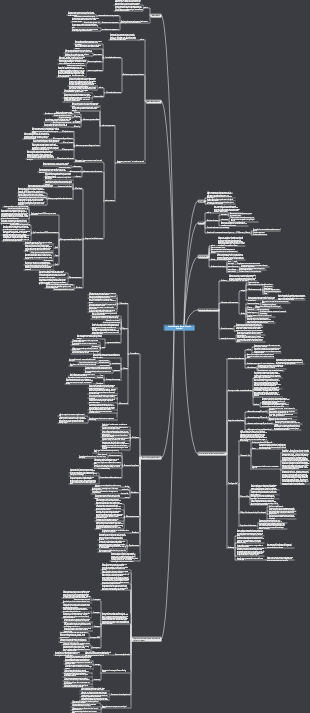
MindMap Gallery Health Education Chapter 4 Health Belief Model (HBM)
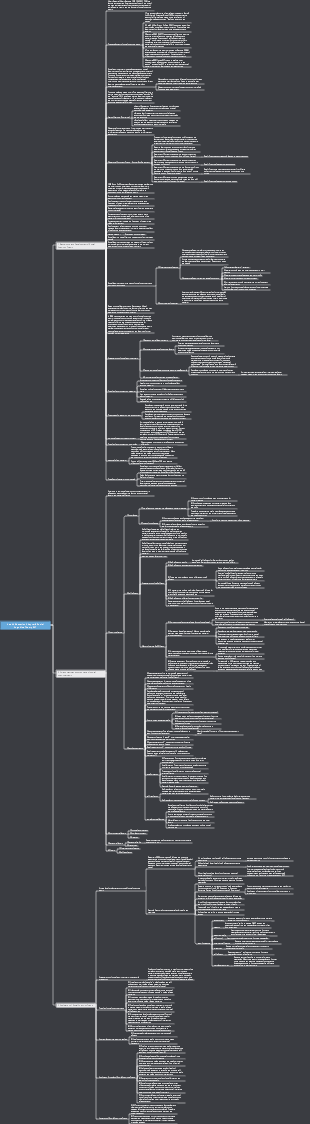
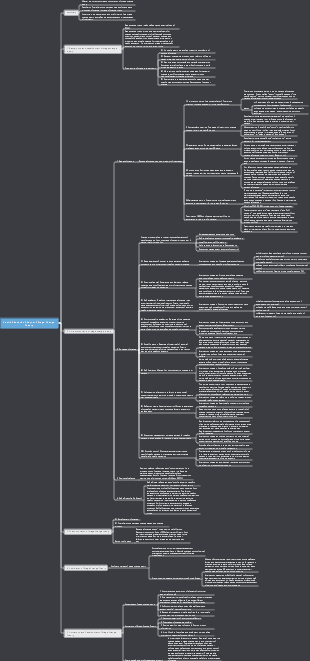
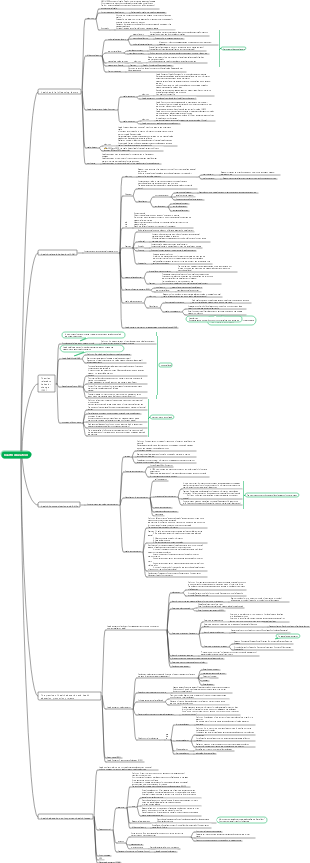
This picture introduces the background, related concepts and frameworks, practices and applications of the development of the health belief model. I hope it will be helpful to everyone. Welcome to collect and like it!
Edited at 2024-03-05 17:56:20This is a mind map about bacteria, and its main contents include: overview, morphology, types, structure, reproduction, distribution, application, and expansion. The summary is comprehensive and meticulous, suitable as review materials.

This is a mind map about plant asexual reproduction, and its main contents include: concept, spore reproduction, vegetative reproduction, tissue culture, and buds. The summary is comprehensive and meticulous, suitable as review materials.
This is a mind map about the reproductive development of animals, and its main contents include: insects, frogs, birds, sexual reproduction, and asexual reproduction. The summary is comprehensive and meticulous, suitable as review materials.
This is a mind map about bacteria, and its main contents include: overview, morphology, types, structure, reproduction, distribution, application, and expansion. The summary is comprehensive and meticulous, suitable as review materials.
This is a mind map about plant asexual reproduction, and its main contents include: concept, spore reproduction, vegetative reproduction, tissue culture, and buds. The summary is comprehensive and meticulous, suitable as review materials.
This is a mind map about the reproductive development of animals, and its main contents include: insects, frogs, birds, sexual reproduction, and asexual reproduction. The summary is comprehensive and meticulous, suitable as review materials.
Health Education Chapter 4 Health Belief Model (HBM)
1. Background of the development of health belief model
In 1952, a survey of 1,200 adults was conducted in three cities that implemented free X-ray traveling tuberculosis screening vans.
Research result
Susceptibility√, benefit√: 82% had undergone X-ray examination.
Susceptibility √, benefit ×: 64% had undergone X-ray examination.
Susceptibility ×, benefit √: 29% have undergone X-ray examination.
Susceptibility ×, benefit ×: 21% had X-ray examination.
in conclusion
In order for the public to accept and adopt fluoroscopy, it is necessary not only to make them aware of the threat of tuberculosis, but also to establish a belief in the benefits of early fluoroscopy
In the context of the polio vaccine issue in the United States, Rosenstock detailed the prototype of the health belief model in 1966 to explain public health behavior. Personal readiness factors, social and situational factors. Becker and Maiman revised it in 1975, giving the health belief model a rough shape.
The theoretical source of HBM
Stimulus-response theory: classical constraints, operant constraints;
Pavlov's dog, Thorndike's cat, Skinner's guinea pig, Bandura's child
Cognitive theory: Behavior is affected by the strength of personal beliefs;
Value expectancy theory.
People are more likely to choose behaviors that maximize benefits at low cost
health belief model
The Health Belief Model (HBM) is an important theoretical model that uses psychological concepts to explain health-related behaviors.
The health belief model is a behavioral theoretical framework that motivates people to adopt positive health behaviors. This framework is based on people's desire to avoid negative health outcomes as the original motivation.
This model believes that the factors forming an individual’s health behavior are: ① disease threat (threat), ② outcome expectation (outcome expectation), and ③ efficacy expectation (efficacy expectation).
The core concept of HBM is perception, which refers to the perception of the threat of related diseases and behavioral consequences, that is, health beliefs. The former relies on perceptions of disease susceptibility and severity of disease consequences; the latter includes perceptions of the effectiveness of behavioral changes and barriers to implementation. It is a behaviorally perceived belief.
Health beliefs consist of perceptions of susceptibility to disease or risk factors, their severity, and the benefits and barriers to adopting certain health behaviors.
2. Related concepts and framework development of the health belief model
perceived threat
Perceived threat: Perception of disease threat, including perceived susceptibility and severity.
Perceived susceptibility: refers to the actor's judgment on the possibility of contracting a certain disease or falling into a certain disease state after having a certain understanding of the incidence and prevalence of the disease. The scale depends on the individual's perception of the disease. Subjective perceptions of health and illness.
Perceived severity: refers to the actor's perception of the consequences of suffering from a certain disease, being exposed to certain health risk factors, or not controlling or treating an existing disease. Including ① the judgment of the biological consequences of the disease; ② the judgment of the social consequences of the disease.
Taking lung cancer as an example of self-evaluation of perceived threats.
perceived threat
Perceptions of disease susceptibility
1. Smoking increases the risk of lung cancer
2. Smoking increases the risk of COPD
Perception of disease severity
1. Lung cancer can lead to early death
2.COPD will reduce the quality of life
3. Illness will cause financial burden
behavioral evaluation
Perceived benefits: also known as effectiveness, refers to the actor's judgment on whether adopting a certain healthy behavior or giving up a certain harmful behavior can effectively reduce the risk of contracting a certain disease or alleviate the consequences of the disease. Including: ① whether it can effectively prevent the disease; ② whether it can alleviate the pain and reduce the social impact of the disease, etc.
Perceived barriers: refers to the actor's perception of difficulties and resistance in the process of adopting the behavior recommended by doctors or public health personnel, including the tangible and psychological costs of overcoming these difficulties and resistance.
Taking smoking cessation as an example, evaluate self-perceived benefits and barriers.
perceived benefits
1. Stopping smoking now can reduce the risk of lung cancer
2. Physical health can be significantly improved after quitting smoking.
perceived barriers
1. Stopping smoking will affect my thinking
2. Quitting smoking will affect my interpersonal relationships
action clues
Cues to action, also known as action inducements or prompts, refer to the "fuse" or "trigger" that inspires or arouses actors to take action, and is a determining factor in the occurrence of healthy behaviors.
(1) Internal clues: body pain, physiological discomfort;
(2) External clues: health publicity and education through mass media, doctors’ recommendations to adopt healthy behaviors, help from family members and groups, etc.
example
1. The doctor who examined me recently warned me that I am in poor health.
2. A friend who has been smoking for a long time died of lung cancer
3. Recently, the unit has launched strict tobacco control measures
self-efficacy
Self-efficacy (self-efficacy) is the actor's confidence in his ability to successfully implement or give up a certain behavior, that is, he has a correct evaluation and judgment of his own behavioral ability, and believes that he will be able to successfully adopt an action that can achieve the expected results through hard work. Behavior.
High self-efficacy and sufficient confidence to complete healthy behaviors;
Low self-efficacy and lack of confidence make it difficult to adopt healthy behaviors.
Self-efficacy plays a decisive role in the implementation of healthy behaviors.
example
1. I believe that I can insist on not smoking
2. I can overcome all odds to quit smoking.
Modifying factors
1) Demographic factors: age, gender, race, ethnicity, education, etc.;
2) Social psychological factors: personality traits, socioeconomic status, social pressure, peer influence, etc.;
3) Knowledge structure factors: knowledge about the disease and past contact with the disease.
protection motivation theory
Threat appraisal: People's understanding of danger is formed by balancing threat perception and benefits.
Intrinsic rewards: subjective pleasant feelings brought about by performing harmful behaviors, such as the pleasure caused by smoking.
Extrinsic rewards: objective “benefits” brought about by performing harmful behaviors, such as the convenience of communication caused by smoking.
Threat assessment = (perceived threat) – (internal reward external reward)
Coping appraisal: People's understanding of the ability to deal with threats to health is formed by balancing response efficacy, self-efficacy, and response costs.
Coping evaluation = (self-efficacy response efficacy) – (response cost)
Based on the experience and lessons gained from serious disease prevention and treatment (AIDS prevention and treatment), Rogers and other scholars proposed separate variables from threat assessment and response assessment - fear
Fear: An emotional reaction resulting from a desire to escape when one perceives a serious threat but does not know the situation or how to deal with it.
Proper threat assessment: rational thinking based on mastering repeated information.
In the process of health education practice, targeted work is used to help target groups understand relevant information, eliminate fears, and make correct threat assessments.
3. Practice and application of health belief model
Advantages and Disadvantages of the Health Belief Model
advantage
(1) In the past few decades, HBM has provided a useful theoretical framework for investigating health behaviors due to its simple structure, which makes the model easy to implement, apply and test;
(2) The model structure is clearer and fully considers the impact of social psychological factors on behavior;
(3) Generally speaking, all components of the model can be regarded as independent predictors of health behavior, that is, health-related behaviors can be better explained and predicted through attitudes and beliefs;
(4) As the model continues to develop and improve, the influencing factors involved in the model are constantly refined, and it is increasingly suitable for the practical needs of health education development;
(5) In practice, educational content and education plans can be selected according to the actors’ health beliefs, avoiding the adoption of a uniform health education approach for all actors;
(6) Through the evaluation of promoting factors and restricting factors, select effective education methods and improve the quality of health education, thereby obtaining the cooperation and conscious participation of actors.
shortcoming
(1) Variable setting of the model: ① The model does not clearly indicate the relationship between the variables, and there are no clear rules for the combination of variables; ② The model has low predictive ability.
(2) It is difficult to test the validity and credibility of the model;
(3) Privacy of the model;
(4) Control of interference factors.
debate
(1) The perception of disease severity conflicts with the HBM theoretical hypothesis; “The higher the individual’s awareness of the severity of AIDS, the less willing they are to participate in HIV antibody testing.”
(2) HBM theory assumes that all individuals have the opportunity to choose specific behaviors independently, but it does not apply in certain situations. “Not all women have the freedom to choose safe sex.”
[Example] A cross-sectional survey on barriers to condom use in rural areas of Benin
Research background and research purpose
Research content and methods
Threat perception – risk of HIV infection, severity of AIDS
Behavioral Assessment – Benefits and Barriers to Condom Use
Action clues - AIDS publicity, public service announcements
Self-efficacy—confidence in being able to stick to condoms
Personal behavior - whether to use condoms
Research results and findings
Through data analysis, the perception of adoption behavior effectiveness and the perception of barriers to implementation of the behavior are the main influencing factors of condom use.