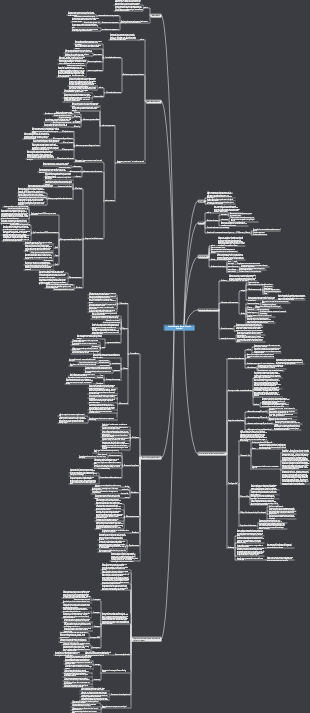
MindMap Gallery Health Education Chapter 5 Stage Change Theory
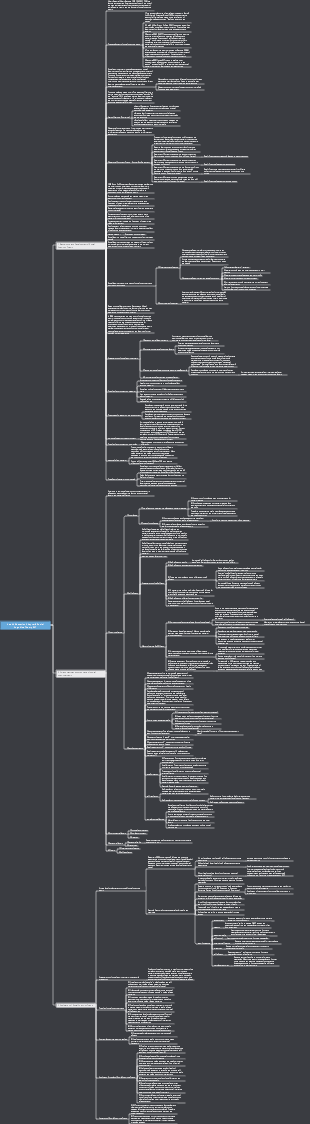
This picture introduces the background and development, core components, connotation, application, limitations and development of stage change theory. I hope it will be helpful to everyone. Welcome to like and collect it!
Edited at 2024-03-06 15:13:32This is a mind map about bacteria, and its main contents include: overview, morphology, types, structure, reproduction, distribution, application, and expansion. The summary is comprehensive and meticulous, suitable as review materials.
This is a mind map about plant asexual reproduction, and its main contents include: concept, spore reproduction, vegetative reproduction, tissue culture, and buds. The summary is comprehensive and meticulous, suitable as review materials.
This is a mind map about the reproductive development of animals, and its main contents include: insects, frogs, birds, sexual reproduction, and asexual reproduction. The summary is comprehensive and meticulous, suitable as review materials.
This is a mind map about bacteria, and its main contents include: overview, morphology, types, structure, reproduction, distribution, application, and expansion. The summary is comprehensive and meticulous, suitable as review materials.
This is a mind map about plant asexual reproduction, and its main contents include: concept, spore reproduction, vegetative reproduction, tissue culture, and buds. The summary is comprehensive and meticulous, suitable as review materials.
This is a mind map about the reproductive development of animals, and its main contents include: insects, frogs, birds, sexual reproduction, and asexual reproduction. The summary is comprehensive and meticulous, suitable as review materials.
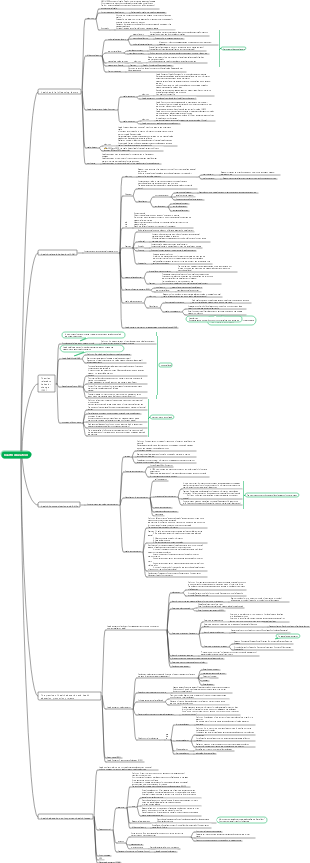
Health Education Chapter 5 Stage Change Theory
summary
Master: the core structure and connotation of stage change theory.
Familiarity: The relationship between stages of change and processes of change in stage-of-change theory.
Understand: the background and brief history of the stage change theory, as well as the advantages and disadvantages of the theory.
1. Background and development of stage change theory
Stage change theory is also called transtheoretical model (TTM)
Stage change theory provides a theoretical basis for changing unhealthy behaviors. It effectively combines cognition, behavior and time of behavior change, and successfully applies it to behavior change intervention, providing theoretical guidance for the practical work of health education. . Its intervention strategy is essentially about doing the right thing at the right time
The premise of stage change theory
(1) No single theory can explain the entire complexity of behavioral change
(2) Behavior change is a process, which refers to different stages presented over a period of time
(3) Each stage has both stable and variable characteristics. Some behavioral risk factors are difficult to change, while others are easy to change.
(4) Most at-risk populations are unprepared for behavior change and will not change their behavior through traditional behavior change programs
(5) Appropriate change strategies should be adopted at specific stages to maximize the effectiveness of behavior change
2. Core components of stage change theory
1. Stages of change
Behavioral change can be divided into five stages
1 No intention period (precontemplation): There is no intention to change behavior in the next 6 months.
There is no immediate period in which behavioral changes are intended. The so-called "recent" is usually based on "the next 6 months", but this time period will vary depending on behavioral characteristics or research needs.
reason
① Never been told that the behavior would have adverse consequences (ignorance and fearlessness)
② I have tried many times to change but failed repeatedly and became discouraged, even disappointed with my abilities.
2. Contemplation period: The stage of intention to change behavior within the next 6 months.
People at this stage are somewhat aware of the benefits of changing their behavior, but still have strong feelings about the difficulties that may be encountered in changing their behavior.
When weighing "benefits" and "costs", one often falls into deep thought. If one is often in an ambivalent state of mind about making a choice, it is regarded as a "long period of deliberation" or "delay in behavior" (undecided).
3 Preparation period: Some behavioral changes are planned or already taken within the next 30 days.
People at this stage usually use "the last month" as the standard for time measurement.
Actions these individuals may take to change their behavior include attending health education classes, consulting a professional or doctor, purchasing books to read, or already adopting self-change strategies. Some intermittent behavioral changes begin to occur. (Eager to try)
4 Action period: Action has been taken and changes in behavior have occurred but the duration has not exceeded 6 months.
Action has been taken within the past 6 months and there is an observable and noticeable change in behavior. (start to act)
Not all actions can be regarded as behavioral changes. Professional judgment must be used to determine that the actions have reached a level sufficient to reduce the risk of disease before they can be determined as behavioral changes. Taking smoking cessation as an example, simply reducing the amount of cigarettes smoked cannot be considered a behavioral change; only not smoking at all can reduce the threat of disease, which is considered a behavioral change.
5 Maintenance period: Changing the original behavior and adopting a new behavior for more than 6 months.
"Avoiding recurrence" is the most important task during the maintenance period. (Perseverance) People in the maintenance stage need to work harder to avoid the recurrence of old behaviors in addition to adopting specific and obvious changes in behavior. Confidence in maintaining behavioral changes.
Termination: 100% confidence that there will be no temptation to return to old behavior.
Modified TTM (1992), is the end point of stage changes.
The termination period is "zero temptation" and "full certainty", so people at this stage are sure that they will not return to their old behaviors. They seem to have never developed the old behaviors, and the new behaviors have solidified and become automatic. response (maintained throughout life).
Termination periods are rarely incorporated into research plans or intervention plans. But it is used in some addictive behaviors.
2. Processes of change
Change process: refers to the various manifestations of people changing from one stage of behavior to another. It can be implicit or explicit:
Increase awareness and arouse emotions
Self-re-evaluation and environmental re-evaluation
social liberation, self-liberation
Help-seeking relationships, reflective habits
Strengthen management and stimulus control
(1) Raise awareness: Discover and understand new facts, concepts, and tips that support healthy behavior change.
Intervention strategies: Increase awareness of causes, consequences, and specific problem behaviors.
① Information feedback (take your blood pressure to know that your blood pressure is high)
② Talk to people (communicate with doctors to understand your health status)
③ Read books about health (learn knowledge from medical books)
④ Media promotion (seeing promotional videos on TV)
(2) Emotional arousal: Experience and learn and release negative emotions (fear, anxiety, worry) that may be caused by health-threatening behaviors.
Intervention strategies: Arouse and relieve negative emotions related to unhealthy behaviors.
Through various methods such as role-playing, watching movies, risk communication, and media publicity, people can feel the possible consequences of unhealthy or dangerous behaviors to induce the generation of negative emotions (such as fear, fear, anxiety, worry, etc.). Then use appropriate activities to reduce or relieve the previously induced negative emotions.
(3) Self-evaluation: Realizing that behavioral change is an important part of individual identity. That is, individuals make an assessment of their self-image, including cognition and emotion, regarding the presence or absence of a certain health-threatening behavior.
Intervention strategy: Combining cognitive emotions and assessing one's unhealthy self-image to realize the importance of behavioral changes.
① Value judgment (compare the value expression of exercise and non-exercise)
②Health model (please come and share your experience if you like sports)
③Metaphoric imagery (imagine the health and vitality of those who love sports)
(4) Environmental re-evaluation: Be aware of the negative impact of unhealthy behaviors on the surrounding environment. Includes both cognitive and emotional evaluations. Including the physical environment in which a person lives or works, as well as the social environment
Intervention strategies: Integrate cognitive emotions and assess how personal habits affect society.
Environmental re-evaluation through empathy training (developing compassion), watching documentaries, providing evidence, family involvement, etc.
(5) Social liberation: Be aware of the arrival of a social environment that supports healthy behaviors. That is, recognizing that social norms have evolved in a direction that supports healthy behaviors.
On the one hand, it can provide a variety of opportunities or alternatives to promote personal behavior changes and no longer be bound by social norms; on the other hand, it can also change unreasonable social norms so that personal behaviors are no longer subject to inappropriate constraints.
Intervention strategies: issue advocacy, mass empowerment, formulating public policies, and strengthening social welfare.
(6) Self-liberation: Make a firm commitment to change your behavior.
Individuals hold positive beliefs about behavioral change and are willing to put this belief into action, thus making commitments and recommitments.
Intervention strategy: Usually people will use the New Year or birthday or an anniversary to make a wish, or make a public commitment in front of everyone. This can strengthen the will and determination to change behavior and help individuals get rid of the pressure and constraints caused by behaviors that endanger health. .
(7) Help-seeking relationship: refers to seeking social support networks to assist individuals in changing behaviors that endanger health.
To provide support, care, trust, openness and acceptance to people who want to eliminate health-damaging behaviors is to provide social support. This support can come from intimate relationships, friend relationships, doctor-patient relationships, consultation relationships, partnerships, etc.
Intervention strategies: relationship building, therapy groups, counselor calls, buddy system.
(8) Reflect on habits (reverse restriction): Enhance awareness of unhealthy behaviors and choose healthier behaviors to replace them.
Intervention strategies: Learn healthy behaviors to replace unhealthy behaviors.
Keep your body and mind relaxed, adhere to the belief of change, reduce the intensity of stimuli that induce existing behaviors, receive professional alternative treatment, strengthen the habit of positive thinking, etc.
(9) Strengthen management: increase rewards for healthy behaviors and penalties for behaviors that endanger health.
Reinforcement refers to the consequences (consequences) of an individual's behavioral performance, which are positive or change in the expected direction, and various rewards that encourage or make people happy are given. Reinforcement increases the likelihood that a new behavior will be repeated.
Intervention strategies: change contracts, provide material rewards or bonuses, give spiritual praise or hugs, strengthen support among members of small groups, etc.
(10) Stimulus control: Eliminate reminders that induce harmful health behaviors or enhance reminders that are beneficial to health behaviors.
Stimulus refers to factors that prompt an individual to take action or trigger an individual to take action.
There are two processing methods of stimulus control: one is to remove events or certain action cues that prompt old behaviors; the other is to enhance events or provide action cues that are suggestive of new behaviors.
Intervention strategies: avoidance or distance, environment modification, group member support.

3. Decisional balance
Decision balance reflects a person's consideration of the pros and cons of behavior change, that is, it reflects the weight a person gives to the benefits (pros) and disadvantages (cons) of behavior change (from the decision-making model proposed by Janis & Mann (1977))
4. Self-efficacy (self-efficacy)
Self-efficacy reflects a person's confidence in oneself to perform new behaviors or not revert to old behaviors.
The measurement of self-efficacy can be considered from two levels: confidence and temptation. The former represents the confidence to persist in practicing healthy behaviors or new behaviors in various challenging situations; the latter represents the ability to persist in practicing healthy behaviors or new behaviors in various challenging situations. Ability to resist temptations to engage in unhealthy or old behaviors in a variety of challenging situations. Self-efficacy can be enhanced through experience accumulation, observation and learning, and persuasion of others.
3. The connotation of stage change theory
(1) Spiral pattern of change
(2) The relationship between change stages and change process
Return to old ways
Behavioral change doesn’t happen in one fell swoop. Recovery is common. About 15% of quitters will return from the intention stage, preparation stage or action stage to the pre-intention stage. But most smokers learn from their failures and switch to other strategies the next time they quit.
4. Application of Stage Change Theory
Application areas of stage change theory
Physical exercise, chronic disease management, postoperative rehabilitation, lifestyle changes, psychological intervention, obesity management, health literacy, breastfeeding
Group smoking cessation programs in the United States
Methods: Smokers were recruited through phone calls and letters, and each smoker was asked to sign up for an action-oriented smoking cessation clinic through face-to-face persuasion by doctors and nurses. Using a computer, each participant answered 40 questions to understand their specific stage of change in quitting smoking.
Intervention measures: ① Self-help manual; ② Computer feedback report on awareness raising, quitting process, self-efficacy and temptation; ③ Health education professionals propose improvement plans based on computer assessment of participants' needs and improvements.
5. Limitations and Development of Stage Change Theory
Advantages of stage change theory
1. Comprehensive absorption of elements from other theoretical models
2. Emphasize that individual health-related behavior changes are dynamic and can effectively propose different intervention strategies for people at different stages.
3. Fully consider social and psychological factors and respect people’s actual conditions
4. Behavioral intervention is also applicable to individuals, groups, high-risk groups and key groups.
Limitations of Stage Change Theory
1. Less consideration of environmental factors
2. The stages of change are unclear
3. Poor operability, easy to lose to follow-up or omit information
4. It is difficult to formulate and implement individualized intervention measures (subpopulation).
Future development of stage change theory
In order to explore motor behavior, Park et al. combined the change stages in stage change theory with the theory of planned behavior. The research results confirm that important concepts of the theory of planned behavior include personal attitudes, subjective norms, action control and behavioral intentions, which can effectively distinguish the stages of change in exercise behavior. There are also studies that combine stage change theory with the health belief model and plan to use health beliefs to predict stages of change.