 Wondershare EdrawMind
MindMap Gallery Oral Anatomy and Physiology-Mind Map of Molar Appearance
- 123
Oral Anatomy and Physiology-Mind Map of Molar Appearance
Regarding the oral anatomy and physiology, the eighth edition of the mind map of the People's Health Ministry has a detailed introduction and comprehensive description. I hope it will be helpful to those who are interested!
Edited at 2023-12-04 10:18:57
- bacteria
This is a mind map about bacteria, and its main contents include: overview, morphology, types, structure, reproduction, distribution, application, and expansion. The summary is comprehensive and meticulous, suitable as review materials.
- Plant asexual reproduction
This is a mind map about plant asexual reproduction, and its main contents include: concept, spore reproduction, vegetative reproduction, tissue culture, and buds. The summary is comprehensive and meticulous, suitable as review materials.
- Reproductive development of animals
This is a mind map about the reproductive development of animals, and its main contents include: insects, frogs, birds, sexual reproduction, and asexual reproduction. The summary is comprehensive and meticulous, suitable as review materials.
Oral Anatomy and Physiology-Mind Map of Molar Appearance
- bacteria
This is a mind map about bacteria, and its main contents include: overview, morphology, types, structure, reproduction, distribution, application, and expansion. The summary is comprehensive and meticulous, suitable as review materials.
- Plant asexual reproduction
This is a mind map about plant asexual reproduction, and its main contents include: concept, spore reproduction, vegetative reproduction, tissue culture, and buds. The summary is comprehensive and meticulous, suitable as review materials.
- Reproductive development of animals
This is a mind map about the reproductive development of animals, and its main contents include: insects, frogs, birds, sexual reproduction, and asexual reproduction. The summary is comprehensive and meticulous, suitable as review materials.
- Recommended to you
- Outline
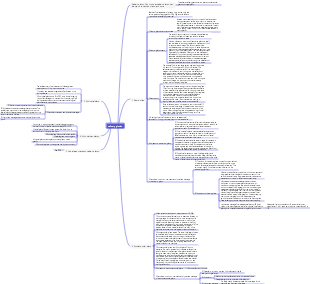
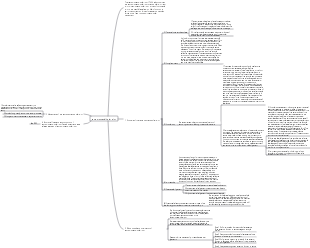
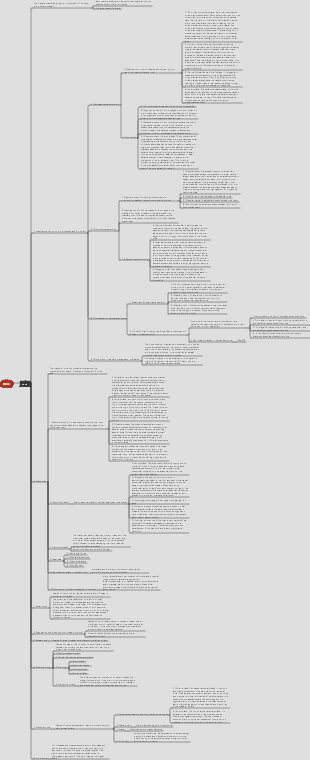

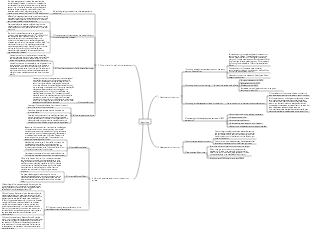
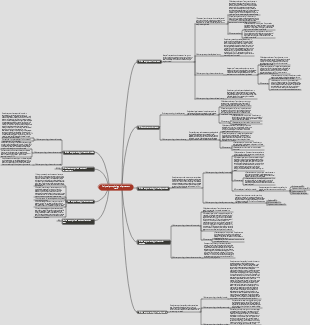
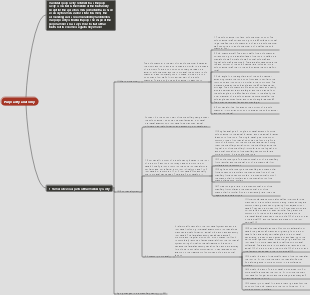
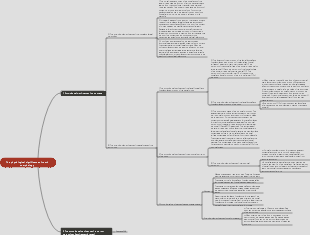
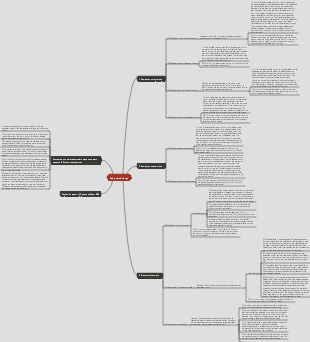
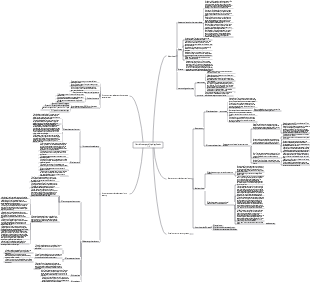
molar shape
molar group
Features: The crowns of molars are large in size, and the size of the first molar to the third molar gradually decreases. The dental crown is cube or rectangular, consisting of four axial surfaces: buccal surface, lingual (palatal) surface, mesial surface and distal surface, and a 𬌗 surface. The buccolingual (palatal) surface is trapezoidal, and the adjacent surface is quadrilateral, 𬌗 There are 4 to 5 cusps on the surface and 2 to 3 roots. Teeth grind the food into fine pieces.
(1) Maxillary first molar
Characteristics: It erupts around the age of 6, so it is called the "sixth age tooth". It is the largest tooth in the maxillary dental arch.
(1) Buccal surface: slightly like a trapezoid, the mesial and distal width is greater than the cervical height, the mesial edge is long and straight, the distal edge is slightly short and protruding, the mesial buccal tip, the mesial oblique edge of the distal buccal tip. Distal The middle oblique edge forms the 𬌗 edge, and the width of the 𬌗 edge is greater than the width of the neck edge. The mesial buccal cusp is slightly wider than the distal buccal cusp, and there is a buccal duct passing between the two cusps, which is approximately parallel to the buccal axial ridge. The buccal axial ridge of the mesial buccal cusp is more obvious than the distal buccal axial ridge. The high point of the shape is at 1/3 of the neck.
(2) Lingual surface: similar in size to or slightly smaller than the buccal surface, the mesial and distal oblique edges of the mesial and distal lingual tips form the rim. The mesial tongue tip is wider than the distal tongue tip, and the distal tongue groove passes between the two tongue tips and extends to 1/2 of the tongue surface. The lingual axial ridge is not obvious, and the highest point of the shape is in the middle 1/3 of the tongue. There is occasionally a fifth cusp on the lingual side of the mesial lingual tip. This cusp was first discovered by the Viennese dentist Carabelli in 1842, so it is also called Carabelli's cusp. There is a crescent-shaped groove separating the fifth cusp and the mesial lingual cusp. The cusp neither reaches the 𬌗 surface nor the pulp angle, so it is more appropriately called Carnage's tubercle.
(3) Proximal surface: like a quadrilateral, the mesial surface is larger than the distal surface, the buccal and lingual diameter is greater than the neck height, the neck is flat, and the high point of the shape is at 1/3 of the neck. The mesial contact area is at the junction of the proximal 𬌗1/3 and the buccal 1/3 and middle 1/3, and the distal contact area is at the middle 1/3 of the proximal 𬌗1/3.
(4) Noodles:
Features: The surface structure is complex, with undulating peaks and ridges, staggered grooves and ridges, and an oblong outline.
①Marginal ridge: The surrounding surface is composed of buccal marginal ridge, lingual marginal ridge, mesial marginal ridge and distal marginal ridge. The buccal marginal ridge is composed of the mesiodistal cusp ridge of the mesiobuccal cusp and the mesiodistal cusp ridge of the distal buccal cusp. The lingual marginal ridge consists of the mesiodistal cusp ridge mesial to the lingual tip and the mesiodistal cusp ridge distal to the lingual tip. The mesial marginal ridge is short and straight, and the distal marginal ridge is slightly longer. The mesiobuccal angle and the distal lingual angle are acute angles. The distal buccal angle and the mesial lingual angle are obtuse angles.
②Tooth cusps: There are four cusps on the 𬌗 surface: the mesial buccal cusp, the distal buccal cusp, the mesial lingual cusp, and the distal lingual cusp. The mesial lingual cusp is the largest, followed by the mesial buccal cusp, the distal buccal cusp, and the distal lingual cusp. Minimum. The buccal cusp is sharp and is a non-functional cusp. The lingual cusp is round and blunt and is a functional cusp. The mesial lingual cusp is the main functional cusp of the maxillary first molar.
③Triangular ridge: Each of the four cusps has a triangular ridge. The triangular ridge of the mesiobuccal cusp runs obliquely from the tip of its cusp to the distal and lingual side to the central fossa. The mesial lingual apex triangular ridge is oblique from the top of the tooth cusp to the distal buccal side to the center of the 𬌗 surface. The mesial lingual apex triangular ridge is oblique from the top of the tooth cusp to the lingual side and slightly mesial to the center of the 𬌗 surface. The mesial lingual apex triangular ridge is with The triangular ridges of the distal buccal cusp are obliquely connected to form an oblique ridge, which is an anatomical feature of the maxillary first molar. The triangular ridge of the distal lingual apex is smaller, diagonally from the top of the cusp to the buccal side and slightly mesial to the center of the 𬌗 surface.
④ Nest points: The middle part of the 𬌗 surface is sunken into a socket. There are three main sockets, the central fossa, the mesial fossa, and the distal fossa. The central fossa is larger and is located between the distal surface of the mesial buccal apex triangular ridge and the mesial surface of the mesial lingual apex and distal buccal apex triangular ridge. There is a central point gap in the fossa. The distal fossa is smaller, an approximately triangular fossa located between the distal buccal and lingual apex triangular ridge and the distal marginal ridge, also known as the distal triangular fossa. In addition to the central fossa and the distal fossa, there is also an approximately triangular mesial fossa located between the mesial buccal and lingual apex triangular ridge and the mesial marginal ridge, also known as the mesial triangular fossa.
⑤Gutter: There are three main development grooves on the 𬌗 surface. The buccal sulcus extends from the central point to the buccal side, crosses the buccal marginal ridge between the cheeks to the buccal surface, extends from the central point to the mesial area to form the mesial sulcus, and ends at the mesial point in the mesial triangular fossa. There are several accessory grooves emanating from the mesial gap, such as the mesial triangular buccal groove, the mesial triangular lingual groove, the mesial marginal groove, etc. There is an oblique developmental groove in the distal fossa called the distal lingual groove, which originates from the distal point space and passes between the two tongue tips and crosses the marginal ridge of the tongue to the tongue surface. In addition, several accessory grooves can emerge from the distal point space. Such as the distal triangular buccal sulcus, the distal triangular lingual sulcus, the distal marginal sulcus, etc. The central point gap forms a distal groove in the distal direction, also known as the transverse groove of the oblique crest. It is usually not obvious when it reaches the oblique crest, but this groove can also cross the oblique crest to the distal fossa, as in the maxillary first molar. This groove is not obvious.
⑥ Inclined surfaces: Each tooth cusp has four inclined surfaces. Among them, the buccal inclined surface of the buccal cusp has no occlusal contact with the opposing teeth, but the lingual inclined surface of the buccal cusp, the buccal inclined surface and the lingual inclined surface of the lingual cusp all have occlusal contact with the opposing teeth.
Root:
Characteristics: It consists of three roots: the two buccal roots are the mesiobuccal root and the distal buccal root, and the lingual root is called the lingual root. The mesiobuccal root is located above the mesial and buccal neck of the crown. Its buccal surface is wider than the lingual surface, and the mesio- and distal surfaces are both flat. The distal buccal root is located on the distal buccal neck of the crown and is shorter than the mesiobuccal root. The lingual root is located on the lingual neck of the crown. It is the largest of the three roots. Its buccal and lingual surfaces are wider and flat. There is a ditch. The two buccal roots are close to each other, the buccal root and the lingual root are far apart, and the bifurcation between the three roots is large, which is beneficial to the stability of the teeth.
(2) Maxillary second molar
Characteristics: Similar in shape to the first molar, slightly smaller than the maxillary first molar.
1. The inclination of the buccal surface of the crown from mesial to distal to lingual is greater than that of the maxillary first molar. The distal buccal cusp is significantly smaller, and the mesiobuccal axial ridge is more prominent than the distal buccal axial ridge.
2. The distal lingual cusp is smaller, the mesial lingual cusp accounts for most of the tongue surface, and very few have the fifth cusp.
3. The facial oblique ridge is not as obvious as the maxillary first molar, the distal groove (oblique ridge transverse groove) is more obvious than the maxillary first molar, and the distal lingual groove is not obvious. The mesial lingual cusp of some maxillary second molars is extremely large, while the distal lingual cusp is not obvious, and the lingual surface is significantly smaller than the buccal surface.
4. The number of roots is the same as that of the maxillary first molar, and the bifurcation between the buccal and lingual roots is small and skewed distally. In a few teeth, the mesiobuccal root or distal buccal root is fused with the lingual root, or the mesiodistal buccal root is fused into two roots, and in a very few teeth, the mesiodistal buccal root and the lingual root are fused to each other.
(3) Maxillary third molar
Characteristics: The shape, size and position vary the most.
1. The standard shape of this tooth is similar to the maxillary second molar, but the crown is smaller, the root is shorter, the middle 1/3 of each axial surface is more rounded, and the high points of the buccal and lingual surfaces are in the middle 1/3.
2. The buccal surface of the crown has a greater inclination from the mesial to the distal to the lingual side. The distal lingual cusp is very small or absent. The buccal surface is wider than the lingual surface. The 𬌗 surface is rounded and triangular in shape, with many accessory grooves. Sometimes there are many cusps and the boundaries are not clear.
3. The number and shape of tooth roots vary greatly, and most of them merge into a tapered root.
(4) Mandibular first molar
Characteristics: The earliest tooth to erupt among permanent teeth, it has 5 faces, 5 cusps, and 2 roots. It erupts around the age of six. It is also called the sixth-instar tooth and is the largest tooth in the mandibular dental arch.
1.Dental crown
(1) Buccal surface: Slightly like a trapezoid, the 𬌗 edge is longer than the neck edge, the mesial and distal diameter is larger than the 𬌗 neck diameter, the mesial edge is straight and the distal edge is protruding. The mesial buccal cusp, distal buccal cusp and half of the distal cusp can be seen on the rim, which are separated by the buccal groove and distal buccal groove respectively, with a point gap formed at the end of the buccal groove. The buccal axis ridge at the mesiodistal buccal tip is parallel to the buccal groove, and the buccal axis ridge at the distal tip is not obvious. The buccal cervical crest is parallel to the neck edge. The high point of the shape is at 1/3 of the cheek and neck.
(2) Lingual surface: Like a trapezoid, smaller and slightly more protruding than the buccal surface. The mesial tongue tip and distal tongue tip can be seen on the edge of the tongue. The lingual groove passes through the two tongue tips, and the lingual axis ridge is not obvious. The high point of the shape is in the middle 1/3 of the tongue.
(3) Proximal surface: Like a quadrilateral, the crown of the tooth is inclined toward the lingual side, and the buccal tip is lower than the lingual tip. The distal surface is smaller than the mesial surface. The mesiobuccal angle and the mesiolingual angle are sharp. The mesial contact area is close to the buccal 1/3 of 𬌗1/3, and the distal contact area is at the middle 1/3 of proximal 𬌗1/3.
(4) 𬌗 face: The 𬌗 face has a complex shape, with a sharp 𬌗 face and the most crests, pits, grooves and inclined surfaces. The mesial marginal ridge is long and straight, and the distal marginal ridge is short and protruding.
①Marginal ridge: The surface is surrounded by four marginal ridges. The buccal marginal ridge is longer than the lingual marginal ridge. The mesial marginal ridge is longer and straight, and the distal marginal ridge is shorter and protruding.
②Tooth cusps: There are 5 cusps on the 𬌗 surface. The buccal tip is short and rounded, the lingual tip is long and sharp, and the distal tip is the smallest, located at the junction of the buccal surface and the distal surface.
③Triangular ridge: There are 5 triangular ridges on the 𬌗 surface extending towards the center of the 𬌗 surface. The distal and buccal apical triangular ridge is the longest and the distal and apical triangular ridge is the shortest.
④Foot gap: There is a central fossa on the 𬌗 surface, which is located between the distal surface of the mesial buccolingual triangular ridge, the mesial and distal surface of the distal buccolingual apical triangular ridge, and the mesial surface of the distal apical triangular ridge. There is a central fossa in the fossa. Point gap. In addition to the central fossa, there are two fossae. One is the triangular-like mesial fossa located between the mesial surface of the mesial buccal and lingual apex triangular ridge and the mesial marginal ridge, also known as the mesial triangular fossa. The other is the triangular-like distal fossa located between the distal surface of the distal apical triangular ridge and the distal marginal ridge, also known as the distal triangular fossa.
⑤Gutter: A total of 🈶5 developmental grooves on the surface. The buccal groove extends from the central point space to the buccal side, passes between the mesiodistal buccal cusp to the buccal surface, and forms a point gap at the end; the lingual groove extends from the central point space, passes between the mesiodistal and distal tongue tips to the tongue surface; the mesial groove starts from the center The punctum gap extends mesially and ends in the mesial marginal ridge; the distal sulcus extends from the central punctum gap to the distal part and ends in the distal marginal ridge; the distal buccal groove separates from the distal sulcus and starts from the distal buccal tip between the distal tip and the distobuccal direction to the buccal surface.
⑥ Inclined surfaces: Each tooth cusp has four inclined surfaces. Among them, the lingual inclined surface of the lingual tip has no occlusal contact with the opposing teeth, and the buccal inclined surface of the lingual tip and the buccal and distal cusps all have occlusal contact with the opposing teeth.
2.Tooth root
It is a flat and thick double root with a short root trunk. The mesial root is slightly larger than the distal root, and there is a long depression on the mesial and distal root surface; the distal root has a long depression only on the mesial root surface. The root apex is oriented distally. The distal root is evenly divided into two buccal and lingual roots, and the distal and lingual root is short and curved.
(5) Mandibular second molar
Characteristics: Similar to the shape of the mandibular first molar, it can be divided into four-cusp type and five-cusp type according to its surface shape.
1.Dental crown
The four-cusp type is the main type of mandibular second molar, with a square-shaped surface and four cusps, of which the mesial buccolingual cusp is larger than the distal buccolingual cusp and there is no distal cusp. There are 4 developmental grooves in the central fossa of the 𬌗 face distributed in a " " shape, namely the buccal sulcus, lingual groove, mesial sulcus and distal sulcus. The marginal ridge and developmental groove make the entire 𬌗 face resemble a "field" shape, which is a characteristic of this tooth. The five-cusp mandibular second molar is similar to the mandibular first molar, but slightly smaller. The 𬌗face has 5 cusps and 5 developmental grooves. The two are difficult to distinguish after being isolated from the body.
2.Tooth root
Most of them have double roots, which are relatively flat. The root bifurcation is smaller than that of the mandibular first molar. The root tips are far away from each other and sometimes gather into a cone shape. A few teeth have mesio-distal and buccal fusion, but the lingual side is still separated, and the root cross-section is C-shaped, which is called C-shaped root. Very few bifurcate into three roots, namely the mesiobuccal root, the mesiolingual root and the distal root.
(6) Mandibular third molar
Features: The most variation in shape, size and position.
1. The standard shape of the tooth is that the tooth has five cusps on the 𬌗 surface and is similar to the shape of the mandibular first molar, and the tooth has four cusps and is similar to the mandibular second molar.
2. Each axial surface of the crown is smooth, and the high points of the shape are all in the middle 1/3 of the crown. 𬌗The surface is reduced and the crown is spherical. The sharp ridges, pits and grooves on the 𬌗 surface are not clear and there are many secondary grooves.
3. Tooth roots often fuse into tapered roots and sometimes branch into multiple roots.
(7) The difference between maxillary molars and mandibular molars
1. The crowns of the maxillary molars are straight, while the crowns of the mandibular molars are inclined lingually.
2. The crown surface of the maxillary molars is rhombic, with the mesiodistal diameter smaller than the buccolingual diameter, while the crown surface of the mandibular molars is rectangular, with the mesiodistal diameter larger than the buccolingual diameter.
3. The maxillary molars have sharp buccal tips and blunt lingual tips, which are functional cusps, while the mandibular molars have sharp lingual tips, blunt buccal tips, and functional cusps.
4. Maxillary molars mostly have three roots, while mandibular molars mostly have two roots.
(8) Applied anatomy of molars
1. The first molar erupts early and has many pits and fissures on the surface, making it prone to caries. When filling or repairing, care should be taken to restore its normal anatomy.
2. The first molar and the second deciduous tooth are similar in shape and close in location. They exist in the oral cavity at the same time during the tooth replacement period. It is easy to misidentify them. Pay attention to the identification when extracting the second deciduous molar.
3. The buccal mucosa directly opposite the buccal surface of the crown of the maxillary second molar is the opening of the parotid canal. The maxillary third molar can be used as a marker to find the greater palatine foramen.
4. The third molar is prone to congenital loss or abnormal shape and position, and often causes pericoronitis or second molar caries due to impaction. It should be extracted as soon as possible; if the position is normal and there is a normal occlusal relationship, it should be retained.
5. When extracting maxillary and mandibular molars, attention should be paid to the number, bifurcation and direction of the roots to avoid root fractures or root residues.
6. The positional relationship between the maxillary and mandibular first molars plays an important role in establishing normal occlusion, so it should be preserved as much as possible. If it is extracted, it should be repaired as soon as possible to avoid causing displacement of adjacent teeth and affecting the normal occlusal relationship.
7. Maxillary molars are closely related to the maxillary sinus. Apical infection can cause odontogenic maxillary sinusitis. Pushing force should not be used when removing the roots to prevent the roots from entering the maxillary sinus. The root tips of mandibular molars are close to the mandibular neural canal. When removing the roots, it is not advisable to use pressure to avoid damage to the inferior alveolar nerve and blood vessels.