MindMap Gallery Oral Anatomy and Physiology-Pulp Chamber Anatomy Mind Map
Oral Anatomy and Physiology Human Health Textbook 8th Edition Mind Map, detailed introduction, comprehensive description, I hope it will be helpful to interested friends!
Edited at 2023-12-04 10:24:13This is a mind map about bacteria, and its main contents include: overview, morphology, types, structure, reproduction, distribution, application, and expansion. The summary is comprehensive and meticulous, suitable as review materials.

This is a mind map about plant asexual reproduction, and its main contents include: concept, spore reproduction, vegetative reproduction, tissue culture, and buds. The summary is comprehensive and meticulous, suitable as review materials.
This is a mind map about the reproductive development of animals, and its main contents include: insects, frogs, birds, sexual reproduction, and asexual reproduction. The summary is comprehensive and meticulous, suitable as review materials.
This is a mind map about bacteria, and its main contents include: overview, morphology, types, structure, reproduction, distribution, application, and expansion. The summary is comprehensive and meticulous, suitable as review materials.
This is a mind map about plant asexual reproduction, and its main contents include: concept, spore reproduction, vegetative reproduction, tissue culture, and buds. The summary is comprehensive and meticulous, suitable as review materials.
This is a mind map about the reproductive development of animals, and its main contents include: insects, frogs, birds, sexual reproduction, and asexual reproduction. The summary is comprehensive and meticulous, suitable as review materials.
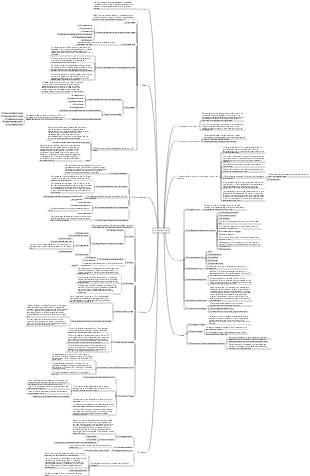
Pulp cavity anatomy
The dental pulp cavity, referred to as the pulp cavity, is located in the middle of the tooth body. Except for the apical foramen (some teeth also have accessory foramen and or lateral foramen), the surrounding walls are surrounded by hard dentin. The pulp cavity is filled with pulp. The shape of the pulp chamber is basically similar to that of the tooth, but its volume is significantly smaller.
1. Names of various parts of the medullary cavity
(1) Marrow chamber
The pulp chamber is the part of the pulp chamber located at the crown and root neck, and its shape is similar to the shape of the crown. There is no obvious boundary between the anterior pulp chamber and the root canal; the posterior pulp chamber is approximately cubic in shape, divided into top, bottom and four walls. It is the wider part of the pulp chamber. There is only one pulp chamber in each tooth.
1. The pulp chamber roof and pulp chamber bottom: The pulp chamber wall corresponding to the 𬌗 surface or incisal ridge is called the pulp chamber roof, and the pulp chamber wall opposite to the pulp chamber roof is called the pulp chamber floor.
2. Pulp chamber wall: The dentin wall of the pulp chamber corresponding to the axial surface of the tooth is called the mesial pulp wall, distal pulp wall, buccal pulp wall and lingual pulp wall respectively. There are also cases where the top and bottom of the pulp chamber are included in the pulp chamber wall, that is, the pulp chamber has six walls in total.
3. Pulp angle: It is the angular part of the pulp chamber extending toward the tooth cusp. Its shape is similar to the tooth cusp and its position is similar to the tooth cusp. The distance between the pulp angle and the 𬌗 surface varies with age. The pulp chambers of deciduous teeth and newly erupted permanent teeth are larger, and the distance from the pulp angle to the 𬌗 surface is closer; in the elderly, the inner diameter of the pulp chamber becomes smaller, the pulp angle becomes lower, and the pulp angle reaches 𬌗. The distance between faces becomes larger.
4. Root canal orifice: Located on the bottom of the pulp chamber, it is the transition point between the pulp chamber and the root canal.
(2) Root canal system
Concept: It is the conduit part of the medullary cavity except the pulp chamber, which can be manifested as: root canal, intercanal anastomosis, root canal side branches, apical bifurcation, apical bifurcation and accessory root canals, etc.
1. Root canal: It is most of the pulp cavity located in the root of the tooth. Each tooth root may have one or more root canals. Usually, a round tooth root has one root canal with a similar shape, but a flatter tooth root is likely to have 1 to 2 root canals or a mixture of 1 or 2 root canals. Occasionally, one root canal can be seen. There are 3 root canals in it.
(1) Single canal type: A single root canal extends from the pulp chamber to the apical foramen, and one apical foramen leads out of the tooth. The single-canal type is the most common type of root canal, which can be found in all the roots of the mouth, but the occurrence rate varies. Among them, the maxillary central incisor, the maxillary canine, the lingual root of the maxillary first molar, and the lingual root and distal buccal root of the maxillary second molar are more common. It is a single tube type.
(2) Double-tube type: The mesiobuccal root of the maxillary first premolar and the mesial root of the mandibular first molar are more common.
(3) Single-double tube type: the maxillary and mandibular first and second premolars, the mesiobuccal roots of the maxillary first and second molars, the mesiodistal roots of the mandibular first molars, and the mesial roots of the mandibular second molars.
(4) Three-tube type: rare in the mesiobuccal root of the maxillary first molar and the mesiodistal root of the mandibular first molar. Since it is extremely rare, it can be regarded as a variant type.
2. Accessory root canal
It refers to all channels in the root canal system except the root canal: including intercanal anastomosis, root canal side branches, apical bifurcation, apical bifurcation and accessory root canals. The lateral accessory canals have a small structure and irregular distribution, which makes it difficult to completely remove infected materials from the root canal system during clinical root canal treatment. In addition, because the lateral accessory canal is often another pathway for pulp-periodontal communication, it has received much attention in the treatment of combined pulp-periodontal lesions.
(1) Intertubular anastomosis: also called intertubular side branches or intertubular communicating branches, they are communicating branches originating from adjacent root canals. They can be divided into 1 to 2 branches, which are horizontal, arc-shaped or even reticular. They are more common in In the double-canal type, there are more intercanal lateral branches in the middle 1/3 of the root than in the apical 1/3, and the fewest are present in the root cervical 1/3.
(2) Root canal lateral branches: Also known as lateral root canals, they are small branches originating from the root canal, often at a nearly vertical angle to the root canal, penetrating the dentin and cementum, and leading to the periodontal ligament space. Since they originate from the root canal, it is more reasonable to call them root canal collaterals. There are more root canal side branches in the apical 1/3 of the root than in the middle 1/3 of the root, and the fewest ones appear in the root cervical 1/3.
(3) Apical bifurcation: It is a small branch of the root canal at the root tip. At this time, the main root canal still exists. Apical divergence is more common in: premolars and molars
(4) Apical bifurcation: The root canal is dispersed into 2 or more small branches at the root tip. At this time, the main root canal no longer exists, and there may be as many as 9 branches at the root tip.
(5) Accessory root canal: It is a tube that originates from the bottom of the pulp chamber to the root bifurcation. It is more common in molars.
Aging changes in the medullary cavity
P51