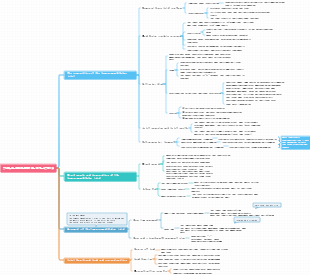
MindMap Gallery Oral Anatomy and Physiology-Temporomandibular Joint
An article about the mind map of the eighth edition of the oral anatomy and physiology human health textbook, with a detailed introduction and comprehensive description. I hope it will be helpful to those who are interested!
Edited at 2023-12-04 10:32:17This is a mind map about bacteria, and its main contents include: overview, morphology, types, structure, reproduction, distribution, application, and expansion. The summary is comprehensive and meticulous, suitable as review materials.
This is a mind map about plant asexual reproduction, and its main contents include: concept, spore reproduction, vegetative reproduction, tissue culture, and buds. The summary is comprehensive and meticulous, suitable as review materials.
This is a mind map about the reproductive development of animals, and its main contents include: insects, frogs, birds, sexual reproduction, and asexual reproduction. The summary is comprehensive and meticulous, suitable as review materials.
This is a mind map about bacteria, and its main contents include: overview, morphology, types, structure, reproduction, distribution, application, and expansion. The summary is comprehensive and meticulous, suitable as review materials.
This is a mind map about plant asexual reproduction, and its main contents include: concept, spore reproduction, vegetative reproduction, tissue culture, and buds. The summary is comprehensive and meticulous, suitable as review materials.
This is a mind map about the reproductive development of animals, and its main contents include: insects, frogs, birds, sexual reproduction, and asexual reproduction. The summary is comprehensive and meticulous, suitable as review materials.
temporomandibular joint
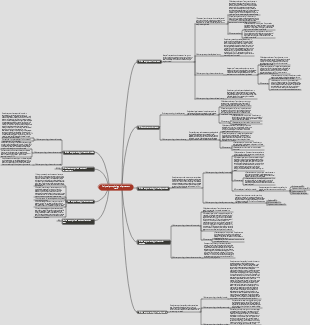
The temporomandibular joint (TMJ), also known as the temporomandibular joint, mandibular joint, jaw joint or craniomandibular joint, is the only movable joint in the maxillofacial region. Main function: to carry the contraction force of masticatory muscles (when biting) and to support mandibular movement.
1. Structure of the temporomandibular joint
(1) Temporal bone articular surface
1. Temporomandibular glenoid fossa: Located on the lower surface of the squamous part of the temporal bone, it is roughly triangular in shape. When the human body is sitting upright, the front edge of the glenoid fossa is lower than the rear edge, and the outer edge is lower than the inner edge.
2. Articular tubercle: dome-shaped, the posterior slope of the articular tubercle and near the top of the articular tubercle are the main functional load areas.
(2) Condylar process
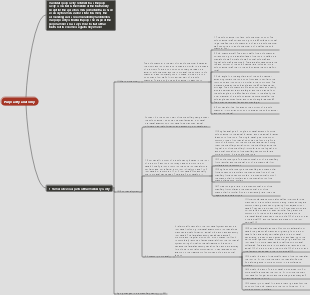
It is fusiform, with shorter front and rear diameters, about 8 to 10 mm, and longer inner and outer diameters, about 15 to 30 mm. The protrusions on the inner and outer sides of the condyle are called the inner and outer poles respectively. The inner pole is more protruding than the outer pole. When the opening moves, the outer pole of the condyle can be palpated in front of the tragus. There is a bony protuberance running inward and outward on the top of the condyle, called the transverse crest. The transverse crest is sometimes not obvious. The transverse crest divides the condylar joint into two parts, the anterior and posterior parts, called the anterior condylar slope and the posterior condylar slope. The anterior slope of the condyle is narrow and elongated and is the main functional surface.
(3) Articular disc
The temporomandibular joint disc has the function of absorbing shock and relieving intra-articular pressure.
1. The shape of the articular disc is slightly oval, and the inner and outer diameters are longer than the anteroposterior diameters. There is a reflection in the front corresponding to the top of the articular tubercle, so its cross section is S-shaped. The lower surface of the articular disc conforms to the shape of the condyle and is concave when viewed from below. In the oblique sagittal direction, the articular disc can be divided into three zones: anterior, middle and posterior according to thickness, with thicknesses of 2mm, 1mm and 3mm respectively. Its main component is collagen fiber and has no blood vessels and nerve distribution. Under normal circumstances, the middle zone of the articular disc is opposite to the anterior slope of the condyle and the posterior slope of the articular tubercle, and is the main functional load area of the articular disk. In addition, there may be a little elastic fiber nerve and blood vessel distribution in the front and back bands. In the oblique coronal direction, the articular disc has a concave C shape, which is thicker on the medial side and thinner on the lateral side.
2. Peripheral attachment relationship of the articular disc and joint cavity: The periphery of the temporomandibular joint disc has an attachment relationship with the bone tissue around the articular surface, dividing the joint cavity into upper and lower cavities that are completely disconnected from top to bottom, and both cavities are potential lacunae. The relationship between the articular disc and surrounding tissues is looser in the sagittal direction, called attachment, and denser in the coronal direction, called ligament.
(1) Articular disc attachment: including the anterior temporal attachment attached to the anterior edge of the anterior slope of the articular tubercle, the anterior attachment of the mandible to the anterior edge of the anterior slope of the condyle and the condyle neck, and the attachment to the posterior edge of the glenoid fossa. and the posterior temporal attachment of the petrosquamous fissure, as well as the posterior mandibular attachment to the condylar neck of the inferior border of the posterior slope of the condyle, and the attachment of the lateral pterygoid tendon between the anterior temporal attachment and the anterior attachment of the mandible. (Hu Ke Examination Point) The nerves in the double plate area are stimulated, which can cause joint pain. At the same time, this area is also a common site for articular disc perforation. (The second most common site: the middle zone)
(2) Intra- and lateral ligaments of the articular disc: referred to as lateral disc ligaments, they closely connect the medial and lateral edges of the articular disc with the medial and lateral edges of the condyle. The articular disc and the condyle are closely connected to form a functional whole, that is, disc- condylar complex.
(3) Joint cavity: disc-temporal joint (sliding joint) disc-condylar joint (hinge joint, hinge position: mandibular recession contact position)
(4) Joint capsule
It is composed of tough fibrous connective tissue and is sleeve-shaped. It is attached superiorly and anteriorly to the anterior edge of the anterior slope of the articular tubercle, superiorly and posteriorly to the anterior aspect of the tympanosquamous fissure and petrosquamous fissure, and medially and laterally attached to the edge of the glenoid fossa. Behind the posterior boundary of the joint capsule, there is often a bony depression. , because there is no obvious boundary between it and the glenoid fossa in imaging examinations such as X-ray and CT, this depression and the glenoid fossa in front of it are collectively called the mandibular fossa. The synovial membrane composed of connective tissue can secrete synovial fluid, which has the functions of nutrition, lubrication, and friction reduction.
(5) Extracapsular ligament
1. Temporomandibular ligament: prevents lateral dislocation
2. Sphenomandibular ligament: suspends the mandible and protects nerves and blood vessels
3. Styloid mandibular ligament: fixes the mandibular angle
(6) Anatomical relationship between the superior head of the lateral pterygoid muscle and the temporomandibular joint
The contraction of the lateral pterygoid muscle is beneficial to stabilizing the articular disc. When the main function of the upper head of the lateral pterygoid muscle is to maintain a stable relationship between the articular disc and the condyle, the upper head of the lateral pterygoid muscle will contract and play a corresponding coordination role.
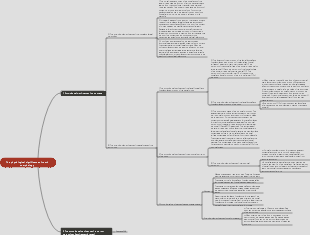
2. Blood supply and innervation of temporomandibular joint
The blood supply mainly comes from: the articular branches of the superficial temporal artery and the maxillary artery, and well-known arteries within about 2cm of the adjacent joints all have branches distributed in the temporomandibular joint.
There are three main distributions of the facial nerve in the temporomandibular joint, namely the auriculotemporal nerve, the deep temporal nerve, and the masseteric nerve.
Receptors for the presence of joint capsules and their ligaments
Type 1: Ruffini corpuscles, low-threshold slow-adaptive force receptors, function: to sense changes in condyle position
Type 2: Pacini corpuscles, low-threshold fast-adaptive force receptors, role: sensing joint movement
Type III: Golgi tendon organ, high-threshold force receptor, function: to sense the stretch stimulation of the joint capsule and its joint ligaments
Type 4: free nerve endings, pain receptors, function: to sense painful stimuli
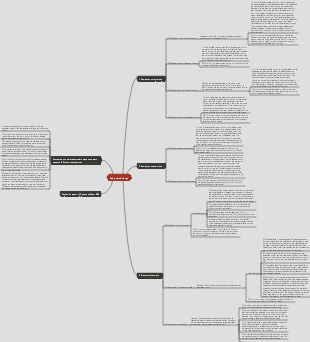
3. Movements of the temporomandibular joint
1. Simple rotation: also called hinge movement, this movement continues until the mouth opening of the incisors reaches about 18~25mm. It mainly occurs in the subarticular cavity.
2. Simple sliding: mainly occurs in the upper joint space
3. Sliding and rotation: can appear in asymmetric motion
4. Functional load and reconstruction of temporomandibular joint Development and age-related changes of temporomandibular joint
See P105