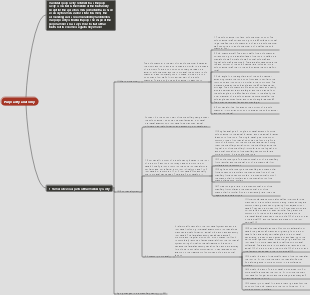
MindMap Gallery Oral Anatomy and Physiology-Bone
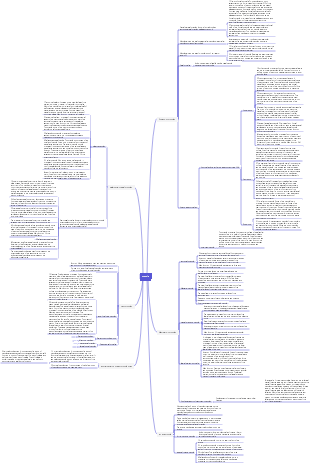
Chapter 4 of the Mind Map of the 8th Edition of the Oral Anatomy and Physiology Human Health Textbook has a detailed introduction and comprehensive description. I hope it will be helpful to interested friends!
Edited at 2023-12-04 10:31:33This is a mind map about bacteria, and its main contents include: overview, morphology, types, structure, reproduction, distribution, application, and expansion. The summary is comprehensive and meticulous, suitable as review materials.

This is a mind map about plant asexual reproduction, and its main contents include: concept, spore reproduction, vegetative reproduction, tissue culture, and buds. The summary is comprehensive and meticulous, suitable as review materials.
This is a mind map about the reproductive development of animals, and its main contents include: insects, frogs, birds, sexual reproduction, and asexual reproduction. The summary is comprehensive and meticulous, suitable as review materials.
This is a mind map about bacteria, and its main contents include: overview, morphology, types, structure, reproduction, distribution, application, and expansion. The summary is comprehensive and meticulous, suitable as review materials.
This is a mind map about plant asexual reproduction, and its main contents include: concept, spore reproduction, vegetative reproduction, tissue culture, and buds. The summary is comprehensive and meticulous, suitable as review materials.
This is a mind map about the reproductive development of animals, and its main contents include: insects, frogs, birds, sexual reproduction, and asexual reproduction. The summary is comprehensive and meticulous, suitable as review materials.
bone
bone
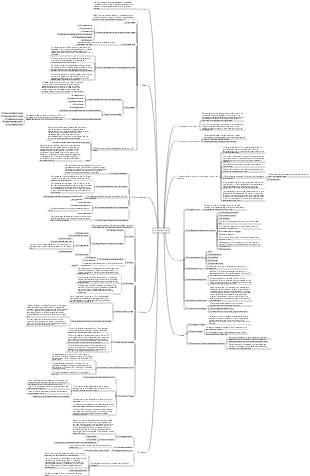
The oral and maxillofacial region is composed of 14 bones with different shapes.
Pairs: maxilla, nasal bones, lacrimal bones, zygomatic bones, palatine bones, inferior turbinates
Unpaired: mandible vomer
1. Maxilla (one body with four processes and four sides)
(1) Appearance characteristics
1. Maxillary body: slightly tapered and divided into four sides: front, back, upper and inner
(1) Front: Also known as the face, there is an oval-shaped infraorbital foramen about 0.5cm below the midpoint of the infraorbital rim, through which nerves and blood vessels pass. The orientation of the infraorbital foramen is: antero-inferior and medial, and the direction leading into the infraorbital canal is posterior-superior and lateral. The infraorbital foramen is an effective needle insertion site for infraorbital nerve block anesthesia. The levator anguli oris muscle originates from the canine fossa, which is located above the apices of the premolars. In front of the canine fossa and above the maxillary incisors is a shallow incisal fossa.
(2) Posterior: below the temporal surface, toward the posterior and outward sides. There is a zygomatic-alveolar ridge at the lateral transition between the posterior and anterior surfaces of the maxillary body, which can be touched on the face or oral vestibule. It is an important symbol for performing upper retroalveolar nerve block anesthesia. There is a relatively rough rounded bulge in the lower part of the back, called the maxillary tubercle, which is the starting point of the superficial head of the medial pterygoid muscle.
(3) Above: Also called the orbital surface, it is triangular in shape and constitutes most of the infraorbital wall. The infraorbital canal is about 1.5cm long. When performing infraorbital canal anesthesia, the needle should not be inserted too deep to avoid the needle tip passing through the infraorbital groove and damaging the eyeball.
(4) Inner surface: Also called the nasal surface, it forms the lateral wall of the nasal cavity. The pterygopalatine canal is about 3.1cm long, and the descending palatine artery and palatine nerve pass through it. Clinically, maxillary nerve block anesthesia can be performed through the pterygopalatine canal.
2. Four bursts
(1) Frontal process: located above the body of the maxilla.
(2) Zygomatic process: A cone-shaped protrusion formed by the front and back surfaces of the maxillary body. It connects to the zygomatic bone outwards and downwards to the first molar to form the zygomatic alveolar ridge.
(3) Palatine process: It is a horizontal bone plate. Anesthetic drugs can be injected into the incisor foramen or incisor canal when anesthetizing the nasopalatine nerve. The posterior edge of the palatine process is serrated and connected to the horizontal part of the palatine bone.
(4) Alveolar process: It is arch-shaped. The buccal and labial bone plate of the alveolar process is thin and has many small holes leading to the cancellous bone. Therefore, local infiltration anesthesia can be used clinically for treatment or surgery on maxillary teeth, gums, and alveolar bones. The maxillary alveolar process and the horizontal part of the palatine bone together form the greater palatine foramen, through which the anterior palatine nerve passes. Greater palatine foramen: The surface mark is located at the intersection of the middle and outer 1/3 of the line connecting the gingival margin of the maxillary third molar to the midpalatal suture, about 0.5cm from the posterior edge of the hard palate. (bone mark)
(2) Structural characteristics
1. Alveolar process: clinical significance: basis for orthodontic treatment, reconstruction after tooth loss.
(1) Alveolar socket: The alveolar socket of the maxillary canine is the deepest, and the maxillary first molar has the largest alveolar socket. The wall around the alveolar socket is called the proper alveolar bone and is surrounded by the periodontal ligament. There are many small holes in the inherent alveolar bone, called cribriform plates or cribriform plates. Because it is dense, a white linear image appears on X-ray surrounding the periodontal ligament, so it is called a hard bone plate.
(2) Alveolar ridge: the free edge of the alveolar fossa
(3) Alveolar interval: the alveolar process between two teeth.
(4) Root interval: the alveolar process between the roots of multi-rooted teeth.
2. Maxillary sinus: It is cone-shaped. The root apex of the maxillary first molar is closest to the lower wall of the maxillary sinus, followed by the maxillary second molar, followed by the second premolar and third molar. (passed many times)
3. Pillar and bracket structure
(1) Canine pillar: nasofrontal pillar. It mainly bears the masticatory pressure in the canine area, originates from the alveolar process in the maxillary canine area, and goes up along the outer edge of the piriform foramen and the inner edge of the orbit through the frontal process to the frontal bone.
(2) Zygomatic process pillar: It mainly bears the chewing pressure of the first molar area. It originates from the alveolar process of the maxillary first molar area. It goes up along the zygomatic alveolar ridge to the zygomatic bone and then divides into two branches. One branch runs along the frontal process of the zygomatic bone. It passes through the outer edge of the orbit and reaches the frontal bone at the lateral end of the superior orbital edge. The other branch passes backward and outward through the zygomatic arch to the base of the skull.
(3) Pterygoid pillar: Also called pterygomaxillary pillar, it mainly bears the chewing pressure in the molar area and is formed by connecting the pterygoid process of the sphenoid bone and the rear end of the alveolar process of the maxilla.
(3) Clinical anatomical characteristics
1. Weak parts (23 years real questions)
(1) Le Fort I type maxillary fracture line: from the lower part of the piriform foramen parallel to the base of the alveolar process through the maxillary tubercle to the pterygoid process of the sphenoid bone.
(2) Maxillary Le Fort II fracture line: from the nasal bone, lacrimal bone, and below the zygomatic bone to the pterygoid process of the sphenoid bone
(3) Maxillary Le Fort III fracture line: passes through the nasal bone, lacrimal bone, orbital floor, and above the zygomatic bone to the pterygoid process of the sphenoid bone. (cerebrospinal fluid fistula)
2. Clinical Applied Anatomy (Jaw Bone Quality Classification) (23 years of real questions)
According to the content ratio of compact bone to cancellous bone and the density of cancellous bone, it can be divided into four categories:
I─Consists almost entirely of homogeneous dense bone.
II─Thick layers of dense bone surrounding trabecular bone and densely arranged cancellous bone
III─Thin layers of dense bone surrounding trabecular bone and densely arranged cancellous bone
IV─A thin layer of dense bone surrounds the loosely arranged trabeculae of cancellous bone.
3. Age-related changes in the maxillary bone
See P90
(4) Blood supply, lymphatic drainage and innervation
The blood supply of the maxilla is extremely rich, including the superior alveolar artery, the posterior superior alveolar artery, the infraorbital artery, the descending palatine artery, etc., which are distributed in the buccal, labial, palatal, mucoperiosteum and other soft tissues.
Clinical significance: 1. Anatomical basis of orthognathic surgery 2. Strong anti-infection ability 3. Rapid fracture healing 4. More bleeding after trauma
2. Mandible
The mandible is the only movable bone among the maxillofacial bones and is located in the lower 1/3 of the face.
1. Mandibular body: It is an arcuate surface with two inner and outer surfaces: alveolar process and lower edge of the mandibular body.
(1) Externally: bony landmarks: median symphysis, mental tubercle, external oblique line (depressor labialis inferioris, depressor angius oris muscle, below the external oblique line: platysma), above the external oblique line: 5 or between 4 and 5 Below and slightly above the upper and lower edges of the mandibular body, there is the mental foramen (mental nerve). The direction of the mental foramen in adults is: posterior, superior, and lateral.
(2) Inner surface: two pairs of protrusions, the superior and inferior mental spines. The superior mental spine is the origin of the genioglossus muscle, and the inferior mental spine is the origin of the hyoid muscle. The internal oblique line or mylohyoid line is the origin of the mylohyoid muscle. The posterior end of the medial oblique line is attached to the pterygomandibular ligament. The digastric fossa is the origin of the anterior belly of the digastric muscle. (4 starting points)
(3) Alveolar process: The mandibular alveolar process is similar to the maxillary alveolar process, but the mandibular alveolar fossa is smaller than the corresponding maxillary alveolar fossa. Outside the tooth area, there are few small holes leading to the cancellous bone. When extracting mandibular teeth or performing alveolar surgery, block anesthesia is generally used except for infiltration anesthesia in the incisor area.
(4) Lower edge of mandibular body: also called lower edge of mandible. The shape is round and blunt, and it is the densest part of the mandibular bone. The lower edge of the mandibular body is often used as a landmark for the location of surgical incision in the submandibular region and as the upper limit of the neck.
2. Mandibular ramus
One on each side, almost vertical rectangular bone plates
(1) Inner surface: There is a mandibular hole slightly behind the center, which is funnel-shaped and the opening faces backward and upward. In front of the foramen is the mandibular uvula, which is the attachment point of the sphenomandibular ligament.
(2) Externally: The position of this protrusion is approximately equivalent to the front and back of the medial mandibular foramen and near the upper edge of the upper edge of the mandibular foramen. When performing mandibular ramus surgery (such as orthognathic surgery), the lateral protuberance of the mandibular ramus can be used as a landmark to protect the inferior alveolar nerve and blood vessels on the inside of the mandibular ramus.
(3) Four edges: upper edge, lower edge, trailing edge, front edge
(4) Coracoid process: Also called muscle process, it is flat and triangular in shape. There are temporalis muscle and masseter muscle inside and outside. When the zygomatic bone is fractured, it can compress the coracoid process and affect mandibular movement.
(5) Condylar process: one of the main growth centers of the mandible. If this area is damaged or destroyed before development is completed, it will affect the growth and development of the mandible and lead to maxillofacial deformity.
3. Mandibular canal
The mandibular canal is relatively close to the apex of the mandibular molars, especially the apex of the mandibular third molar. When extracting teeth or root removal, care should be taken to avoid damaging the inferior alveolar nerve in the mandibular canal.
Dental force track and muscle force track
4. Weak area
(1) Genzhong United
(2) Mental foramen area
(3) Mandibular angle
(4) Condylar neck
5. Age-related changes in the mandible
downward and forward growth, anterior and external resorption, widening of the dental arch
5. Blood supply, lymphatic drainage and innervation
Inferior alveolar artery, periosseous soft tissue artery, medial pterygoid artery, lateral pterygoid artery, temporomandibular joint capsular artery, temporalis muscle artery, masseteric artery, sublingual artery. Mandibular lymphatic drainage to the submandibular and deep cervical lymph nodes.
3. Nasal bones
Features: It looks like an irregular rectangle and is located in the center of the face.
The lower part of the nasal bone is thin and protrudes forward, so it is easy to be damaged and fractured. The fracture is often located in the lower 1/3 of the nasal bone (Chang Kao). In adults, the nasal bones on both sides are closely connected, and fractures often occur on both sides at the same time; in children, there is an obvious gap between the nasal bones on both sides, and the fracture can be limited to one side.
4. Zygomatic bone (one body with three protrusions)
Features: Approximately diamond-shaped in shape, one on the left and one on the left. Located on the upper outer part of the face, it is the main support between the maxilla and the brain. Supports facial appearance
Three processes: frontal process, maxillary process, zygomatic process
5. Palatal bone
Features: Paired L-shaped bone plates on the left and right.
6. Sphenoid bone
Features: Located in the middle of the skull base, embedded between the frontal bone and occipital bone. A pair of big wings A pair of small wings
1. Body of sphenoid bone
2. Winglet: Paired triangular bone plates
3. Big wing:
①Brain surface
② Temporal surface
③Inferotemporal
④Orbital surface
4. Pterygoid process
The fossa between the inner and outer plates is called the pterygoid fossa, which is the origin of the internal pterygoid muscle. Outer pterygoid plate: bony landmark for maxillary and mandibular nerve block anesthesia positioning.
7. Temporal bone
Features: Temporal squamation, mastoid process, petrous part, tympanic plate
1. Temporal squama: divided into inner and outer sides
(1) Outer surface: Also called temporal surface, it is smooth and slightly convex and is the main part of the temporal fossa. The depression between the anterior end of the ridge and the superior posterior quadrant of the external auditory canal is the supracanal triangle. The upper edge of the zygomatic arch is thin and attached to the deep temporal fascia; the lower edge is short arch-shaped and is the origin of the masseter muscle.
(2) Inner surface: Also known as the cerebral surface, it is adjacent to the temporal lobe of the brain and has the middle meningeal artery groove. The inner surface is bounded inferiorly by the petrosquamous fissure, which is separated from the petrous part of the temporal bone.
2. Mastoid part
There is a curved sigmoid sinus groove
3. Iwabe
Cone-shaped with trigeminal nerve
4. Drum part
Curved bone plate There is a stylomastoid foramen between the styloid process and the mastoid process, which is the lower opening of the facial nerve canal, through which the facial nerve exits the skull.
8. Hyoid bone
It is U-shaped and located above the thyroid cartilage and behind and below the mandible. It is an important bony landmark in the neck. Clinically, the greater angle of the hyoid bone is an important anatomical landmark for pharyngeal surgery and for finding or ligating the lingual artery.