 Wondershare EdrawMind
MindMap Gallery Medicine-Vascular
- 88
Medicine-Vascular
Mind map of the eighth edition of the Anatomy and Physiology Human Health Textbook. The arteries and veins in the face and neck are criss-crossed and have very rich blood supply. The arteries originate from the common carotid artery and the subclavian artery. The common carotid artery branches into the internal carotid artery in the neck. and external carotid artery.
Edited at 2023-12-04 10:34:43
- bacteria
This is a mind map about bacteria, and its main contents include: overview, morphology, types, structure, reproduction, distribution, application, and expansion. The summary is comprehensive and meticulous, suitable as review materials.
- Plant asexual reproduction
This is a mind map about plant asexual reproduction, and its main contents include: concept, spore reproduction, vegetative reproduction, tissue culture, and buds. The summary is comprehensive and meticulous, suitable as review materials.
- Reproductive development of animals
This is a mind map about the reproductive development of animals, and its main contents include: insects, frogs, birds, sexual reproduction, and asexual reproduction. The summary is comprehensive and meticulous, suitable as review materials.
Medicine-Vascular
- bacteria
This is a mind map about bacteria, and its main contents include: overview, morphology, types, structure, reproduction, distribution, application, and expansion. The summary is comprehensive and meticulous, suitable as review materials.
- Plant asexual reproduction
This is a mind map about plant asexual reproduction, and its main contents include: concept, spore reproduction, vegetative reproduction, tissue culture, and buds. The summary is comprehensive and meticulous, suitable as review materials.
- Reproductive development of animals
This is a mind map about the reproductive development of animals, and its main contents include: insects, frogs, birds, sexual reproduction, and asexual reproduction. The summary is comprehensive and meticulous, suitable as review materials.
- Recommended to you
- Outline
The membranes, blood vessels, and cerebrospinal fluid circulation of the brain and spinal cord
- 44
Blood vessel
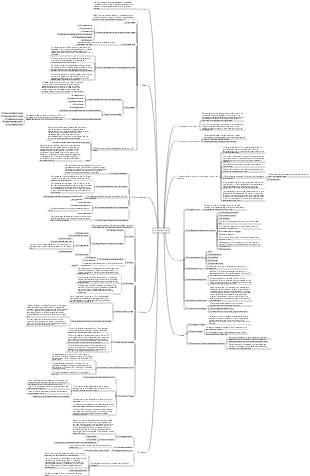
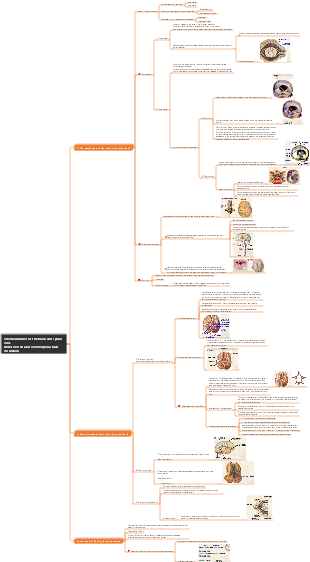
The arteries and veins of the face and neck are criss-crossed and have very rich blood supply. The arteries originate from the common carotid artery and the subclavian artery. The common carotid artery branches into the internal carotid artery and the external carotid artery in the neck.
artery
(1) Common carotid artery (carotid sinus, carotid body)
The left common carotid artery is longer (from the aortic arch)
The right common carotid artery is shorter (from the brachiocephalic trunk)
Common carotid artery - level of the upper edge of thyroid cartilage - internal carotid artery (no branches before entering the skull) - external carotid artery (several branches)
Clinically, it is often used as a site for feeling the pulse and temporarily applying pressure to stop bleeding. Whether there are branches is an important sign to distinguish the internal carotid artery from the external carotid artery during neck surgery.
1. Carotid sinus: The enlarged portion at the beginning of the internal carotid artery or the bifurcation of the common carotid artery. The sinus wall contains special baroreceptors, which can reflexively cause the heart rate to slow down when the arterial pressure rises or is stimulated by other pressures. , peripheral blood vessels dilate and lower blood pressure. Clinically, when performing surgery near the bifurcation of the common carotid artery, lidocaine is commonly used for local sealing to avoid carotid sinus syndrome due to compression of the common carotid artery or inadvertent involvement of the carotid sinus, resulting in slowed heart rate and lowered blood pressure. .
2. Carotid body: Brown oval flat body. The carotid body contains a rich capillary network and sensory nerve endings, which are chemoreceptors. You can feel the carbon dioxide content in the blood. When the carbon dioxide concentration increases, it can reflexively speed up and deepen the breathing movement.
(2) External carotid artery
1. Superior thyroid artery: slightly below the greater angle of the hyoid bone, it emits the sternocleidomastoid muscle branch, the infrahyoid muscle branch, and the cricothyroid muscle on the way to serve the infrahyoid muscle group and its nearby skin. It is the subhyoid muscle skin used clinically. The source of blood supply to the valve. Clinically, regional chemotherapy with retrograde cannulation of the external carotid artery can be performed at the origin of the superior thyroid artery; external carotid artery ligation is performed between this artery and the lingual artery. Therefore, the origin of the superior thyroid artery is a commonly used anatomical landmark.
2. Ascending pharyngeal artery: It branches from the medial wall of the origin of the carotid artery, goes up along the lateral wall of the pharynx to the base of the skull, and branches to the pharynx, soft palate, palatine tonsils and deep cervical muscles.
3. Lingual artery: The tip of the greater corner of the hyoid bone is a landmark for finding the origin of the lingual artery or the external carotid artery. The lingual artery is divided into three segments:
(1) From the origin of the lingual artery to the posterior edge of the hyoglossus muscle. The outer diameter of this section of the lingual artery is about 2.1mm, and its location is superficial and easy to be exposed. It is often used as the recipient artery for vascular anastomosis during free flap surgery in clinical practice; or it can be used for ligation of the lingual artery to control bleeding during tongue surgery or injury.
(2) It is a section of the lingual artery deep to the hyoglossus muscle.
(3) The lingual artery divides into two terminal branches, the hypoglossal artery and the deep lingual artery, at the anterior edge of the hyoglossus muscle. After its origin, the sublingual artery travels forward between the genioglossus muscle and mylohyoid muscle to the sublingual gland, where it supplies the sublingual gland, oral floor mucosa, and tongue muscles. The deep cervical artery is a direct continuation of the lingual artery. (2018 Hu Ke Real Exam Questions) Clinically, the origin of the lingual artery is used as a landmark for ligation of the external carotid artery, and can be used for intubation of the lingual artery to infuse chemical drugs to treat malignant tumors of the tongue.
4. Facial artery: slightly above the greater angle of the hyoid bone, at the lower edge of the posterior belly of the digastric muscle. Its branches are:
(1) Ascending palatine artery: It originates from the beginning of the facial artery, goes up between the superior pharyngeal constrictor muscle and medial pterygoid muscle to the base of the skull, and is distributed in the soft palate and palatine tonsils.
(2) Glandular branches: 3 to 4 branches are issued from the submandibular gland sheath and are distributed in the submandibular gland and its nearby muscles, lymph nodes and skin.
(3) Submental artery: The blood supply of the platysma myocutaneous flap in the suprahyoid area of clinical application mainly comes from the submental artery. There are reports in the literature that the island-shaped myocutaneous flap with the submental artery as the pedicle can repair the lips, cheeks and mouth. Good results have been obtained for base defects.
(4) Inferior labial artery: penetrates the orbicularis oris muscle, runs along the submucosa of the lower lip to the midline, and anastomoses with the artery of the same name on the opposite side. In addition, it anastomoses with the mental artery branched from the inferior alveolar artery. The inferior labial artery supplies the mucosa, glands, and muscles of the lower lip.
(5) Superior labial artery: It is slightly thicker than the lower labial artery and has a more obvious curve. It emerges near the corner of the mouth and then enters the upper lip. It passes between the orbicularis oris muscle and the labial mucosa and travels forward to the midline. It anastomoses with the artery of the same name on the opposite side and supplies the upper lip. organize. In clinical cleft lip repair surgery or severe lip trauma bleeding, lip clamps or thumb and index fingers can be used to clamp the lips to temporarily stop bleeding.
(6) Medial canthal artery: Also known as the angular artery, it is the terminal segment of the facial artery. It ascends through the outside of the nose and branches to supply the dorsum of the nose and the alar of the nose. The terminal end of the artery goes to the medial canthus of the eye and anastomoses with the branches of the ophthalmic artery.
The facial artery is often used clinically as the recipient supply artery for anastomosis of various free tissue flaps.
5. Occipital artery: It originates from the posterior outer wall of the external carotid artery at the same height as the facial artery. Clinically, when making the sternocleidomastoid myocutaneous flap with the muscle pedicle located above, attention should be paid to the relationship between the course of the above-mentioned arteries and the anastomotic branches to avoid damage to the occipital artery and its branches to ensure the blood supply of the myocutaneous flap.
6. Posterior auricular artery: In the posterior mandibular fossa, between the posterior belly of the digastric muscle and the upper edge of the stylohyoid muscle, it originates from the posterior wall of the external carotid artery, runs backward and upward along the upper edge of the stylohyoid muscle in the deep surface of the parotid gland. It passes through the superficial surface of the main trunk of the facial nerve to between the cartilage and mastoid of the external auditory canal, and is distributed to the muscles and skin at the back of the auricle. The posterior auricular artery anastomoses with both the occipital artery and the superficial temporal artery. Postauricular axial flap is often designed clinically with this artery as the pedicle.
7. Maxillary artery: also called internal maxillary artery
(1) The first segment: also called the mandibular segment, from the origin to the lower edge of the lateral pterygoid muscle, running transversely on the deep surface of the condylar neck and superficial surface of the auriculotemporal nerve. When performing clinical condylectomy or temporomandibular joint arthroplasty, care should be taken to protect this segment of the artery. This segment of the artery crosses the inferior alveolar nerve on its deep surface and continues with the second segment along the lower edge of the lateral pterygoid muscle. The main branches of the mandibular segment are:
①Middle meningeal artery: After originating, it ascends between the sphenomandibular ligament and the lateral pterygoid muscle, passes between the two roots of the auriculotemporal nerve, enters the middle cranial fossa through the puncture hole, and travels in the dura mater to divide into anterior and posterior branches to supply the dura mater. .
②Inferior alveolar artery: It originates from the lower wall of the maxillary artery near the lower edge of the lateral pterygoid muscle, close to the medial surface of the mandibular branch, passes behind the inferior alveolar nerve, penetrates the mandibular foramen, enters the mandibular canal, and branches within the canal to supply the mandible. Premolar alveolar process periodontal ligament and gingiva. Before the inferior alveolar artery enters the mandibular foramen, it divides into the mylohyoid muscle artery, which mainly supplies this muscle. During orthognathic surgery on the mandibular ramus, injury to the inferior alveolar artery should be avoided.
(2) The second segment: also known as the pterygoid muscle segment, is the longest segment. It usually passes through the superficial surface of the lower head of the lateral pterygoid muscle (sometimes on the deep surface of the muscle), runs obliquely forward and upward, runs on the deep surface of the temporalis muscle, and passes through Between the two heads of the lateral pterygoid muscle to the pterygomaxillary fissure. The branches of this segment mainly supply structures such as the masticatory muscles, buccinator muscles, and temporomandibular joint capsule. Its branches anastomose with those of the facial artery, superficial temporal artery, and ophthalmic artery.
(3) The third segment: the pterygopalatine segment, which is the terminal segment of the maxillary artery and enters the pterygopalatine fossa through the pterygomaxillary cleft. The branches of the pterygopalatine segment are:
①Posterior maxillary alveolar artery: It originates from where the maxillary artery is about to enter the pterygopalatine fossa, descends along the back of the maxillary body, branches through the alveolar foramen, and enters the alveolar canal on the posterior wall of the maxillary sinus.
② Infraorbital artery: It originates from the maxillary artery and near the origin of the posterior alveolar artery, or it emerges from the same trunk as the posterior superior alveolar artery.
③Descending palatine artery: arises in the pterygopalatine fossa. Injury to the descending palatine artery during maxillary Le Fort I osteotomy can cause severe bleeding.
④Sphenopalatine artery: It is the terminal branch of the maxillary artery, passes through the sphenopalatine foramen to the nasal cavity, and branches to supply the lateral wall of the nasal cavity, nasal septum, paranasal sinuses and the front of the hard palate.
The average height of the pterygomaxillary junction is 14.6 mm, and the average distance from the maxillary artery to the lowermost edge of the pterygomaxillary junction is 25 mm. Therefore, the pterygopalatine segment of the maxillary artery is still 10 mm away from the upper end of the pterygomaxillary junction.
8. Superficial temporal artery
(1) Transverse facial artery
(2) Additional expenses
(3) Top branch
The distance from the upper edge of the root of the zygomatic process of the temporal bone to the center point of each branch of the external carotid artery and the bifurcation of the common carotid artery, the measurement results are as follows
① About 3.5cm to the center point of the maxillary artery orifice
②Approximately 7.5cm to the center point of the facial artery orifice
③Approximately 8.6cm to the center point of the lingual artery orifice
④Approximately 9.4cm from the center point of the superior thyroid artery orifice
(3) Internal carotid artery
The internal carotid artery nourishes the brain, orbital structures and the main frontonasal arteries. It originates from the common carotid artery in the carotid triangle, goes up along the pharyngeal side wall to the base of the skull, and penetrates the carotid canal in the petrous part of the temporal bone to enter the cranial cavity.
1. Internal carotid artery neck
2. Internal carotid artery intracranial
(4) Subclavian artery
1. Vertebral artery: usually passes through the transverse process foramen of the sixth to first cervical vertebrae, enters the cranial cavity through the foramen magnum, and merges into a basilar artery, which branches to supply the brain and spinal cord. Its end is divided into the left and right posterior cerebral arteries and participates in the cerebral arterial ring. composition.
2.Thyrocervical trunk
(1) Inferior thyroid artery: It starts and goes upward across the back of the carotid sheath to the lower end of the lateral lobe of the thyroid gland, with branches serving the thyroid, pharynx, larynx, esophagus, trachea, etc. Within the gland it anastomoses with the branches of the superior thyroid artery.
(2) Transverse cervical artery: Most originate from the thyroid cervical trunk, and the trapezius muscle flap often uses the transverse cervical artery as its blood supply pedicle.
3. Costocervical trunk: It originates from the second segment of the subclavian artery, and its branched deep cervical artery branches to the deep part of the neck and anastomoses with the branch of the occipital artery.
(5) Arterial anastomosis of the head and neck
Features: 1. Extensive arterial anastomoses in the head and neck provide sufficient blood supply, which is conducive to wound healing and the success of plastic surgery. 2. When performing a large-scale operation, in order to prevent excessive bleeding, although the relevant main artery is ligated, the arterial anastomosis can still be performed without affecting the local blood supply. 3. However, due to the abundant arterial anastomoses, it is also a disadvantageous factor for excessive bleeding during oral, maxillofacial and neck injuries or surgery. At the same time, in the case of massive bleeding in the oral, maxillofacial and neck areas, even if the main blood supply artery on the injured side is compressed or ligated, sometimes the bleeding cannot be completely stopped.
main anastomotic branch
1. Anastomosis between branches of external carotid artery
2. Anastomosis between internal and external carotid arteries
3. Anastomosis between the internal and external carotid arteries and the subclavian artery
Veins (distributed in a network)
(1) Oral and maxillofacial superficial veins (facial vein, superficial temporal vein)
1. Facial vein: It starts from the medial canthal vein and ends at the submandibular triangle, then passes through the submandibular gland, the posterior belly of the digastric muscle and the superficial surface of the stylohyoid muscle, at the posterior and inferior aspects of the mandibular angle and the mandibular surface from the posterior and superior aspects. The anterior branch of the posterior vein merges into the common facial vein, which empties into the internal jugular vein near the greater angle of the hyoid bone. The triangle formed by the root of the nose and the corners of the mouth on both sides is called the facial dangerous triangle.
2. Superficial temporal vein: A venous network that starts in the scalp and is formed by the confluence of the frontal and parietal branches above the zygomatic arch. It penetrates the parotid gland superficially at the root of the zygomatic arch. Clinically, when forming a forehead flap, care should be taken to avoid damaging the superficial temporal vein and its communicating vein branches, so as to avoid obstruction of the venous blood returning from the flap and causing necrosis.
(2) Oral and maxillofacial deep veins
Mainly include: pterygoid venous plexus, maxillary venous plexus, retromandibular vein and common facial vein, which are deeply located.
1. Pterygoid venous plexus: located in the infratemporal fossa, equivalent to the posterior and superior part of the maxillary tubercle, distributed between the temporalis muscle and the medial and lateral pterygoid muscles. This venous plexus converges backward to form the maxillary vein. When performing maxillary retroalveolar nerve block anesthesia, the direction, angle, and depth of the injection needle should be correctly controlled to avoid puncturing the pterygoid venous plexus and causing hematoma. Anteriorly: Deep Facial Vein Posteriorly and Laterally: Maxillary Vein Upward: Through the rupture of the foramen ovale network leading to the connection of the blood vessels to the intracranial cavernous sinus along the vein.
2. Maxillary vein: It starts from the posterior end of the pterygoid plexus and joins the retromandibular vein near the posterior edge of the mandibular ramus.
3. Retromandibular vein: After the retromandibular vein leaves the lower end of the parotid gland, the marginal mandibular branch of the facial nerve crosses its superficial surface. Therefore, the retromandibular vein can be used to find the marginal mandibular branch and then trace the facial nerve trunk.
4. Common facial vein: It is a thick venous trunk at one end, located within the carotid triangle, behind and below the angle of the mandible.
(3) Superficial veins of the neck
1. External jugular vein: It is a large superficial vein in the neck. Its location is superficial. Most of it is located in the superficial fascia and on the surface of the sternocleidomastoid muscle. This vein is composed of two front and rear branches. The front branch is the retromandibular vein. The posterior branch is synthesized by the occipital vein and the postauricular vein. The anterior and posterior branches meet near the angle of the mandible, travel downward and posteriorly along the surface of the sternocleidomastoid muscle, to the posterior edge of the muscle, about 2.5cm above the midpoint of the clavicle, pass through the superficial to deep layers of the deep cervical fascia, and merge into The subclavian vein occasionally merges into the internal jugular vein. The external jugular vein collects venous blood from the skin and muscles of the occiput and lateral neck.
2. Anterior jugular vein: A superficial vein that originates from the submental part, descends along both sides of the anterior midline of the neck, turns outward at a right angle near the lower part of the neck, and empties into the terminal part of the external jugular vein, and occasionally into the subclavian vein or brachiocephalic vein. Clinically, the external jugular and anterior jugular veins are often used as anastomotic veins for free tissue flaps to repair oral and maxillofacial defects.
(4) Deep veins of the neck
1. Internal jugular vein: a thick venous trunk in the head and neck, which is the main vein for the return of blood vessels in the head, face and neck. It starts from the dorsal side of the internal carotid artery, adjacent to the lateral wall of the pharynx, then descends along the lateral side of the common carotid artery, and is wrapped in the cervical sheath together with the vagus nerve. The veins merge to form the brachiocephalic vein. The lower end of the internal jugular vein also expands to form the subjugular bulb. There is a pair of valves above and sometimes below the expanded cavity. These valves prevent blood from flowing backward.
2. Subclavian vein: Located at the base of the neck, it is the continuation of the axillary vein. It starts from the lateral edge of the first rib, behind the sternoclavicular joint and the medial edge of the anterior scalene muscle, and merges with the internal jugular vein to form the brachiocephalic vein.
(5) Communication between intracranial and intracranial veins
1.Conduit vessel
2. Barrier vein
3. Venous network around cranial nerves and blood vessels
4.Ocular vein