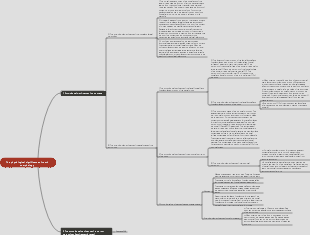
MindMap Gallery oral anatomy
Oral Anatomy and Physiology Human Health Textbook 8th Edition Chapter 5 Oral and Maxillofacial Regional Anatomy Mind Map, with detailed introduction and comprehensive description, I hope it can be helpful to interested friends.
Edited at 2023-12-07 09:40:53This infographic, created using EdrawMax, outlines the pivotal moments in African American history from 1619 to the present. It highlights significant events such as emancipation, key civil rights legislation, and notable achievements that have shaped the social and political landscape. The timeline serves as a visual representation of the struggle for equality and justice, emphasizing the resilience and contributions of African Americans throughout history.

This infographic, designed with EdrawMax, presents a detailed timeline of the evolution of voting rights and citizenship in the U.S. from 1870 to the present. It highlights key legislative milestones, court decisions, and societal changes that have expanded or challenged voting access. The timeline underscores the ongoing struggle for equality and the continuous efforts to secure voting rights for all citizens, reflecting the dynamic nature of democracy in America.
This infographic, created using EdrawMax, highlights the rich cultural heritage and outstanding contributions of African Americans. It covers key areas such as STEM innovations, literature and thought, global influence of music and arts, and historical preservation. The document showcases influential figures and institutions that have played pivotal roles in shaping science, medicine, literature, and public memory, underscoring the integral role of African American contributions to society.
This infographic, created using EdrawMax, outlines the pivotal moments in African American history from 1619 to the present. It highlights significant events such as emancipation, key civil rights legislation, and notable achievements that have shaped the social and political landscape. The timeline serves as a visual representation of the struggle for equality and justice, emphasizing the resilience and contributions of African Americans throughout history.
This infographic, designed with EdrawMax, presents a detailed timeline of the evolution of voting rights and citizenship in the U.S. from 1870 to the present. It highlights key legislative milestones, court decisions, and societal changes that have expanded or challenged voting access. The timeline underscores the ongoing struggle for equality and the continuous efforts to secure voting rights for all citizens, reflecting the dynamic nature of democracy in America.
This infographic, created using EdrawMax, highlights the rich cultural heritage and outstanding contributions of African Americans. It covers key areas such as STEM innovations, literature and thought, global influence of music and arts, and historical preservation. The document showcases influential figures and institutions that have played pivotal roles in shaping science, medicine, literature, and public memory, underscoring the integral role of African American contributions to society.
oral anatomy
1. The realm of oral cavity
The boundaries of the oral cavity: the front wall is the lip; the posterior wall is the pharyngeal door (composed of the velum palatine, palatoglossal arch and tongue base); the two side walls are the cheeks; the upper wall is the palate; the lower wall is the tongue and sublingual area
The front of the oral cavity is connected to the outside world through the cleft between the upper and lower lips; the posterior border continues with the oropharynx through the pharyngeal door.
2. Divisions of the oral cavity
The anterolateral (called oral vestibule) is a U-shaped potential cavity located between the lips and cheeks and the dentition, gums and alveolar mucosa.
Posteromedial: also known as proper oral cavity
3. Anatomical landmarks on the surface of the oral vestibule
1. Oral vestibular sulcus (or lip-buccal gingival sulcus): It is shoe-shaped, and the submucosal tissue of the oral vestibular sulcus is soft. It is a commonly used puncture site for oral local anesthesia.
2. Lip frenulum: The upper lip frenulum is more obvious than the lower lip frenulum. Affects the alignment of the maxillary permanent central incisors, requiring surgical treatment if necessary.
3. Buccal frenulum: Generally, the upper cheek frenulum is more obvious
4. Parotid duct papilla: on the buccal mucosa level with the crown of the maxillary second molar
5. Retromolar area: composed of the retromolar triangle and retromolar pad.
(1) Retromolar triangle: located behind the mandibular third molar, in a triangular shape
(2) Remolar pad
6. Pterygomandibular fold: The pterygomandibular fold is an important sign for inferior alveolar nerve block anesthesia; it is also a reference sign for intraoral incisions in the pterygomandibular space and parapharyngeal space.
7. Buccal fat pad tip: an important reference mark for inferior alveolar nerve block anesthesia. The position of the buccal fat pad tip is sometimes not constant. The tip can be upward or downward, or even far away from the pterygomandibular fold. At this time, attention should be paid to adjusting the anesthesia puncture point. .
4. Lips
(1) The realm of lips
The upper boundary is the base of the nose, the lower boundary is the mentalolabial groove, and the labial facial grooves are the boundaries on both sides.
(2) Surface anatomical landmarks of the lip
1. Mouth clefts and quarrels
2. Lipstick and white lips
3. Lip red edge
4. Lip arch: The red edge of the upper lip is in an M-shaped arch.
5. Lip peak: the highest point of the M-shaped lip arch on both sides of the upper lip
6. Lip beads (upper lip tubercle)
7. People’s midpoint
8. Philtrum: The philtrum is an important surface structure of the upper lip skin.
9. Renzhong point: The intersection point of the upper and middle 1/3 of the philtrum is the Renzhong point, which is a first-aid acupoint.
10. Philtrum crest
(3) Structural levels of lips
1.Skin
2. Superficial fascia
3. Muscle layer
4. Submucosa
5. Mucous membrane
(4) Blood supply of lips
From the superior and inferior labial arteries branching from the facial artery
(5) Lymphatic drainage of lips
Features: 1. The lymphatic drainage of the upper lip is relatively extensive 2. The lymphatic vessels in the middle of the lower lip can cross to the opposite side
Lymphatic vessels from the upper lip drain into the submandibular lymph nodes, and lymphatic vessels from the upper lip sometimes drain into the preauricular lymph nodes or deep superior cervical lymph nodes.
(6) Innervation of labial nerve
Sensory nerves come from: branches of the maxillary and mandibular nerves. The sensory nerves of the upper lip are innervated by the infraorbital nerve that passes through the infraorbital foramen. Sensation to the lower lip is innervated by the mental nerve which passes through the mental foramen. The movement of the lips is controlled by the facial nerve (mainly the upper and lower buccal branches of the facial nerve).
(7) The role of lips in chewing
1. Sensitive to temperature and touch to prevent inappropriate food from entering the mouth
2. Helps ingest and transport food
3. Prevent food or drinks from spilling from the mouth
5. Cheeks
(1) The realm of cheeks
The anterior border of the cheek is the labiofacial groove; the posterior border is the anterior border of the masseter muscle; the upper border is the lower border of the zygomatic bone; the lower border is the lower border of the mandible.
(2) Levels of cheeks
Six layers of cheeks and five layers of lips (five layers of lips and six layers of cheeks)
Skin, subcutaneous tissue, buccal fascia, buccinator muscle, submucosa, mucous membrane
(3) Blood supply, lymphatic drainage and innervation
Blood supply: facial artery, infraorbital artery, transverse facial artery, venous blood mainly returns to facial vein.
Buccal lymphatics drain into submandibular lymph nodes
Buccal movement is innervated by the facial nerve, and sensation is innervated by the maxillary and mandibular branches of the trigeminal nerve.
6. Gums
The oral mucosa covering the edge area of the alveolar process and the tooth neck is internally connected to the palate or sublingual area, and externally to the alveolar mucosa.
7. Palate
Palate: Also known as the oral cavity, it is located at the top of the mouth and is divided into two parts: the hard palate in the front 2/3 and the soft palate in the back 1/3.
(1) Hard palate
1. Anatomical landmarks on the surface of the hard palate
(1) Midpalatal suture
(2) Incisive papilla
(3) Palatal folds
(4) Maxillary hard area and maxillary protuberance
(5) Greater palatine foramen
(6) Wing hook
2. Hard palate level
Hard palate mucosa, submucosa, hard palate periosteum, hard palate bone plate
3. Structural characteristics of hard palate and soft tissue
(1) The submucosa is different at the front and back of the hard palate. The front part contains a small amount of fat and no glands; the back part has more palatine glands, so palatine gland tumors mostly occur in the back part of the hard palate.
(2) The periosteum of the hard palate has the characteristic of being more closely attached to the mucosa and submucosa than to the bone surface.
(3) The oral mucosa of the hard palate is chewing mucosa. The mucoperiosteum of the hard palate is not easy to move and can withstand friction and chewing pressure. The mucosa in the midline is directly attached to the periosteum.
(4) The mucoperiosteum of the hard palate is very thin at the midline of the palate, but is significantly thicker on both sides near the alveolar bone. This is because it contains palatine glands, nerves, and blood vessels.
(2) Soft palate
1. Anatomical landmarks on the soft palate surface
(1) Palatal concave: The mucosa on both sides of the midline of the front end of the soft palate, and the symmetrical palatal concavities on the left and right, are the surface anatomical landmarks of the posterior nasal spine on the posterior edge of the hard palate, and can be used as a reference marker for the posterior edge of the denture base.
(2) Palatal velum
(3) Palatal lobe (uvula)
(4) Palatoglossal arch
(5) Tonsil fossa
(6) Pharyngeal gate
2.Levels of the soft palate
Mucosa, submucosa, palatine aponeurosis, palatine muscle
Palatine aponeurosis and palatine muscles
The palatine muscle is located in the posterior 2/3 of the soft palate. It is a small muscle and is connected to the palatine aponeurosis in front, with a total of five pairs.
(1) Tensor veli palatini muscle
(2) Levator veli palatini muscle
(3) Palatoglossus muscle
(4) Palatopharyngeal muscle
(5) Hypopalatine muscle
(3) Blood supply, lymphatic drainage and innervation of the palate
Blood supply: The descending palatine artery, a branch of the maxillary artery, is supplied by the greater (lesser) palatine artery through the greater (lesser) palatine foramen. The anterior part of the palate is supplied by the nasopalatine artery, the terminal branch of the sphenopalatine artery, through the incisal foramen, and the two terminal branches anastomose at the palate.
Lymphatic drainage: deep upper cervical lymph nodes
nerve:
Sensory nerve: the maxillary branch of the trigeminal nerve, whose branches exit the greater palatine foramen and the incisive foramen and are distributed in the palate. The soft palate also has glossopharyngeal nerve distribution. The movement of the soft palate is mainly controlled by the cranial root of the accessory nerve via the pharyngeal branch of the vagus nerve, but the tensor veli palatini muscle is controlled by the motor branch of the mandibular nerve of the trigeminal nerve.
8. Sublingual area
(1) Sublingual area realm
The part located under the tongue and floor of mouth mucosa and above the mylohyoid and hyoglossus muscles. The anterior boundary and both sides of the sublingual area are the medial surface of the mandibular body, and the posterior boundary ends at the base of the tongue.
(2) Sublingual area division and transportation
Sublingual area: The sublingual area is divided into left and right parts by the geniohyoid muscle originating from the mental spine of the mandible.
Sublingual area communication: The front ends of the left and right sublingual areas are connected to each other deep to the lingual frenulum; the rear ends of the left and right sublingual areas are connected to the submandibular space through the cleft between the mylohyoid muscle and the hyoid muscle.
(3) Surface anatomical landmarks and clinical features of the sublingual area
Sublingual caruncle (also known as sublingual caruncle)
sublingual fold
(4) Contents and arrangement of sublingual area
1. Sublingual gland
2. Submandibular gland duct
3. Hypoglossal nerve and hypoglossal nerve accompanying veins
4. Sublingual artery
(5) Lymphatic drainage in the sublingual area
The lymphatic capillaries are continuous with the network of lymphatic capillaries in the lower gums, under the tongue, and in the sublingual gland.
9. Tongue
The tongue is divided into the upper part (called the dorsum of the tongue) and the lower part (the belly of the tongue).
(1) Above
1. Dorsal part of tongue
2. Surface markings on the back of the tongue
(1) Boundary ditch
(2) Blind foramen of tongue
(3) Tongue papilla
①Filiform nipples:
②Fungiform papilla: taste buds
③Contour nipple: There are taste buds in the groove, which are responsible for taste. They are the largest in size, usually 7 to 9.
④Foliated papillae
(4) Lingual tonsils
(2) Below
1. Tongue ventral surface landmarks
(1) Tongue tie
(2) Umbrella folds
2. Local anatomical characteristics of the tongue abdominal submucosa
See P177
(3) Muscle layer
The tongue muscle is located between the upper and lower sides of the tongue and is called the striated muscle. It is divided into two parts: internal tongue muscle and external tongue muscle.
Intrinsic tongue muscles: originate and end in the tongue, they are the supralingual longitudinal muscle, hypoglossal longitudinal muscle, transverse tongue muscle and vertical tongue muscle.
External tongue muscles: They mainly originate from the mandible, hyoid bone, styloid process and soft palate and end on the tongue. They are called genioglossus, hyoglossus, styloglossus and palatoglossus muscles respectively.
(4) Blood supply of tongue
Blood: Lingual artery, the posterior 1/3 of the tongue also has branches from the ascending pharyngeal artery. The terminal branches of the lingual artery are the hypoglossal artery and the deep lingual artery.
The tongue's venous blood returns through two pathways:
1. Deep lingual vein: originates from the tip of the tongue, travels backward along the deep side of the abdominal mucosa of the tongue, and merges with the hypoglossal vein at the front edge of the hyoglossus muscle to form the accompanying vein of the hypoglossal nerve, and then empties backward into the common facial vein or lingual vein.
2. Dorsal lingual vein: collects venous blood from the dorsum of the tongue and both sides of the tongue and injects it into the lingual vein. The lingual vein and lingual artery drain into the internal jugular vein.
(5) Tongue lymphatic drainage
1. Most of the lymphatic vessels at the tip of the tongue go to the submental lymph nodes, and the other part goes to the omohyoid muscle lymph nodes in the neck.
2. Part of the marginal or lateral lymph nodes in the front 2/3 of the tongue drains to the submandibular lymph nodes, and the other part of the lymphatic vessels drains to the deep superior cervical lymph nodes. (especially the lymph nodes at the bifurcation of the common carotid artery)
3. The central lymphatic vessel of the tongue drains the lymph on both sides of the midlingual suture, descends between the genioglossus muscles, and then merges left and right into the deep cervical lymph nodes.
(6) Innervation of the tongue (key points, test points)
The general sensation in the front 2/3 of the tongue is controlled by the lingual nerve, and the taste is controlled by the taste fibers of the chorda tympani that participate in the lingual nerve.
The general sensation and taste in the back 1/3 of the tongue are innervated by the glossopharyngeal nerve (but the middle part of the back 1/3 of the tongue is innervated by the vagus nerve)
The mucous membrane in the back 1/3 of the tongue is sensitive
(7) Function of tongue
The tongue has the following basic functions:
1. The tongue is an assister and participant in speech, chewing, sucking, and swallowing. The functions of the tongue in chewing activities include:
①Pushing (transferring) and squeezing food: Keeping food between the upper and lower jaw dentition is conducive to the oral cavity cutting, crushing and grinding food;
② Stir food: The tongue mixes food with saliva to facilitate swallowing and digestion;
③Identify whether there are any traumatic substances and odor substances in food;
④Clean up food residues and keep your mouth clean.
2. General sensory and special sensory (taste) functions of the tongue.
3. In establishing the balance of internal and external power, the tongue is also the provider of medial power.
4. In traditional Chinese medicine diagnosis and treatment, the tongue is an important window for traditional Chinese medicine to observe and diagnose certain diseases throughout the body.
10. Swallow
(1) Pharyngeal cavity
Pharynx: It is a funnel-shaped muscular tube that is wide at the top, narrow at the bottom, and slightly flattened front and back. The pharynx starts from the base of the skull (the top wall is tightly attached to the base of the skull with a fibrous membrane), goes down to the level of the sixth cervical vertebra, and continues to the esophagus at the lower edge of the cricoid cartilage. The total length in adults is about 12~14cm.
Divisions of pharynx:
1. Nasopharynx
2. Oropharynx
3. Hypopharynx (the narrowest part of the pharyngeal cavity)
(2) Pharyngeal wall levels
From inside to outside: mucosa, submucosa, muscularis and adventitia
(3) Pharyngeal lymphatic ring
tonsils, lymph nodes, lymph follicles
(4) Pharyngeal blood supply, innervation and lymphatic drainage
Blood: Ascending pharyngeal artery, superior thyroid artery, facial artery, dorsal lingual artery, maxillary artery
The rich blood supply of the palatine tonsils comes from the branches of the external carotid artery: 1. Ascending pharyngeal artery tonsils 2. Facial artery tonsillar branch 3. Ascending palatine artery of facial artery 4. Dorsal lingual artery of lingual artery 5. Descending palatine artery of maxillary artery
Nerve: Pharyngeal plexus
Lymphatic drainage: Injection into deep cervical lymph nodes