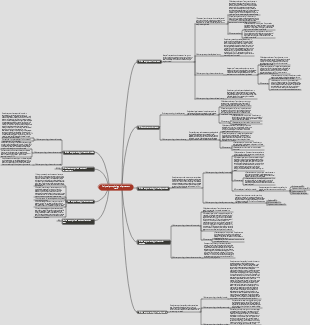
MindMap Gallery Oral anatomy and physiology-physiological significance of tooth morphology
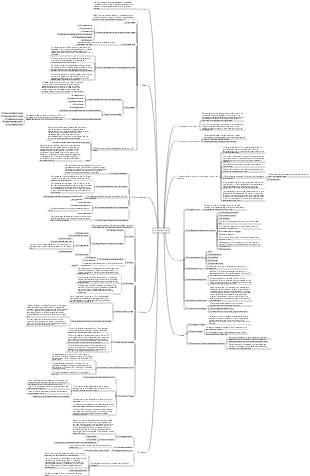
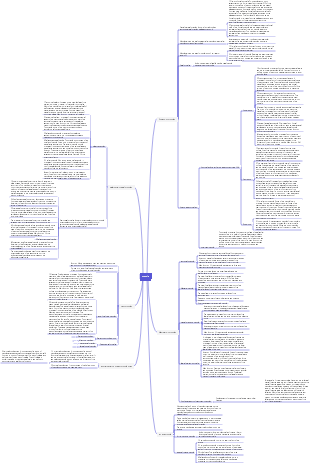
Regarding the oral anatomy and physiology - the physiological significance of tooth morphology, the mind map includes the physiological significance of the incisal and lateral morphology, the physiological significance of the axial morphology of the crown, etc.
Edited at 2023-12-04 10:23:16This is a mind map about bacteria, and its main contents include: overview, morphology, types, structure, reproduction, distribution, application, and expansion. The summary is comprehensive and meticulous, suitable as review materials.

This is a mind map about plant asexual reproduction, and its main contents include: concept, spore reproduction, vegetative reproduction, tissue culture, and buds. The summary is comprehensive and meticulous, suitable as review materials.
This is a mind map about the reproductive development of animals, and its main contents include: insects, frogs, birds, sexual reproduction, and asexual reproduction. The summary is comprehensive and meticulous, suitable as review materials.
This is a mind map about bacteria, and its main contents include: overview, morphology, types, structure, reproduction, distribution, application, and expansion. The summary is comprehensive and meticulous, suitable as review materials.
This is a mind map about plant asexual reproduction, and its main contents include: concept, spore reproduction, vegetative reproduction, tissue culture, and buds. The summary is comprehensive and meticulous, suitable as review materials.
This is a mind map about the reproductive development of animals, and its main contents include: insects, frogs, birds, sexual reproduction, and asexual reproduction. The summary is comprehensive and meticulous, suitable as review materials.
The physiological significance of tooth morphology
1. Physiological significance of crown shape
(1) The physiological significance of the incisal and lateral morphology
1. The incisal ridges and cusps of the incisal ends of the anterior teeth have the function of cutting, penetrating and tearing food; the cusps, fossa, triangular ridge, marginal ridge, and bevels of the posterior teeth have the function of containing, grinding and restricting food. Function, the developmental groove is the channel through which food flows after grinding into the proper oral cavity or oral vestibule.
2. In the early stages of tooth eruption, the tips and pits and ridges of the incisal and lateral surfaces are composed of curves and curved surfaces. When biting, point-line contact is formed between the maxillary and mandibular teeth. Because children's chewing power is small, the chewing force generated per unit area during point-line contact is large, which is conducive to chewing food; at the same time, the point-line contact mode is conducive to tooth movement and establishing a suitable occlusal relationship.
3. As children grow and develop, the teeth undergo functional wear and tear, gradually changing from point and line contact patterns to small bevel contacts. When the inclined surface contacts, the chewing efficiency is higher due to the large contact area; at the same time, after the teeth are fully erupted and adjusted to establish a suitable occlusal relationship, the surface contact is conducive to the stability of the occlusal relationship.
(2) The physiological significance of the axial shape of the tooth crown
1. The physiological significance of the labial (buccal) and lingual surface protrusion of the dental crown
(1) The location of the protrusion of the labial (buccal) and lingual surfaces: the protrusion of the labial and lingual surfaces of the anterior teeth is at the cervical 1/3; the protrusion of the buccal surface of the posterior teeth is also at the cervical 1/3, and the protrusion of the lingual surface of the posterior teeth is also at the cervical 1/3. The protrusion of the third molar is at 1/3 of the crown; the buccal and lingual protrusion of the third molar is at 1/3 of the crown.
(2) The physiological significance of the labial (buccal) and lingual surface protrusions of the crown
① When chewing, the overflowing food slides into the oral cavity along the normal crown protrusion. When passing through the gum surface, it has a physiological massage effect on the gums, which can promote the blood circulation of the gums and is beneficial to the health of the gum tissue. If the coronal process is too small or has no protrusion, the gums will be directly impacted by food and be injured; conversely, if the coronal process is too large, the gums will lose the physiological massage effect of food and may cause atrophy.
②The protrusion of 1/3 of the crown neck can also play a role in expanding the gingival margin, making it tense and powerful.
2. The physiological significance of the proximal protrusion of the crown
(1) The position and shape of the proximal protrusion: Two adjacent teeth are in close contact with each other through their proximal protrusion, and the point of contact is called the contact point. During the chewing movement, the contact points gradually wear away and form small surfaces for stability, which are called contact areas. The proximal protrusions of the anterior teeth and posterior teeth are at the incisal 1/3 and 𬌗1/3 respectively. The contact area of the anterior teeth is an oblong facet, the incisal diameter is larger than the labial and lingual diameter, the mesial surface contact area is close to the incisal angle, and the distal surface contact area is slightly farther from the incisal angle. The contact area of the posterior teeth is a flat oval, and the gingival diameter is smaller than the buccal and lingual diameter. The contact area of the mesiodistal surface of the first and second premolars is mostly in the middle 1/3 of the proximal margin.
(2) The physiological significance of interproximal protrusion
① Normal proximal protrusion forms a good adjacent contact relationship, which not only prevents food impaction, but also prevents the gingival papilla from shrinking under pressure and the alveolar process from reducing absorption.
②Normal adjacent contact relationship can maintain the integrity and stability of the dental arch, facilitate dispersion of dental forces, and is of great significance to the health of teeth, periodontal tissues, masticatory muscles and temporomandibular joints.
3. Physiological significance of wedge-shaped space
Glossary
Wedge-shaped gap or abduction gap: There is a V-shaped gap that expands around the contact area of the two teeth.
The spaces on the lip (buccal) and lingual sides are called labiobuccal wedges and lingual wedges respectively.
The spaces on the tangential side are called incisal wedge-shaped spaces and 𬌗 wedge-shaped spaces respectively; the gaps on the gingival side are called interproximal spaces.
Except that the labial and lingual cuneiform spaces of the mandibular incisors are close to each other and the buccal cuneiform space of the maxillary first molar is larger than the lingual cuneiform space, the lingual cuneiform space is generally larger than the buccal cuneiform space.
Physiological significance of cuneiform space
① The interproximal space is filled with gingival papillae, which can protect the alveolar bone and the adjacent surface of the tooth crown.
② When chewing, part of the food is discharged into the mouth through the wedge-shaped gap. The wedge-shaped gap is normal. Food can rub the tooth surface to keep the tooth surface clean and prevent the occurrence of caries and gingivitis.
2. The physiological significance of tooth root morphology (less frequently tested)
See page P46