MindMap Gallery Oral Anatomy and Physiology-Mind Map of Permanent Tooth Pulp Chamber Morphology
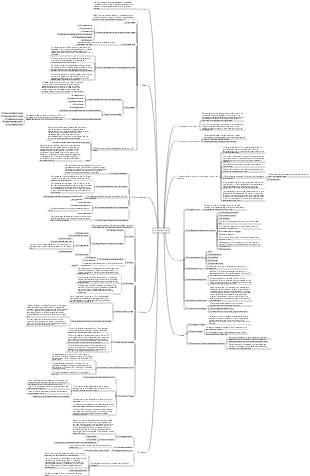
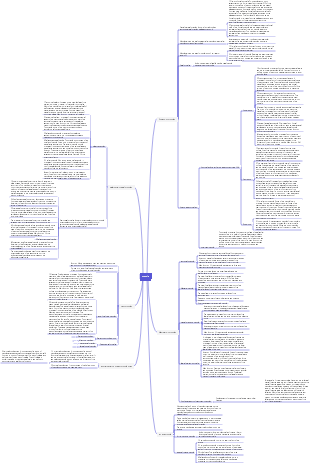
A mind map about the eighth edition of the oral anatomy and physiology human health textbook, including the shape of the pulp cavity of the incisors, The morphology of the pulp chamber of canines, the morphology of the pulp chamber of upper collar premolars, etc.
Edited at 2023-12-04 10:25:07This is a mind map about bacteria, and its main contents include: overview, morphology, types, structure, reproduction, distribution, application, and expansion. The summary is comprehensive and meticulous, suitable as review materials.
This is a mind map about plant asexual reproduction, and its main contents include: concept, spore reproduction, vegetative reproduction, tissue culture, and buds. The summary is comprehensive and meticulous, suitable as review materials.
This is a mind map about the reproductive development of animals, and its main contents include: insects, frogs, birds, sexual reproduction, and asexual reproduction. The summary is comprehensive and meticulous, suitable as review materials.
This is a mind map about bacteria, and its main contents include: overview, morphology, types, structure, reproduction, distribution, application, and expansion. The summary is comprehensive and meticulous, suitable as review materials.
This is a mind map about plant asexual reproduction, and its main contents include: concept, spore reproduction, vegetative reproduction, tissue culture, and buds. The summary is comprehensive and meticulous, suitable as review materials.
This is a mind map about the reproductive development of animals, and its main contents include: insects, frogs, birds, sexual reproduction, and asexual reproduction. The summary is comprehensive and meticulous, suitable as review materials.
Pulp cavity morphology of permanent teeth
(1) Pulp cavity shape of incisor teeth
Features: The shape of the pulp chamber of the incisor is similar to that of the corresponding tooth body. There is no obvious boundary between the pulp chamber and the root canal. The characteristic is that the root canal is mostly a single root canal.
1. The shape of the pulp chamber of the maxillary central incisor: the pulp chamber is larger, the root canal is thicker, and there is no obvious boundary between the pulp chamber and the root canal. The maxillary central incisors usually have a single canal.
(1) Mesial and distal section: The entire pulp chamber is approximately triangular in shape. The top of the pulp chamber, which is the base of the triangle, is the widest, close to the middle 1/3 of the crown. The top of the pulp chamber is slightly concave and the sides are slightly pointed. The pulp chamber narrows slightly toward the cervical edge and gradually tapers from the cervical edge to the root tip. Young people often have three rounded processes on the roof of the pulp chamber, pointing to the incisal ridge. These processes gradually disappear with age.
(2) Labial and lingual cross-section: The pulp cavity is slightly fusiform, thickest at the flat neck edge, and narrows to a pointed shape toward the incisal ridge until the middle 1/3 of the crown. The pulp cavity gradually narrows and becomes thinner from the neck edge to the root apex.
(3) Cross-sectional view:
① Transverse section of the tooth neck: The root canal is rounded and triangular in shape. The shape of the root canal is basically similar to that of the tooth root. The center of the cross section is slightly labial. The lingual root canal wall is slightly thicker than the labial root canal wall.
② Transverse section of the middle part of the tooth root: The root canal is about half smaller than the cross section of the tooth neck, mostly round, located in the center and slightly labial, and the lingual root canal wall is thicker than the labial root canal wall.
2. Pulp cavity anatomy of maxillary lateral incisors
The pulp cavity shape of the maxillary lateral incisors is similar to that of the maxillary central incisors, but slightly smaller. The top of the pulp chamber in the mesio-distal section is relatively neat, close to the middle of the crown, and is the widest part of the pulp chamber. The width of the pulp cavity gradually decreases from the tooth neck to the middle of the root, and then decreases significantly until the apical 1/3 of the root. In the labial and lingual section, the medullary cavity is thickest near the cervical edge, shrinks until the root tip 1/2 or 1/3, and curves with the root tip. Maxillary lateral incisors usually have a single root canal, but occasionally have 2 root canals.
3. Pulp cavity morphology of mandibular central incisor
Characteristics: The mandibular central incisor has the smallest pulp cavity volume, the labial and lingual diameter is larger than the mesio-distal diameter, the root canal is mostly a narrow and flat single canal, and about 4% of the cases are divided into two labial and lingual canals.
(1) Mesial and distal section: The pulp chamber is in the shape of a long and narrow triangle. The base of the triangle is the top of the pulp chamber. It is located close to the middle 1/3 of the crown. It gradually shrinks toward the cervical edge and significantly shrinks from the cervical edge toward the root apex.
(2) Labial and lingual section: The labial and lingual diameter is larger in the middle of the medullary cavity and smaller at both ends. The top of the pulp chamber is pointed and is located close to the middle 1/3 of the crown. The entire pulp chamber is larger in the 2/3 of the root neck and gradually shrinks toward the root tip.
(3) Cross section
① Transverse section of tooth neck: The pulp cavity is oval in shape, with the labial and lingual diameter larger than the mesio-distal diameter and located in the center.
②Middle section of tooth root: The root canal is oval or round, both located in the center. The root canals of round ones are significantly smaller, and the mesio-distal diameter of the root canals of oval ones is narrower. The mesiodistal root canal wall in the middle of the flat root is only about 1.0mm thick. When preparing the root canal, attention should be paid to this thickness to avoid lateral penetration.
4. Pulp cavity morphology of mandibular lateral incisors
The pulp cavity volume of mandibular lateral incisors is larger than that of mandibular central incisors, the mesio-distal diameter of the pulp cavity is smaller, the labial and lingual diameter is larger, and the root canal is longer. Most mandibular lateral incisors have a single root canal, and about 10% have two root canals.
(2) Shape of canine pulp chamber
1.Pulp cavity morphology of maxillary canines
The labial and lingual diameter of the pulp chamber of the maxillary canine is large and the mesial and distal diameter is narrow. Maxillary canines usually have a single canal.
(1) Mesial and distal section: The pulp cavity is narrow, both ends are pointed, the pulp angle is close to the middle 1/3 of the crown, the pulp cavity is wider at the 1/2 of the root neck, and gradually becomes wider at the apical 1/2. narrow.
(2) Labial and lingual profile: The top of the pulp chamber is narrow and pointed, the top of the pulp angle is close to the middle 1/3 of the crown, 2/3 of the pulp cavity is very thick, and it gradually becomes narrower until the apical 1/3, and the apical hole is larger than the incisor. big.
(3) Cross section
① Transverse section of the tooth neck: The pulp cavity is larger, located in the center of the tooth root, in the shape of a round triangle, and the labial and lingual diameter is larger than the mesial and distal diameter.
②Transverse section of the middle of the tooth root: the root canal is small and round
2. Pulp cavity morphology of mandibular canines
The medullary cavity is also characterized by a large labial and lingual diameter and a narrow mesial and distal diameter. The difference is that the pulp chamber and root canal are narrower than those of the upper canine, and the pulp angle is rounder. Mandibular canines usually have a single root canal, and about 4% have double root canals.
(1) Mesial and distal section: The pulp cavity is narrow, the pulp angle is blunt, the top of the pulp angle is close to the middle 1/3 of the crown, the pulp cavity is slightly wider from below the pulp angle to the middle of the root, and gradually tapers toward the root tip.
(2) Labial and lingual section: The labial and lingual diameter of the pulp cavity is relatively large. The largest section is located at the crown neck and root neck 1/3 or 1/2, and gradually becomes thinner towards the root apex. The pulp angle is pointed and the top of the pulp angle is Close to the middle 1/3 of the crown
(3) Cross section:
① Transverse section of the tooth neck: The pulp cavity is oval, the labial and lingual diameter is large, and it is located in the center of the tooth root.
②Transverse section of the middle root: the root canal is round or oval
(3) Pulp cavity morphology of maxillary premolars
The pulp chamber is similar to a cube, with the buccal and lingual diameter larger than the mesial and distal diameter. The pulp chamber is located in the neck of the crown and the root trunk. The top of the pulp chamber is concave, and the most concave part is approximately flush with the edge of the neck. There are two pulp angles, buccal and lingual, on the top of the pulp chamber, and there are 1 to 2 root canals in the root of the tooth.
1. Pulp cavity morphology of maxillary first premolar
(1) Mesiodistal section: The shape of the mesiodistal section is slightly similar to that of the canine, but the pulp chamber and root canal are both narrower.
(2) Buccal and lingual section: There is a buccal and lingual pulp angle on the top of the pulp chamber that protrudes toward the buccal and lingual apex respectively. The buccal pulp angle is higher, close to the middle 1/3 of the crown, and the lingual pulp angle is lower, close to the tooth. In the 1/3 of the crown neck (a few are close to the middle 1/3 of the crown), there are two on the bottom of the pulp chamber, and one occasionally has three root canal openings, which are connected with the corresponding root canals.
(3) Cross section
① Transverse section of the tooth neck: the pulp chamber is oval in shape, the buccal and lingual diameters are both larger than the mesio-distal diameter, and the mesio-distal diameter is reduced to be kidney-shaped.
② Transverse section of the middle of the tooth root: if it is a single root canal, the root canal is oval; if it is a double root canal, the buccal and lingual canals are round, and occasionally there are three root canals, and the buccal root canal is very small.
(4) Root canal type of maxillary first premolar:
There are many types of root canals in the maxillary first premolar, which can be divided into the following four categories:
Double tube type: 65%
Single and double tube types: 28%
Single tube type: about 7%
Three-tube type: relatively rare
2. Pulp cavity morphology of maxillary second premolar
The shape of the pulp chamber is similar to that of the maxillary first premolar, but the mesio-distal width of the pulp chamber is narrower, the buccal and lingual diameter is larger, the buccal and lingual pulp angles are both low, and it is located in the cervical 1/3 of the crown. There are three main types of root canals
Single tube: 48%
Double root canals: 11%
Single and double root canals: 41%
(4) Pulp cavity morphology of mandibular premolars
1. Pulp cavity morphology of mandibular first premolar
(1) Mesial and distal section: The pulp chamber and root canal of the mandibular first premolar are shaped like canines, but narrower.
(2) Buccal and lingual profile: The buccal pulp angle of the mandibular first premolar is particularly long, and the top of the pulp angle can reach 1/3 of the crown. The lingual pulp angle is short and round, often not obvious, and is located close to the crown neck 1 /3. The buccolingual diameter of the crown 2/3 of the entire pulp cavity is larger. The medullary cavity mostly shrinks into a tube in the apical 1/3 of the root, and a few shrinks into a tube in the middle 1/3 of the root or the root neck 1/3, accounting for about 83%; the other about 17% forms a double tube type in the middle of the root canal. Or single and double tube type, and some are divided into two buccal and lingual tubes in the apical 1/3.
(3) Cross section
① Transverse section of the tooth neck: The pulp chamber of the mandibular first premolar is mostly oval, and the buccolingual diameter is larger than the mesiodistal diameter. If it has double root canals, both the buccal and lingual canals will be round.
②Transverse section of the middle part of the tooth root: the root canal is small and round
2. Pulp cavity morphology of mandibular second premolar
The shape of the pulp cavity of the mandibular second premolar is similar to that of the mandibular first premolar, but there are the following differences: the buccal root of the mandibular second premolar has an obvious lingual pulp angle, and the buccal pulp angle is slightly higher than the lingual pulp angle. Both are located at the cervical 1/3 of the tooth crown. The pulp chamber is large at 1/3 of the crown neck and 1/3 of the root neck, but significantly shrinks into a tube below 1/3 of the root neck (toward the root apex), and sometimes shrinks into a tube in the middle or apical 1/3 of the root. By. Mostly single tube.
(5) Pulp cavity morphology of maxillary molars
The pulp chamber of the maxillary molar is shaped like a cube. There are 4 pulp angles on the top of the pulp chamber, and 3 to 4 root canal openings can be seen on the bottom of the pulp chamber, which are connected with the corresponding root canals.
1. Pulp cavity morphology of maxillary first molar:
The pulp chamber of the maxillary first molar is like a short rectangle with a very small pulp chamber height, buccolingual diameter > mesial and distal diameter > pulp chamber height. The top of the pulp chamber is concave, and the most concave part is approximately flush with the edge of the neck. The mesiobuccal pulp angle and mesiolingual pulp angle on the top of the pulp chamber are relatively high, both close to the middle 1/3 of the crown; the distobuccal pulp angle and distal lingual pulp angle are low, both close to the top 1/3 of the crown. There are 3 to 4 root canal orifices at the bottom of the pulp chamber, which are arranged in a quadrilateral or triangular shape with a long buccal and lingual diameter and a short mesio-distal diameter. The mesiobuccal root canal orifice is closer to the distobuccal root canal orifice than to the lingual root canal orifice. Farther away, the distobuccal root canal orifice is located distal to the lingual side of the mesiobuccal root canal orifice. The shape of each root canal opening is: the mesiobuccal root canal opening is relatively flat, and the distal buccal root canal opening is slightly rounded. The lingual root canal orifice is larger. Approximately 63% of cases have a double-canal or single-double type in the mesiobuccal root canal, 9% have a distal-buccal root canal that is divided into two canals, and the lingual root canal is mostly a single canal. Maxillary first molars usually have 3 to 4 root canals, 1 to 2 root canals in the mesiobuccal root, and one root canal in the distal buccal root and lingual root.
2. Pulp cavity morphology of maxillary second molar
The mesiobuccal root canal is double-tube type or single-double type, accounting for about 30% of the total. The distal-buccal root canal and lingual root canal are mostly single canal. The maxillary second molar occasionally has two root canals, including a lingual root canal and a larger buccal root canal.
3. Pulp cavity morphology of maxillary third molar
The maxillary third molar is the tooth with the most changes in the shape of the whole mouth. The changes in the pulp cavity also have its own characteristics, which are mainly manifested in the large pulp chamber, thick root canal, low pulp angle, and the position of the pulp chamber bottom is often related to the root shape: three roots In patients with double roots, the pulp chamber floor is usually located in 1/3 of the root diameter or in the middle 1/3 of the root; in patients with double roots, the pulp chamber floor is mostly located in the middle 1/3 of the root; in patients with single root or fused root canals, the pulp chamber is mostly reduced in the apical 1/3 of the root. into tubes.
(6) Pulp cavity morphology of mandibular molars
1. Pulp cavity morphology of mandibular first molar
The pulp chamber of the mandibular first molar is approximately in the shape of a short cuboid, with mesiodistal diameter > buccal and lingual diameter > pulp chamber height (approximately 1mm); the top of the pulp chamber is concave, with the highest point approximately flush with the cervical edge, and the mesiolingual pulp angle is the same as the distal pulp chamber. The heights of the lingual pulp angles are similar, and both are close to the middle 1/3 of the crown. The mesiobuccal pulp angle, distal buccal pulp angle and distal pulp angle are lower and located in the cervical 1/3 of the crown or near the cervical edge. The outline of the pulp chamber floor is a quadrilateral or pentagon with a long mesio-distal diameter and a short buccal and lingual diameter. There are 2 to 4 root canal orifices on the pulp chamber floor. A total of 87% of cases have a double-canal or single-double type in the mesial root canal, and 40% have a double-canal or single-double type in the distal root canal.
The mandibular first molar usually has 3 to 4 root canals, 2 mesial canals, and 1 to 2 distal canals.
2. Pulp cavity morphology of mandibular second molar
The pulp cavity morphology of the mandibular second molar is similar to that of the mandibular first molar. A total of 64% of patients have a double-canal or single-double canal type in the mesial root canal, and 18% have a double-canal type or single-double canal type in the distal root canal.
The mesiodistal roots of the mandibular second molar are fused on the buccal side, and the root canals are also connected on the buccal side. The cross section of the root canal is C-shaped, which is called C-type root canal, accounting for about 31%.
3. Pulp cavity morphology of mandibular third molar
Since the shape of the mandibular third molar varies greatly, its pulp chamber and root canal also vary according to its shape. The pulp chamber root canals are all larger. If there are two root canals, they will be 2 root canals. If there are fused root canals, they will mostly be a single root canal.
(7) Applied anatomy of pulp chamber of permanent teeth
P57~58
Pulp cavity morphology of deciduous teeth
1. Although the shape of the pulp chamber of deciduous teeth is similar to that of deciduous teeth, in terms of tooth proportions, the pulp chamber of deciduous teeth is larger than that of permanent teeth. It is characterized by large pulp chambers, thin pulp walls, high pulp angles, and thick root canals. , the root canal has a larger slope and the apical hole is larger. Therefore, when preparing the cavity shape, care should be taken to protect the dental pulp and prevent pulp penetration.
2. The wall of the pulp cavity of deciduous teeth is thin, from the pulp angle to the apex, from the top of the pulp chamber to the 𬌗 surface, from the bottom of the pulp chamber to the root furcation surface, from the pulp chamber wall to the axial surface of the crown, and from the root canal wall to the root surface. The distances are smaller than the corresponding distances of permanent teeth.
3. The pulp chamber roof and pulp angle are mostly located in the middle of the crown.
4. The pulp chamber of the pre-primary tooth is similar in shape to its crown. The root canal is mostly a single root canal. Occasionally in the mandibular deciduous incisor, the root canal is divided into two labial and lingual root canals.
5. Primary molars have larger pulp chambers and usually have three root canals. The maxillary primary molars have 2 buccal root canals and 1 lingual root canal. Mandibular primary molars have 2 mesial root canals and 1 distal root canal. The mandibular second deciduous molar sometimes has four root canals, which are distributed as two mesial canals and two distal canals.
Applied anatomy of pulp chamber of deciduous teeth
P59