MindMap Gallery Oral anatomy and physiology-dentition
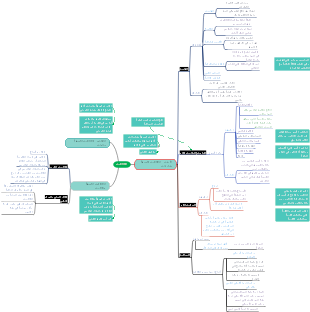
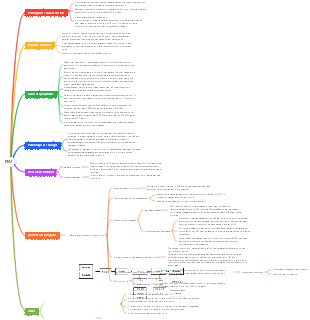
A mind map of the dentition in the eighth edition of the oral anatomy and physiology textbook for human health, including dentition classification, Measurement of dentition, inclination pattern of normal tooth arrangement, etc.
Edited at 2023-12-04 10:27:25This is a mind map about bacteria, and its main contents include: overview, morphology, types, structure, reproduction, distribution, application, and expansion. The summary is comprehensive and meticulous, suitable as review materials.
This is a mind map about plant asexual reproduction, and its main contents include: concept, spore reproduction, vegetative reproduction, tissue culture, and buds. The summary is comprehensive and meticulous, suitable as review materials.
This is a mind map about the reproductive development of animals, and its main contents include: insects, frogs, birds, sexual reproduction, and asexual reproduction. The summary is comprehensive and meticulous, suitable as review materials.
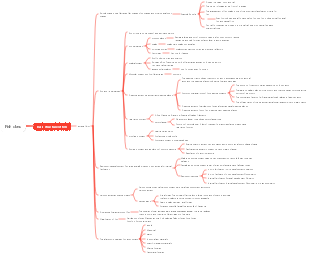
This is a mind map about bacteria, and its main contents include: overview, morphology, types, structure, reproduction, distribution, application, and expansion. The summary is comprehensive and meticulous, suitable as review materials.
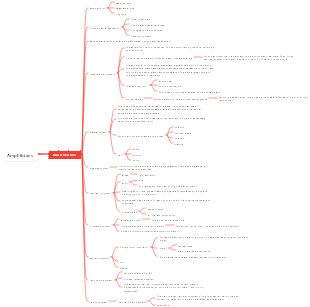
This is a mind map about plant asexual reproduction, and its main contents include: concept, spore reproduction, vegetative reproduction, tissue culture, and buds. The summary is comprehensive and meticulous, suitable as review materials.
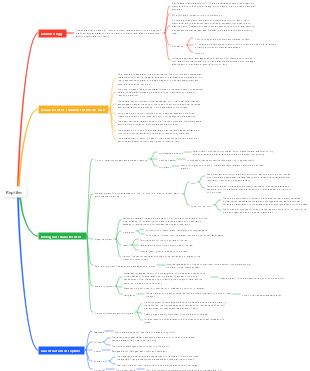
This is a mind map about the reproductive development of animals, and its main contents include: insects, frogs, birds, sexual reproduction, and asexual reproduction. The summary is comprehensive and meticulous, suitable as review materials.
dentition
1. Classification of dentition
1. According to categories: permanent dentition, deciduous dentition, mixed dentition
Permanent dentition: complete upper and lower dentition, each containing 16 teeth. The maxillary dentition is wider than the mandibular dentition. The maxillary permanent dentition of Chinese people is about 55mm wide and 50mm long. The mandibular permanent dentition: 52mm wide and 41mm long. Upper dental arch: 128mm. Lower dental arch: 126mm
Deciduous dentition: The shape is approximately semicircular, and the length of the dentition is about 47mm (shorter than the permanent dentition).
Mixed dentition: dentition develops differently at different stages of development
2. According to dentition morphology
Pointed circle, square circle, ellipse
Pointed circles account for 26%
Fangyuan accounts for 24%
Ellipse accounts for 46%
Some are a mixture of the above two or three types, accounting for about 4%
3. According to the arrangement of teeth in the dentition,
Can be divided into: normal dentition abnormal dentition
(1) Normal dentition: The number of teeth is normal, the teeth are arranged neatly, and there are no gaps or crowding.
(2) Abnormal dentition: including abnormal number of teeth, abnormal tooth arrangement and abnormal dental arch. Abnormal number of teeth, such as too many teeth (extra teeth) or too few; abnormal tooth arrangement, such as crowded teeth, sparse teeth, extra-arch teeth, high teeth, low teeth, translocated teeth and twisted teeth, etc. Abnormalities between dental arches such as maxillary and mandibular dental arch imbalance and crossbite dentition.
4. The meaning of close adjacency between teeth is: (2022 real question)
① Support each other during chewing movements
②Disperse chewing force
③Improve chewing efficiency
④ Helps stabilize teeth and avoid food impaction
⑤Prevent tooth displacement and protect gum papillae
2. Measurement of dentition
1. Dentition length and dentition width
Dentition length: usually the vertical distance between the line connecting the labial most prominent points of the left and right central incisors and the line connecting the distal most prominent point of the last tooth on the left and right sides of the dentition.
Dentition width: the distance between the same anatomical landmarks of the same tooth on the left and right sides.
2.Terra index and Bolton index
Terra index: the ratio of dentition width to dentition length.
Bolton index: the ratio of the sum of the mesiodistal diameters of 12 teeth in the mandible, including the first molar, to the sum of the mesiodistal diameters of 12 teeth with the same name in the maxilla (whole tooth ratio)
Total tooth ratio: 91.5% Anterior tooth ratio: 78.8%
3. Tilting rules of normal tooth arrangement
The physiological significance of the tilted arrangement of the dentition
The tilted arrangement of the teeth also enables close contact between the teeth in the dentition, increases the contact area of the upper and lower teeth during chewing, avoids biting of the labial, cheek and tongue tissues, and facilitates tongue movement; it also helps to set off the labial and cheek tissues. , plays an important role in maintaining the shape of the lower 1/3. (2020 real questions)
(1) The mesiodistal inclination pattern (the mesial inclination of the molars gradually increases)
𬌗Plane: The imaginary plane formed by the line connecting the mesial incisal point of the maxillary central incisor to the mesial or distal buccal cusp of the first molar. This plane is approximately parallel to the alar tragus line.
Anatomical plane: the imaginary plane formed from the mesial incisal point of the mandibular central incisor to the distal buccal cusp of the bilateral last molars. (21 Huke real questions)
The roots of the maxillary central incisors are slightly inclined distally at an angle of about 5~10°, inclination: 2>3, and the canines are in between. The long axis of the mandibular central incisor is relatively straight, the inclination of the lateral incisors and canines gradually increases, and the roots of the teeth are inclined distally. The mesiodistal inclination of the maxillary and mandibular premolars is generally straight. Starting from the first molar, the long axis of the tooth body of the maxillary and mandibular molars gradually inclines mesially, and the degree gradually increases.
(2) The inclination pattern of the lips (cheeks) and tongue
Viewed from the front of the dental arch, the maxillary posterior teeth are slightly inclined toward the buccal side, and the mandibular posterior teeth are slightly inclined toward the lingual side, with a certain overjet relationship.
Viewed from the side of the dental arch, the long axes of the upper and lower front teeth are slightly protruding toward the labial side, consistent with the inclination direction of the alveolar process at the front of the jaw. The upper jaw is slightly more protruding than the lower jaw, and a certain overjet is formed between the upper and lower front teeth. relation.
(3) Vertical relationship
Viewed from the front of the dental arch, the incisal edge of the maxillary central incisor is 2mm below the vermilion border, the incisal edge of the maxillary lateral incisor is about 1mm higher than the incisal edge of the central incisor, and the cusps of the maxillary canines are flush with the incisal edge of the central incisor. Taking the maxillary 𬌗 plane as the reference plane, the incisal edge of the maxillary central incisor is flush with the 𬌗 plane, the maxillary lateral incisors are 0.5~1mm away from the 𬌗 plane, the cusp of the maxillary canine is the first premolar, the second premolar is the first buccal cusp The mesial buccal cusp of the molar is on the 𬌗 plane, the distal buccal cusp of the first molar, the second molar, and the third molar are away from the 𬌗 plane in sequence.
(4) Cusp height and cusp slope
Cusp height: The vertical distance from the top of the tooth cusp to the bottom of the tooth socket.
Cusp slope: the angle between the cusp slope and the horizontal plane
Generally, the buccal cusps of the maxillary teeth are higher than the lingual cusps, and the cusps of the premolars are higher than the cusps of the molars. The lingual cusp of the mandibular molars is higher than the buccal cusp, and the buccal cusp of the premolars is higher than the lingual apex.
4. Morphological characteristics of the dentition surface
(1) Vertical 𬌗 curve (spee)
Spee curve: From the side view, it connects the incisal edges of the mandibular incisors, the canine cusps, the premolar buccal cusps, and the molar buccal cusps, forming a concave upward arc line, which is lowest and gradually rises backward in the area of the premolars and first molars. Extends to the anterior edge of the condylar neck. The curvature of the spee curve is generally below 1.5mm
Maxillary longitudinal curve: In the maxilla, it connects the incisal edges of the maxillary incisors, canine cusps, premolar buccal cusps and molar buccal cusps, and also forms a convex downward curve. The curve is flatter in front of the mesiobuccal cusp of the first molar.
Compensation curve: starts from the distal buccal tip of the first molar and gradually curves upward. (convex downward)
(2) Horizontal 𬌗 curve (Wilson)
Wilson curve: Viewed from the front, it connects the buccal and lingual tips of the molars with the same name on both sides of the maxilla, forming a convex downward arc, called the Wilson curve or maxillary transverse curve. This is caused by the fact that the maxillary molars are slightly tilted toward the buccal side, so that the tongue tip is lower than the buccal tip and the buccal tip is slightly higher than the tongue tip.
The mandible also has a corresponding one, but the maxillary transverse 𬌗 curve is convex downward, while the mandibular transverse 𬌗 curve is concave upward, and the upper and lower jaw transverse 𬌗 curves coincide with each other.
(3) Trigonometric theory and spherical theory of the mandible and mandibular dental arch
1. Balkwill angle: The intersection angle formed by the line from the center point of the condyle to the mesial incisal angle of the mandibular central incisor and the 𬌗 plane is called Balkwill, with an average of about 26°
2. Bonwill's theory: The center of the bilateral condyles, the mesial incisal angle of the mandibular central incisor, and the equilateral isosceles triangle dentition are centered. The perspective of an equilateral triangle has a side length of 10.16cm. Chinese people are more in line with the isosceles triangle rule. Whether it is an equilateral or an isosceles triangle, their common feature is that the oral and jaw system (temporomandibular joint, maxillofacial muscles, dentition) is symmetrical on both sides, and the dentition is centered. Factors such as sleeping posture, chewing habits, and jaw disease can affect the normal shape of the mandibular arch.
3. Monson's spherical theory: Based on Bonwill's triangle theory, it is proposed that the mandibular arch surface is part of a spherical surface with the glabella point as the center and a radius of 10.16cm, and the maxillary compensation curve is also part of this spherical surface. Explain that the surface shape of the dental arch is a curved surface rather than a flat surface