MindMap Gallery Oral Anatomy and Physiology-Salivary Glands
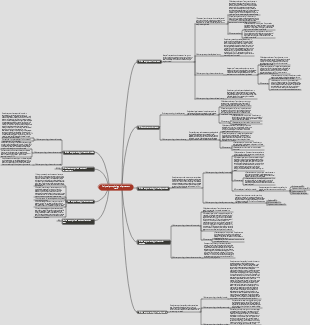
Oral Anatomy and Physiology Human Health Textbook 8th Edition Mind Map, Salivary Glands: Also known as salivary glands, they are mainly composed of acini and ducts. Contains three major salivary glands: parotid gland, subcollar gland, and sublingual gland.
Edited at 2023-12-04 10:34:02This is a mind map about bacteria, and its main contents include: overview, morphology, types, structure, reproduction, distribution, application, and expansion. The summary is comprehensive and meticulous, suitable as review materials.
This is a mind map about plant asexual reproduction, and its main contents include: concept, spore reproduction, vegetative reproduction, tissue culture, and buds. The summary is comprehensive and meticulous, suitable as review materials.
This is a mind map about the reproductive development of animals, and its main contents include: insects, frogs, birds, sexual reproduction, and asexual reproduction. The summary is comprehensive and meticulous, suitable as review materials.
This is a mind map about bacteria, and its main contents include: overview, morphology, types, structure, reproduction, distribution, application, and expansion. The summary is comprehensive and meticulous, suitable as review materials.
This is a mind map about plant asexual reproduction, and its main contents include: concept, spore reproduction, vegetative reproduction, tissue culture, and buds. The summary is comprehensive and meticulous, suitable as review materials.
This is a mind map about the reproductive development of animals, and its main contents include: insects, frogs, birds, sexual reproduction, and asexual reproduction. The summary is comprehensive and meticulous, suitable as review materials.
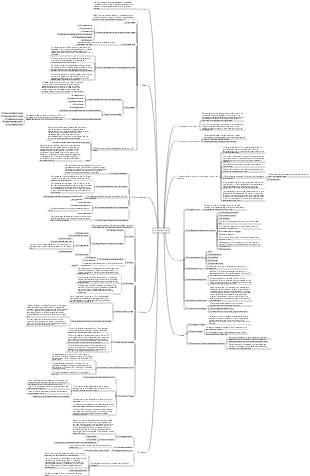
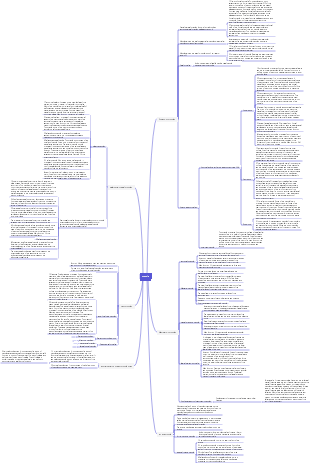
salivary glands
Salivary glands: Also known as salivary glands, they are mainly composed of acini and ducts.
Three major salivary glands: parotid gland, submandibular gland, sublingual gland
1. Parotid gland
Features: The largest pair of glands in the human body are serous gonads, weighing about 20 to 30g, and the left and right sides are basically symmetrical.
1. Parotid gland location and shape
Located: subcutaneously on both sides of the face, below the zygomatic arch, anterior and inferior to the external auditory canal, posterior and lateral to the mandibular ramus. Most glands are located in the posterior mandibular fossa. It is an irregular cone shape with the base facing outward and the tip facing inward. About 35% of people have accessory parotid glands
2. Parotid gland sheath
The superficial continuation of the deep cervical fascia is formed by two layers of deep and superficial fascia surrounding the parotid gland.
Mumps infected by the virus will cause the glands to swell, and the fascia surrounding the glands is dense and difficult to decompress outwards. The tension receptors are stimulated and pain is likely to occur. In acute suppurative parotitis, multiple scattered small abscesses can form in the gland. During clinical examination, the fluctuating sensation is generally not palpable. When incision and drainage of abscesses, only by opening up all the abscess cavities can adequate drainage be achieved. The purpose of diversion. Suppurative parotitis can spread to the parapharyngeal space and external auditory canal through the weakness of the deep facial fascial structure of the parotid sheath.
3.Parotid duct
The tube wall is thick and has a certain degree of toughness. It is about 5~7cm long and 0.3~0.5cm in diameter. The saliva secreted by the acinar cells of the parotid gland merges into the parotid duct through the intercalary duct, secretory duct, and interlobular duct and is discharged into the oral cavity. About 70% of the parotid ducts are single-trunk type, and the others include double-trunk type and triple-trunk type. The double-trunk type and triple-trunk type parotid duct merge into the common duct after passing through the front edge of the gland.
The parotid duct passes through the front edge of the gland 1.5cm from the lower edge of the zygomatic arch and walks forward, parallel to the zygomatic arch, crossing the surface of the masseter muscle, and inward at a nearly right angle at its front edge, passing through the buccal fat pad and buccinator muscle. It opens in the buccal mucosa corresponding to the buccal surface of the crown of the maxillary second molar. The mucosa at the opening is slightly raised and is called the parotid duct papilla.
Body surface projection of the parotid duct: the middle 1/3 section from the lower edge of the earlobe to the midpoint between the lower edge of the nose and the corner of the mouth. When the parotid gland is squeezed during clinical examination, clear fluid can be seen flowing out of the opening of the parotid duct.
Clinical significance: The parotid duct is an anatomical landmark for finding the buccal branch of the facial nerve.
4. Adjacent to the parotid gland
(1) Above: superficial temporal vein, auriculotemporal nerve (sometimes behind the superficial temporal vein), superficial temporal artery, temporal branch of facial nerve and zygomatic branch. (Huke selection)
(2) Anteromedial surface: transverse facial artery and vein, zygomatic branch of facial nerve, superior buccal branch of facial nerve, parotid duct, inferior buccal branch of facial nerve and marginal mandibular branch.
(3) Posteromedial surface: the anterior edge of the mastoid process and the anterior edge of the sternocleidomastoid muscle, the posterior belly of the digastric muscle, the styloid process and the muscles attached to the styloid process. The facial nerve trunk enters the parotid gland from between the mastoid and styloid impressions.
(4) Superficial surface: skin, superficial fascia, platysma muscle, and superficial parotid sheath. Marginal mandibular branch of facial nerve (sometimes changed location) cervical branch of facial nerve, retromandibular vein
5. Vascular distribution, innervation and lymphatic drainage of the parotid gland
(1) The blood of the parotid gland comes from the branches of the external carotid artery and is mainly supplied by the superficial temporal artery and the postauricular artery. The veins drain mainly from the retromandibular vein to the external jugular vein.
(2) Innervation of parotid gland:
①Sensory nerves: Sensory nerve fibers from the branches of the greater auricular nerve and the parotid branch of the auriculotemporal nerve. The greater auricular nerve can be used as a donor nerve for facial nerve bypass repair.
②Sympathetic nerves and parasympathetic nerves: distributed in the skin, sweat glands, and arrector pili muscles in the parotid gland and auriculotemporal nerve distribution areas. The preganglionic fibers innervating the parasympathetic ganglia come from the inferior salivary nucleus of the oblongata. Their fibers follow the tympanic nerve of the glossopharyngeal nerve and the superficial petrosal nerve to the auricular ganglion. After exchanging neurons, the postganglionic fibers accompany the auriculotemporal nerve and distribute to the parotid gland. Taste sweating syndrome may occur after parotidectomy.
③Lymphatic drainage: There are generally about 20 lymph nodes in the parotid gland area, including superficial parotid gland lymph nodes and deep parotid gland lymph nodes.
Preauricular lymph nodes (about 4), subauricular lymph nodes (about 1 to 4), deep parotid lymph nodes (about 5 to 10)
2. Submandibular gland
Mixed gonads, mainly serous, weighing about 10~20g
1. Position and shape: flat oval, one on each side, located on the lower edge of the mandible, within the submandibular triangle formed by the anterior and posterior belly of the digastric muscle, reaching forward to the anterior belly of the digastric muscle, and borrowing the stem posteriorly The promandibular ligament separates the parotid gland, extends upward to the medial surface of the body of the mandible, and covers the interdigastric tendon downward.
2. Submandibular gland sheath: The superficial layer of deep cervical fascia is divided into deep and superficial layers in the submandibular area, which surrounds the mandible to form the submandibular gland sheath. The superficial fascia is dense and attached to the lower edge of the mandible. The deep medial oblique line is loosely attached to the medial surface of the mandible.
3. Submandibular gland duct: 5cm long and 2~4cm in diameter. The duct originates from the deep surface of the superficial part of the submandibular gland, travels forward along the deep part of the gland between the mylohyoid muscle and the hyoglossus muscle, and then passes through the medial side of the sublingual gland and the lateral side of the genioglossus muscle and travels forward and medial. On the way, the sublingual gland ducts merge into it, and finally open into the sublingual caruncles on both sides of the lingual frenulum.
4. Adjacent to the submandibular gland
①Outside ②Bottom ③Inside
5. Vascular distribution, innervation and lymphatic drainage of the submandibular gland
(1) Vascular distribution: derived from: branches of facial artery and lingual artery.
(2) Innervation:
Sensory nerve: lingual nerve branch of trigeminal nerve
Parasympathetic nerve: submandibular ganglion
(3) Lymphatic drainage
3 to 6 are mainly located between the lower edge of the mandible and the mandibular gland.
3. Sublingual gland
The smallest pair of the three pairs of salivary glands, weighing about 3~4g, is a mixed gonad.
1. Location and shape: elongated and flat, located in the sublingual area
2. Sublingual gland ducts: 8 to 20. During clinical imaging, lipiodol contrast agent is injected from the opening of the sublingual caruncle duct, and sometimes the sublingual glands can also be visualized.
3. Vascular innervation and lymphatic drainage
(1) Sensory nerve: lingual nerve of trigeminal nerve
(2) Sympathetic nerves and parasympathetic nerves: The sympathetic trunk superior cervical ganglion forms the arterial plexus. Parasympathetic nerves originate from the superior salivation nucleus,
(3) Lymphatic drainage: deep upper cervical lymph node group
4. Minor salivary glands
Distributed in the submucosa of the oral cavity and pharynx, the total number of glands is approximately 450 to 750.
1. Labial gland (Sjögren) mixed gonad The lower lip is a common site for mucous gland cysts.
2. Buccal gland: Mucous cell mixed gonad
3. Palatal gland: mucous gland
4. Lingual glands: serous glands, mucus glands, mixed glands
5. Retromolar gland: mixed gonad, mainly mucinous acini
5. Age-related changes in salivary glands
See P128