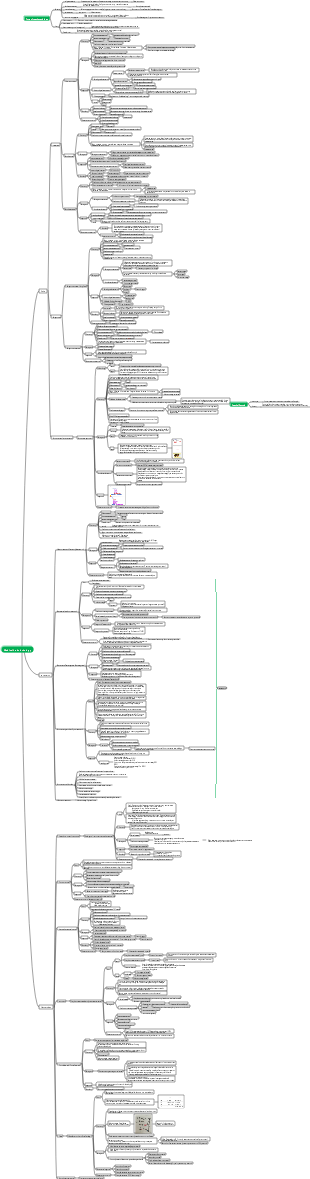
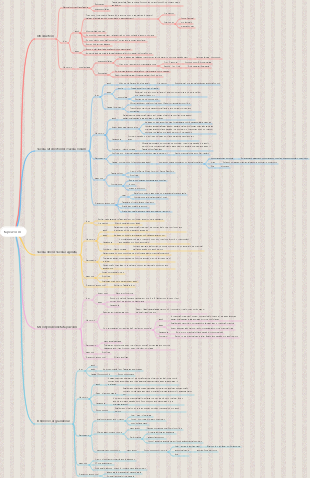
MindMap Gallery Medical parasites—sporozoites
This is a mind map about the knowledge content of the medical parasite-sporozoites. It is full of useful information, interested friends can refer to it.
Edited at 2023-11-16 17:48:36This is a mind map about bacteria, and its main contents include: overview, morphology, types, structure, reproduction, distribution, application, and expansion. The summary is comprehensive and meticulous, suitable as review materials.

This is a mind map about plant asexual reproduction, and its main contents include: concept, spore reproduction, vegetative reproduction, tissue culture, and buds. The summary is comprehensive and meticulous, suitable as review materials.
This is a mind map about the reproductive development of animals, and its main contents include: insects, frogs, birds, sexual reproduction, and asexual reproduction. The summary is comprehensive and meticulous, suitable as review materials.
This is a mind map about bacteria, and its main contents include: overview, morphology, types, structure, reproduction, distribution, application, and expansion. The summary is comprehensive and meticulous, suitable as review materials.
This is a mind map about plant asexual reproduction, and its main contents include: concept, spore reproduction, vegetative reproduction, tissue culture, and buds. The summary is comprehensive and meticulous, suitable as review materials.
This is a mind map about the reproductive development of animals, and its main contents include: insects, frogs, birds, sexual reproduction, and asexual reproduction. The summary is comprehensive and meticulous, suitable as review materials.
Sporaria
Plasmodium
Overview
Transmitted by mosquito bites
Mainly distributed in tropical and subtropical countries. Local cases in my country are rare and are mainly imported cases from abroad.
form
basic structure
cell membrane
cytoplasm
cell nucleus
Reiter/Giemsa dyeing
Nucleus—Purple red
Cytoplasm—blue
The product of malaria parasite digestion of hemoglobin-malariin-brown
Plasmodium vivax—three stages and six states in red blood cell development
trophozoites
Early trophozoite - ring body
The cytoplasm is less blue and is ring-shaped, with large vacuoles in the middle.
The cell nucleus is red, located on one side of the insect body, like a ruby on a ring.
late trophozoite
Pseudopodia, large vacuoles
malaria pigment
Trophozoites filled with red blood cells
Xue's point
Schizont
immature schizont
The insect body becomes round and the vacuoles disappear
The nucleus begins to divide, but the cytoplasm has not yet divided
2 to 12 nuclei
Red blood cells become enlarged, pale in color, and irregular in shape
mature schizont
There are 12 to 24 merozoites, arranged irregularly
Worms occupy swollen red blood cells
malaria pigment concentrated in piles
gametophyte
female gametophyte
The worms are larger and occupy the swollen red blood cells.
Cytoplasm dark blue dense
Small, dark red and dense nucleus
malaria pigment dispersion
male gametophyte
Insects are smaller
Cytoplasm light blue
Large, light red and loose core
Plasmodium falciparum—three stages and six states in red blood cell development
trophozoites
Early trophozoite - ring body
ring slender
1 to 2 cores (2 is common)
Red blood cells often contain more than two protozoa
The worms are often located at the edge of red blood cells and appear like a bird flying.
late trophozoite
Generally does not appear in peripheral blood
malaria pigment concentrated into dark brown
Protozoa begin to concentrate in the visceral capillaries at this time
Schizont
immature schizont
Small, dense cytoplasm
A large concentration of malaria pigment
The nucleus divides into multiple
mature schizont
There are 8 to 26 merozoites, arranged irregularly
Malaria pigment-concentrated parasites account for 2/3 to 3/4 of red blood cells
gametophyte
female gametophyte
Crescent shape, two segments slightly pointed
The nucleus is dense and dark red in the center
Malaria pigment is dark brown, distributed around the nucleus
male gametophyte
Sausage shape, blunt ends
Cytoplasmic blue with reddish color
The core is loose and light red in the center
Classification
Plasmodium vivax (my country)
Falciparum malaria (my country)
malaria malaria
malaria ovale
knowlesi malaria
life history
Overview
Human (intermediate host), female Anopheles mosquito (definitive host), alternation of generations
infection stage
Sporozoites, merozoites (during blood transfusion)
route of infection
mosquito bites
blood transfusion
placenta
Pathogenic stage
intraerythrozoic Plasmodium
Human body parasitic parts
Hepatocyte
red blood cells
two hosts
Human - intermediate host - asexual reproduction (split proliferation)
Mosquitoes—definitive host—sexual reproduction (gametogenesis), asexual reproduction (sporulation)
installment
develop in human body
Schizont proliferation in liver cells (infrared phase)
extraerythrocytic phase
When Anopheles mosquitoes suck human blood, sporozoites enter the human body and invade liver cells.
In the liver cells, sporozoites → trophozoites → schizonts proliferate into infrared stage schizonts → merozoites → merozoite bodies escape from the liver cells by budding → blood sinusoids, and part of the merozoites are covered by giant Phagocytosis, part of which invades red blood cells
Intraerythrocytic development: intraerythrocytic schizont proliferation (intraerythrocytic stage) gametocyte formation
intraerythrocytic phase
Includes two stages: trophozoite and schizont
Ring body → late trophozoite → immature schizont → mature schizont → merozoite → healthy red blood cell
Some merozoites no longer undergo schizophrenia and develop into gametophytes
Further development of the gametocytes needs to take place in the mosquito stomach, otherwise it will be eliminated by the body
Different Plasmodium parasitizes red blood cells at different developmental stages
Plasmodium vivax—reticulocytes
Falciparum malaria—various developmental stages
develops within anopheles mosquito
Gastric cavity—sexual reproduction—gametogenesis
The female Anopheles mosquito sucks the blood of the patient → the protozoa in each stage of the red blood cells enter the mosquito stomach, and only the female and male gametophytes can continue to develop.
Male gametophyte → male gamete/microgamete
Female gametophyte → female gamete/macrogamete (immobile)
The male gamete swims in the mosquito stomach → burrows into the female gamete → forms a zygote (kinozygote)
The zygote penetrates the mosquito stomach wall → forms an oocyst
Stomach wall - asexual reproduction - sporulation
The nucleus and cytoplasm in the oocyst divide repeatedly for spore multiplication, forming giant polysporozoites
Sporozoites emerge from the oocysts and enter the mosquito body tissue. Only those sporozoites that enter the mosquito's salivary glands are infectious.
Pathogenic
The main pathogenic stage—the intraerythrocytic schizophrenia stage
incubation period
Related to Plasmodium species, sporozoite number, and human immunity
Malaria attack
Periodic—chills, high fever, fever with sweating
Chills
The whole body is shaking, the face is pale, the skin is goose-like, and the lips and nails are purple.
fever
High fever, headache, body aches
In severe cases, convulsions and coma
Sweating reduces fever
Sweating profusely, body temperature dropped sharply
reason
The attack cycle is consistent with the erythrozoite proliferation cycle - periodic
Two kinds of pyrogens stimulate the body temperature regulation center - fever
Plasmodium metabolites—exogenous pyrogens
Merozoites, denatured hemoglobin, red blood cell fragments engulfed by phagocytes - endogenous pyrogen
mixed infection
Decreased immunity
Rekindle and relapse
Re-ignition (P. vivax, P. falciparum)
Relapse (vivax malaria)
anemia
reason
Plasmodium directly destroys red blood cells
Hypersplenism—phagocytosis of normal red blood cells by splenic macrophages
immune hemolysis
Bone marrow hematopoiesis is inhibited
splenomegaly
Tropical megasplenomegaly syndrome
Dangerous Malaria
Common symptoms
cerebral malaria
acute renal failure
severe anemia
Hypoglycemia
Usually caused by falciparum malaria
susceptible
Children in endemic areas and tourists without immunity
gastrointestinal malaria
malaria in pregnant women
etiological diagnosis
Giemsa staining—taking peripheral blood
Blood collection time
Falciparum malaria
During an attack: check for annular bodies
reason
Late trophozoites and schizonts usually adhere to splanchnic capillary endothelium and do not appear in peripheral blood
vivax malaria
Within 10 hours after onset
reason
The number of protozoa decreased
Thick blood film smear
advantage
Concentration of insects
shortcoming
Deformed, difficult to identify
Thin blood film smear method
advantage
The structure is complete and clearly identifiable
shortcoming
Fewer bugs
Popularity
Source of infection
Patients with mature gametocytes in the blood, parasite carriers
media
Anopheles mosquito (female)
Prevention and control
prevention
Mosquito vector control
Personal application of repellent
Indoor insecticide spraying
Preventive medication
type
Primaquine—kills liver-stage malaria parasites and dormant parasites
Chloroquine
Mefloquine—for treatment of chloroquine-resistant falciparum malaria
Sulfadoxine-pyrimethamine—Seasonal malarial chemoprophylaxis (women and children)
method
Take it 2 weeks before entering a malaria endemic area
Take once a week when staying in endemic areas
Leave endemic areas and continue taking it for 4 weeks
It is not advisable to take the medicine continuously for more than six months
treat
Acts on infrared stage schizonts and hypnozoites
primaquine
Acts on endoerythrozoites
Chloroquine, lonadidine, artemisinin
Toxoplasma gondii
Overview
Opportunistic pathogenic protozoa
Worldwide distribution
Parasitizes the nucleated cells of humans and a variety of warm-blooded animals and a few ectothermic animals
Felines (definitive host, intermediate host), humans and other animals (intermediate host)
form
Trophozoites, pseudocysts
trophozoites
include
Tachyzoites
Banana shape, with red nucleus in the center and blue cytoplasm
endogenous budding
bradyzoite
false cyst
Inside the cyst are tachyzoites
cyst
Within the cyst are bradyzoites
Schizont
gametophyte
egg sac
life history
include
infection stage
Cyst, pseudocyst, oocyst
Mode of infection
Oocyst-oral
False cyst, cyst - mouth, skin break, placenta
two hosts
Definitive host—cat, feline
Intermediate host—human, animal (pig, cow, sheep, rat)
Reproductive mode
Sexual reproduction—cats and felines
Asexual reproduction - humans, animals (including cats)
process
Development in the definitive host
Cats ingest animal viscera or meat tissue, swallow the cysts or pseudocysts contained therein/eat food contaminated with oocysts
Bradyzoites, tachyzoites, and sporozoites escape from the intestinal lumen and invade intestinal epithelial cells to proliferate.
After schizoite proliferation, schizonts are formed, which release merozoites after maturity and invade new intestinal epithelial cells.
After multiple schizoite proliferations, some merozoites develop into male and female gametophytes and continue to develop into male and female gametes.
Male and female gametes are fertilized into zygotes and finally form egg sacs
The oocysts break through the epithelial cells and enter the intestinal lumen, and are excreted with the feces.
Development in the intermediate host
Oocysts/cysts/pseudocysts in cat feces are swallowed by humans (mammals), and sporozoites/bradyzoites/tachyzoites escape from the intestines
Invades the intestinal wall/mononuclear lymphocyte system, spreads throughout the body, and enters cells to form pseudocysts
Tachyzoites continue to multiply and invade new cells
Adhesion, penetration, insect vacuole formation
Pathogenic
mechanism
Insect strain virulence
body immune status
Trophozoite proliferation destroys a large number of cells, inflammatory response
Cyst squeezes organ tissue → granuloma, fibrosis
symptom
congenital toxoplasmosis
Placental infection of the fetus → miscarriage, stillbirth, malformation
acquired toxoplasmosis
Hidden infection under normal circumstances
Various clinical symptoms of people with low immunity (lymphadenopathy, encephalitis, HIV infection)
Diagnosis (taking the patient’s amniotic fluid and cerebrospinal fluid)
smear staining
Animal vaccination and cell culture
imaging diagnosis
Popularity
The population is generally susceptible
Pregnant women, fetuses, and people with low immunity are more susceptible
Prevention and control
Pregnant women - spiramycin
Pyrimethamine, sulfonamides
Cryptosporidium
Overview
Causes cryptosporidiosis, a zoonotic disease mainly characterized by diarrhea
form
egg sac
Round/oval shape, mature oocyst contains 4 exposed sporozoites
life history
Only one host is needed
parasitic site
Intestinal epithelial cells brush border Nasalaria vacuoles
infection stage
mature egg sac
route of infection
mouth
installment
schizophrenia, gametogenesis, spore reproduction
Pathogenic
mechanism
Damage intestinal villi and intestinal wall, affecting intestinal nutrient absorption
symptom
normal person
Acute watery diarrhea, no pus and blood, 2 to 20 bowel movements per day
People with low immunity
Persistent cholera-like watery diarrhea
diagnosis
Stool test
Direct smear staining can confirm the diagnosis by detecting the oocysts
way for spreading
feces-oral
Prevention and control
Spiramycin, allicin capsules