MindMap Gallery Alkenes mind map
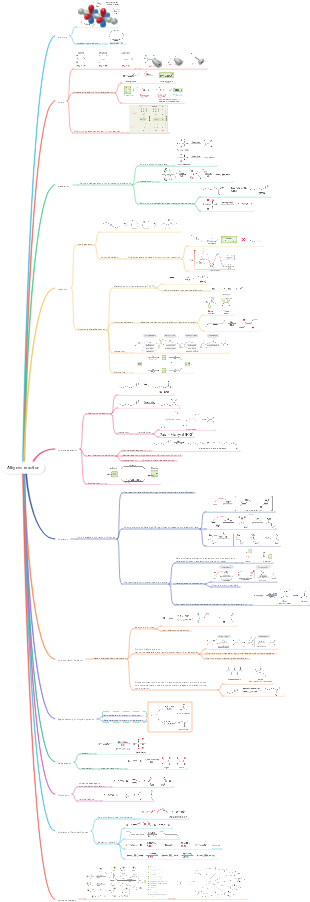
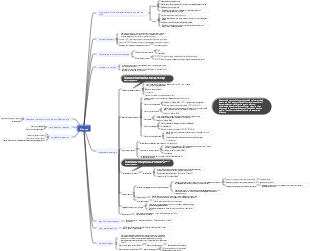
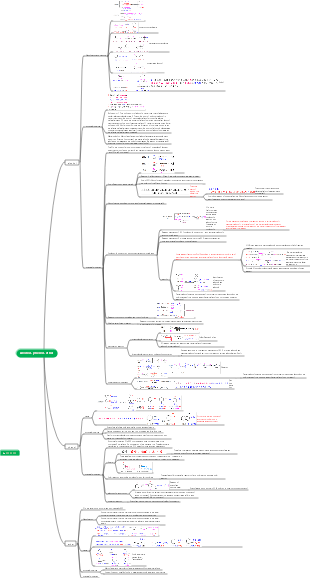
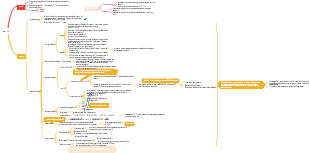
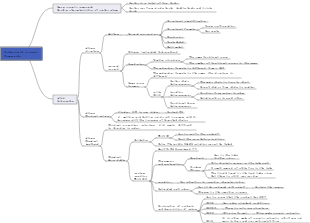
Regarding the mind map of alkenes, hydrocarbons containing carbon-carbon double bonds in their molecules are called alkenes and are unsaturated hydrocarbons. Open-chain alkenes containing one double bond have the general formula CnH2n.
Edited at 2023-11-05 11:20:06This is a mind map about bacteria, and its main contents include: overview, morphology, types, structure, reproduction, distribution, application, and expansion. The summary is comprehensive and meticulous, suitable as review materials.

This is a mind map about plant asexual reproduction, and its main contents include: concept, spore reproduction, vegetative reproduction, tissue culture, and buds. The summary is comprehensive and meticulous, suitable as review materials.
This is a mind map about the reproductive development of animals, and its main contents include: insects, frogs, birds, sexual reproduction, and asexual reproduction. The summary is comprehensive and meticulous, suitable as review materials.
This is a mind map about bacteria, and its main contents include: overview, morphology, types, structure, reproduction, distribution, application, and expansion. The summary is comprehensive and meticulous, suitable as review materials.
This is a mind map about plant asexual reproduction, and its main contents include: concept, spore reproduction, vegetative reproduction, tissue culture, and buds. The summary is comprehensive and meticulous, suitable as review materials.
This is a mind map about the reproductive development of animals, and its main contents include: insects, frogs, birds, sexual reproduction, and asexual reproduction. The summary is comprehensive and meticulous, suitable as review materials.
Alkenes
definition
Hydrocarbons containing carbon-carbon double bonds in their molecules are called alkenes and are unsaturated hydrocarbons. Open-chain alkenes with one double bond have the general formula CnH2n
Isomers and nomenclature of alkenes
Structural isomerism of alkenes
Cis-trans isomerization of alkenes
The fixed (intrinsic) arrangement of atoms or groups in organic compound molecules in space is called configuration. Cis-trans isomerism is a type of configurational isomerism in stereoisomerism. The reason why cis-trans isomerism occurs is because there are factors that restrict rotation (such as alicyclic rings or double bonds) in the molecule, causing the atoms or groups in the molecule to The arrangement of groups in space cannot be changed arbitrarily.
Two conditions must be met to produce cis-trans isomerism: (1) There are factors in the molecule that restrict the free rotation of atoms, such as double bonds or rings (alicyclic rings) in alkenes (2) Each atom that cannot rotate freely is connected with different atoms or groups.
Cis and trans isomers often have very different biological activities.
Nomenclature of alkenes
systematic nomenclature
.1 Select the longest carbon chain including double bonds as the main chain. It is called "a certain alkene" according to the number of carbon atoms contained in the main chain. Alkenes with more than ten carbon atoms are named with lowercase Chinese numbers plus "carbon alkene". .
2. When numbering, number the carbon atoms in the main chain sequentially starting from the end close to the double bond. The position of the double bond is represented by the smaller of the two double bond carbon atoms. When numbering, first consider that the number of the double bond position is as small as possible, and secondly, take into account that other substituents have lower positions.
3. Write the position of the double bond before the name of the parent, separated by a half-word line "-", and then write the position, number and name of the substituents before the position of the double bond.
The remaining group after removing a hydrogen atom from an alkene molecule is called an alkenyl group. When naming an alkenyl group, the numbering begins with the carbon atom on which the free radical is located.
Nomenclature of cis-trans isomers
cis-trans configuration nomenclature
Z/E configuration nomenclature
order rules
1. Sort the first atom directly connected to the double-bonded carbon atom by atomic number. Atoms with larger atomic numbers are given priority. If two atoms are isotopes, the one with the greater relative atomic mass takes precedence.
2. If the first atom directly connected to the double-bonded carbon atom is the same, compare the atomic numbers of other atoms connected to the atom to determine the priority of the group. If the second atom is still the same, proceed one by one in sequence. Compare step by step until a better group is found.
3 When there are double bonds or triple bonds in the substituent, they can be regarded as being connected to two or three identical atoms respectively.
chemical properties of alkenes
Catalytic hydrogenation
In the presence of a catalyst, olefins react with hydrogen to form the corresponding saturated hydrocarbons
The relative rates of catalytic hydrogenation of different olefins are: ethylene > monoalkyl substituted ethylene > dialkyl substituted ethylene > trialkyl substituted ethylene > tetraalkyl substituted ethylene
electrophilic addition reaction
Alkenes contain carbon-carbon double bonds and can undergo electrophilic addition reactions with reagents such as halide, hydrogen halide, water, and sulfuric acid.
1 Adding halogen, alkenes and halogens can react at room temperature to generate the corresponding ortho-dihalogenated hydrocarbons.
2 Add hydrogen halide, and the electrophilic addition reaction between the alkene and the hydrogen halide will produce an alkyl halide.
The order of activity of the reaction between hydrogen halides and alkenes is consistent with the order of their acidity: HI > HBr > HCl.
Markov's rule: When an addition reaction occurs between asymmetric alkenes and asymmetric reagents such as hydrogen halide, the hydrogen atom in the hydrogen halide is added to the double-bonded carbon atom containing more hydrogen, and the halogen atom or other atom and group is added to On the double bonded carbon atom that contains less hydrogen.
Regional selectivity means that when the orientation of the reaction is likely to generate several products, only one product is generated or mainly one product is generated. Applying Markov's rule can correctly predict the main products of the addition reaction of asymmetric alkenes and asymmetric reagents
induced response
It refers to the introduction of an atom or group into an organic molecule, which changes the density distribution of the bonding electron cloud in the molecule. This change can not only occur on the directly connected atoms, but can also affect adjacent atoms in the molecule. This change The effect of transferring bond electrons in a certain direction along the atomic chain due to the polarity of an atom or group is called the induction effect
The induction effect can be transmitted from near to far along the molecular chain, but it weakens rapidly as the carbon chain grows. Generally, after three carbon atoms, the influence of the induction effect can be ignored.
Relative stability order of alkyl carbocations
Tertiary carbon>Secondary carbon>Primary carbon>Methyl carbon
3Add sulfuric acid
Alkenes can undergo addition reactions with sulfuric acid at around 0°. The reaction also proceeds through the carbocation mechanism and follows Markovian addition.
4. Add water
Alkenes can also be hydrated into alcohols under acid catalysis.
free radical addition reaction
In the presence of light or peroxide, HBr adds to asymmetric alkenes, mainly obtaining anti-Martens addition products.