MindMap Gallery Thinking, Fast and Slow
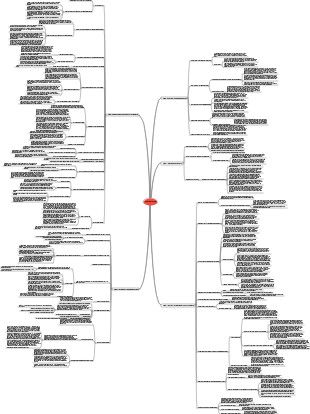
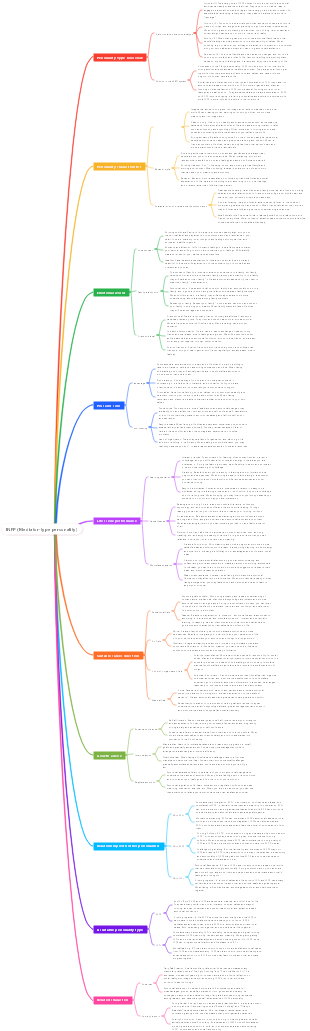
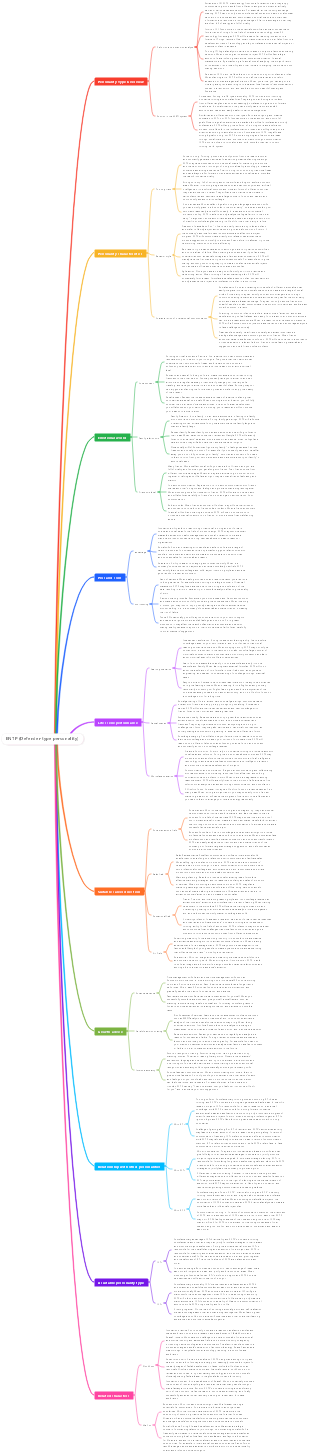
"Thinking, Fast and Slow" is a best-selling psychology book worth reading. By reading this book, readers can learn about the two modes of human thinking and become aware of the biases and errors that are susceptible to rapid thinking. At the same time, readers can also learn how to apply the slow thinking mode to make more in-depth and rational decisions.
Edited at 2024-11-21 16:09:31This template shows the structure and function of the reproductive system in the form of a mind map. It introduces the various components of the internal and external genitals, and sorts out the knowledge clearly to help you become familiar with the key points of knowledge.
This is a mind map about the interpretation and summary of the relationship field e-book, Main content: Overview of the essence interpretation and overview of the relationship field e-book. "Relationship field" refers to the complex interpersonal network in which an individual influences others through specific behaviors and attitudes.
This is a mind map about accounting books and accounting records. The main contents include: the focus of this chapter, reflecting the business results process of the enterprise, the loan and credit accounting method, and the original book of the person.
This template shows the structure and function of the reproductive system in the form of a mind map. It introduces the various components of the internal and external genitals, and sorts out the knowledge clearly to help you become familiar with the key points of knowledge.
This is a mind map about the interpretation and summary of the relationship field e-book, Main content: Overview of the essence interpretation and overview of the relationship field e-book. "Relationship field" refers to the complex interpersonal network in which an individual influences others through specific behaviors and attitudes.
This is a mind map about accounting books and accounting records. The main contents include: the focus of this chapter, reflecting the business results process of the enterprise, the loan and credit accounting method, and the original book of the person.
"Thinking, Fast and Slow"
core concepts
System 1 vs. System 2
System 1 characteristics: fast, automatic, unconscious, associative, emotional, react quickly based on instinct and experience, and consume almost no cognitive resources. For example, seeing an angry face can recognize emotions immediately.
System 2 characteristics: slow, controlled, conscious, rational, analytical, requires concentration and effort, and can perform complex calculations, logical reasoning and other tasks, such as solving a complex mathematical problem.
Interrelationship: System 1 continues to operate, providing impressions, intuition and other information to System 2; System 2 is usually in a relaxed state and is activated when System 1 encounters difficulties or goes against common sense.
cognitive bias
heuristic judgment
Representativeness heuristic: Judgment of probabilities based on how similar things are to typical cases, ignoring basic ratios. For example, it is believed that a quiet person who likes reading is more likely to be a librarian than a salesperson, while ignoring that the number of salespersons is much larger than The fact that there is a population of librarians.
Availability heuristic: Evaluate the probability of an event based on the ease of retrieval of information in memory. For example, if you have seen frequent reports of plane crashes recently, you will overestimate the probability of a plane crash, but in fact its probability may be extremely low.
Anchoring effect: When making decisions, relying too much on the information (anchor) initially obtained, subsequent judgments will be adjusted around the anchor point. For example, in negotiations, the price proposed first often becomes the anchor point for bargaining between the two parties.
Overconfidence
Manifestation: Over-optimism about one's own knowledge, judgment, and prediction abilities, overestimating the probability of success, and underestimating the risk and possibility of failure. For example, entrepreneurs overly believe that their business ideas can succeed, while ignoring risk factors such as market competition.
Psychological roots: self-perception bias, inappropriate assessment of one's own abilities, ignoring the uncertainty of the external environment, etc.
framing effect
Definition: Different ways of framing the same problem can affect people's decision-making, even if the nature of the problem is the same. For example, describing the success rate of a certain surgery, saying "90% of people survive after surgery" is better than "10% after surgery." people will die” more people will undergo surgery.
Influencing factors: language expression, focus, emotional color, etc.
decision making and judgment
prospect theory
Core point of view: People tend to be risk averse when faced with gains, and tend to be risk-prone when faced with losses; people are more sensitive to losses than to gains, for example, when choosing to be sure to get 1,000 yuan or have a 50% chance When receiving 2,000 yuan, most people will choose a sure profit; and when faced with a guaranteed loss of 1,000 yuan or a 50% chance of losing 2,000 yuan, many people will choose to take a risk and gamble.
Value function and weight function: The value function reflects the S-shaped impact of gains and losses on people's psychological value, which is steeper in the loss area; the weight function reflects that people's subjective weights of events with different probabilities are not consistent with the actual probabilities, and for low-probability events It may be overestimated, and it may be underestimated for high-probability events.
Emotional factors in decision-making
Emotional heuristic: Emotions can affect the recognition and judgment of events. Positive emotions may lead to more optimistic evaluations, while negative emotions are the opposite. For example, when you are in a good mood, you are more likely to make optimistic expectations about investment projects.
Emotions and cognitive resources: Strong emotions may tie up cognitive resources and interfere with rational analysis in System 2, such as making impulsive decisions when angry.
Thought and memory
associative mechanism
Formation of associations: Establishing connections between things based on experience, knowledge, perception, etc. For example, when you see a flame, you will associate it with heat, danger, etc.
The influence of associations on thinking: It can quickly provide information and inspiration, but it may also lead to cognitive biases and incorrect judgments, such as refusing to purchase a product due to bad associations with a certain brand.
properties of memory
Encoding and storage of memory: Information enters the brain through the senses and is encoded and stored in different brain areas. It is divided into short-term memory and long-term memory. For example, when memorizing a phone number, it first stays in short-term memory for a short time. If it is used repeatedly, it may enter long-term memory. .
Retrieval and reconstruction of memory: When retrieving memories, the memory is not reproduced completely accurately, but is reconstructed based on clues and the current situation. Memory biases and errors may occur, such as adding one's own imagination when recalling events or changing the memory under the influence of others. content.
Application and inspiration
Application in life
Personal decision-making optimization: Be aware of misunderstandings in thinking, proactively activate System 2 when making important decisions, and conduct rational analysis, such as comparing multiple products and analyzing the pros and cons when purchasing large-ticket items.
Interpersonal communication strategies: Understand the possible cognitive biases of others, avoid communication misunderstandings due to framing effects, etc., and use more appropriate expression methods, such as choosing an appropriate expression frame when persuading others.
Applications in business and economics
Marketing strategy: Use framing effects, anchoring effects, etc. to design product promotion and pricing strategies, such as setting high-price anchors and then launching discounted products, using consumers' psychological illusions to promote sales.
Investment decision analysis: consider the impact of investors' overconfidence, loss aversion and other psychological factors on market fluctuations, and formulate more reasonable investment strategies, such as diversified investments to reduce risks.