MindMap Gallery 23-《Cognitive Nature》
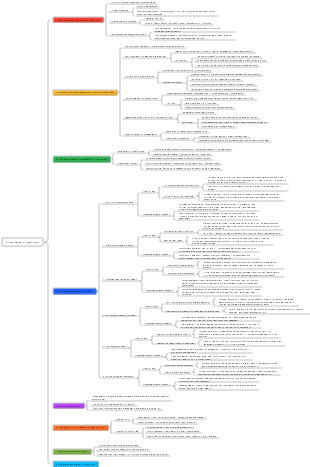
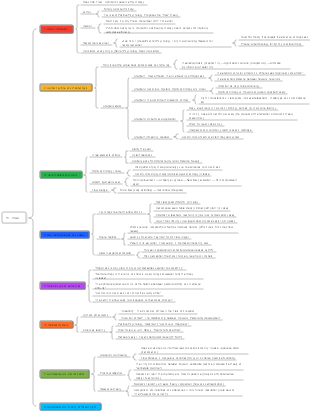
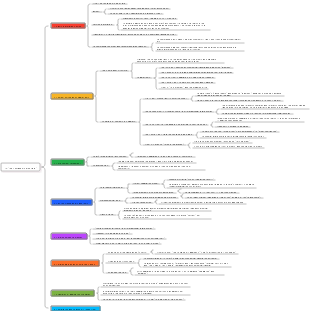
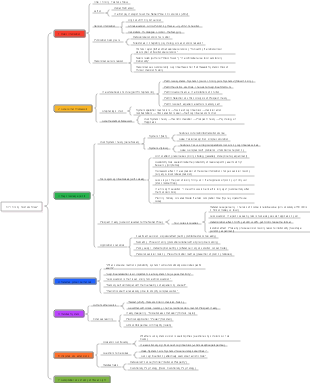
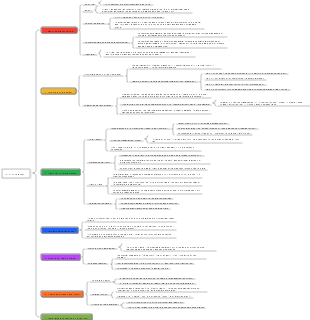
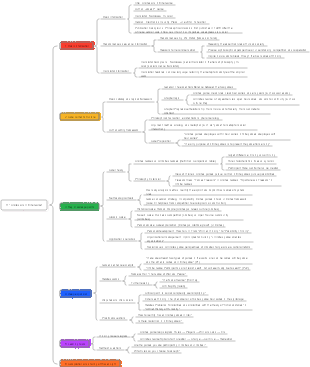
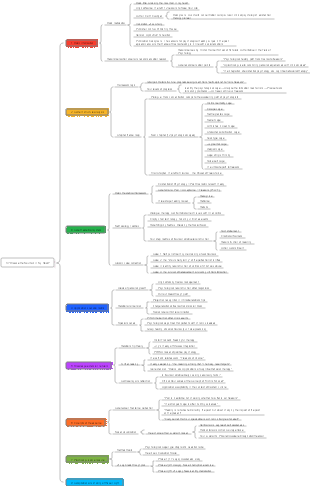
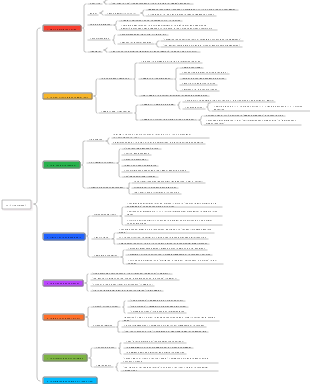
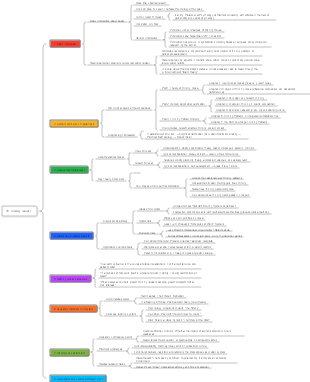
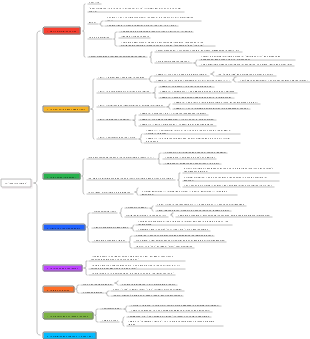
This is a mind map about 23-"Cognitive Nature", the main contents include: 8. Encountering light sorting and sharing, 7. Deep extension, 6. Related knowledge network, 5. Golden sentence system, 4. Key knowledge point system, 3. Core content refinement, 2. Content structure and chapter logic, 1. Basic information.
Edited at 2025-02-27 14:29:00Rumi: 10 dimensions of spiritual awakening. When you stop looking for yourself, you will find the entire universe because what you are looking for is also looking for you. Anything you do persevere every day can open a door to the depths of your spirit. In silence, I slipped into the secret realm, and I enjoyed everything to observe the magic around me, and didn't make any noise. Why do you like to crawl when you are born with wings? The soul has its own ears and can hear things that the mind cannot understand. Seek inward for the answer to everything, everything in the universe is in you. Lovers do not end up meeting somewhere, and there is no parting in this world. A wound is where light enters your heart.
Chronic heart failure is not just a problem of the speed of heart rate! It is caused by the decrease in myocardial contraction and diastolic function, which leads to insufficient cardiac output, which in turn causes congestion in the pulmonary circulation and congestion in the systemic circulation. From causes, inducement to compensation mechanisms, the pathophysiological processes of heart failure are complex and diverse. By controlling edema, reducing the heart's front and afterload, improving cardiac comfort function, and preventing and treating basic causes, we can effectively respond to this challenge. Only by understanding the mechanisms and clinical manifestations of heart failure and mastering prevention and treatment strategies can we better protect heart health.
Ischemia-reperfusion injury is a phenomenon that cellular function and metabolic disorders and structural damage will worsen after organs or tissues restore blood supply. Its main mechanisms include increased free radical generation, calcium overload, and the role of microvascular and leukocytes. The heart and brain are common damaged organs, manifested as changes in myocardial metabolism and ultrastructural changes, decreased cardiac function, etc. Prevention and control measures include removing free radicals, reducing calcium overload, improving metabolism and controlling reperfusion conditions, such as low sodium, low temperature, low pressure, etc. Understanding these mechanisms can help develop effective treatment options and alleviate ischemic injury.
Rumi: 10 dimensions of spiritual awakening. When you stop looking for yourself, you will find the entire universe because what you are looking for is also looking for you. Anything you do persevere every day can open a door to the depths of your spirit. In silence, I slipped into the secret realm, and I enjoyed everything to observe the magic around me, and didn't make any noise. Why do you like to crawl when you are born with wings? The soul has its own ears and can hear things that the mind cannot understand. Seek inward for the answer to everything, everything in the universe is in you. Lovers do not end up meeting somewhere, and there is no parting in this world. A wound is where light enters your heart.
Chronic heart failure is not just a problem of the speed of heart rate! It is caused by the decrease in myocardial contraction and diastolic function, which leads to insufficient cardiac output, which in turn causes congestion in the pulmonary circulation and congestion in the systemic circulation. From causes, inducement to compensation mechanisms, the pathophysiological processes of heart failure are complex and diverse. By controlling edema, reducing the heart's front and afterload, improving cardiac comfort function, and preventing and treating basic causes, we can effectively respond to this challenge. Only by understanding the mechanisms and clinical manifestations of heart failure and mastering prevention and treatment strategies can we better protect heart health.
Ischemia-reperfusion injury is a phenomenon that cellular function and metabolic disorders and structural damage will worsen after organs or tissues restore blood supply. Its main mechanisms include increased free radical generation, calcium overload, and the role of microvascular and leukocytes. The heart and brain are common damaged organs, manifested as changes in myocardial metabolism and ultrastructural changes, decreased cardiac function, etc. Prevention and control measures include removing free radicals, reducing calcium overload, improving metabolism and controlling reperfusion conditions, such as low sodium, low temperature, low pressure, etc. Understanding these mechanisms can help develop effective treatment options and alleviate ischemic injury.
23-《Cognitive Nature》
1. Basic information
Title: Cognitive Nature: Psychological Rules that Make Learning Easy
author:
Peter C. Brown (scientific writer)
Henry L. Rodig III (cognitive psychologist)
Mark A. McDaniel (educational psychologist)
Version:
CITIC Publishing Group, September 2018, 1st edition
Based on 10 years of research results in the fields of cognitive science and neuroscience
Core point of recommendation order:
Fan Deng: Subverts the traditional misunderstanding of repetitive learning and reveals the underlying logic of efficient learning
Yang Zhiping: Transform laboratory results into actionable learning strategies for the public
Translator: Deng Feng (Psychology Major)
2. Content structure and chapter logic
The whole book framework: Theoretical explanation (Chapter 1-4) → Practical application (Chapter 5-8) → Social value (Chapter 9-11)
Chapter 1 Learning is a compulsory course that challenges nature
Core contradiction: intuitive preference (easy learning) vs. scientific method (effective learning)
Key experiments:
Repeated reading group (35% of memory retention after 1 week) vs Active memory group (68% of memory retention after 1 week)
Chapter logic:
Revealing the essence of traditional learning misunderstandings
Introducing the core concept of "desirable difficulties"
Chapter 2 The Essence of Learning: Knowledge Chain and Memory Knot
Core Model:
Knowledge chain: Information forms a chain through logical association
Memory knot: Strengthen key nodes through active extraction
Methodology:
Free memory method (core point of closed volume retelling)
Concept mapping method (visual knowledge association)
Chapter logic:
Explain the dynamic relationship between memory storage and extraction
Provide theoretical basis for subsequent "interval exercises"
Chapter 3 “Post-deliberate practice” era
Subversive view:
Deliberate practice requires combining the three elements of interval, interspersion and diversity
Comparative analysis:
Traditional exercises: concentrated repetition (20%-40% reduction in efficiency)
Optimization mode: 75% familiar with content 25% new challenges (efficiency improvement 33%)
Chapter logic:
Criticize the limitations of mechanical repetition
Propose a new paradigm of "dynamic exercises"
Chapter 4 The "snowball" effect of knowledge
Core mechanism:
Necessary difficulty theory (the greater the learning resistance, the stronger the long-term memory)
Memory reconstruction bidirectional process: storage → extraction → restoration (enhanced neural pathway)
Application scenarios:
Interdisciplinary knowledge connection (case: cross-application of physics and economics)
Chapter logic:
Revealing the nonlinear laws of knowledge accumulation
Transition to practical methodology
Chapter 5 Create a "mind model" that suits you
Core contradiction: Standardized learning vs. Personalized knowledge system
Methodology:
Generate effects (try to solve the problem first and then learn the answer)
Interval exercises Combination of interlaced exercises (case: alternating grammar and vocabulary training in language learning)
Key experiments:
Mathematical Modeling Competition: Groups using generative effects are 27% faster to solve problems
Chapter logic:
From theory to personal practice
Emphasize the flexibility of knowledge application
Chapter 6 Reflection: Hidden Path to Cognitive Upgrade
Core Model:
Reflection on the four-step method (description → analysis → summary → migration)
Key data:
Radiologists improve diagnosis accuracy by 19% through reflection log training
Chapter logic:
Revealing the importance of metacognition
Connect "Extraction Exercise" and "Knowledge Transfer"
Chapter 7 The "Cognitive Toolbox" to Solve Complex Problems
Tool matrix:
Analogy reasoning method (Case: Darwin uses Malthusian population theory to inspire evolution theory)
Diversified representation method (the same problem is expressed in multiple forms in words/charts/formula)
Application scenarios:
"3×3 risk assessment model" in business decision-making
Chapter logic:
Integrate the previous methodology
Provide a systematic problem-solving framework
Chapter 8: Crossing the gap between "knowing" and "doing"
Core contradiction: cognitive understanding vs behavioral change
Key experiments:
Pilot simulation training: interval training team operation errors decreased by 41%
Methodology:
Reflection application of STAR model (situation → task → action → result)
Chapter logic:
Focus on the transformation mechanism of knowledge to behavior
Lay the foundation for organizing learning scenarios
Chapter 9 Social Learning: Evolution of Group Cognition
Core theory:
Dynamic Test Theory (Expose cognitive blind spots through teamwork)
Case:
Silicon Valley technology companies’ “error review meeting” system (error rate reduced by 35%)
Chapter logic:
Expand from individual learning to group level
Discuss the direction of reform of the education system
Chapter 10 The Cognitive Revolution of Educators
Subversive view:
The role of teacher has changed from a “knowledge transferor” to a “cognitive coach”
Practical Plan:
Classroom dynamic quiz (interspersed instant test every 20 minutes)
Evolution system for wrong questions (transform errors into learning resources)
Chapter logic:
Criticize the shortcomings of traditional education models
Propose an implementable teaching reform path
Chapter 11 The Law of Survival of Lifelong Learners
Core Model:
Ability half-life curve (the relationship between knowledge elimination speed and learning strategy)
Methodology:
3R learning loop (retrieve → reconstruct Reorganize → correlate Relate)
Chapter logic:
Respond to the cognitive challenges of the digital age
Summary of the whole book to build a complete learning ecosystem
3. Core content refinement
Subversive Theory:
Desirable Difficulties
Generation Effect
Dynamic Test Theory
Methodological system: (forming a complete learning closed loop)
Interval exercises → Interlude exercises → Diversified exercises → Reflective extraction (forming a complete learning closed loop)
Key experimental data:
Air Force Pilot Training Research: Interval Training Team Efficiency Improves 22%
Medical School Case Teaching: Interspersed Exercises Reduce Misdiagnosis Rate by 31%
4. Key knowledge point system
Core theoretical model:
Memory intensity vs extraction intensity
Necessary difficulty curve
Learning the Pyramid (Dynamic Version)
Tool matrix:
Knowledge retention self-test table
Interval review cycle algorithm
Concept cross comparison table
Application scenarios:
Exam Review: Dynamically Generate Knowledge Tree
Skill training: 3×3 practice method
Workplace Learning: STAR Model of Reflecting the Log
5. Golden sentence system
"Memory is the residue of thinking"
"The easier it is to acquire knowledge, the easier it is to lose it"
"Exams are one of the most effective learning tools"
"The degree of pain in learning is U-shaped and the final effect"
6. Related Knowledge Network
Extended by the author:
Rodiger's Science of Memory
McDaniel, Educational Neuroscience
Related disciplines:
The Bjork couple's "New Memory Theory"
Daniel Willingham "Why Students Don't Like to Go to School"
Controversy point:
Applicable boundaries for necessary difficulty (disputed by special groups)
The balance of pros and cons of memory outsourcing in the digital age
7. Deep extension
Unsolved question:
Quantitative relationship between neuroplasticity and necessary difficulty
The impact of artificial intelligence on traditional learning theory
Practical Paradox:
The contradiction between short-term efficiency decline and long-term effect improvement
Practical Dilemma of Personalized Difficulty Calibration
Extended reading:
Analysis of similarities and differences in "Deliberate Practice"
Comparison of methodology of "The Way of Learning"
8. Compilation and sharing of Hidden Light