MindMap Gallery Adobe Market Segmentation, Targeting and Positioning Analysis
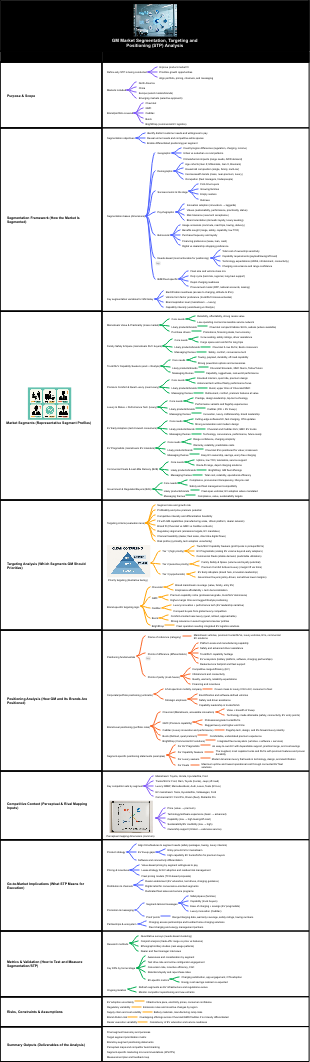
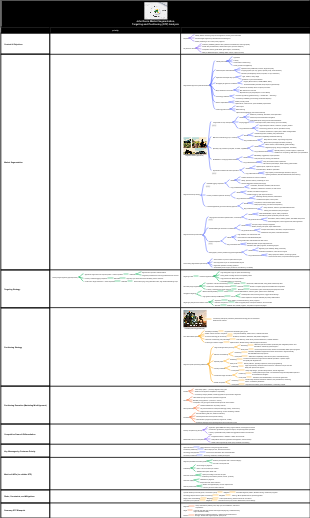
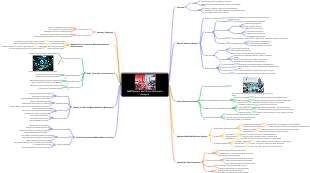
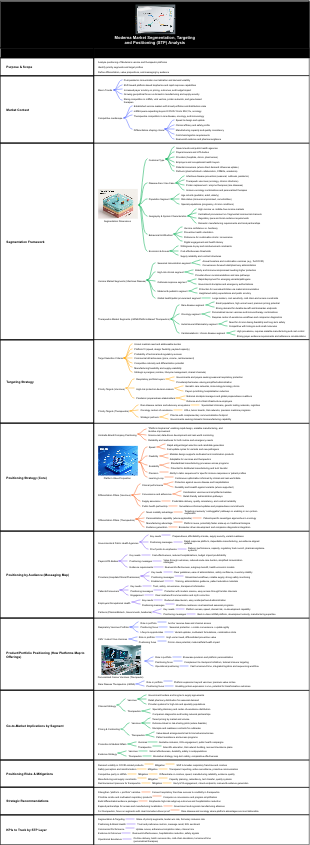
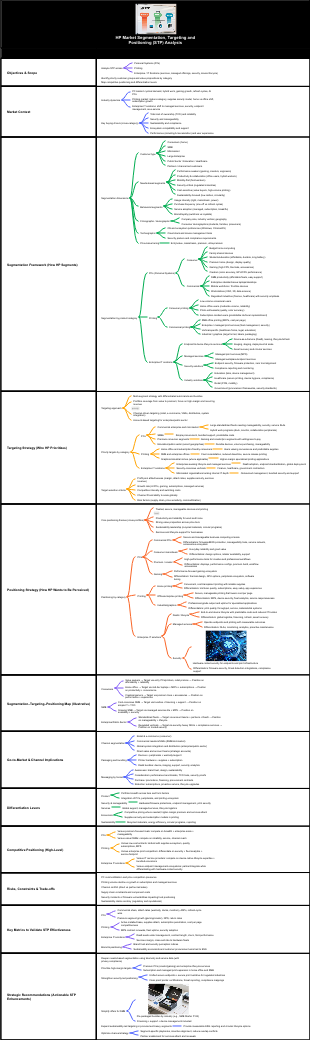
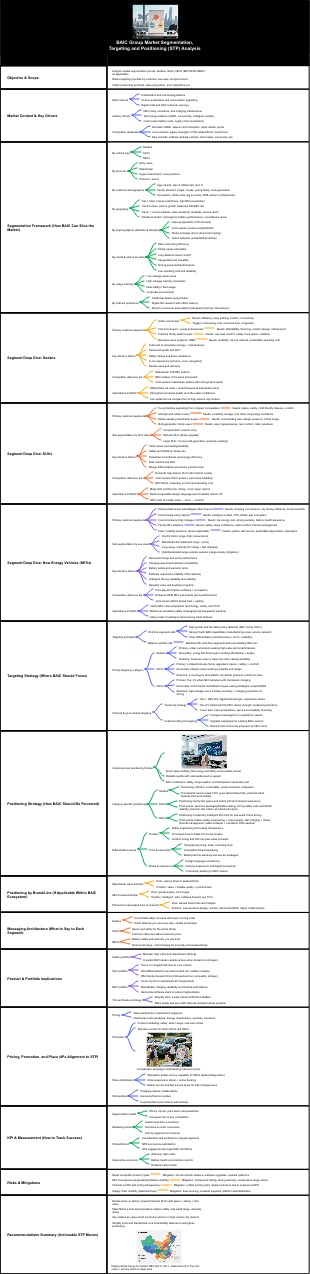
This analysis explores how Adobe strategically segments, targets, and positions its diverse product offerings across Creative Cloud, Experience Cloud, and Document Cloud. Segmentation bases include demographics (age, income, occupation), geography (North America, EMEA, APAC), behavior (usage frequency, purchase patterns), psychographics (creative mindset, tech adoption), needs (professional tools, collaboration, analytics), and price sensitivity (SMB vs. enterprise). Key customer groups include creative professionals (designers, photographers, videographers) requiring advanced tools, regular updates, and ecosystem integration; prosumers and students seeking accessible, value-priced subscriptions; enterprise teams needing collaboration, security, and administration features; digital marketers leveraging Experience Cloud for analytics, personalization, and campaign management; and IT stakeholders focused on integration, scalability, and compliance. Each segment’s unique needs, constraints, and priorities are mapped to Adobe’s capabilities. Creative professionals prioritize performance and AI features; prosumers value affordability and ease of use; enterprises require robust security, deployment flexibility, and integration; marketers seek real-time insights and customer journey tools; IT demands reliability and data governance. Positioning aligns solutions with workflows and willingness-to-pay. Creative Cloud is positioned as essential for creative workflows; Document Cloud emphasizes productivity and digital transformation; Experience Cloud focuses on data-driven customer engagement. This STP framework enables targeted growth and competitive positioning, ensuring Adobe addresses diverse customer needs across a complex global market.
Edited at 2026-03-25 15:17:27This strategic SWOT analysis explores how Aeon can navigate the competitive online landscape, highlighting strengths, weaknesses, opportunities, and threats. Strengths include strong brand recognition (trusted Japanese heritage, quality), omnichannel capabilities (stores + online + mall integration), customer loyalty programs (Aeon Card, points, member pricing), and physical footprint (extensive store network for pickup/returns). Weaknesses encompass digital maturity gaps (e-commerce penetration, app functionality, personalization vs. Amazon, Alibaba), cost structure challenges (store-heavy, real estate, labor), and supply chain complexity (fresh food, frozen logistics for online). Opportunities include enhancing e-commerce competitiveness (faster delivery, wider assortment, lower minimum order), leveraging data-driven strategies (purchase history, personalized offers, inventory optimization), expanding omnichannel integration (buy online pick up in store, ship from store), and private label growth (Topvalu, localized brands). Threats involve online-first players (Amazon, Alibaba, Sea Limited) with lower costs, wider selection, faster delivery, market dynamics (changing consumer behavior post-COVID, discount competitors), and regulatory risks (data privacy, cross-border e-commerce rules). Aeon can strengthen market position by investing in digital capabilities, leveraging store assets for omnichannel, and using customer data for personalization, while addressing cost structure and online competition.

This analysis explores how Aeon effectively tailors offerings to meet the diverse needs of family-oriented consumers through a comprehensive Segmentation, Targeting, and Positioning (STP) framework. Demographic segmentation examines family life stages (young families with babies, school-aged children, teenagers, empty nesters), household sizes (small vs. large), income levels (mass, premium), and parent age bands (millennials, Gen X). This identifies distinct consumer groups with different spending patterns. Geographic segmentation highlights store catchment types (urban, suburban, rural), community characteristics (density, income, competition), and local preferences (fresh food, halal, Japanese products). Psychographic segmentation delves into family values (health, safety, education, convenience), lifestyle orientations (busy professionals, home-centered, eco-conscious). Behavioral segmentation focuses on shopping missions (daily grocery, weekly stock-up, seasonal shopping), price sensitivity (value seekers, premium), channel preferences (in-store, online, pickup). Needs-based segmentation reveals core family needs related to value (good-better-best pricing), budget considerations (affordability, promotions, member pricing), safety (food quality, product recall), convenience (one-stop shopping, parking, store hours). Targeting prioritizes young families with school-aged children, budget-conscious households, and convenience-seeking shoppers. Positioning emphasizes Aeon as a family-friendly, value-for-money, one-stop destination with Japanese quality and local relevance. These insights enhance family shopping experiences through tailored assortments (kids’ products, school supplies), promotions (family bundles, weekend events), and services (nursing rooms, kids’ play areas).
This Kream Sneaker Consumption Scene Analysis Template aims to visualize purchasing and consumption journeys of sneakers, identifying key demand drivers and obstacles. User behavior within Kream includes searching, bidding, buying, selling, authentication, and community engagement. External influences include brand drops (Nike, Adidas), social media (Instagram, TikTok), influencer hype, and cultural trends. Target categories: limited editions, collaborations, retro releases, performance sneakers, and general releases. Timeframes: launch day, first week, first month, long-term (seasonal, yearly). Regions: North America, Europe, Asia (Korea, China, Japan). User segments: Collectors: value rarity, condition, completeness (box, accessories). KPIs: collection size, spend, authentication rate. Resellers: value profit margin, volume, turnover. KPIs: sell-through rate, average profit, listing frequency. Sneakerheads: value hype, trends, community validation. KPIs: purchase frequency, social engagement, wishlist adds. Casual trend followers: value style, convenience, price. KPIs: conversion rate, average order value, repeat purchases. Gift purchasers: value ease, presentation, brand trust. KPIs: gift message usage, return rate. Consumption journey: Awareness: social media, email, push notifications. Search: browse, filter, search by brand, model, size. Purchase: bid, buy now, payment, shipping. Authentication: inspection, verification, certification. Resale: list, price, sell, transfer. Sharing: review, unboxing, social post, community discussion. Key performance indicators: conversion rate, sell-through rate, average order value, customer lifetime value, authentication pass rate, return rate, Net Promoter Score. This framework helps understand sneaker trading dynamics, user motivations, and touchpoints for engagement and satisfaction.
This strategic SWOT analysis explores how Aeon can navigate the competitive online landscape, highlighting strengths, weaknesses, opportunities, and threats. Strengths include strong brand recognition (trusted Japanese heritage, quality), omnichannel capabilities (stores + online + mall integration), customer loyalty programs (Aeon Card, points, member pricing), and physical footprint (extensive store network for pickup/returns). Weaknesses encompass digital maturity gaps (e-commerce penetration, app functionality, personalization vs. Amazon, Alibaba), cost structure challenges (store-heavy, real estate, labor), and supply chain complexity (fresh food, frozen logistics for online). Opportunities include enhancing e-commerce competitiveness (faster delivery, wider assortment, lower minimum order), leveraging data-driven strategies (purchase history, personalized offers, inventory optimization), expanding omnichannel integration (buy online pick up in store, ship from store), and private label growth (Topvalu, localized brands). Threats involve online-first players (Amazon, Alibaba, Sea Limited) with lower costs, wider selection, faster delivery, market dynamics (changing consumer behavior post-COVID, discount competitors), and regulatory risks (data privacy, cross-border e-commerce rules). Aeon can strengthen market position by investing in digital capabilities, leveraging store assets for omnichannel, and using customer data for personalization, while addressing cost structure and online competition.
This analysis explores how Aeon effectively tailors offerings to meet the diverse needs of family-oriented consumers through a comprehensive Segmentation, Targeting, and Positioning (STP) framework. Demographic segmentation examines family life stages (young families with babies, school-aged children, teenagers, empty nesters), household sizes (small vs. large), income levels (mass, premium), and parent age bands (millennials, Gen X). This identifies distinct consumer groups with different spending patterns. Geographic segmentation highlights store catchment types (urban, suburban, rural), community characteristics (density, income, competition), and local preferences (fresh food, halal, Japanese products). Psychographic segmentation delves into family values (health, safety, education, convenience), lifestyle orientations (busy professionals, home-centered, eco-conscious). Behavioral segmentation focuses on shopping missions (daily grocery, weekly stock-up, seasonal shopping), price sensitivity (value seekers, premium), channel preferences (in-store, online, pickup). Needs-based segmentation reveals core family needs related to value (good-better-best pricing), budget considerations (affordability, promotions, member pricing), safety (food quality, product recall), convenience (one-stop shopping, parking, store hours). Targeting prioritizes young families with school-aged children, budget-conscious households, and convenience-seeking shoppers. Positioning emphasizes Aeon as a family-friendly, value-for-money, one-stop destination with Japanese quality and local relevance. These insights enhance family shopping experiences through tailored assortments (kids’ products, school supplies), promotions (family bundles, weekend events), and services (nursing rooms, kids’ play areas).
This Kream Sneaker Consumption Scene Analysis Template aims to visualize purchasing and consumption journeys of sneakers, identifying key demand drivers and obstacles. User behavior within Kream includes searching, bidding, buying, selling, authentication, and community engagement. External influences include brand drops (Nike, Adidas), social media (Instagram, TikTok), influencer hype, and cultural trends. Target categories: limited editions, collaborations, retro releases, performance sneakers, and general releases. Timeframes: launch day, first week, first month, long-term (seasonal, yearly). Regions: North America, Europe, Asia (Korea, China, Japan). User segments: Collectors: value rarity, condition, completeness (box, accessories). KPIs: collection size, spend, authentication rate. Resellers: value profit margin, volume, turnover. KPIs: sell-through rate, average profit, listing frequency. Sneakerheads: value hype, trends, community validation. KPIs: purchase frequency, social engagement, wishlist adds. Casual trend followers: value style, convenience, price. KPIs: conversion rate, average order value, repeat purchases. Gift purchasers: value ease, presentation, brand trust. KPIs: gift message usage, return rate. Consumption journey: Awareness: social media, email, push notifications. Search: browse, filter, search by brand, model, size. Purchase: bid, buy now, payment, shipping. Authentication: inspection, verification, certification. Resale: list, price, sell, transfer. Sharing: review, unboxing, social post, community discussion. Key performance indicators: conversion rate, sell-through rate, average order value, customer lifetime value, authentication pass rate, return rate, Net Promoter Score. This framework helps understand sneaker trading dynamics, user motivations, and touchpoints for engagement and satisfaction.
Adobe STP Analysis (Market Segmentation, Targeting, Positioning)
Purpose & Scope
Analyze Adobe’s market segmentation across product domains (Creative, Experience, Document)
Define targeting priorities and positioning by customer needs and use cases
Segmentation
Segmentation Framework
Demographic / Firmographic
Individual consumers
SMBs
Mid-market
Enterprises
Education (K-12, Higher Ed)
Government / regulated industries
Geographic
North America
EMEA
APAC
LATAM
Localization needs (language, formats, compliance)
Behavioral
Usage frequency (occasional, regular, power users)
Subscription lifecycle (trial, new subscriber, loyal, churn risk)
Feature adoption (basic editing, collaboration, automation, AI-assisted)
Platform preference (desktop, web, mobile)
Psychographic
Creator identity (hobbyist, aspiring, professional)
Brand-driven vs performance-driven marketers
Risk tolerance (innovators vs conservative adopters)
Needs-based / Jobs-to-be-Done
Create and edit content fast
Produce consistent brand assets at scale
Collaborate across teams and approvals
Deliver personalized digital experiences
Securely sign, store, and manage documents
Reduce compliance and operational risk
Price sensitivity / Value perception
Budget-constrained users
Willing-to-pay for productivity / premium features
Seat-based vs consumption-based preferences
Segment by who they are, where they operate, how they behave, what they value, and the jobs they must get done—then map to willingness-to-pay.
Market Segments by Domain
Creative Software (Creative Cloud)
Creative Professionals
Designers, photographers, video editors, animators
Agencies and studios
Key needs
Advanced tools, precision control, performance
End-to-end workflows (capture → edit → publish)
Interoperability and file standards
Collaboration and versioning
Key constraints
Deadlines, high quality requirements
Hardware acceleration, color accuracy
Prosumer / Enthusiast Creators
Content creators for social platforms, small brands
Key needs
Templates, presets, quick edits
Cross-device workflows, easy publishing
Learning resources and guided experiences
Key constraints
Time, skill gaps, cost sensitivity
Students & Educators
Classroom instruction, portfolio building
Key needs
Affordable access, education licensing
Curriculum-aligned training
Collaboration and submissions
Enterprise Creative Teams
In-house brand and creative operations
Key needs
Brand consistency and governance
Asset management integration (DAM)
Security, SSO, admin controls
Scalable collaboration and approvals
Digital Media / Marketing (Experience Cloud)
Enterprise Digital Marketers
Large B2C/B2B organizations
Key needs
Customer journey orchestration
Personalization at scale
Analytics/attribution, experimentation
Omnichannel execution (web, email, mobile, ads)
Key constraints
Data silos, privacy regulations, legacy systems
Marketing Operations & IT Stakeholders
Owners of martech stack and governance
Key needs
Integrations, APIs, data governance
Reliability, scalability, security
Workflow automation and SLAs
Industry-Specific Marketers
Retail, CPG, financial services, healthcare, travel
Key needs
Compliance-ready personalization
Industry data models and connectors
Speed-to-market for campaigns
Mid-market Marketing Teams
Scaling brands with lean teams
Key needs
Simplified deployment and packaged capabilities
Faster time-to-value, managed services/partners
Document Management (Document Cloud / Acrobat / Sign)
Individuals
Students, freelancers, consumers
Key needs
View, edit, convert, compress PDFs
Fill & sign, basic e-sign
Mobile scanning and sharing
SMBs
Contracts, invoicing, HR documents
Key needs
Simple e-sign workflows
Templates, audit trails
Affordable team plans
Enterprises
Procurement, HR, legal, sales operations
Key needs
High-volume e-signature
Identity verification, compliance (e.g., SOC2, ISO)
Integrations (CRM/ERP), workflow automation
Centralized admin, retention policies
Regulated Industries / Government
Financial services, healthcare, public sector
Key needs
Compliance controls, data residency options
Advanced authentication, tamper evidence
Accessibility standards and records management
Targeting
Targeting Strategy Overview
Multi-segment targeting with product-suite alignment
Creatives → Creative Cloud
Marketers/Enterprises → Experience Cloud
Broad knowledge workers → Acrobat + Sign
Land-and-expand motions
Start with a core app (e.g., Photoshop/Acrobat/Sign)
Expand to teams, admin controls, integrations, full suites
Cross-sell between domains
Creative production + marketing activation (content supply chain)
Document workflows integrated with CRM/ERP and approvals
Primary Target Segments (Highest Strategic Priority)
Creative Professionals and Creative Teams
High willingness-to-pay for best-in-class tools
Strong network effects and industry standardization
Enterprise Digital Experience Leaders
Large contract values, long-term platform adoption
Need end-to-end experience stack and services ecosystem
Enterprise Document Workflows
Broad horizontal need; high renewal potential
Compliance and integration drive stickiness
Secondary Target Segments (Growth & Expansion)
Prosumer creators and social-first content creators
Growth via easier tools, templates, mobile-first experiences
SMBs adopting e-sign and PDF workflows
Value-based bundles, simple onboarding
Education (students as future professionals)
Long-term pipeline, certification, campus-wide agreements
Targeting Criteria (How Segments Are Prioritized)
Market attractiveness
TAM size, growth rate, category maturity
Competitive intensity and differentiation
Ability to sustain premium position
Profitability
ARPU, gross margin, support costs
Strategic fit
Alignment with platform strategy and ecosystem
Retention / switching costs
File formats, workflows, integrations, collaboration networks
Implementation feasibility
Time-to-value, deployment complexity, partner availability
Targeting Tactics
Packaging & Pricing
Individual vs team vs enterprise tiers
Bundles by role (creative, video, design, document)
Volume licensing and enterprise agreements
Channel Strategy
Direct sales for enterprise Experience Cloud and large Sign deals
Self-serve ecommerce for individual Creative Cloud/Acrobat
Resellers and system integrators for implementation-heavy accounts
Education channel partners and campus licensing
Lifecycle Marketing
Trials and freemium entry points (where applicable)
In-product nudges for feature adoption
Upgrade paths to higher tiers and adjacent products
Partner Ecosystem
Martech and data platform integrations
Creative plugins, marketplaces, and developer APIs
SI/consulting for enterprise deployments
Positioning
Overall Brand Positioning
The industry standard platform for creating, delivering, and managing digital experiences and documents
Positioning Pillars
Best-in-class creative quality and professional control
End-to-end workflow integration (create → manage → deliver)
Cloud-enabled collaboration and cross-device continuity
Enterprise-grade security, governance, and compliance
Ecosystem strength (standards, integrations, community, partners)
Innovation leadership (automation and AI-assisted capabilities)
Domain-Specific Positioning
Creative Cloud
Positioning statement
Professional-grade creative tools that set industry standards and power the world’s creators
Key differentiators
Depth of features and precision
Broad app suite (design, photo, video, audio)
File compatibility and collaboration features
Rich learning resources and community
Proof points (typical)
Widespread professional adoption
Integration across apps and services
Experience Cloud
Positioning statement
Enterprise platform to orchestrate personalized customer experiences using content, data, and journeys
Key differentiators
Content + data + execution integration
Advanced analytics, experimentation, orchestration
Enterprise scalability and governance
Proof points (typical)
Large enterprise deployments
Extensive partner and integration ecosystem
Document Cloud (Acrobat/Sign)
Positioning statement
Trusted digital document standard for PDFs and e-signatures that streamlines business and personal workflows
Key differentiators
PDF standard leadership and reliability
Secure, compliant e-sign workflows with auditability
Integrations with productivity and business systems
Proof points (typical)
Broad adoption for PDF use cases
Compliance capabilities for enterprise
Positioning by Segment (Messaging Emphases)
Individuals / Students
Easy to use, quick results, templates and guided workflows
Affordable plans and learning resources
Professionals
Precision, performance, advanced controls, interoperability
Time-saving workflows and pro-grade output
Teams / SMBs
Collaboration, shared libraries/assets, approvals
Simple admin, predictable pricing, fast onboarding
Enterprises
Governance, security, compliance, scalability
Integrations, automation, measurable ROI
Competitive Context (Implications for STP)
Creative Tools Competition
Differentiation levers
Professional depth vs ease-of-use tools
Cross-app workflows and standards
Community, plugins, and training ecosystem
Risk areas
Low-cost alternatives, niche best-of-breed apps, mobile-first tools
Digital Experience / Martech Competition
Differentiation levers
Unified platform vs fragmented stack
Data + content integration and orchestration
Enterprise services and partner support
Risk areas
Long sales cycles, implementation complexity, switching costs
Document & E-sign Competition
Differentiation levers
PDF ubiquity and trust
Compliance, security, enterprise integrations
Ease-of-use for everyday document tasks
Risk areas
Commodity pricing pressure, feature parity in e-sign
Go-to-Market Alignment
Product
Suite strategy with modular adoption
Cloud services to connect apps and workflows
Admin and governance features for teams/enterprises
Price
Tiered subscriptions and volume discounts
Enterprise contracts with support and SLAs
Place (Distribution)
Self-serve for individuals/SMBs
Direct sales + partners for enterprise
Promotion
Creator community and thought leadership
Customer proof, industry events, partner co-marketing
In-product education and certification programs
Metrics to Evaluate STP Effectiveness
Acquisition
Trial-to-paid conversion
CAC by segment and channel
Engagement & Adoption
Feature adoption rates (collaboration, AI features, templates)
Seat utilization and active users
Retention & Expansion
Churn and renewal rates by segment
Net revenue retention (NRR)
Cross-sell/upsell penetration across clouds
Enterprise Outcomes
Time-to-value, deployment success, integration depth
Customer satisfaction (NPS/CSAT) and support metrics
Brand & Positioning
Share of voice, preference, consideration in target segments
Perceived differentiation (quality, trust, innovation)