MindMap Gallery Dental tissue
This is a mind map about dental tissue, mainly including: enamel, composition. Help you become familiar with the key points of knowledge and strengthen memory. Students in need can bookmark it.
Edited at 2025-02-25 20:49:59This template shows the structure and function of the reproductive system in the form of a mind map. It introduces the various components of the internal and external genitals, and sorts out the knowledge clearly to help you become familiar with the key points of knowledge.
This is a mind map about the interpretation and summary of the relationship field e-book, Main content: Overview of the essence interpretation and overview of the relationship field e-book. "Relationship field" refers to the complex interpersonal network in which an individual influences others through specific behaviors and attitudes.
This is a mind map about accounting books and accounting records. The main contents include: the focus of this chapter, reflecting the business results process of the enterprise, the loan and credit accounting method, and the original book of the person.
This template shows the structure and function of the reproductive system in the form of a mind map. It introduces the various components of the internal and external genitals, and sorts out the knowledge clearly to help you become familiar with the key points of knowledge.
This is a mind map about the interpretation and summary of the relationship field e-book, Main content: Overview of the essence interpretation and overview of the relationship field e-book. "Relationship field" refers to the complex interpersonal network in which an individual influences others through specific behaviors and attitudes.
This is a mind map about accounting books and accounting records. The main contents include: the focus of this chapter, reflecting the business results process of the enterprise, the loan and credit accounting method, and the original book of the person.
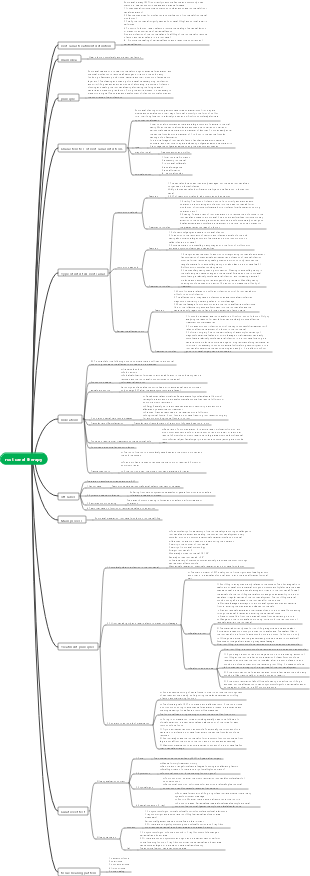
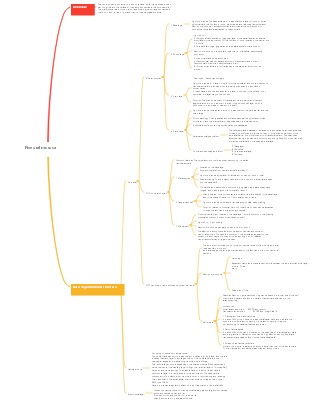
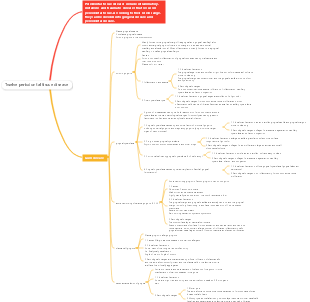
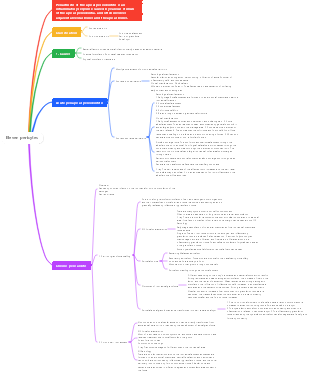
Dental tissue
constitute
Hard tissue: enamel, cementum, dentin
Soft tissue: dental pulp—connects the central pulp cavity to periodontal tissue
Intersection between hard tissues: enamel, dentin-enanguin dentin; dentin, cement-dentin cement; enamel, cement-enanguin cement
Enamel: Specialized epithelial tissue Dentin, cementum, pulp: connective tissue.
Tooth enamel
characteristic
1. Cell-free components: continuous loss and inability to regenerate 2. Non-vascular: Limited nutritional source 3. Low organic content: compressive resistance, toughness 4. The hardest tissue: 296KHN, wear-resistant
Physical and chemical characteristics
1. Distribution and thickness: edge: 2mm; tip: 2.5mm; neck: thin, blade-shaped 2. Color: Milky white or light yellow, depending on the thickness of the enamel and the degree of mineralization 3. Hardness: 296KHN (Knoop hardness number) - wear-resistant! quartz (1) Resist friction and protect deep tissue (2) The content of inorganic substances is high, so it is highly brittle and easy to break - it is impossible to get a beer bottle (3) Observation with grinding slices-slicing will demineralize, and tissue with high inorganic content will be removed 4. Composition: Inorganic substances: 96% (W/W) 86% (V/V) Organic substances: 1% (W/W) 2% (V/V) Water: 3% (W/W) 12% (V/V) 5. Inorganic substances: calcium (Ca2), phosphorus (P3-) ionic apatite crystals—90% Other phosphate crystals are a small amount 6. Organic substances: Less than 1%, composed of protein and lipids: protein: Types: three major categories, including amylogenin, non-enamel and protease Function: The function of guiding the growth of enamel crystals, bonding crystals and glaze columns 7. Water in the enamel: >Binding water: surround the crystal (mainly present form), and form a crystal hydration layer with the help of OH and CO32 on the crystal surface: >Free water 8. Metabolism of enamel > Have metabolic ability >When the pulp is necrotic, the enamel metabolism is affected. The enamel loses its luster, becomes black and brittle
Organizational structure
(I) The basic structure of enamel - glaze column (Enamel Rod)
1. Concept: An elongated columnar structure (diameter 4-6μm), originates from the enamel dentine boundary, runs through the entire layer of the enamel to the surface of the tooth, and is composed of flat hexagonal prism-shaped crystals in a certain alignment direction.
2. Walking direction: the route of retreating when the enamel of ameloblasts is formed. They are wound across each other, with a length greater than the thickness of the enamel at the corresponding part. Glaze column length > glaze thickness. Increase enamel strength and reduce enamel cracking.
3. Arrangement method: bottom of the pit and groove: concentrated from the enamel dentine boundary to the bottom of the pit and groove, radial, herringbone; neck: nearly parallel
4. Light mirror: cross section - fish scale; longitudinal section - glaze column and intercolumn
5. Electron microscope (cross cross section): racket-like, head-large, nearly round, tail-slim; adjacent glaze columns are arranged in the head and tail; they are composed of flat hexagonal prism-shaped crystals in a certain alignment direction. Crystal width: 60-70nm Thickness: 25-30nm Length: >100um
6. Crystal direction: glaze column head: parallel to glaze crystal; move from neck to tail: gradually angled. The tail of the glaze column: inclined at 65-70° with the long axis of the glaze column:
Glaze column sheath: There is an uneven widened gap at the intersection of the tail of a glaze column and two groups of crystals adjacent to the head of the glaze column. This type of gap forms the arc-shaped boundary of the head of the glaze column, namely the glaze column sheath.
Trace elements: resistance to caries: fluorine, boron, barium, magnesium, molybdenum, strontium, vanadium; Prone to caries: lithium carbonate, cadmium chloride, iron, lead, etc.
Dental tissue
Tooth enamel
Organizational structure
(II) Enamel dentin boundary and structures related to the initial formation of enamel
1.Enamel-dentinal Junction, EDJ
2. Enamel tufts
3.Enamel pindle
4. Glaze plate (Enamel1 amellae)