MindMap Gallery Thirteen Oral mucosal blister and ulcerative lesions
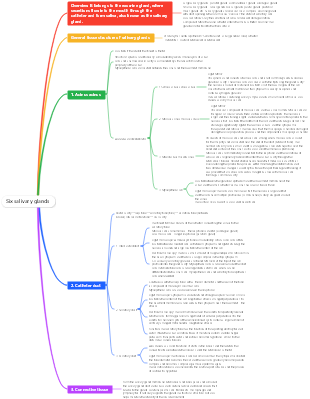
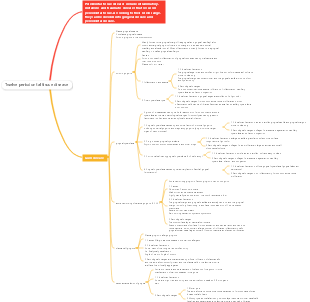
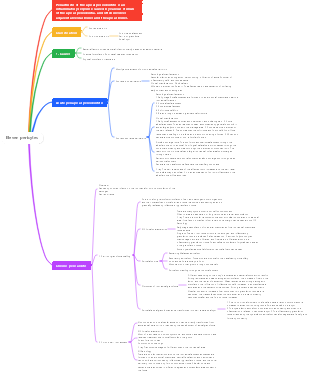
This is a mind map about the thirteen oral mucosal blister and ulcerative lesions. The main contents include: recurrent aphthous ulcer, herpes simplex, pemphigoides (lichen planus pemhigoides, LPP), and pemphigus.
Edited at 2025-02-25 20:47:56This template shows the structure and function of the reproductive system in the form of a mind map. It introduces the various components of the internal and external genitals, and sorts out the knowledge clearly to help you become familiar with the key points of knowledge.
This is a mind map about the interpretation and summary of the relationship field e-book, Main content: Overview of the essence interpretation and overview of the relationship field e-book. "Relationship field" refers to the complex interpersonal network in which an individual influences others through specific behaviors and attitudes.
This is a mind map about accounting books and accounting records. The main contents include: the focus of this chapter, reflecting the business results process of the enterprise, the loan and credit accounting method, and the original book of the person.
This template shows the structure and function of the reproductive system in the form of a mind map. It introduces the various components of the internal and external genitals, and sorts out the knowledge clearly to help you become familiar with the key points of knowledge.
This is a mind map about the interpretation and summary of the relationship field e-book, Main content: Overview of the essence interpretation and overview of the relationship field e-book. "Relationship field" refers to the complex interpersonal network in which an individual influences others through specific behaviors and attitudes.
This is a mind map about accounting books and accounting records. The main contents include: the focus of this chapter, reflecting the business results process of the enterprise, the loan and credit accounting method, and the original book of the person.
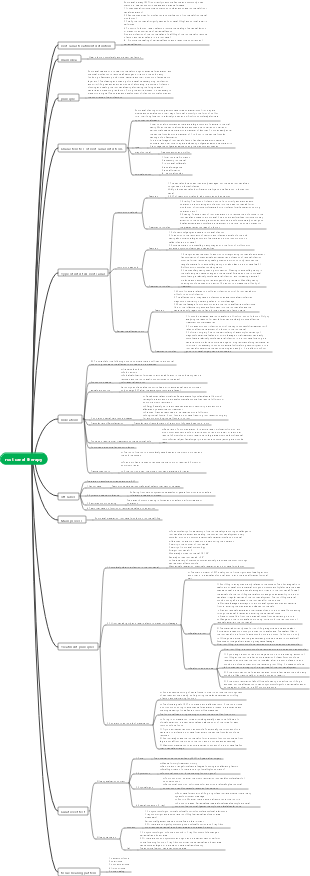
Thirteen oral mucosal blister and ulcerative lesions
Pemphigus
It is a rare and serious group of mucosal skin autoimmune diseases. The autoantigen is epithelial desmosin, and the intercellular connection structure is destroyed to form an epithelial blister. If left untreated, there are four main types of patients who often die in clinical practice, including Pemphigus vulgaris Pemphigus fo lacteus paraneoplastic pemphigus (PNP) IgA pemphigus (Iga pemphigus). Among them, pemphigus vulgaris is the most common, and most cases have oral mucosa involvement, and often occurs before skin lesions.
[Cause] Pemphigus is an autoimmune disease. In pemphigus vulgaris, the body produces autoantibodies to a protein that constitutes epithelial cell desmoglein3, which causes the cell connection to be destroyed and the cell-cell loss of adhesion and separates.
[Clinical manifestations] Patients have a wide distribution of age, but are common in the age of 40-60, and are slightly more common in women. Most cases have oral manifestations, and about 60% of oral mucosal lesions appear before skin lesions, and oral lesions are more stubborn and difficult to cure during the treatment process. They are called "coming early and leaving late". Pemphigus in the oral mucosa can occur widely in any part, with the most common occurrence of the cheek, palate, and gingival mucosa. It is thin-walled blisters at the beginning, but it ruptured quickly. During clinical examination, it is common to have superficial erythema erosion and ulcers, accompanied by obvious pain. The erosion zone generally has clear boundaries, sometimes with a large range, and is in irregular map patterns. Gently pushing the seemingly normal mucosa between the erosion zones can cause epithelial separation and form new blisters, called Nikolsky's sign. This phenomenon is not unique to pemphigus, but can also be seen in other lesions such as pemphigoids. The sagging bulla of the skin mainly appears on the chest and back, and it also quickly ruptured, leaving exposed erythema and scabs later. It can also appear in other mucosa such as genitals and nose; occasionally the eyes are affected, but scars will not form.
[Pathological changes] The most distinctive pathological manifestations of pemphigus are acne-like loosening and intraepithelial blisters. The blisters of pemphigus vulgaris are located between the basal layer and the spinous layer. The basal cell is still attached to the basal membrane and is connected to the connective tissue papilla below. The loosened aprix cells float in the blister fluid in single or clusters because they lose their connection to surrounding cells. They are rounded under the pull of the internal tension filament, and the cytoplasm gathers around the nucleus, which is called pemphigus cells (Tzanck cells). Sometimes due to the fallen blister wall, the spinous epithelium cannot be observed, but a layer of basal cells can still be seen attached to the connective tissue of the blister bottom, and it is villous. Mild to moderate degree of chronic inflammatory cell infiltration was seen in the lamina propria. Immunofluorescence: Using direct immunofluorescence staining technology, autoantibodies that bind to antigens in tissues can be detected, and they have a reticular fluorescence pattern on the epithelial echinola, which is the deposition of immunoglobulin (mainly lgG) and complement (C3) between spinous cells. Emerald green fluorescent rings can also be seen around the loosened pemphigus cell membrane. Indirect immunofluorescence staining can detect antidesomalin 3 autoantibodies (called circulating antibodies) in patients' serum.
【Prognosis】 Pemphigus vulgaris can be cured, but the condition may recur and worsen after remission. Hyperplastic pemphigus manifests as a relatively benign process that can be relieved spontaneously and sometimes completely cured.
pemphigoids (lichen planus pemhigoides,LPP)
It is a rare autoimmune, bullous dermatosal disease.
Cause: Autoimmune disease, epithelial base cell damage becomes an autoantigen, causing the formation of autoantibodies.
Clinical manifestations: Oral lesions are manifested as reticular or erosive lichen planus. Around the mucosa blisters, small white stripes with reticular shapes can be seen. The blisters are scattered and ulcers form after rupture.
Pathological changes: Similar to lichen planus, it is mainly caused by vacuolar changes in epithelial basal cells and dense lymphocyte infiltration zones in the lamina propria. And the glue-like body can be seen. Subepithelial blisters can also be seen forming, basal cells at the top of the blister cavity are intact and have no liquefaction and degeneration. After the blister breaks, ulcers can be seen formed by dense infiltration of inflammation cells. ulcer.
Immunopathology: Direct fluorescence immunology: At the epithelial basal membrane band and the epithelial side basal touch of the blister, immunoglobulin and complement can be deposited to present an emerald green fluorescent band. Indirect fluorescence immunoassay: Anti-nuclear and anti-basal membrane antibodies are positive.
Herpes simplex
It is the most common mucosal skin blister lesions, caused by herpes simplex virus (HSV) infection. Primary infections often occur in childhood, and later the virus is in a latent state, which leads to recurrent herpes after reactivate.
[Cause] The characteristics of infection are that after the primary infection is cured, the virus lurks in specific types of human cells, and after reactivated, it can cause recurrent infection.
[Clinical manifestations] Both primary and recurrent infections are self-limited. Primary herpes simplex occurs in individuals who have not been infected with herpes simplex and are more common in children. Most primary infections do not have obvious clinical symptoms. Symptomatic primary infections mainly manifest as acute herpetic gingivostomatitis. Herpes in the oral mucosa can occur at any part, starting with clusters of 2-3mm blisters, quickly breaking, forming a round, clear superficial ulcer with congestion on the edges, and then fusing into large ulcers with irregular shapes; the gums have red feet and erosion. The pain in the ulcer area is obvious and usually heals itself after 7 to 10 days. Recurrent herpes simplex manifests similar to primary lesions, mainly occur in the primary site or the epithelial area innervated by the ganglion of the virus, but is often unilateral and localized. The most common areas are the red edge of the lip and the skin around the lip, that is, herpes labialis. Intraoral lesions are rare. Patients may have prodromal symptoms such as tingling and itchyness, and then clusters of small blisters appear on the basis of erythema. The small blisters merge, and then break and extrude, ulcers and scabs appear, accompanied by pain. It heals itself after 7 to 10 days, rarely secondary infections, and no scars remain.
[Pathological synthesis] Mainly based on clinical manifestations, Histologically, intercellular edema in the superficial epithelial layer, and fluid accumulation in the spinous layer to form intraepithelial blisters. Epithelial cells are seen in ballooning degeneration on the bottom of the blister.
recurrent aphthous ulcer
Also known as recurrent aphthous stomatitis or recurrent oral ulcers, ulcers and pain are the main symptoms and are very common oral mucosal diseases. It often occurs in adolescence and recurs, but it can gradually improve with age.
[Etiology] The cause is not clear, and there is evidence that it may be related to local immune dysfunction. T cell-mediated immune response and its tumor necrosis factor-a (TNF-a) play a major role in mucosal injury.
[Clinical manifestations] Clinical types can be divided into four types, namely minor, heavy (mair), herpetiform (herpetiform) and complex (complex). ① The most common mild type is, and it occurs in the non-keratinized mucosa. It is often a single ulcer, and there are no more than 6 attacks per attack. The most typical manifestation is a circular or oval ulcer, with a diameter less than 1cm, a yellow-white pseudo-film on the surface, and a clear blush around it. ② A single severe ulcer is greater than 1 cm, with deep damage, obvious pain, long duration, it takes several weeks or even months to heal, often leaving scars, once called recurrent necrotic pericaritis (periadenitis mucosa necrotica recurrens, PMNR). ③ Herpes-like type is characterized by a large number of clusters of small ulcers. At the beginning, the needle tip is larger and fused to irregular ulcers. Herpes-like forms mainly occur in the nonkeratinized mucosa. ④Complex type is also called severe type (severe). Single ulcers are similar to mild type, but multiple ulcers in the patient's oral cavity are one after another, and they are prolonged and do not heal. Long-term pain and discomfort can lead to malnutrition and physical weakness in the patient.
[Pathological changes] Recurrent Aphthalat ulcers have characteristic clinical manifestations and biopsies are only performed when other diseases are excluded. Histological manifestations are nonspecific ulcers, fibrin exudation and neutrophil infiltration on the surface, and inflammatory granulation tissue below, which is manifested as capillary and fibroblast proliferation, tissue edema, and dense acute and chronic inflammatory cell infiltration.