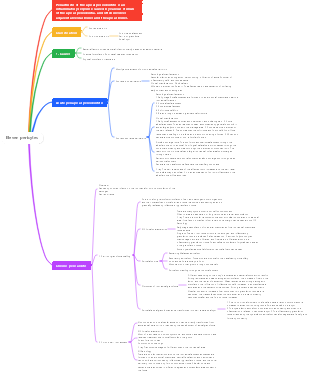
MindMap Gallery 4 Periodontal tissue
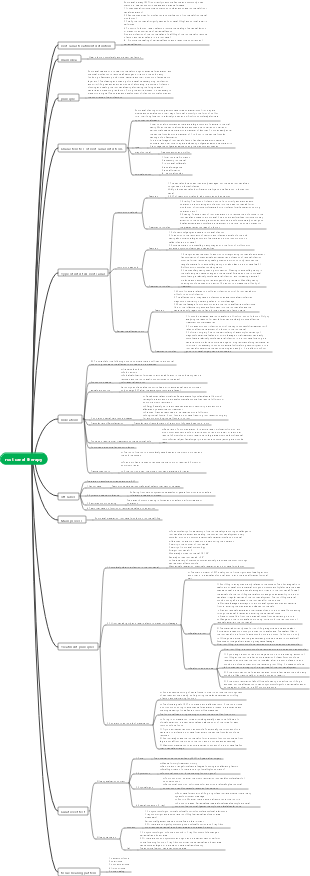
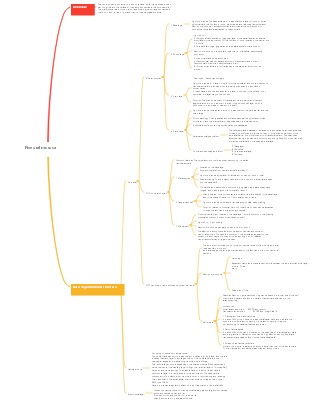
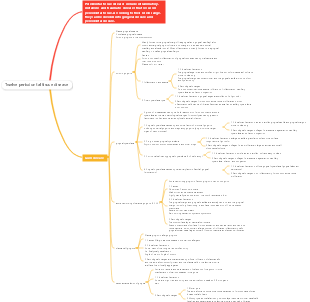
This is a mind map about four periodontal tissues, mainly including: gums, oral mucosa surrounding and covering the neck and alveolar ridges of the teeth, light pink. Chew the mucous membranes, withstand stress and friction, tough inactive.
Edited at 2025-02-25 20:48:18This template shows the structure and function of the reproductive system in the form of a mind map. It introduces the various components of the internal and external genitals, and sorts out the knowledge clearly to help you become familiar with the key points of knowledge.
This is a mind map about the interpretation and summary of the relationship field e-book, Main content: Overview of the essence interpretation and overview of the relationship field e-book. "Relationship field" refers to the complex interpersonal network in which an individual influences others through specific behaviors and attitudes.
This is a mind map about accounting books and accounting records. The main contents include: the focus of this chapter, reflecting the business results process of the enterprise, the loan and credit accounting method, and the original book of the person.
This template shows the structure and function of the reproductive system in the form of a mind map. It introduces the various components of the internal and external genitals, and sorts out the knowledge clearly to help you become familiar with the key points of knowledge.
This is a mind map about the interpretation and summary of the relationship field e-book, Main content: Overview of the essence interpretation and overview of the relationship field e-book. "Relationship field" refers to the complex interpersonal network in which an individual influences others through specific behaviors and attitudes.
This is a mind map about accounting books and accounting records. The main contents include: the focus of this chapter, reflecting the business results process of the enterprise, the loan and credit accounting method, and the original book of the person.
Four periodontal tissue
Gums
The oral mucosa surrounding and covering the neck and alveolar ridges of the teeth, light pink. Chewing mucous membranes, withstand stress and friction toughness The boundaries with the red alveolar mucosa are obvious Continuous with the hard palate mucosa
1. Free gingiva
The part of the gum edge that does not attach to the tooth surface Continuous half-moon curves, slightly redder than the attached gums
Gingival sulcus: Annular narrow space between the gingival and the tooth surface. When the normal depth is 0.5~3mm, the average depth is 1.8mm;>3mm, it is usually considered pathological and is called periodontal bag.
The significance of gingival sulcus fluid: (favor) clearing foreign matter; enhancing epithelium and teeth attachment; antibacterial and enhancing gingival immunity. (Disadvantages) The culture medium of microorganisms is conducive to the formation of plaque and tartar. Periodontal disease.
2. Attached gingiva
Located in: the root square of the free gingival, closely attached to the surface of the alveolar ridge, pink, tough, orange-shaped
Point color: dot-shaped depression, enhancing resistance to friction.
There is often a shallow groove at the point connected to the free gingival groove - the free gingival groove
3. Interdental nipple and gum valley
Interdental papilla: The gingivals fill the gap part adjacent to the two teeth in a cone shape. Also called gingival papilla.
Gingival valley: a low flat concave at the contact point of the adjacent tooth surface, like a valley. Premolars - wedge-turning; posterior teeth - low and flat. It is prone to plaque and tartar.
Membrane gingival joint: the obvious junction between the alveolar mucosa and the gingival.
Histological structure
1. Epithelial layer According to functions: gingival epithelium; gingival sulcus epithelium; binding epithelium 2. Layer of propria
(I) Epithelial layer
1. Gingival epithelium:
Complex squamous epithelium; surface keratinization or incomplete keratinization; epithelial nail processes are numerous and slender. Basal cells grow actively, occasionally melanocytes, or melanin particles, and pigmentation at the base. Therefore, the gums are sometimes black
2. Gingival sulcus epithelium:
Covering the gingival sulcus wall; layered squamous epithelium with epithelial nail process. There is a clear boundary from the binding epithelium.
Akeratosis: Inflammation of connective tissue. Can't resist mechanical forces and easily break.
3. Binding epithelium:
The squamous epithelium extends from the base of the gingival sulcus to the enamel cementum boundary and attaches to the surface of the tooth; there is no keratosis and no epithelial nail process, but epithelial nail process can be seen if stimulated.
Immature, low differentiation, simple epithelium
(1) Closely bonded to the tooth surface through hemidesmosomes; (2) The surface layer is not easy to fall off, and renewed cells move to the tooth surface and fall off into the gingival sulcus; (3) A transparent plate and a dense plate are generated on the tooth surface to make them closely bonded to the tooth surface; The position of the binding epithelium on the tooth surface varies by age. No surgery should damage the binding epithelium to avoid the damage of the epithelium and the tooth attachment; the binding epithelium has strong proliferation ability.
4. Gingival Epithelium:
Thin keratinous epithelium; with epithelial nail process.
(II) Layer of propria
Constituting dense connective tissue;
The nipple layer: high and long, causing the local epithelial bulge. The depression between the bulges is equivalent to the epithelial nail process, and the shallow concave on the surface of the nail process is the dot color.
Rich in collagen fibers
1. Gingival dental group Direction: Cephalogen of the dental neck, free gingival and attached gingival layer propria Features: The most common group of gum fibers Function: Pull the gums into tight bonds with the teeth
2. Alveolar gingival group Direction: Alveolar ridge Free gingival and attached gingival layer propria Function: Stable gums and alveolar bones
3. Ring group Direction: Around the neck of the teeth, arranged in an annular shape Features: thinner than other groups, often wrapped with adjacent fiber bundles Function: Helps free gingival adhere to teeth
4. Periosteum group Direction: From the cementum of the neck of the tooth, it passes through the lateral periosteum of the alveolar process, enters the alveolar process, vestibular muscle and the bottom of the mouth, and exists on the lip and tongue side.
5. Cross the group Direction: The cementum of the self-bound epithelial root square, spans the alveolar septum, and ends at the same position in the adjacent teeth. Features: Only exist on the adjacent tooth. Function: Keep the two adjacent teeth in contact and prevent separation
(III) Blood supply and nerve
Gingival blood vessels come from branches of the alveolar artery: 1. The superior periosteal artery distributed on the buccal and lingual side of the alveolar bone; 2 The blood vessel branches of the periodontal limb enter the gingival; 3 Alveolar midseptal artery
Lymph vessels are abundant and return to submental and submandibular lymph nodes The nerves in the maxillary gums come from the upper alveolar and prepalatine nerves; The lower alveolar nerve and lingual nerve