MindMap Gallery 11 Periacitis
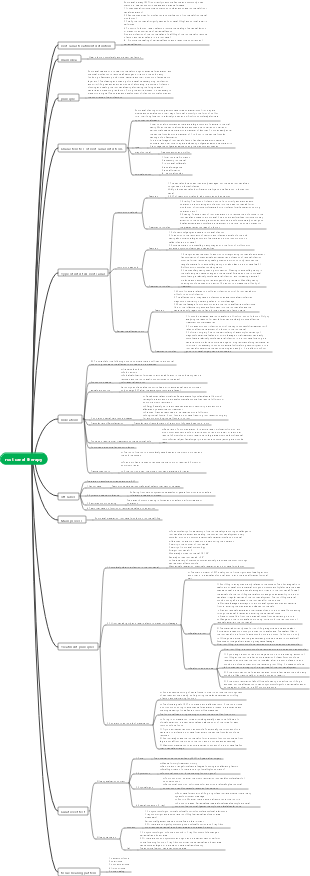
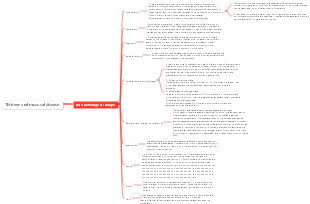
This is a mind map about eleven apical periarthritis, which mainly includes: chronic apical periarthritis, acute apical periarthritis, 1. Cause, classification, apical periarthritis: is an inflammatory response caused by various stimuli of the apical periodontal membrane, which often involves adjacent alveolar bones and apical cementum.
Edited at 2025-02-25 20:46:43This template shows the structure and function of the reproductive system in the form of a mind map. It introduces the various components of the internal and external genitals, and sorts out the knowledge clearly to help you become familiar with the key points of knowledge.
This is a mind map about the interpretation and summary of the relationship field e-book, Main content: Overview of the essence interpretation and overview of the relationship field e-book. "Relationship field" refers to the complex interpersonal network in which an individual influences others through specific behaviors and attitudes.
This is a mind map about accounting books and accounting records. The main contents include: the focus of this chapter, reflecting the business results process of the enterprise, the loan and credit accounting method, and the original book of the person.
This template shows the structure and function of the reproductive system in the form of a mind map. It introduces the various components of the internal and external genitals, and sorts out the knowledge clearly to help you become familiar with the key points of knowledge.
This is a mind map about the interpretation and summary of the relationship field e-book, Main content: Overview of the essence interpretation and overview of the relationship field e-book. "Relationship field" refers to the complex interpersonal network in which an individual influences others through specific behaviors and attitudes.
This is a mind map about accounting books and accounting records. The main contents include: the focus of this chapter, reflecting the business results process of the enterprise, the loan and credit accounting method, and the original book of the person.
Eleven pericytes
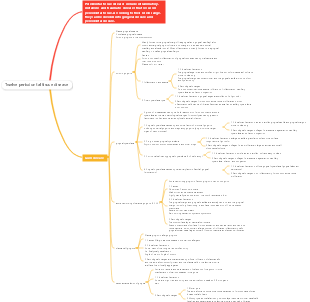
Periarthritis of the apical periodontitis is an inflammatory response caused by various stimuli of the apical periodontia, and often involves adjacent alveolar bones and the apical bones.
Classification
Acute pericarditis
Chronic pericarditis
Chronic apical abscess Peri-root granuloma Apical cyst
1. Causes
Bacterial factors: mixed bacterial infection mainly based on anaerobic bacteria
Chemical stimulation: Root canal treatment medication
Physical stimulation: trauma, etc.
Acute periapical periodontitis
Mostly acute attacks of chronic apical periarthritis
Acute serous pericarditis
Pathological manifestations: Vascular dilation and congestion, serum oozing, infiltration of a small number of inflammatory cells, and tissue edema. Clinical manifestations: Occlusal pain Mild pain, persistent dull pain → The affected teeth have sensation of surfacing, early contact and chewing pain.
Acute suppurative pericarditis
Pathological manifestations: 1. Early stage: Small abscesses are formed in the periodontal membrane near the root apical foramen 2. Acute alveolar abscess 3. Subperiosteal abscess 4. Soft tissue cellulitis 5. Break through the weak organizational structure
Clinical manifestations: 1. Early small abscess: spontaneous, persistent, and pulsating pain. 2. Acute alveolar abscess: The pain reaches its peak, accompanied by general discomfort, and enlarged lymph nodes in the drainage area. 3. Puss pierces the periosteum: the pain relieves. 4. The pus reaches the soft tissue and forms cellulitis: diffuse redness and swelling on the face, and the mouth opening is limited. 5. When pus penetrates the mucosa or skin: a fistula is formed.
Pimple discharge route: The pus forms a subperiosteal abscess through the alveolar bone on the buccal lip or lingual palatal side, which passes through the bone marrow cavity and breaks through the periosteum, mucosa or skin. The teeth with thick root canals and larger root apical holes are also discharged through caries Patients with severe periodontal pockets can also discharge pus through deep periodontal pockets. Penetrate the nasal mucosa Penetrate the maxillary sinus base
X-ray: The peri-radar space of the affected tooth increases, and the peri-radar bone plate may be unclear; if it is an acute attack of chronic inflammation, the alveolar bone will be absorbed
Chronic pericarditis
Overview Caused by uncured infection in the root canal or chronic stimulation of the pathogen Can recurrence
1. Peri-root granuloma swelling
Due to the long-term slow stimulation of peri-apic pathogenic microorganisms and their metabolites, normal peri-apic tissue is absorbed and destroyed, and is gradually replaced by inflammatory granulation tissue
(I) Clinical characteristics
There are many symptoms without self-consciousness Often there are deep caries, or long-term use, and tartar accumulation X-ray: There is a circular transmission shadow with clear boundaries in the apical area; if the lesion is stable or slow, a hard bone margin can be seen around (II) Pathology Early stage: vasodilation of the periar membrane of the root apical membrane, tissue edema Progress: The peri-root tissue structure is destroyed, and inflammatory granulation tissue is replaced. Defense reaction: Neutrophils, lymphocytes, macrophages, etc. are infiltrated, and fibers are proliferated around the inflammatory granulation tissue. Foam cells and cholesterol crystals can be seen in the granulation tissue. Some hyperplasia epithelial clusters or epithelial nets can be seen
Epithelial source:
Remaining Malassez epithelium
Respiratory epithelium: Those who are proximal to the nasal cavity or maxillary sinus and perforated may be from Mucosa or skin that grows through sinus canals
Epithelium crawling through periodontal pockets
Outcomes of root apical granuloma
Different depending on the body's resistance and bacterial competition results. Strong resistance and weak pathogenic stimulation: the increase in fibers in the lesion, and the repair of cementum. Weak resistance and strong pathogenic stimulation: the infiltration of inflammation cells increases, the osteoclasts are activated, and the cementum is absorbed. Strong resistance: dense osteitis---Alveolar bones with increased fiber components in granulation tissue are re-deposited, the trabecula becomes thicker, denser, and the marrow cavity becomes smaller, and the fibrous tissue increases.
Epithelial apical granuloma can be transformed into peri-radar apical cyst:
1. Due to nutritional disorders, the liquefied denaturation osmotic pressure increases to attract surrounding tissue fluid and develop into a cyst. 2. The hyperplastic epithelium is covered with a pus cavity, and when the inflammation is relieved, it becomes a cyst. 3. The inflammatory granulation tissue wrapped by the hyperplastic epithelium can also degenerate, liquefy, and form a cystic cavity.
3. Chronic peri-root abscess
Also known as chronic alveolar abscess, it can be directly transformed from acute apical periarthritis, or caused by the development of apical granuloma
(I) Clinical characteristics Most of them have no obvious symptoms, and some have patients who have received treatment due to small pustules in the gums Check for a tooth pain Common sinus openings X-ray: Transmissive images of different sizes in the root apical area
(II) Pathology There are purulent secretions around the root apical abscess, abscesses are formed in the periodontal membrane, central liquefaction and necrosis and neutrophils are surrounded by inflammatory granulation tissue, and the outer periphery is surrounded by fibrous connective tissue. Alveolar bone and cementum are absorbed in different degrees, and osteoclasts are abundant in the fossa.