MindMap Gallery immune system
The immune system is one of the important components of the organism. It protects the body from various harmful factors through various mechanisms, thereby maintaining the health and stability of the body.
Edited at 2023-11-09 12:00:32This is a mind map about bacteria, and its main contents include: overview, morphology, types, structure, reproduction, distribution, application, and expansion. The summary is comprehensive and meticulous, suitable as review materials.

This is a mind map about plant asexual reproduction, and its main contents include: concept, spore reproduction, vegetative reproduction, tissue culture, and buds. The summary is comprehensive and meticulous, suitable as review materials.
This is a mind map about the reproductive development of animals, and its main contents include: insects, frogs, birds, sexual reproduction, and asexual reproduction. The summary is comprehensive and meticulous, suitable as review materials.
This is a mind map about bacteria, and its main contents include: overview, morphology, types, structure, reproduction, distribution, application, and expansion. The summary is comprehensive and meticulous, suitable as review materials.
This is a mind map about plant asexual reproduction, and its main contents include: concept, spore reproduction, vegetative reproduction, tissue culture, and buds. The summary is comprehensive and meticulous, suitable as review materials.
This is a mind map about the reproductive development of animals, and its main contents include: insects, frogs, birds, sexual reproduction, and asexual reproduction. The summary is comprehensive and meticulous, suitable as review materials.
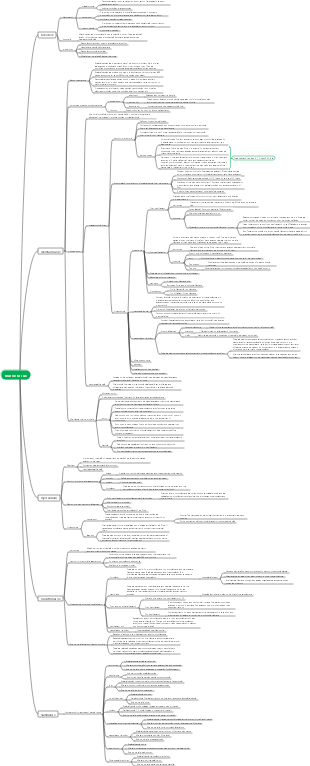
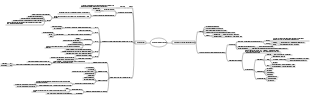
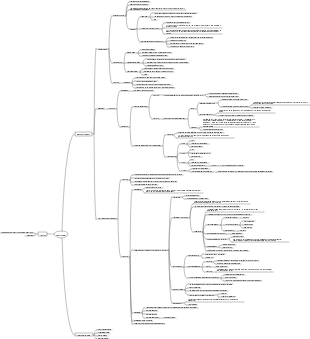
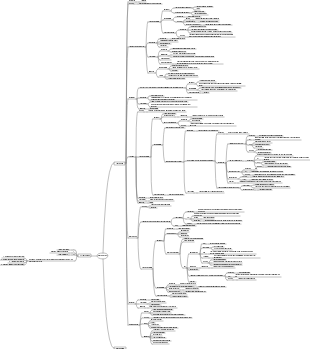
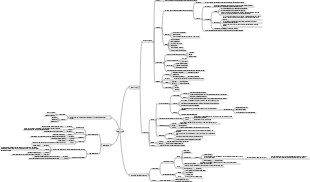
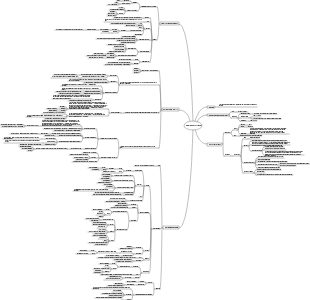
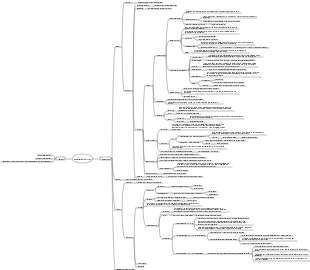
immune system
Molecular basis
Major histocompatibility complex molecules (MHC molecules)
T cell and B cell surface specific antigen receptors
composition
lymphoid organs
Central lymphoid organs (prenatal)
Thymus
structure
membrane
interlobular septa
Separates parenchyma into thymic lobules
substance
cortex
Thymic epithelial cells (scaffold)
structure
Star-shaped, with protuberances and desmosomal connections
nurse cells
Some subcapsular epithelial cells have rich cytoplasm surrounding thymocytes
Function
Secretes thymosin, thymosin and thymopoietin
Thymocytes (many)
T cells
Stromal cells (less)
medulla
Thymic epithelial cells (multiple)
Polygonal, large cell body
Thymocytes (naïve T cells) (less)
Macrophages
Thymic corpuscles (characteristic structures of the medulla)
Thymic epithelial cells arranged in concentric circles
Eosinophilic
blood-thymus barrier
definition
Cortical capillaries and surrounding structures act as a barrier
composition
continuous capillary endothelium
continuous periendothelial basement membrane
perivascular space, containing macrophages
epithelial basement membrane
a continuous layer of thymic epithelial cells
effect
Protect intracortical lymphocytes from foreign antigens and maintain a stable internal environment
Function
Where naive T cells are formed
Secrete a variety of hormones
Thymic stromal cells
Thymic epithelial cells
thymic dendritic cells
Macrophages
eosinophils
Mast cells
Fibroblasts
It is large in childhood, degenerates and shrinks after adolescence, the cortex disappears in old age, and the medulla can be retained throughout life.
marrow
Peripheral lymphoid organs (postnatal)
Lymph nodes
structure
Capsule: trabeculae
substance
cortex
Superficial cortex (B cell area)
lymph nodes
diffuse lymphoid tissue
Paracortical area (thymus-dependent area)
diffuse lymphoid tissue
Th cells
high endothelial venules
Endothelial cells have large nuclei, less heterochromatin, light staining, obvious nucleoli, and rich cytoplasm.
cortical lymphatic sinus
Classification
subcapsular sinus
Peritrabecular sinus
sinus wall
Flat endothelial cells and stellate endothelial cells serve as scaffolds
Reticular fibers, reticular cells, macrophages
Function
Lymph flows slowly in the sinuses, which facilitates macrophage clearance of antigens
medulla
medullary cord
high endothelial venules
T cells, B cells, plasma cells, macrophages
medullary sinus
Same structure as cortical lymphatic sinus, more macrophages
Function
filtering lymph
immune response
Spleen (the largest lymphatic organ in the human body)
structure
capsule and trabeculae
Mesothelium
Irregular dense connective tissue
Elastic fibers, type III collagen fibers, smooth muscle fibers
substance
white marrow
periarterial lymphatic sheath (=paracortical area)
distributed
around the central artery
composition
Large numbers of T cells
interdigitating cells
few macrophages
lymph nodes
fringe zone
definition
Stenosis at the junction of red pulp and white pulp
composition
Macrophages
B cells
Marginal sinus (end of central artery collateral)
The channel through which antigens and lymphocytes in the blood enter the white pulp
Red pith
splenic cord
lymphoid tissue rich in blood cells
splenic sinusoids
long rod endothelial cells
Incomplete basement membrane
Function
filter blood
immune response
hematopoiesis
tonsil
Lymphoid tissue
composition
diffuse lymphoid tissue
Mainly T cells
High endothelial venules (HEVs)/postcapillary venules
An important channel for lymphocytes to enter lymphoid tissue from the blood
lymph nodes (lymph follicles)
Mainly B cells
germinal center
dark zone
B cells, Th cells
Strongly basophilic
Ming District
B cells, Th cells, macrophages
Follicular dendritic cells (FDC)
Can combine with antigen to form antigen-antibody complex
small knot cap
A dense layer of small lymphocytes surrounding the germinal center
Classification
Primary lymph nodes (no germinal centers)
secondary lymph nodes
effect
site of immune response
Immune Cells
Lymphocytes
T cells (cellular immunity)
Source: bone marrow
Mature: Thymus
naive T cells
effector T cells
memory T cells
Helper T cells (Th cells)
Helper B cells and Tc cells conduct immune responses
Cytotoxic T cells (Tc cells)
Directly attack allogeneic cells, tumor cells and virus-infected cells
Release of perforin and granzymes
Regulatory T cells (Tr cells)
Negative regulatory function, inhibiting the proliferation, differentiation and activity of T cells
B cells (humoral immunity)
Source: bone marrow
Effector B cells (plasma cells)
Secrete antibodies to prevent pathogens from adhering to cells
naïve B cells
memory B cells
NK cells
Source: bone marrow
No need for antigen-presenting cell intermediary, no MHC restriction, the body’s first natural line of defense against tumors and infections
lymphocyte recirculation
Macrophages and mononuclear phagocyte system
Monocytes and cells differentiated from them with phagocytic function
composition
Macrophages (connective, lymphatic)
Osteoclasts (bone)
microglia (nerves)
Liver macrophages (Kupffer cells)
Lung macrophages (dust cells)
Function
Devour and kill
Participate in immune response
Secrete large amounts of soluble factors
Antigen presenting cells (APC)
Antigenic peptide/MHC molecule complex
presented to T cells
dendritic cells (DC)
Features
Strongest, few, widely distributed
Derived from bone marrow hematopoietic stem cells
include
Langerhans cells (epidermis)
Interstitial DC (heart, liver, kidney, lung, digestive tract)
Thymic DC
Blood DC
Veil cells (lymph)
Staggered cells (peripheral lymphoid tissue)
Mononuclear/macrophages
B lymphocytes
Granulocytes
Mast cells
immunologically active molecules
Immunoglobulin
complement
Cytokines
Function
Immune defense (external diseases)
Immune surveillance (internal variation)
Immune homeostasis (internal decline)