MindMap Gallery male reproductive system
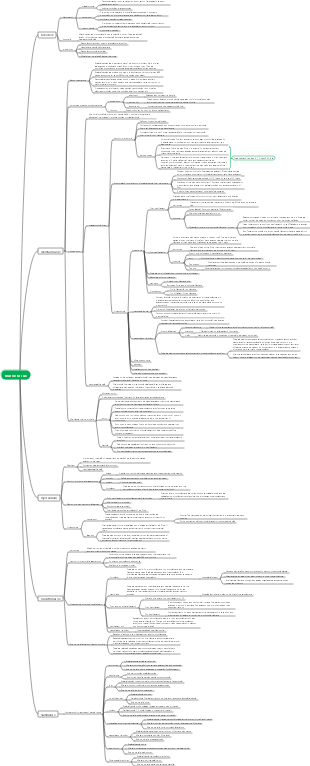
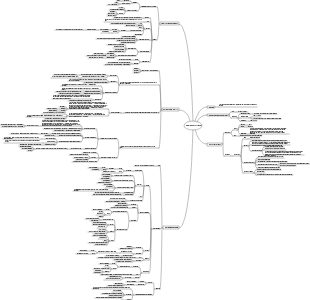
This is a mind map about the male reproductive system, including testicles, reproductive ducts, accessory glands, etc.
Edited at 2023-11-21 00:45:37This is a mind map about bacteria, and its main contents include: overview, morphology, types, structure, reproduction, distribution, application, and expansion. The summary is comprehensive and meticulous, suitable as review materials.

This is a mind map about plant asexual reproduction, and its main contents include: concept, spore reproduction, vegetative reproduction, tissue culture, and buds. The summary is comprehensive and meticulous, suitable as review materials.
This is a mind map about the reproductive development of animals, and its main contents include: insects, frogs, birds, sexual reproduction, and asexual reproduction. The summary is comprehensive and meticulous, suitable as review materials.
This is a mind map about bacteria, and its main contents include: overview, morphology, types, structure, reproduction, distribution, application, and expansion. The summary is comprehensive and meticulous, suitable as review materials.
This is a mind map about plant asexual reproduction, and its main contents include: concept, spore reproduction, vegetative reproduction, tissue culture, and buds. The summary is comprehensive and meticulous, suitable as review materials.
This is a mind map about the reproductive development of animals, and its main contents include: insects, frogs, birds, sexual reproduction, and asexual reproduction. The summary is comprehensive and meticulous, suitable as review materials.
male reproductive system
testis
Seminiferous tubules (spermatogenic epithelium)
Spermatogenic cells and spermatogenesis
spermatogonia
①Distribution: close to the base film
② Morphology: small size, round cells, round nuclei, 12 microns in diameter, dark staining, 1 to 2 nucleoli, karyotype 46 XY
③Characteristics: The most immature spermatogenic cells differentiate into primary spermatocytes
④ Splitting begins during adolescence
Type A (stem cells) continue to produce spermatogonia
Type B
primary spermatocytes
①Distribution: proximal luminal side of spermatogonia
②Shape: Larger, 18 microns in diameter, large and round nucleus, filamentous chromatin, karyotype 46 XY
③Features: Visible in slices,
secondary spermatocytes
①Distribution: near the luminal side of primary spermatocytes
②Shape: Small size, round nucleus, dark staining, karyotype 23 X or 23 Y
③ Features: Hard to see in slices
sperm cells
①Distribution: close to the lumen surface
②Shape: 8 microns in diameter, small and round nucleus, dark coloring, karyotype 23 X or 23 Y
③ Features: No more splitting
④Sperm formation
❶The chromatin is highly condensed, and the nucleus becomes elongated and moves to one side of the cell
❷The Golgi complex forms the acrosome and covers the front 2/3 of the nucleus, together forming the head of the sperm.
❸The centriole migrates to the opposite side of the acrosome and sends out the axoneme to form the tail of the sperm
❹ Mitochondria are arranged in a spiral shape to form a mitochondrial sheath
❺Excess cytoplasm falls off to form residual body
sperm
①Distribution: Luminal surface
②Form
The head is a nucleus with highly condensed chromatin, and the first 2/3 of the nucleus covers the acrosome (a special lysosome containing a variety of hydrolases)
The tail (flagella) is the motility device of sperm
The neck segment is short, contains centrioles and sends out microtubules to form the axoneme, which runs through the entire length.
The middle section is surrounded by a mitochondrial sheath on the outside to provide energy for flagellar activity.
The main segment is the longest and has a fibrous sheath outside.
Terminal segment short, only axoneme
supporting cells
①Distribution: between spermatogenic cells
②Form
LM: The cells are high pyramidal or high columnar, with a wider base and close to the basement membrane. The top extends to the luminal surface, and the cell outline is unclear. The nuclei are mostly located at the base and are triangular, oval or irregular in shape, with light staining and obvious nucleoli.
EM: There are a large number of smooth endoplasmic reticulum and some rough endoplasmic reticulum, a well-developed Golgi apparatus, more mitochondria, lysosomes, microfilaments and microtubules
Tight junctions are formed near the base of the lateral surface to divide the seminiferous epithelium into
Basal compartment contains spermatogonia
Near chamber removal of spermatogonia
③Function
❶Constitute blood-testis barrier
❷Support and nourish spermatogenic cells
❸Promote spermatogenic cells to move toward the lumen and release sperm into the lumen
❹phagocytosis of cytoplasm shed during sperm formation
❺Synthesize and secrete androgen binding protein
Testicular interstitium
Leydig cells
①Distribution: distributed in groups
②Shape: The cell body is large, round or polygonal; the nucleus is large and round, with 1 to 2 nucleoli visible in light staining; the cytoplasm is eosinophilic
③Function: Synthesize and secrete androgens
Seminiferous tubules and rete testis
The wall of the seminiferous tubule is a single layer of cuboidal or columnar epithelium without spermatogenic cells.
reproductive tract
epididymis
Output tubule (head)
The epithelium of the tube wall is composed of high columnar ciliated cells and low columnar non-ciliated cells, which are arranged alternately, so the cavity surface is irregular.
Epididymal duct (body, tail)
The tube wall epithelium is pseudostratified ciliated columnar epithelium, composed of chief cells and basal cells, and the tube lumen is neat and regular.
Vas deferens (thick wall and small cavity)
Mucous membrane composed of pseudostratified ciliated columnar epithelium and elastic lamina propria
muscularis thick smooth muscle
adventitia loose connective tissue
accessory glands
The prostate is a chestnut-shaped solid organ containing 30 to 50 biductal and alveolar glands.
Seminal vesicles and bulbourethral glands
penis