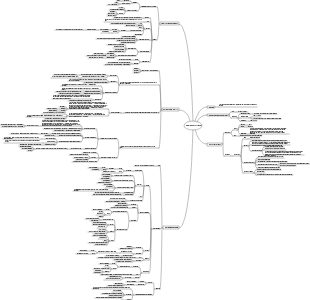
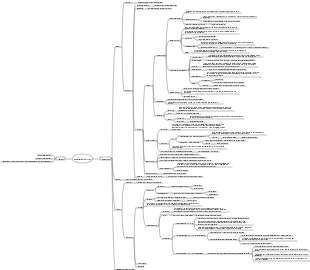
MindMap Gallery Circulatory system mind map
Mind map about the circulatory system, including the cardiovascular system, lymphatic system, etc. Used to organize embryology final exam review
Edited at 2023-11-09 12:06:02This is a mind map about bacteria, and its main contents include: overview, morphology, types, structure, reproduction, distribution, application, and expansion. The summary is comprehensive and meticulous, suitable as review materials.

This is a mind map about plant asexual reproduction, and its main contents include: concept, spore reproduction, vegetative reproduction, tissue culture, and buds. The summary is comprehensive and meticulous, suitable as review materials.
This is a mind map about the reproductive development of animals, and its main contents include: insects, frogs, birds, sexual reproduction, and asexual reproduction. The summary is comprehensive and meticulous, suitable as review materials.
This is a mind map about bacteria, and its main contents include: overview, morphology, types, structure, reproduction, distribution, application, and expansion. The summary is comprehensive and meticulous, suitable as review materials.
This is a mind map about plant asexual reproduction, and its main contents include: concept, spore reproduction, vegetative reproduction, tissue culture, and buds. The summary is comprehensive and meticulous, suitable as review materials.
This is a mind map about the reproductive development of animals, and its main contents include: insects, frogs, birds, sexual reproduction, and asexual reproduction. The summary is comprehensive and meticulous, suitable as review materials.
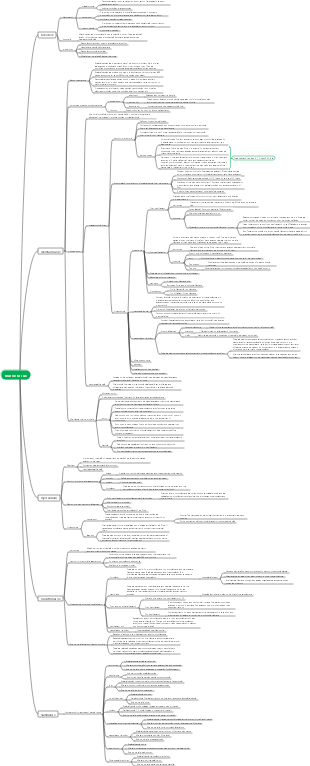
circulatory system
lymphatic system
Lymphatic capillaries
Lymphatic vessels
lymphatic duct
Cardiovascular System
artery
General structure of arterial and venous walls
intima
endothelium
single layer squamous epithelium
Ultrastructure
Plasma membrane vesicles (macromolecule transport carriers)
WP bodies (synthesis and storage of factor VIII-related antigens related to coagulation)
subendothelium
A small amount of collagen fibers and elastic fibers
internal elastic membrane
Elastin composition
dyed bright pink
wavy
tunica media
Elastic membrane (retracts the expanded blood vessels)
Elastane (retract)
Collagen fibers (maintains tension)
Smooth muscle fibers (synthetic phenotype, contractile phenotype) (fibroblast subtype, produces collagen fibers, elastic fibers, matrix)
connective tissue
adventitia
loose connective tissue
In larger arteries, there is an external elastic lamina (thin) at the junction of the media and adventitia.
Including: aorta, pulmonary artery, innominate artery, common carotid artery, subclavian artery, common iliac artery
Large arteries (elastic arteries)
intima
Endothelium: many wp bodies
Subendothelial layer: thick, loose connective tissue, containing collagen fibers and a small amount of smooth muscle fibers
Internal elastic lamina: unclear boundary with tunica media
tunica media
The thickest, 40-70 layers of elastic membrane arranged in concentric circles and a large number of elastic fibers
Circular smooth muscle fibers and collagen fibers
adventitia
Thin, loose connective tissue, indistinct external elastic membrane, containing smooth muscle fibers
Medium artery (muscular artery)
intima
Endothelium: few wp bodies
Subendothelial layer: thin
Internal elastic membrane: obvious, wavy, well-defined
tunica media
Thick, 10-40 layers of annular smooth muscle fibers, with a small amount of elastic fibers and collagen fibers in the intercellular spaces
adventitia
Thickness similar to tunica media
loose connective tissue
Nutritive blood vessels and nerve fibers
The external elastic membrane is obvious
Arterioles (muscular arteries)
Pipe diameter 0.3-1mm
The structure is similar to that of the middle artery, but both are thinner.
Internal elastic membrane is obvious
3-9 layers of circular smooth muscle fibers
No external elastic membrane
arterioles
0.3mm or less
All layers become thinner
There is no internal and external elastic membrane, and the media contains 1-2 layers of smooth muscle fibers.
Arterial wall structure and function
Elastic arteries: dilate during systole and contract during diastole (maintaining continuity of blood flow)
Muscular arteries: constrict and dilate (regulate blood flow to various organs)
Arterioles, arterioles: form peripheral resistance and regulate local blood flow and blood pressure in tissues
capillaries
Features
The smallest diameter is 6-8 microns
The most widely distributed
The thinnest tube wall
The biggest amount
Organs with strong metabolism are very dense
structure
Endothelial cells
plasma membrane vesicles
basement membrane
substrate
pericytes
When capillaries are damaged, pericytes can proliferate and differentiate into endothelial cells, smooth muscle fibers and fibroblasts
Function
Selective permeability and material exchange
Classification (based on the structural characteristics of endothelial cells under electron microscopy)
continuous capillary
tight connection
Basement membrane intact
plasma membrane vesicles
Distributed in connective tissue, muscle tissue, exocrine glands, nervous system, thymus and lungs
Participate in the formation of barrier structures
fenestrated capillaries
tight connection
Basement membrane intact
The non-nucleated part of the cell is extremely thin, has endothelial windows that penetrate the cytoplasm, and is closed by a septum.
Distributed in gastrointestinal mucosa, endocrine glands and renal blood vessels
sinusoids (sinusoidal capillaries, discontinuous capillaries)
The lumen is large and irregular, and the endothelial cell gaps are large, making it easy for large molecules to enter and exit.
Incomplete or absent basement membrane
Distributed in liver, spleen, bone marrow and certain endocrine glands
vein
Features
The cavity is large, the wall is thin, and the cavity is irregular
The media is thin and the outer membrane is thick
Smooth muscle, elastic tissue is not abundant, and sliced tissue is often collapsed or irregular
The boundaries between the three layers are unclear
venous valve
Distribution, veins above 2mm
structure
Center: Connective tissue
Surface: endothelium
Function: Prevent blood from flowing back
Classification
large veins
Medium vein (1-9mm)
Small veins (200 microns-1mm)
Venules (50-200 microns)
Microcirculation
arterioles - intermediate arterioles - true capillaries -
Open blood capillaries—
Arteriovenous anastomosis—
venules
heart
structure of heart wall
Endocardium (thinnest)
endothelium
heart valve
Atrioventricular foramen and arterial orifice
A thin sheet-like structure formed by the endocardium bulging into the cavity
endothelium
center dense connective tissue
surface endothelium
base
Smooth muscle fibers and elastic fibers
Prevents the reverse flow of blood between the atria, ventricles and arteries
subendothelium
inner layer
Dense connective tissue, elastic fibers and a small amount of smooth muscle
Outer layer (subendocardium)
loose connective tissue containing small blood vessels and nerves
Contains branches of the cardiac conduction system (ventricles) [Purkinje fibers]
myocardium
myocardial fiber
Inner longitudinal middle ring and outer diagonal three floors
heart skeleton
Dense connective tissue at the atrioventricular junction, the attachment scaffold for the atrial and ventricular myocardium (also Purkinje fibers)
Characteristics of atrial muscle
short and thin
Atrial special particles
Atrial natriuretic peptide (diuresis, sodium excretion, vasodilation, blood pressure lowering)
Epicardium (visceral layer of pericardium)
Serosa: Loose connective tissue Mesothelial pericardial cavity
cardiac conduction system
Sinoatrial node→AV node→AV bundle→left and right bundle branches→Purkinje fibers
sinoatrial node
Location
The deep part of the epicardium at the junction of the superior vena cava and the right atrial appendage
Function
pacemaker
Atrioventricular node, atrioventricular bundle, left and right bundle branches
Location
subendocardium
The atrioventricular bundle penetrates further into the myocardium
Function
Synchronize contraction and relaxation of atrial and ventricular muscles
cell
pacemaker cells
Location
Within the connective tissue of the sinoatrial and atrioventricular nodes
transference cells
Location
Sinoatrial node and periphery of the atrioventricular node and its atrioventricular bundles
effect
conduct impulse
Purkinje fiber
Location
subendocardium and myocardium
Features
Specialized myocardial fibers that are shorter and thicker than ordinary myocardial fibers
Leap disk developed
Contains less myofibrils
Attached to ventricular muscle fibers
effect
Synchronous contraction of ventricular muscle fibers