MindMap Gallery Female reproductive system mind map
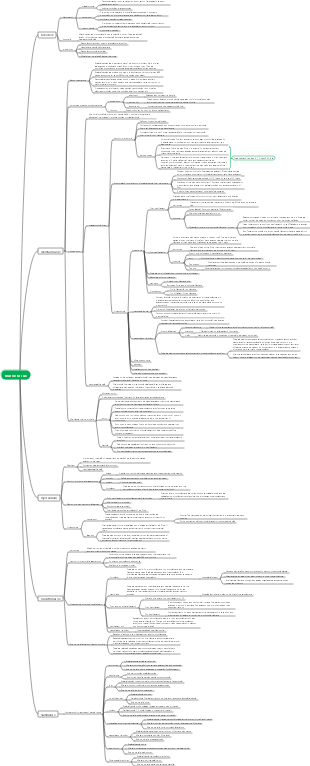
Regarding the mind map of the female reproductive system, the female reproductive system includes internal and external reproductive organs and related tissues. Female internal genitals include vagina, uterus, fallopian tubes and ovaries.
Edited at 2023-11-09 12:02:00This is a mind map about bacteria, and its main contents include: overview, morphology, types, structure, reproduction, distribution, application, and expansion. The summary is comprehensive and meticulous, suitable as review materials.

This is a mind map about plant asexual reproduction, and its main contents include: concept, spore reproduction, vegetative reproduction, tissue culture, and buds. The summary is comprehensive and meticulous, suitable as review materials.
This is a mind map about the reproductive development of animals, and its main contents include: insects, frogs, birds, sexual reproduction, and asexual reproduction. The summary is comprehensive and meticulous, suitable as review materials.
This is a mind map about bacteria, and its main contents include: overview, morphology, types, structure, reproduction, distribution, application, and expansion. The summary is comprehensive and meticulous, suitable as review materials.
This is a mind map about plant asexual reproduction, and its main contents include: concept, spore reproduction, vegetative reproduction, tissue culture, and buds. The summary is comprehensive and meticulous, suitable as review materials.
This is a mind map about the reproductive development of animals, and its main contents include: insects, frogs, birds, sexual reproduction, and asexual reproduction. The summary is comprehensive and meticulous, suitable as review materials.
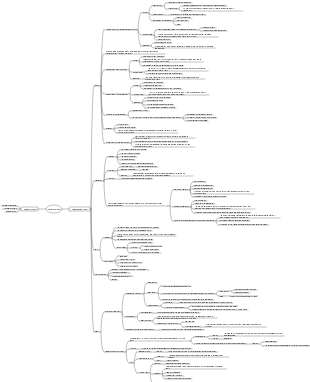
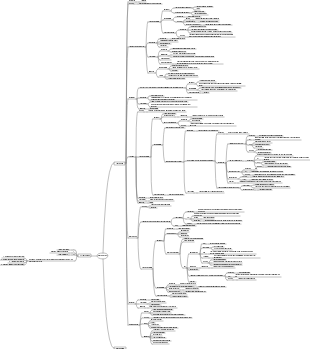
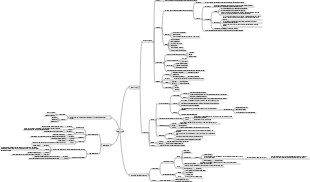
female reproductive system
Features
obvious age changes
regular cyclical changes
Regulated by the neuro-endocrine system (hypothalamic-pituitary-gonadal axis)
composition
ovary
Function
Produce eggs and secrete sex hormones
structure
surface epithelium
Single layer flat or single layer cubic
albuginea
thin layer of dense connective tissue
cortex
Follicle
composition
primordial follicle
Located in the superficial layer of the ovarian cortex, they are numerous and small in size;
a primary oocyte
Round, the nucleus is large and round, the nucleolus is obvious, and the cytoplasm is eosinophilic.
Prolonged arrest in the prophase of the first meiotic division
a layer of flattened follicle cells
Cells are small and flat
primary follicle
The size of the primary oocyte increases, the nucleus also becomes larger, and the number of organelles increases
The presence of cortical granules (a type of lysosome) in the cytoplasm prevents polyspermy during fertilization
follicle cells
From flat to cubic/cylindrical
From single layer to multi-layer
Cellophane tape
Located between the oocyte and the innermost follicle cell, they secrete together to form a thick eosinophilic membrane rich in glycoproteins.
zona pellucida protein ZP
It is composed of ZP1-4, among which ZP2 and ZP3 are sperm receptors.
theca
As the size of primary follicles increases, spindle cells in the matrix surrounding the follicles proliferate and differentiate, gradually forming
Secondary follicle (largest)
Follicular cavity
Fluid cavities of varying sizes appear between the follicle cells and gradually merge into a large cavity, called the follicular cavity, which is filled with follicular fluid.
corona radiata
A layer of columnar follicle cells next to the zona pellucida, arranged radially
cumulus
As the follicle cavity continues to expand, the primary oocyte, zona pellucida, corona radiata and surrounding follicle cells gradually reside on one side of the follicle cavity and protrude into the follicle cavity, which is called cumulus.
granulosa cells
Follicle cells in the granulosa layer are called granulosa cells
granular layer
The follicle cells surrounding the follicle cavity constitute the follicle wall. The follicle cells here are smaller in size and densely arranged in a granular shape, which is called the granulosa layer.
theca
intima layer
Blood vessel
Theca cells (steroid-secreting cells) (estrogen)
Adventitia
Collagen fibers, a small amount of smooth muscle
mature follicle
Large in size, protruding toward the surface of the ovary
The follicular cavity is large, the granulosa layer is thin, and the granulosa cells stop proliferating.
secondary oocyte
endocrine
Theca cells and granulosa cells jointly secrete estrogen
Secondary follicles and mature follicles with follicular cavity are also called cystic follicles.
ovulation
definition
The process in which mature follicles rupture and the secondary oocytes shed from the follicle wall are expelled from the ovary together with the zona pellucida, corona radiata and follicular fluid.
time
Around day 14 of the menstrual cycle
result
fertilization
The secondary oocyte continues to complete the second meiotic division to produce an egg cell and a second polar body.
unfertilized
degradation absorbed
corpus luteum
definition
After ovulation, the remaining follicle wall, theca and blood vessels collapse into the follicle cavity. Under the action of luteinizing hormone, they develop into a large endocrine cell mass rich in blood vessels. They are yellow when fresh and are called corpus luteum.
structure
LM
Granular layer cells - granular luteal cells
There are many lipid droplets in the cytoplasm, which are light in color and large in number. They are located in the center of the corpus luteum.
Function
secrete progesterone
progesterone and relaxin
Theca cells – theca luteal cells
Deep staining, small amount, located around the corpus luteum
Function
secrete estrogen
Both cells of the corpus luteum under EM have the characteristics of cells secreting steroid hormones.
The corpus luteum is a temporary endocrine gland
After degeneration → white body
atretic follicle
The number of follicles during puberty is approximately 40,000
Approximately 450 ovulations occur during the entire reproductive period.
Most follicles degenerate at different stages of development to form atretic follicles
interstitial glands
When larger follicles degenerate, the follicle wall collapses, theca cells enlarge, the cytoplasm is filled with lipid droplets, resembles luteal cells, and is separated into scattered cell clusters by connective tissue and blood vessels.
secrete estrogen
connective tissue
Spindle stromal cells, reticular fibers
medulla
loose connective tissue
Blood vessels, lymphatic vessels, nerves, elastic fibers
oviduct
site of fertilization, transport of germ cells
Uterus
Function
Pregnant fetus, produces menstruation
structure
intima
structure
epithelium
simple columnar epithelium
ciliated cells
secretory cells
lamina propria
Connective tissue (reticular fibers, stromal cells)
spiral artery
uterine glands
layered
Functional layer (blastocyst implantation layer)
Shedding during menstrual period
Basal layer (proliferation, repair layer)
Does not fall off
The thickness of the endometrial functional layer, uterine glands, stromal cells and spiral arteries all change with the cyclic changes of ovarian hormones
menstrual cycle
definition
Since puberty, the endometrium undergoes cyclic changes under the action of hormones secreted by the ovaries, that is, endometrial peeling, bleeding, repair, and proliferation occur every 28 days or so, which is called the menstrual cycle.
cycle
From the first day of menstruation → the day before the next menstrual period
installment
Menstrual period: 1st~4th
Regression of the corpus luteum, sudden decrease in estrogen and progesterone
The continuous contraction of the spiral arteries in the functional layer of the endometrium causes endometrial ischemia and uterine gland secretion stops → necrosis of the functional layer
Spiral arteries temporarily dilate → functional layer blood vessels rupture → blood and necrotic intima are peeled off together and discharged from the vagina
Proliferative phase: 5th~14th (follicular phase)
Secondary follicle → mature follicle, secretes estrogen
Endometrial basal layer hyperplasia repair
In the early stage of hyperplasia, the uterine glands are short, straight and thin.
At the end of hyperplasia, the long curve of the uterine gland begins to secrete, and the spiral artery becomes long and curved.
On the 14th, one follicle matures and ovulates
Secretory phase: 15th~28th (luteal phase)
The corpus luteum forms and secretes progesterone and estrogen
The endometrium continues to proliferate and thicken
The uterine glands are longer and more curved, and the spiral arteries are longer and curved.
Predecidual cells (intracellular glycogen lipid droplets) (become decidual cells during pregnancy)
If there is no pregnancy, the functional layer of the endometrium will fall off and turn into menstrual period.
Muscle layer
adventitia
Vagina and external genitalia